
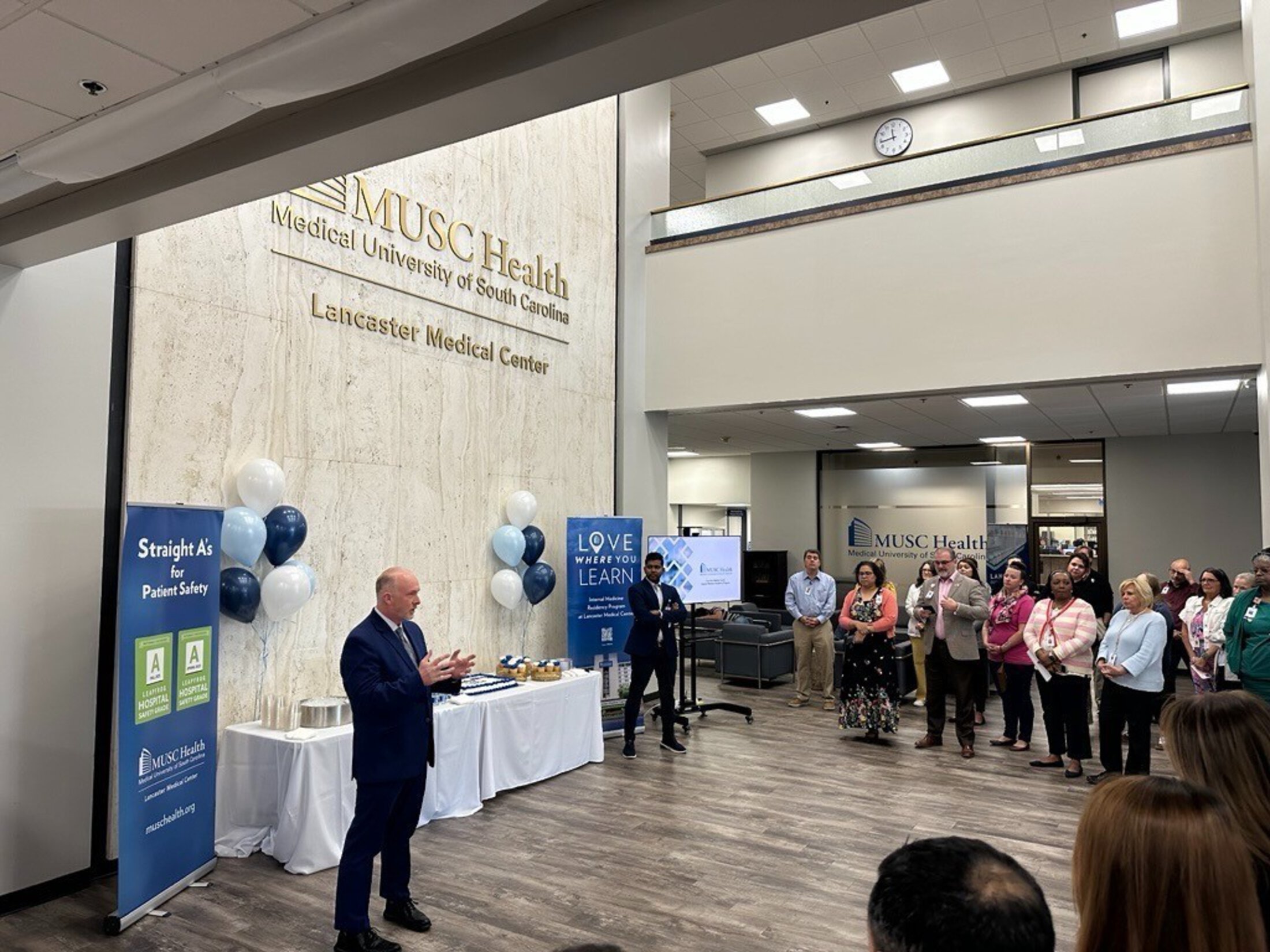
As South Carolina’s population continues to grow, so does the demand for physicians. To meet that need, MUSC is expanding its graduate medical education (GME) program across the MUSC Health Regional Hospital Network (RHN), with new physicians training with teams at the MUSC Health Lancaster Medical Center and the MUSC Health Florence Medical Center.
A recent U.S. Census Bureau estimate showed that Lancaster County grew faster than the state average from July 2024 to July 2025. Nearby York County, just outside of Charlotte, also saw population growth during that time.
In the Pee Dee region, Florence County experienced growth as well, while neighboring Horry County, home to Myrtle Beach, outpaced the state average.
Meeting the demand for care
Although these areas are experiencing population growth, communities like Florence and Lancaster serve large rural populations, where access to care has long been a challenge. The GME program will expand the physician workforce in these areas, helping to meet the growing need and improving access to care in the rural communities.
In 2023, MUSC Health Florence earned accreditation for its first GME program, welcoming its inaugural Internal Medicine class in July of 2024. This marked both the first cohort of Internal Medicine residents outside Charleston and the first cohort of residents within the MUSC Health RHN.
A year later, MUSC Health expanded its GME footprint with the launch of additional programs, including a Family Medicine residency in Florence and an Internal Medicine residency in Lancaster, each started with eight students in their inaugural classes.
Florence: Building a pipeline of care
In Florence, for the third year in a row, eight residents matched with Internal Medicine, for a total of 24. This residency is approved for 30 residents and is expected to reach full capacity in next year’s match. The Family Medicine program also matched with eight, for a total of 16 residents currently in training. This adds 40 additional primary care providers to the area, with more on the horizon.
“Most doctors want to stay in the area where they trained,” said Ribal Al Aridi, M.D. director of the Internal Medicine Residency Program in Florence. “They will have patients that will want to continue their care with them. The GME program definitely helps bridge the gap in the nationwide doctor shortage.”
Because access to care remains a challenge in rural communities, Florence offers residents many opportunities to train in these areas. “We want them to graduate knowing how to handle disease in both the rural setting and in the hospital setting. They will be well-rounded with both medical knowledge and clinical confidence,” Al Aridi said. “They participate in community health fairs and volunteer at local homeless shelters. Through these efforts, they demonstrate a strong sense of social responsibility and a genuine dedication to serving vulnerable populations.”
As part of the South Carolina Chapter of the American College of Physicians, the Florence Internal Medicine residents take part in various advocacy campaigns that address important health care issues throughout the state. The residents will also be involved in clinical research. Al Aridi noted that they have presented various findings at national conferences over the last two years. Through the many unique opportunities afforded to the residents, she believes that the GME program ultimately serves to provide better care for patients overall.
“These residents provide our more seasoned doctors with up-to-date medical knowledge, plus they improve accountability among our current medical staff. Also, it goes without saying that more doctors mean better care, since there will be more doctors to engage with the patients,” she said. “Having the GME program elevates the practice of medicine on all levels.”
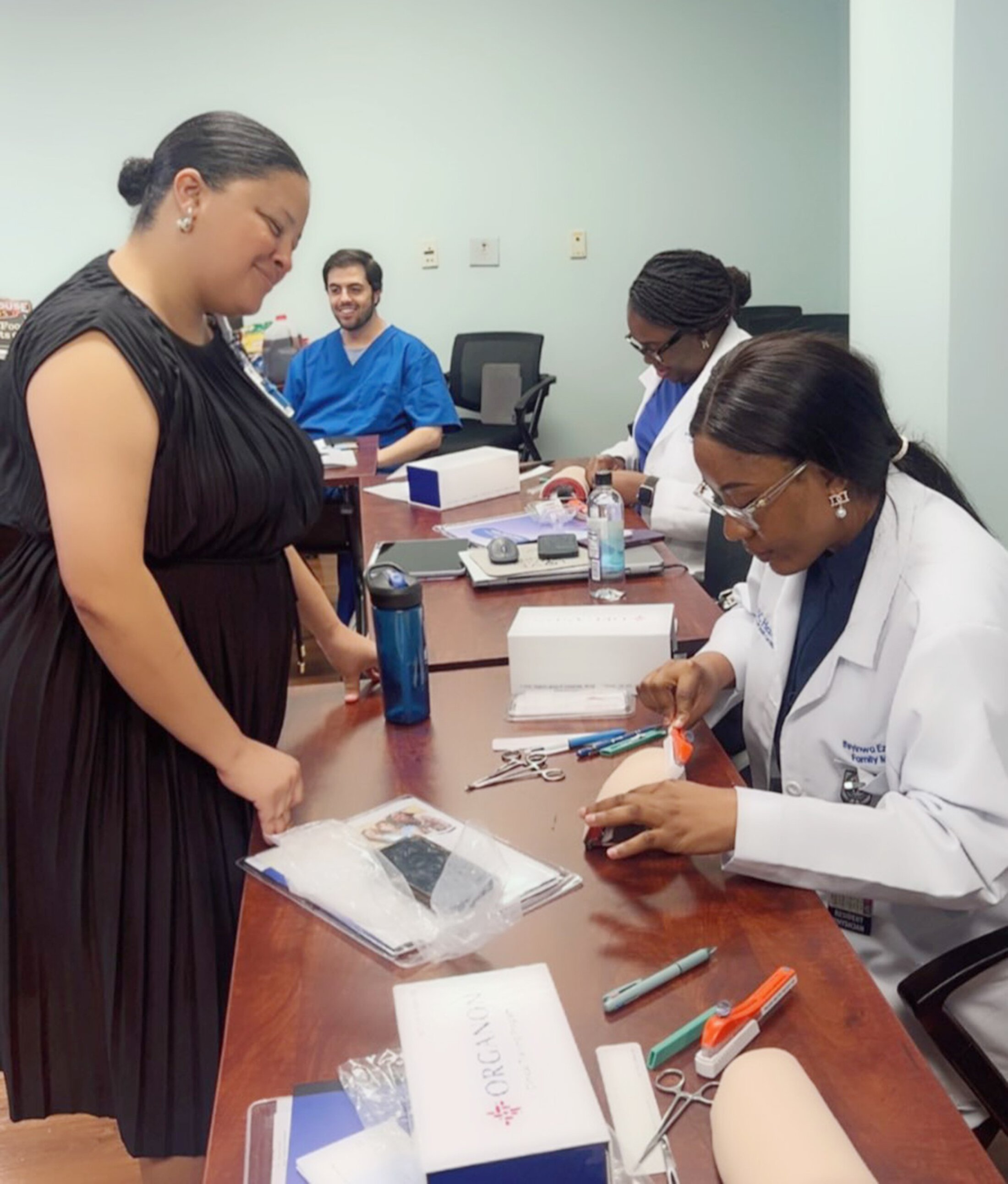
Kourtney Osorio, M.D., MUSC Health Florence Medical Center Family Medicine Residency Program director, and her colleague Al Aridi share a focus on training the next generation of physicians. Osorio highlighted her program’s commitment to supporting both patients and the physicians who care for them. “We emphasize the well-being of both our patients and our physicians, understanding that a healthy work-life balance promotes the retention of primary care professionals in rural areas,” she said. “The quality is enhanced by residency programs themselves. Good training makes good doctors.”
Lancaster: Growing the physician workforce
Aravind Raghavan, M.D., director of Lancaster’s Internal Medicine Residency Program, said 10 residents matched with the program this year, bringing total enrollment to 18 at this time. The program is approved for 30 residents and is expected to reach full capacity with the 2027 match.
For 10 available positions, the program received more than 3,400 applicants from around the world, including top graduates from medical schools in India, Pakistan, Jordan, Turkey and Japan – a reflection of growing interest in the Lancaster program, Raghavan said.
“These residents are doing research at some big places like the Mayo Clinic,” he said. “They had the best scores in school, graduating in the top tiers of their classes. They all have recent experience. I am excited to see how they will add to our hospitals.”
Raghavan explained that residents will train across a broad range of specialties. “We have everything they need for thorough training. Not only will they be working with our core faculty and rotating through specialties, such as cardiology, critical care, endocrinology, emergency medicine and infectious diseases, but they’ll also work with transplant specialists in the kidney transplant program. All of this will create very confident doctors for the community.”
Edward McCutcheon, M.D., chief medical officer and associate designated institutional officer for the GME program in Lancaster’s Catawba area, agreed.
“All of our subspecialties have expressed interest in working with these residents,” he said. “They will have a great opportunity to work with our highly trained doctors. We have heard so much enthusiasm from our medical staff, too. They are excited to work with the best candidates out there.”
McCutcheon believes that residents elevate the quality of care in a division. “We have to practice the most current evidence-based medicine to provide state-of-the-art care. They keep us at the top of our game. The residents will teach us all. They will inevitably increase the quality of care, but it will also increase learning among the medical staff in our division.”
Currently, the Lancaster area is working toward adding a Family Medicine program as well. McCutcheon said they hope to receive full approval soon and will implement it in 2027. They also have plans to add a Sports Medicine fellowship, which aligns with efforts to offer sports medicine to all seven high schools in the region.
Theresa Stratford
Theresa Stratford is the editor for MUSC’s newspaper, The Catalyst. She has worked as a writer and editor for 25 years since graduating from the University of South Carolina with a Bachelor of Arts degree in journalism and mass communications. As a writer, she has worked for the federal government in cybersecurity and for the Department of Energy. As both a writer and an editor, she has worked for a variety of syndications, including national magazines, such as Vogue Knitting, as well as many local Charleston and South Carolina publications.
Recent MUSC News stories