
A group of researchers at the Medical University of South Carolina (MUSC) has recently developed a new stem cell therapy with a remarkable ability to reverse new-onset Type 1 diabetes (T1D) in a mouse model of the disease.
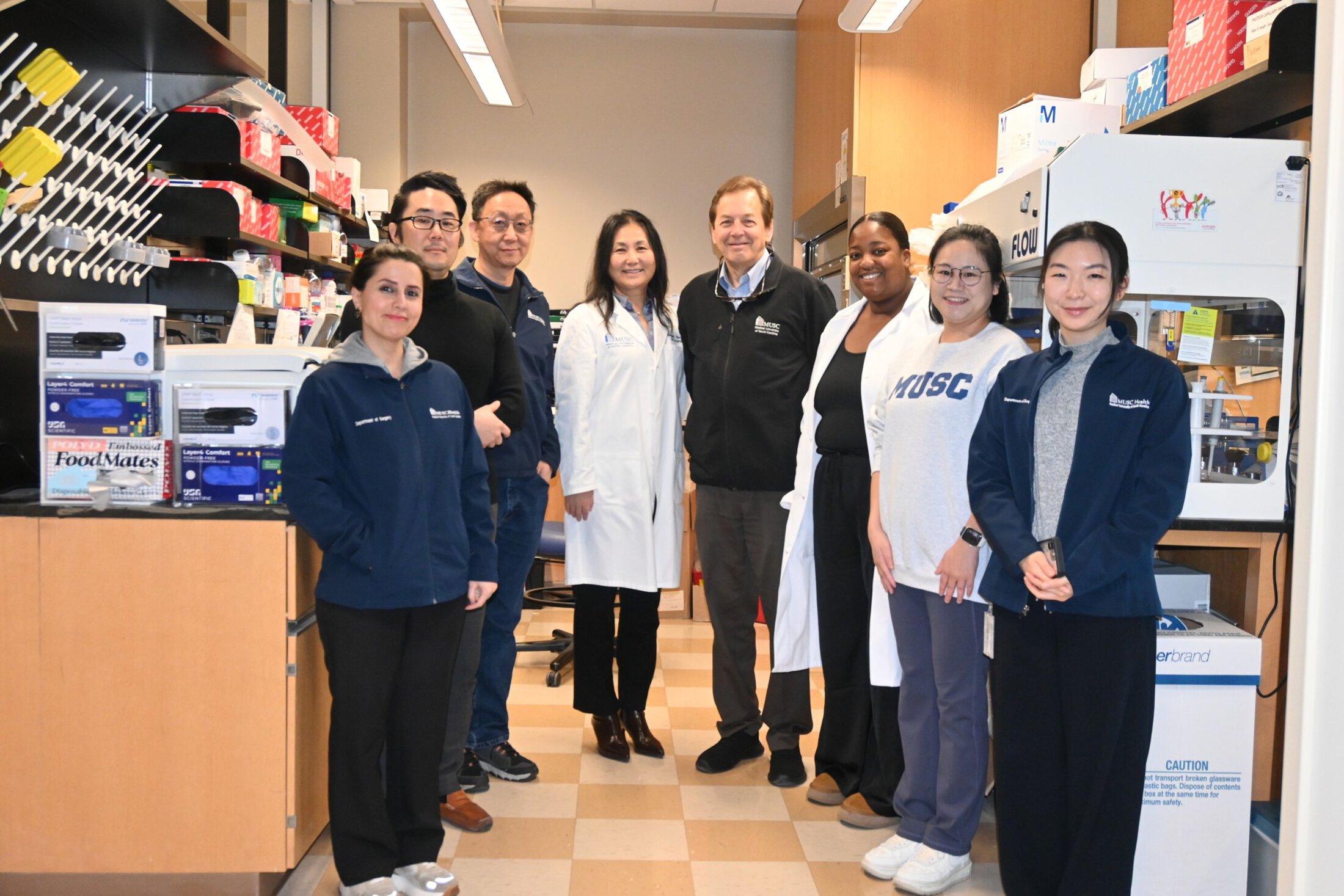
Hongjun Wang, Ph.D., associate director of the South Carolina Clinical & Translational Research (SCTR) Institute Pilot Program and co-scientific director for the Center for Cellular Therapy, led the team. Co-first authors Hua Wei, Ph.D.; Judong Kim, Ph.D.; and Wenyu Gou, Ph.D., together with other collaborators, conducted most of the work to establish these findings, which were published in the journal Molecular Therapy.
This research study marks a pivotal move away from the current standard of managing blood sugar through multiple daily insulin injections and toward a lasting way to reprogram the immune system itself. For the millions of people currently living with T1D, this could be a game-changer.
“While insulin injections are lifesaving, they cannot stop immune attacks, and they do not prevent long-term complications,” said Wang. “This study suggests a new way to treat Type 1 diabetes by addressing the root cause – immune system dysfunction –rather than just managing blood sugar."
The experimental treatment uses mesenchymal stem/stromal cells (MSCs) – adult stem cells with a natural ability to heal tissue and regulate the immune system. Previous clinical trials have shown that standard MSCs can help to preserve remaining insulin production in T1D patients. However, without a means to counter the body's severe inflammatory response, MSCs can be overwhelmed before they can fully reverse the established disease.
To reinforce the cells, Wang’s team genetically modified MSCs to produce alpha-1 antitrypsin (AAT), a protective protein that acts as a shield against inflammation. This creates a compounding effect: The AAT-MSCs are now capable of shielding surviving insulin-producing cells in the pancreas and stopping the overactive immune response at the same time. Co-senior author Charlie Strange, M.D., emphasized that this dual action makes AAT-MSC treatment more powerful than standard stem cell therapy.
This study suggests a new way to treat Type 1 diabetes by addressing the root cause – immune system dysfunction –rather than just managing blood sugar.
Reprogramming the immune system
Wang’s team then set out to understand how the therapy worked at the cellular level. By analyzing thousands of individual immune cells, they discovered that the infusion of AAT-MSCs didn't just suppress the overactive immune system; it actively reprogrammed it.
The therapy works by retraining two embattled sides of the immune system: T-regulatory peacekeeper cells, which try to maintain insulin production in the pancreas, and CD8+ killer T-cells, the attackers that drive the immune assault and destroy insulin-producing cells. While the peacekeeping force is always present in the pancreas, the never-ending swarm of attacking cells in T1D overwhelms its defensive capabilities, leading to the loss of insulin production.
However, after AAT-MSC treatment, Wang and her team observed a striking increase in the number of peacekeeper cells and a decrease in active attacker cells, which appeared driven to exhaustion by the therapy.
One aspect that sets this treatment apart from others is how long it lasts. Although the stem cells themselves were cleared from the body within hours or days, the immune reprogramming effect persisted.
“To impact or cure T1D, the stem cells themselves don't need to be there,” said Wang. “This means that when you administer the cell therapy to patients, the effect can last six months to two years, as seen in clinical trials using MSCs for a range of diseases." Wang believes that this is because AAT-MSCs secrete microscopic factors that continue to protect the body’s organs long after the cells disappear.
A hopeful future
The study specifically focused on new-onset diabetes, a window of time during which patients are more likely to retain insulin-producing cells that may be rescued. The Wang team is currently testing the safety and efficacy of MSCs in patients with new-onset Type 1 diabetes, in a clinical trial. Wang’s previous work in this space was made possible by a SCTR Discovery Grant.
The research has far-reaching implications, with the team already exploring how this immune-reprogramming strategy might apply to other inflammatory and autoimmune conditions, such as lupus or chronic pancreatitis.
While more research is needed before this treatment can move into clinical trials, the findings provide a profound sense of hope for the future of diabetes care.
“If preliminary trials are successful, we want to do a large, multicenter trial for Type 1 diabetes,” said Wang. “The good news is that there are studies saying that even if you have had T1D for many years, you still have remaining insulin-producing cells there that are functioning. So hopefully we can apply this to people with long-term T1D as well.”
The Wang Lab is actively recruiting participants for two chronic pancreatitis trials:
• Novel Cellular Therapy for the Treatment of Pain Associated With Chronic Pancreatitis (MSCPainRelief)
Reference:
Wei H, Gou W, Kim J, Subramanian S, Yeung T, Chakraborty P, Lotfy A,
Mehrotra S, Berto S, Strange C, Wang H, Taming Autoimmunity: Alpha-1 Antitrypsin Overexpressing Mesenchymal Stem/Stromal Cells Promote Regulatory T Cell Crosstalk to Reverse Diabetes, Molecular Therapy (2026), doi: https://doi.org/10.1016/j.ymthe.2026.03.032.

Gavin Scheldrup
Gavin Scheldrup is a Ph.D. candidate in the Department of Neuroscience and a Science Writing Initiative for Trainees (SC-SWIFT) intern at MUSC.
Recent MUSC News stories