
In head and neck oncology, success has historically been defined by a single metric: the elimination of the tumor. While survival remains the ultimate goal, patients with head and neck cancer face unique challenges because the treatment that saves their lives often alters their ability to speak, eat, or breathe in public. This can cause patients to withdraw from society due to embarrassment or functional limitations. One in four cancer survivors suffers from clinically significant distress about their body image, yet few programs adequately address the psychological dimensions of recovery.
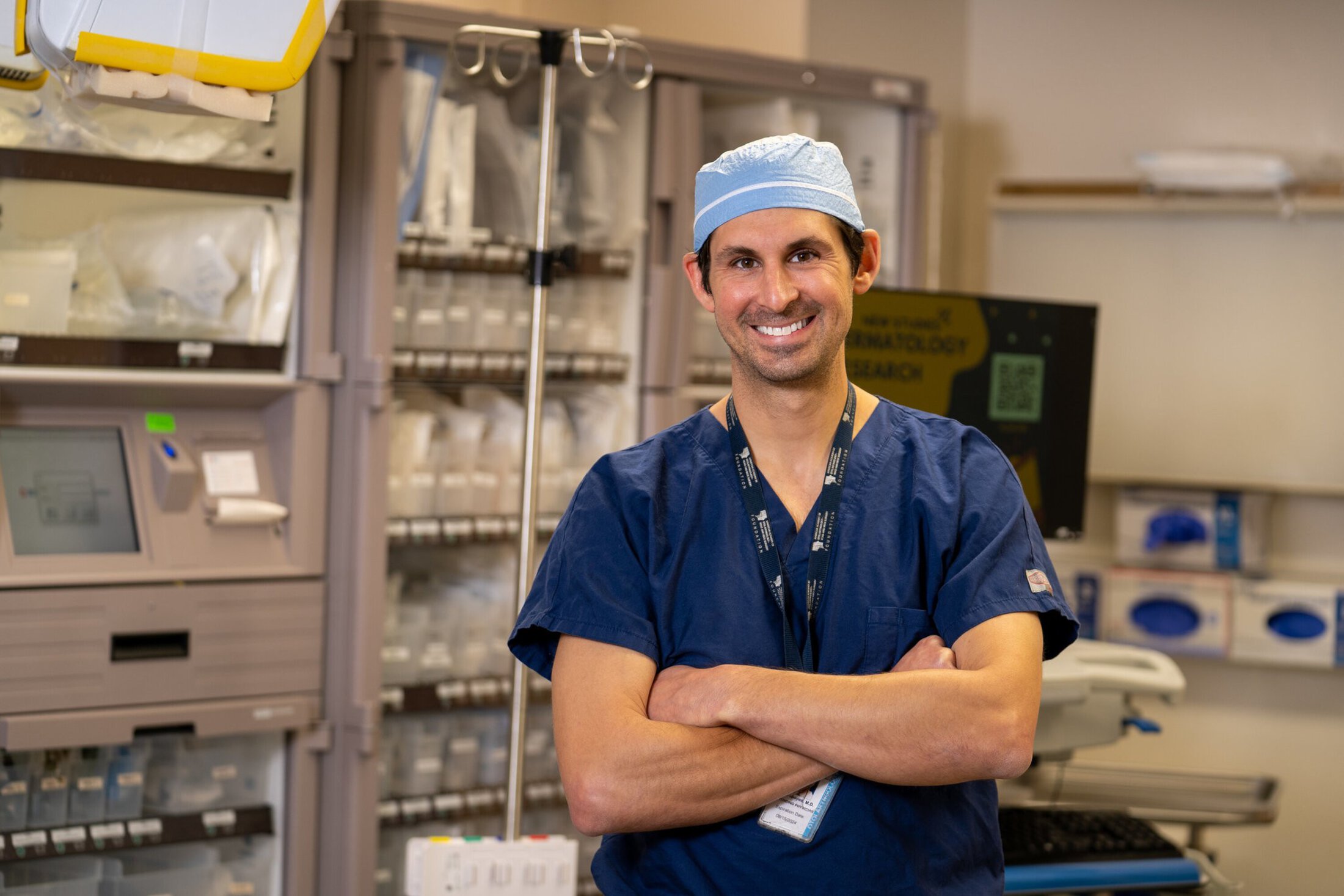
At MUSC Health, Dr. Evan Graboyes – who directs the Hollings Cancer Center Survivorship Program and the Survivorship and Cancer Outcomes Research (SCOR) Program – is leading a national shift in how we care for these patients and proving that the mission of a world-class cancer center must extend far beyond the operating room.
Addressing the Invisible Scars
To address the invisible scars of treatment, Dr. Graboyes launched the BRIGHT trial (Building a Renewed ImaGe after Head & neck cancer Treatment) in 2023. This $3+ million, NCI-funded multi-site randomized clinical trial tests the first evidence-based treatment specifically designed for head and neck cancer survivors struggling with body image distress.
As Dr. Graboyes noted, "people are not born knowing how to go to the grocery store and have kids point and stare or how to handle a dinner party when you take all of your nutrition through a feeding tube.” That makes it imperative that patients are taught what the social aspects related to head and neck cancer care require. MUSC is leading the effort to do exactly that.
The BRIGHT trial is about reclaiming a sense of self. Some survivors with minimal scarring from a “successful” surgery may still feel too embarrassed to attend church or social events, while others with more visible disfigurements are eager to re-engage. The BRIGHT intervention provides these patients with psychological tools to navigate their new normal. BRIGHT is a brief form of psychotherapy called cognitive behavioral therapy (CBT) to target the specific thoughts and maladaptive coping strategies unique to this population.
Recent results show that patients receiving the BRIGHT intervention were seven times more likely to show improvement in body image distress than those receiving standard education. The program has successfully reduced secondary symptoms including depression, shame, stigma, and social isolation. And, 95% of participants reported they would recommend the program to other survivors, highlighting its resonance with the patient community.
A Multi-Site Network
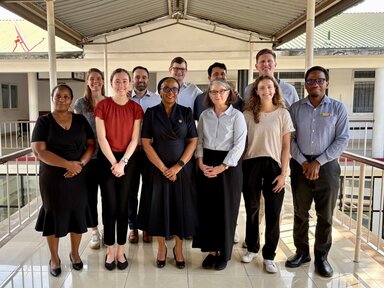
To ensure these results are replicable across a diverse population, the trial included five additional institutions across the United States: Washington University in St. Louis (St. Louis, MO), Henry Ford Hospital (Detroit, MI), Pennsylvania State University (Hershey, PA), University of Texas Southwestern (Dallas, TX), and University of Michigan (Ann Arbor, MI).
This expansion ensures that the trial's findings are generalizable to a broad cross-section of society, allowing researchers to gather data from diverse patient populations that more accurately represent the national landscape. For South Carolina, this national collaboration brings home world-class methodologies and standardized care protocols that would otherwise be unavailable, directly improving outcomes for local patients by integrating them into a high-caliber national network of expertise.
Bridging the Rural Gap via Telehealth
A key component of MUSC’s strategy is ensuring that elite care reaches every corner of South Carolina, where cancers are often discovered at later stages, requiring radical surgeries with life-altering consequences. For these patients - who may struggle with speech or feel self-conscious in public - the physical and financial burden of traveling to Charleston for specialized mental health care is often an insurmountable barrier.
The BRIGHT trial removes this barrier by utilizing a decentralized, remote-delivery model. The entire BRIGHT intervention is delivered remotely so that patients do not have to travel to Charleston. To ensure that patients in rural areas across the state receive the exact same elite psychological support as a patient in Charleston, participants who otherwise cannot participate in the trial are provided with a study-issued, cellular-enabled iPad loaded with a secure video platform to allow them to engage BRIGHT.
Why It Matters
Achieving Comprehensive NCI status, the highest designation for cancer research and clinical excellence, requires a world-class survivorship program. The Department of Otolaryngology-Head & Neck Surgery is a key engine driving this distinction for the NCI-designated MUSC Hollings Cancer Center. By prioritizing treatment intent and functional recovery, MUSC Health is helping survivors manage cancer as a chronic disease while maximizing their happiness.
MUSC Health ensures that when we save a life, we also save the person's ability to live it.
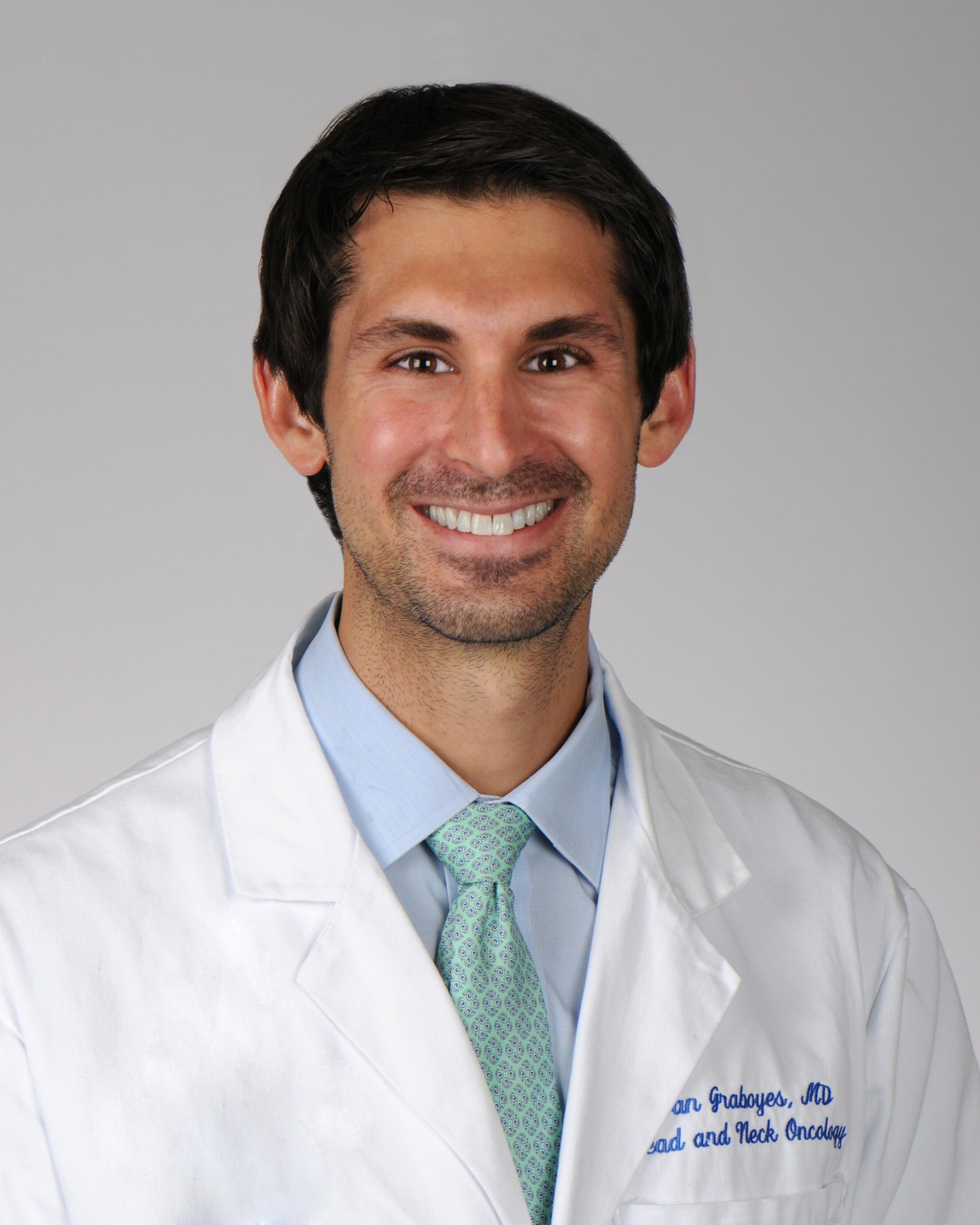
Evan Graboyes
Director, Survivorship and Cancer Outcomes Research (SCOR), MUSC Hollings Cancer Center Medical Director, Survivorship Program, MUSC Hollings Cancer Center Professor, Otolaryngology-Head & Neck Surgery and Public Health Sciences
Evan M. Graboyes, M.D., MPH, is a Professor in the Departments of Otolaryngology-Head and Neck Surgery and Public Health Sciences at the Medical University of South Carolina, where he serves as the Medical Director of the Survivorship Program and Director of Survivorship and Cancer Outcomes Research (SCOR) at the NCI-designated Hollings Cancer Center. As a fellowship-trained head and neck surgical oncologist and microvascular reconstructive surgeon, Dr. Graboyes focuses on the removal and reconstruction of benign and malignant head and neck tumors. Dr. Graboyes is certified by the American Board of Otolaryngology-Head and Neck Surgery.
Dr. Graboyes' clinical practice as a head and neck surgical oncologist informs and grounds his research program, which leverages his scientific training in supportive oncology, health behavior, and health services research to understand and address issues in cancer survivorship. Supported by more than $15 million in NCI funding, he has been the Principal Investigator on six NCI-funded trials evaluating cancer care delivery and supportive care interventions among cancer survivors. He has published more than 160 articles related to head and neck cancer, cancer survivorship, and cancer care delivery in leading clinical oncology journals.
At a national level, he is at the forefront of conversations shaping cancer care delivery and cancer survivorship through his work at NRG Oncology/NCORP (Vice Chair, Healthcare Access Research Committee), the American Society of Clinical Oncology (Chair-Elect, Health Policy Committee), the National Cancer Institute (Member, Social Determinants of Health Working Group), and the American Head and Neck Society (Chair, Value & Quality of Care Committee; Liaison, Commission on Cancer). He also serves as the Deputy Editor of JAMA-Otolaryngology Head and Neck Surgery.
Dr. Graboyes was born in St. Louis, Missouri, and raised in Wisconsin. He graduated summa cum laude from Princeton University with degrees in philosophy and public policy. He received his medical degree and completed his otolaryngology residency at Washington University School of Medicine in St. Louis. He completed his head and neck oncologic and reconstructive surgery fellowship at the Medical University of South Carolina, where he also received his Master of Public Health in Health Behavior and Health Promotion. He enjoys being outdoors in the Charleston area with his wife and three children.