
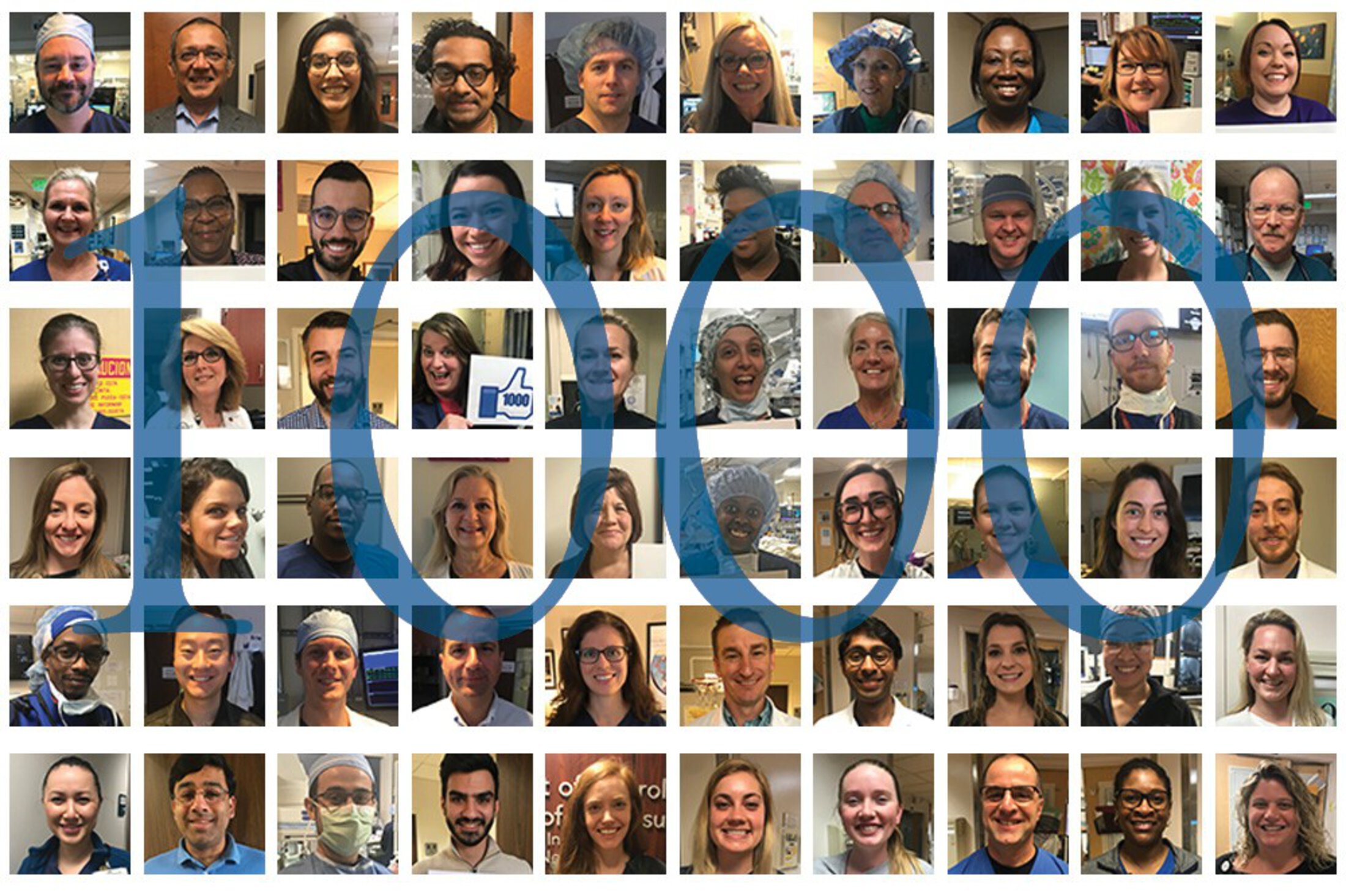
MUSC Health’s Comprehensive Stroke Center team is celebrating a big milestone – the 1,000th patient treated with the ADAPT procedure.
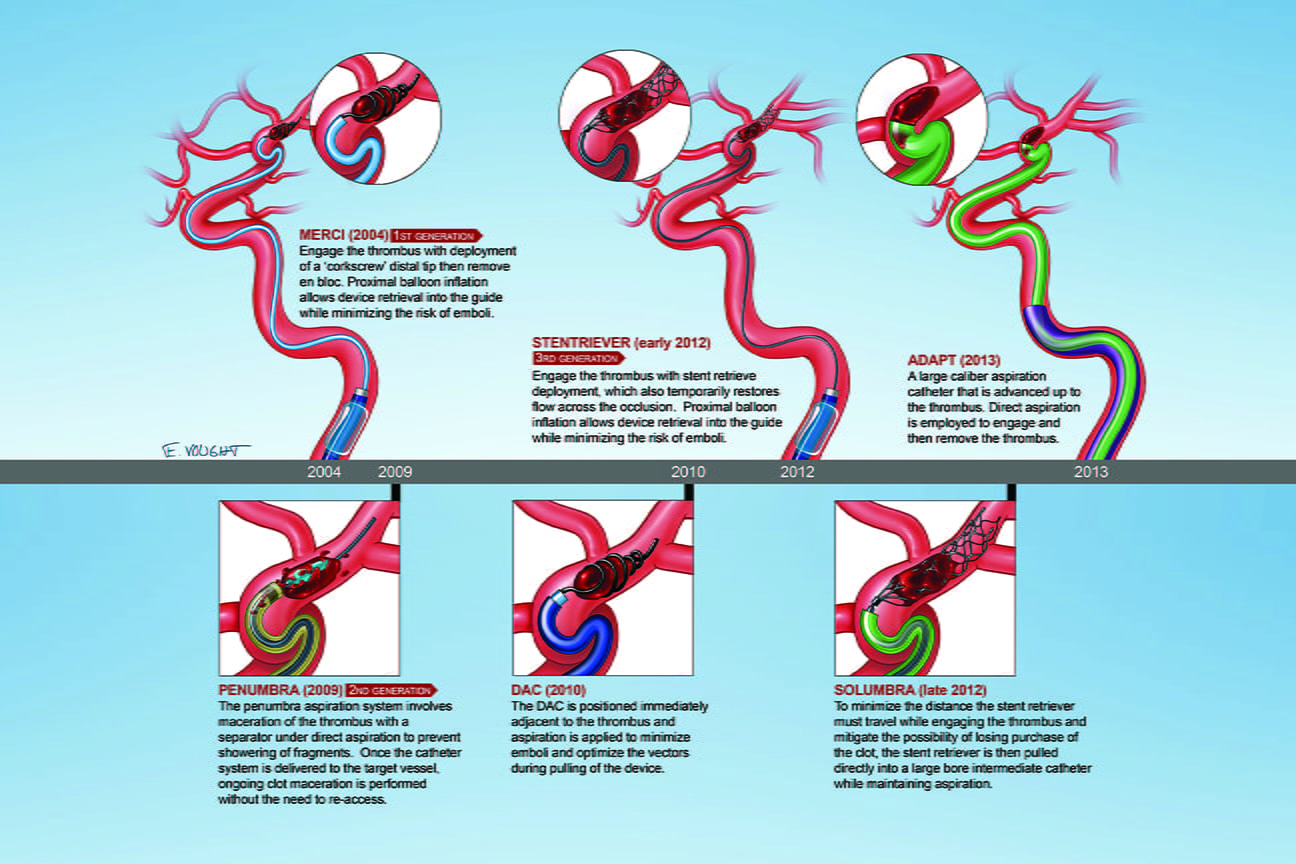
ADAPT, which stands for “A Direct Aspiration first Pass Technique,” is a way of treating strokes that MUSC Health pioneered in 2013.
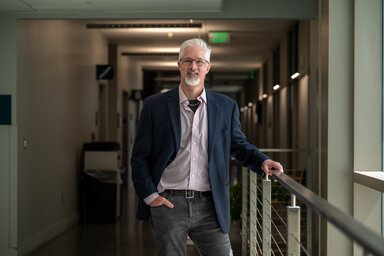
“It’s faster, more effective and less costly than the alternative,” said Alejandro Spiotta, M.D., director of the Division of Neuroendovascular Surgery.
So fast, in fact, that Spiotta and his team recently set what he believes is a world record – removing a blood clot in 3 minutes, 23 seconds. They beat the previous record, set by MUSC Health’s Jonathan Lena, M.D., by 14 seconds.
Now, those times are unusual. Typically the procedure takes less than 20 minutes, which is still quite a bit faster than the 35 minutes or so that it took in 2013, when MUSC Health began using the procedure regularly. Times have decreased because the neuroendovascular surgery team – the techs, nurses and doctors – has streamlined its processes and because industry has responded by producing catheters specifically designed for this procedure, Spiotta explained.
When someone arrives at the hospital with a blood clot blocking a large blood vessel in the brain, one of the treatment options is a thrombectomy – physically removing the clot. Traditionally, doctors have done this by using a stent retriever that grabs the clot and pulls it out. MUSC Health doctors were attempting such a procedure in 2013, but the clot had eluded their first attempt. As the tech prepped for the second try, the doctors decided to try to aspirate the clot mechanically – basically, they sucked it out through the catheter like a vacuum hose.
“It was that ‘aha!’ moment,” Spiotta said. The aspiration technique had been used before as a backup but hadn’t been considered as the go-to procedure.
Soon, MUSC Health doctors began using aspiration rather than stent retrieval. They also began conducting trials and publishing their results to spread the word about the procedure.
Unlike a heart or cancer surgery, the results from a thrombectomy are pretty much instantaneous.
“If you were to see it, it would shock you. Because someone’s coming in totally paralyzed, can’t talk, they’re totally unaware,” Spiotta said. But within minutes, the clot may be removed and brain function is restored.
During a stroke, a blood clot blocks blood flow to the brain, meaning part of the brain is dying. If blood flow isn’t restored, the person could physically survive but be unable to speak or understand language in a normal manner or even feed or care for him- or herself. But all that changes once the surgeon sucks out the clot, Spiotta said.
“Within minutes they’re thanking you on the table, and they can go home the next day. It’s highly impactful, and it has never ceased to amaze me, even after our 1,000th procedure.”
Another difference from other surgeries is the time of day. It seems like strokes never happen on a weekday afternoon, Spiotta joked. Instead, team members get jolted out of bed to attend to patients.
“That’s a lot of people waking up at night by a phone call saying, ‘Get your butt in the hospital.’ It’s a big sacrifice, but one all of our team members are willing to take day in and day out to help the patients we serve,” he said.
He emphasized that it’s the large team working together that makes this possible. The process begins at outlying hospitals with stroke neurology, then in the Emergency Department, proceeds to the hybrid imaging suite/operating room, then progresses to the neuro intensive care unit and finally ends with the research team that collects and analyzes data.
The team celebrated with a luncheon earlier this month, and Spiotta put together a video that he shared on social media, showcasing the scores of people who helped the program get to this point.
“We definitely think it’s a big deal,” he said.
Spiotta said team members take pride in knowing that they’re changing stroke care in South Carolina and beyond.
“We really set the benchmarks of how fast the procedure should be, how many attempts to get the artery open, what’s the exact technique,” Spiotta said. “So we really set the benchmark because we’ve done so many, and we’re the first ones to do it.”
Leslie Cantu
Senior Communications Manager
Leslie Cantu is the senior communications manager at MUSC Hollings Cancer Center, where she works with researchers, clinicians and patients to tell the people of South Carolina about the innovative work being done to improve cancer care for everyone in the state. She joined the MUSC Office of Communications and Marketing in 2018 after a career as an award-winning writer, editor and producer at community newspapers and local TV news. She transferred to the communications office at Hollings in 2022, where she happily finds something new and interesting to write about every day. Her favorite stories to cover at MUSC have included Match Day, the Angel Tree Parade, a clinical trial of CAR-T cell therapy and the many patients who have agreed to share their very personal struggles and triumphs.