
Researchers at MUSC are gaining global recognition for their work on cell and gene therapies. A new industry analysis from Inpart, a global scientific partnering platform used by 90% of the world’s top 50 pharmaceutical companies, identified three MUSC technologies among the top 10 most impactful early-stage innovations. Rankings were based on real-world engagement, including partnering requests and direct outreach from biotech and pharmaceutical firms.
With three in the top 10, MUSC outperformed other institutions, placing the University alongside major research powerhouses such as Case Western Reserve University, Cincinnati Children’s Hospital Medical Center and the City University of New York.
The recognition highlights growing industry interest in translating academic discoveries into therapies. MUSC’s innovations include precision RNA therapeutics, mitochondrial gene therapy and CAR-T cancer treatments.
The announcement comes as the cell and gene therapy sector grows rapidly, with analysts projecting the global market will expand from roughly $15.5 billion to nearly $29 billion in the coming years.
Two of the MUSC technologies tackle particularly difficult challenges: repairing damaged cellular energy systems and addressing the root genetic cause of a rare neurodevelopmental disorder.
A critical brain protein in rare neurological disorders
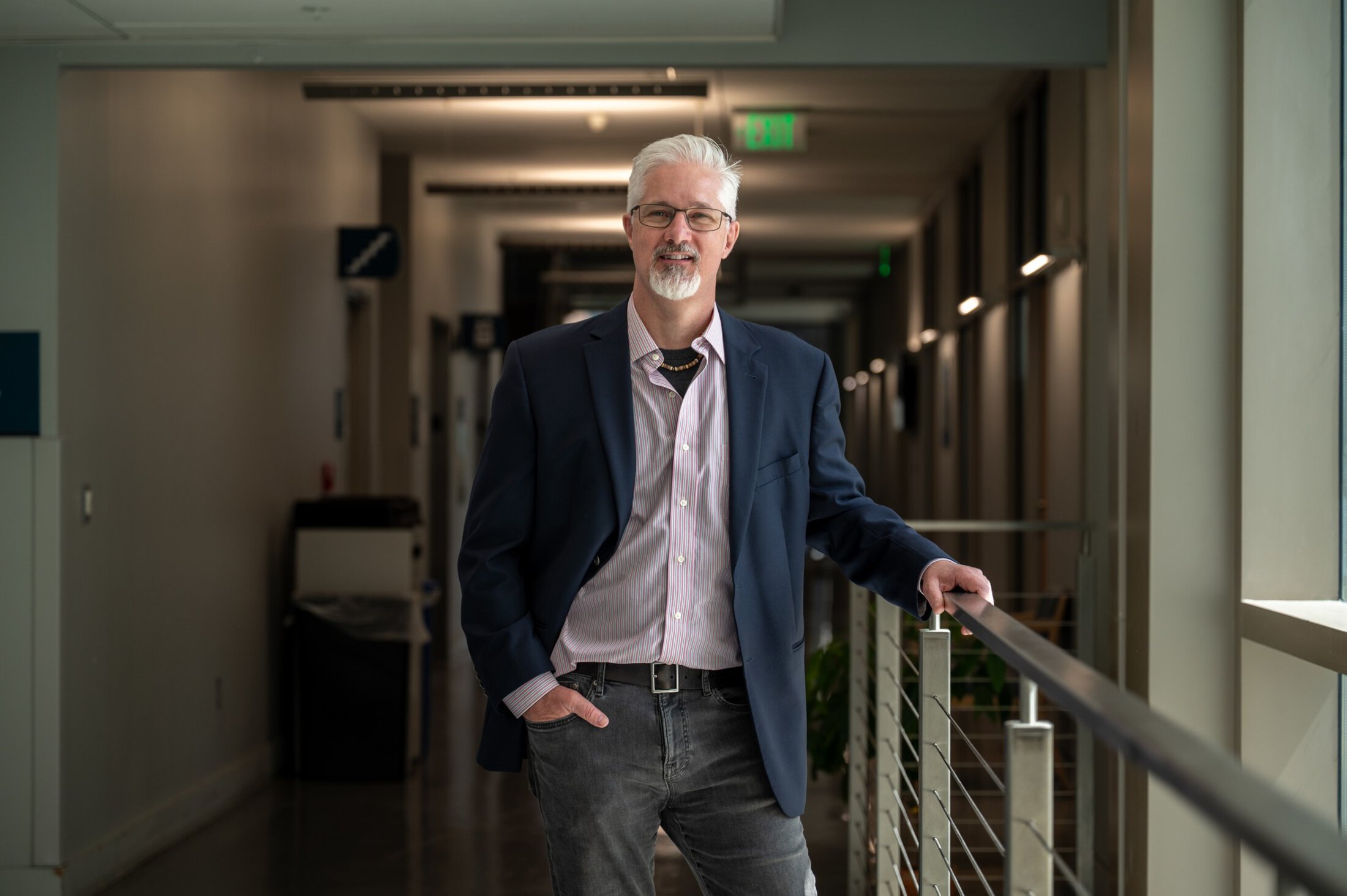
Christopher Cowan, Ph.D., professor and chairman of the Department of Neuroscience at MUSC and founder of the startup Theripio Innovations, is developing precision therapies for MEF2C haploinsufficiency syndrome, a rare neurodevelopmental condition caused by insufficient production of the MEF2C protein, which is critical for typical, healthy brain development and function.“From a therapeutic standpoint, we know what's wrong: Patients with this condition don't have a sufficient level of MEF2C protein expression because one of the two copies is mutated. One copy is not enough to meet the demand,” said Cowan.
Patients with an MEF2C deficiency can experience intellectual disability, impaired movement, absent speech and seizures. Current treatments manage some of the symptoms but do not address the underlying cause. Cowan’s team is exploring strategies to increase MEF2C protein production in brain cells.
One of their approaches focuses on protecting the cell’s ability to make the protein in the first place. Their method works by helping to support the messenger RNA that carries instructions for making the MEF2C protein. Cowan’s team developed synthetic molecules that block microRNAs from slowing the process of converting messenger RNAs into protein. As a result, the new therapeutics increase MEF2C protein levels.
“The concept of interfering with microRNAs to get upregulation of protein is very novel and groundbreaking. I give my M.D.-Ph.D. student, Alain Greige, a lot of credit for helping to develop this treatment concept. It's very, very exciting. It's a truly innovative idea,” noted Cowan, referring to a process that increases the body’s production of a specific protein.
Early experiments have shown promising results. “We can get about a 40% to 60% increase in MEF2C levels using these small, chemically modified RNAs,” he said.
The team is also able to study the disorder directly using patient-derived cells, converting them into neurons and observing their function in the lab.
“Our therapeutic approach works in mice and in human cells. We can deliver it to the mice in a way that would be similar to how humans would get it. And it does increase levels of MEF2C,” said Cowan, meaning the therapy boosts production of the MEF2C protein.
The research has attracted nearly $1 million in funding, including support from a Behavioral Brain Research Foundation Distinguished Investigative Grant and the Rare Bird Foundation. The therapy is now moving closer to human studies through a collaboration with Weill Cornell Medicine on a clinical readiness study.
Another exciting thing is that eight of our potential therapeutics work. It isn't like we just have one potential candidate. If you think about this from a drug company standpoint, we could say we have eight drugs in the pipeline.
“Another exciting thing is that eight of our potential therapeutics work. It isn't like we just have one potential candidate. If you think about this from a drug company standpoint, we could say we have eight drugs in the pipeline,” noted Cowan.
“This approach can be applied to any haploinsufficiency condition. If an insufficient level of a particular gene is what's causing symptoms, this approach could potentially work,” added Cowan, pointing to genetically linked cases of autism spectrum disorder.
Replacing damaged mitochondrial DNA
Repairing damage to mitochondrial DNA represents another MUSC innovation that made the top 10, addressing a longstanding challenge in genetics. This innovative study, led by Kyrie Wilson, Ph.D., then a Ph.D. student, aims to restore function in mitochondria, “the powerhouse of the cell.”
“As you age, mitochondrial DNA accumulates mutations, and eventually, the damage can be so severe that the DNA is no longer readable,” said Wilson. This degradation is linked to age-related macular degeneration, Parkinson’s and Alzheimer’s disease.
The team's breakthrough centers on a natural phenomenon. “Healthy mitochondrial DNA can be transferred into cells with damaged mitochondrial DNA and actually replace the damaged mitochondrial DNA, thereby restoring cellular energy production,” Wilson explained.
While scientists have sought to do this since the 1980s, mitochondrial DNA has been notoriously difficult to manipulate. Previous methods, like micro-needle injections, were limited to lab dishes and not translatable to humans. To bridge the gap, the MUSC team developed a nanoparticle delivery system to transport intact, healthy mitochondrial DNA directly into cells.
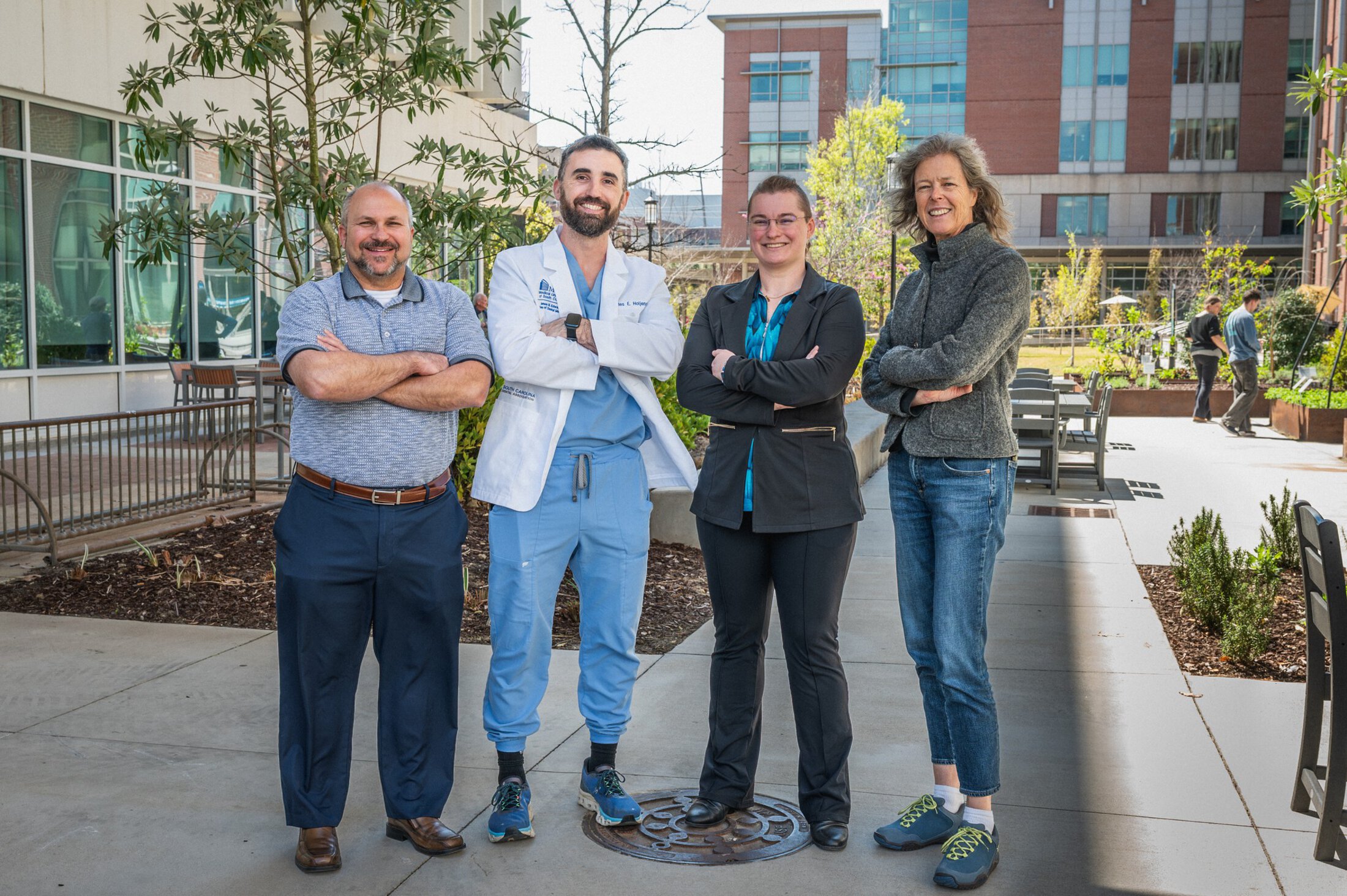
“The significance is that the nanoparticle technology was successful in delivering a very large molecule and shows the potential for restoring the health of the mitochondria in general,” said Andrew Jakymiw, Ph.D., associate professor at MUSC’s College of Dental Medicine and key contributor to the technology. He noted that this delivery platform is far more effective at delivering and retaining DNA than other methods under investigation, such as mitochondrial transplantation.
“We have, over the last five years, developed a physical prototype that can deliver intact, healthy mitochondrial DNA,” added Wilson.
The platform could eventually support personalized mitochondrial therapies. “It's a technology that's universally adaptable. It has the potential to be easily used for many different treatments,” said Jakymiw.
Its translational potential facilitates a rapid shift from lab to clinic. “I can translate very easily from a mouse to a human being, scaled up for a clinical trial, but using the same readouts that were developed in the lab,” said Baerbel Rohrer, Ph.D., professor of ophthalmology and the SmartState Endowed Chair in Gene and Pharmaceutical Treatment of Retinal Degenerative Disease and another key member of the team.
In addition to its therapeutic potential, the project also highlights MUSC’s collaborative environment. “The opportunity to be on a project like this is something that I don't think many people get when they’re students,” said Wilson. “As trainees, it teaches us that the sky's the limit, and that we can make a difference in the world.”
Charles Holjencin, a D.M.D.-Ph.D. student who will graduate this month, has been integral to the project’s success. He credited the University’s support for the breakthrough. “All this happened through the collaborative opportunities that we have at MUSC. It's taken us so far already, and that's because of the resources that we have here at the University.” The technology is currently being further developed through MitoMend, a MUSC spinout company, in collaboration with additional partners at MUSC and beyond.
The opportunity to be on a project like this is something that I don't think many people get when they’re students. As trainees, it teaches us that the sky's the limit, and that we can make a difference in the world.
CAR-T therapy targets tumor resistance
A project that advances CAR-T immunotherapy – a treatment that programs a patient’s own immune cells to attack tumors – rounds out the third MUSC innovation that made the top 10.During his time at MUSC, Zihai Li, M.D., Ph.D., led research aimed at overcoming tumor immune resistance, a key challenge in CAR-T therapy that allows cancer to evade immune attack, which has the potential to improve the effectiveness of engineered immune cells.
Together, MUSC’s three globally recognized innovations reflect the expanding range of cutting-edge work underway at MUSC – from precision therapeutics that correct rare genetic disorders to approaches that repair cellular energy affected by aging to advanced cancer treatments.

Jennifer Sweenie
Recent MUSC News stories