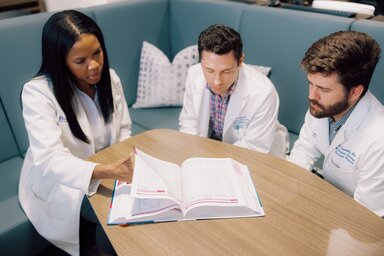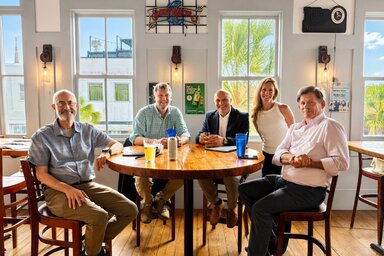


What began as an idea for a novel tool to assist vascular surgeons and their patients is a huge step closer to commercial reality. Adam Tanious, M.D., Medical Director of Vascular-Dialysis Access at MUSC, and his co-creator Ryan Gedney, M.D., have developed a clinic-ready prototype for a groundbreaking vascular access solution with support from the SCTR Translational Entrepreneurship Pilot (STEP) Grant.
The SCTR STEP Grant backs forward-thinking cross-disciplinary pilot projects focused on advancing intellectual property and commercialization potential. Awardees are granted up to $10,000 direct costs for a 12-month period. With these funds, Drs. Tanious and Gedney advanced the Anchor Medical Bidirectional Vascular Access Sheath from a concept to a functional, alpha prototype – the first iteration of a new invention and an important phase before translating it into real-world use. This innovation aims to make placing and keeping medical tubes in blood vessels easier, safer, and more secure for providers, and to reduce damage or irritation to the vessel during procedures for patients.
Partnering with medical device engineering firm Tensentric, LLC, Drs. Tanious and Gedney designed and built the prototype, which then was put through extensive mechanical testing to ensure durability, functionality, and manufacturability. This allowed them to refine and optimize the device and gather data to identify areas for further improvement. The technology is now positioned for next-stage funding and a hopeful future on the market.
According to Todd Headley, CEO of the Zucker Institute for Innovation Commercialization, Tanious and Gedney's work exemplifies the overarching goal of invention at MUSC. “At the Zucker Institute, our mission is to help move promising MUSC discoveries from early ideas into real-world health care solutions. Dr. Tanious and Dr. Gedney’s project is a great example of why early translational support matters. With the right combination of clinical insight, intellectual property strategy, prototype development, and entrepreneurial guidance, innovations like this can move closer to helping patients and improving care.”
We sat down with Dr. Tanious to learn more about his project and experience as a SCTR Pilot Grant recipient:
Q&A with Adam Tanious, M.D.
Q: How did you first find out about the SCTR Pilot Grant program and what made you apply?
We first heard about the SCTR Pilot program from our close relationship with the Zucker Institute as we worked on developing our first prototype of our novel medical device.
Q: For a lay audience, can you describe your project in a sentence or two?
Anchor Medical is developing a new medical device designed to help doctors treat patients with failing dialysis access grafts and fistulas more efficiently and safely. Our device is designed to allow doctors to perform procedures through a single access point – typically requiring an open surgery or multiple points of access – and by reducing the number of punctures needed, we aim to simplify procedures, shorten treatment times, reduce complications, and improve the experience for both physicians and patients.
Q: Can you briefly describe your background and what led you to develop this innovation?
Our team is comprised of two surgeons who deal with this patient population daily. We perform these procedures 5-10 times per week and after collaborating on these cases together the co-founders separately had the same idea for an invention and that happy coincidence blossomed into an amazing partnership. Our team has a mix of bioengineering and entrepreneurship expertise.
Q: How did the SCTR Pilot Grant help you carry out your project?
The SCTR Pilot Grant was pivotal in getting our first alpha prototype design complete which was a critical step in funding our next iteration of the device.
Q: How would you define a successful outcome in regard to your project? Did you achieve that here?
A successful outcome was completion of our prototype which was achieved 8 months into the project.
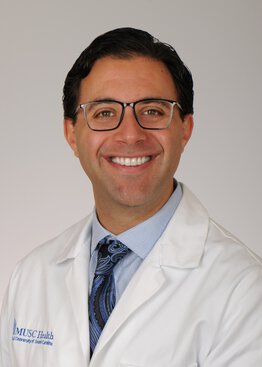
Adam Tanious, M.D., MBA, MMSc, FACS, FSVS, RPVI
Adam Tanious, M.D., is vascular surgeon with surgical expertise in treatng patients with aortic, carotid, peripheral arterial, and venous diseases in addition to patients with End Stage Renal Disease and Complex Vascular Reconstructions/Mobilization. He serves as the Medical Director of the Vascular Dialysis Access Institute - Charleston. His research interests revolve around innovation in surgery as well as surgical education.
Q: What is next for your project?
We are now pitching to several investors to fund our beta prototype development.
Q: If you could give someone considering applying for a SCTR Pilot Grant a piece of advice, what would it be?
Simply apply. It is an amazing program that helps build opportunities that would otherwise have no chance to progress.
Learn more about the SCTR Pilot Grant Program and all the exciting available funding opportunities, visit the Pilot Grant Program webpage or contact sctr-sdo@musc.edu
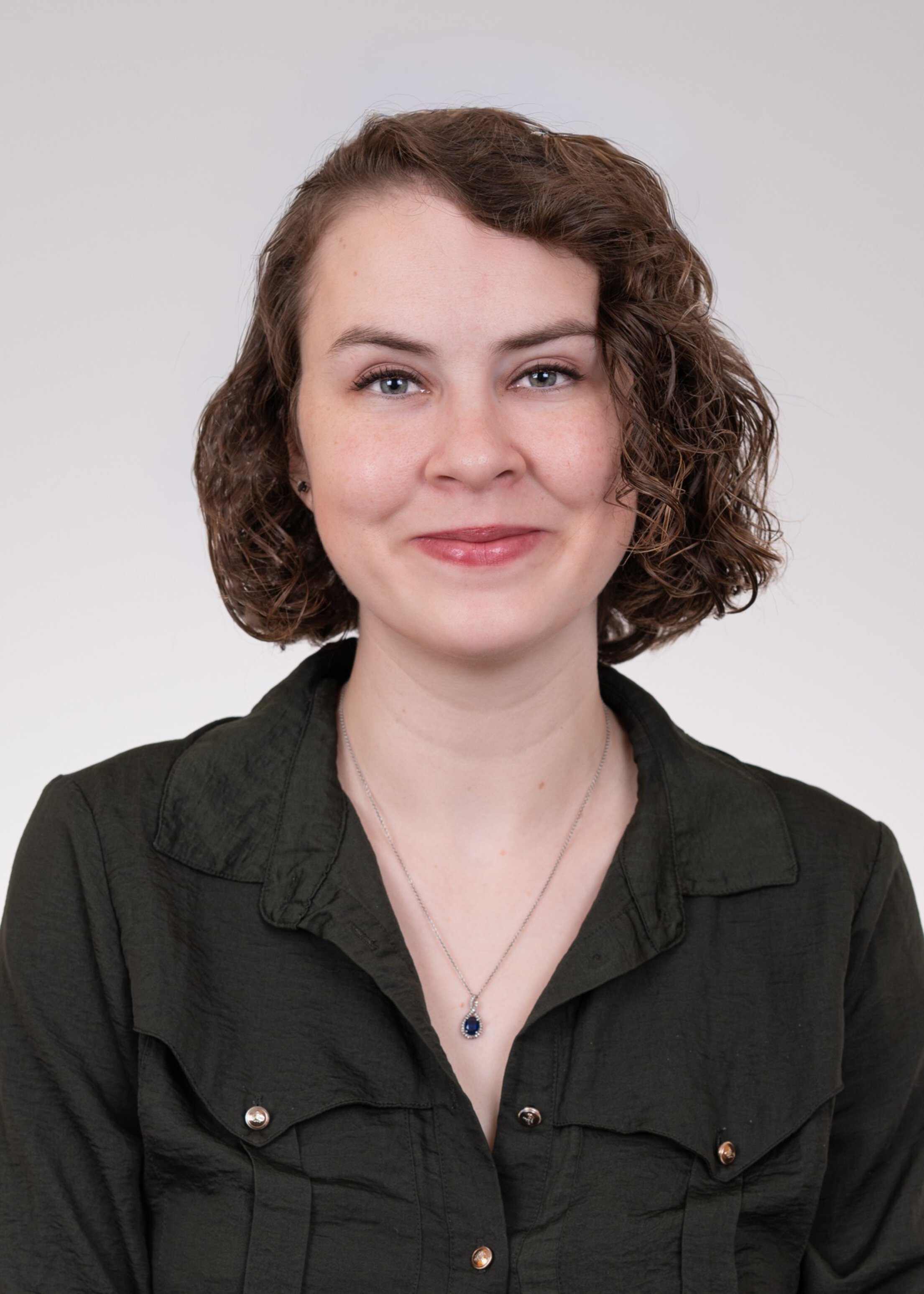
Sophia Barry Gordon
Sophia Barry Gordon is the science writing and communications program coordinator at the South Carolina Clinical & Translational Research (SCTR) Institute. She holds a Master of Science degree from New York University and is currently a Ph.D. candidate at the University of Birmingham (UK).