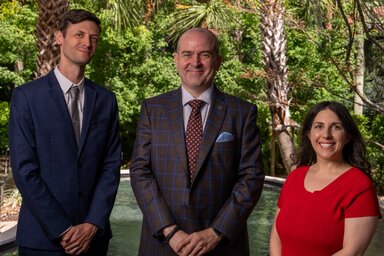

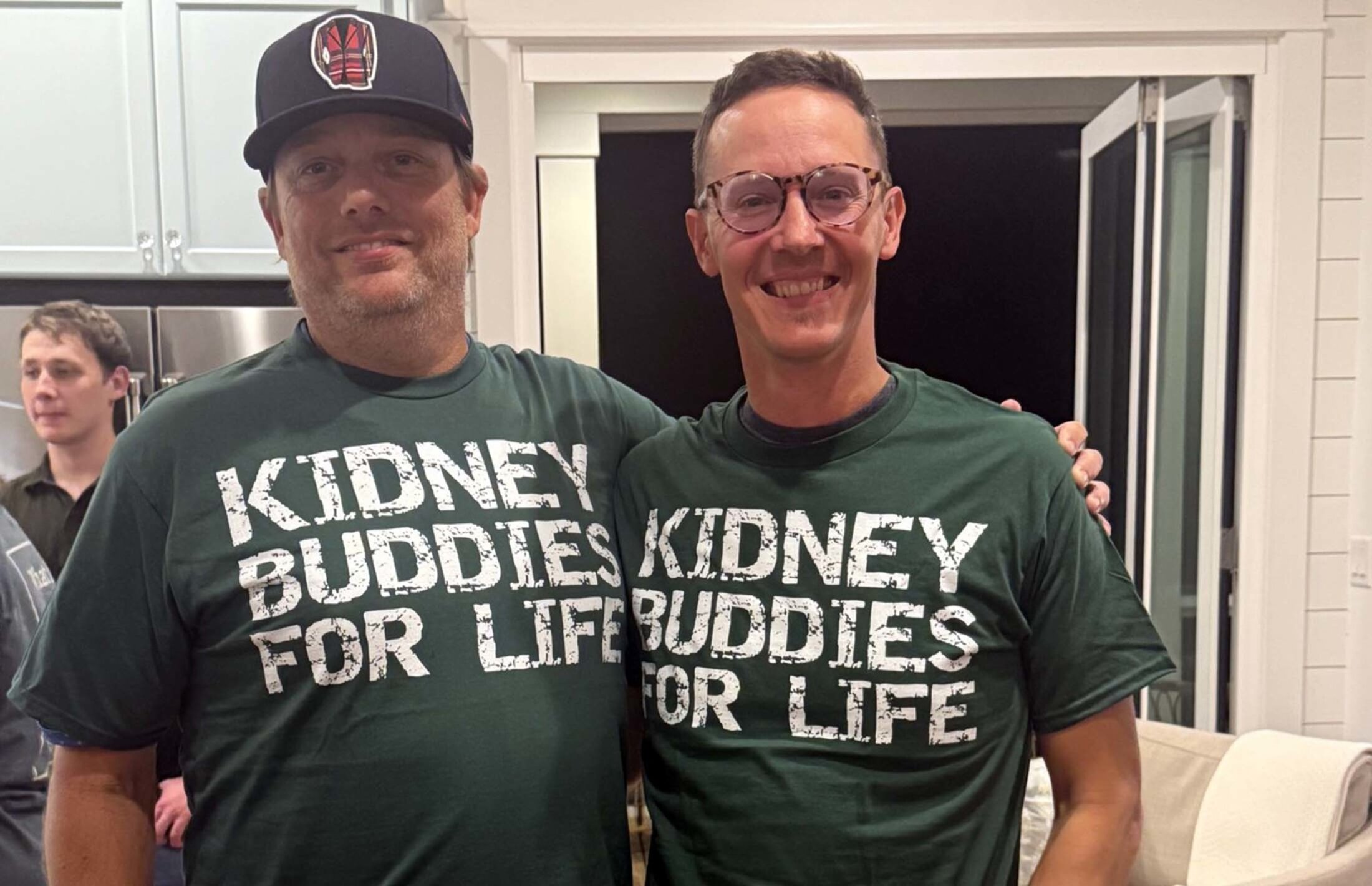
A trip to get routine blood work for a life insurance policy led to a lifesaving kidney transplant for Marshall Smith, 48, of Lady’s Island, S.C.
As bleak as the news that he had only 9% kidney function seemed when Smith got the diagnosis in the summer of 2025, luck was on his side. MUSC was preparing to launch South Carolina’s first robotic-assisted kidney transplantation program, a minimally invasive alternative to the traditional open surgery. After a battery of tests, Smith was deemed a qualified candidate for transplantation.
Still, he needed a donor, and through the months-long ordeal of tests, dialysis, nausea and weight loss, Smith and his wife, Christal, never lost hope. Through Facebook, he connected with Russell Schaeffer, 44, a fellow church member who turned out to be a perfect match.
“I knew it would happen; I just didn’t know when, and I relied on my faith, my family and my church for support,” Smith said.
And then he relied on the expertise and care at MUSC.
I knew it would happen; I just didn’t know when, and I relied on my faith, my family and my church for support.
On April 29, a day that Schaeffer describes as “euphoric,” Smith and Schaeffer became two of the first patients to undergo the robotic-assisted kidney transplantation procedure. Smith’s transplantation surgery was performed by Dirk J. van der Windt, M.D., Ph.D., a multi-organ transplant surgeon at MUSC Health who specializes in liver, kidney and pancreas transplantation.
The da Vinci robot-assisted surgical platform gives surgeons greater dexterity and a highly magnified view of the surgical field, allowing for precise movements. Much of the operation can be performed with smaller incisions, which ease recovery.
Instead of a large incision in the lower belly, smaller incisions can have important benefits for kidney transplant patients, van der Windt said.
“The suppression medication that patients who undergo kidney transplants must take slows down their wound healing after surgery,” he said. “With the minimally invasive approach, patients’ recovery can be faster and less painful.”
Smith said his recovery was “great.”
“I was tired, and I had to get my energy back, but nothing really bothered me physically,” he said. “My incisions were small, and I felt great. I didn’t have nearly as much pain as I thought I would, and I was in the hospital only four days. My biggest concern was whether my body would accept the kidney.”
Robotic surgery itself isn’t new. The first da Vinci system was approved by the Food and Drug Administration (FDA) in 2000, and the technology has continued to evolve over the past two decades.
“The first models of the robot were not as effective as they are now, and development is proceeding very fast,” van der Windt said. “Still, it’s not a robot that can do the operation by itself. It’s a platform that helps the surgeon do the operation under higher magnification and greater precision.”
Van der Windt and his team spent several years building their experience with robotic surgery before launching MUSC Health’s robotic-assisted kidney transplant program in 2026.
They began by using the robotic procedure to remove kidneys only from living donors, which allowed the team to schedule the procedures in advance and the transplant team to work in a controlled setting, van der Windt said.
The next logical step was to expand the robotic platform to recipients of living-donor kidneys. “These planned procedures allowed our team to gain valuable experience with the robotic approach before also expanding the program to deceased-donor transplants, which tend to arrive in a less predictable fashion,” van der Windt said.
That preparation was put to the test in May, when the team performed four robot-assisted kidney transplants in just two weeks. Among them were MUSC Health’s first two robotic transplants using kidneys from deceased donors – both performed during the same weekend.
The milestone marked the program’s expansion and demonstrated that the team could use the robotic approach even when the timing of a transplant was unpredictable.
Today, MUSC Health remains the only center in South Carolina offering robotic-assisted transplantation. Van der Windt said MUSC Health is also part of a relatively small but growing group of centers nationwide using the approach.
Although we are the first in South Carolina, the overall goal is to offer it to as many patients as possible across the entire country.
But for van der Windt, being first in South Carolina is only part of the story. The larger goal is expanding access to the approach.
“Although we are the first in South Carolina, the overall goal is to offer it to as many patients as possible across the entire country,” he said.
Smith knows he was fortunate to have access to the new procedure and the expertise at MUSC. “My surgical team was the best; they encouraged me and answered every question I had. If I needed anything, I could call, and that’s still the case with my follow-up care. It’s been a great process all the way through.
For Schaeffer, the experience ultimately became about something much larger than the donation itself.
This donation reinforced for me that I’m not designed just for me and that my purpose on Earth is a lot larger than me.
“There’s literally nothing like it,” he said. “What a beautiful opportunity for anyone to be a part of such a momentous event. Just the idea that a person’s body is capable of accepting an organ from another person is amazing. This donation reinforced for me that I’m not designed just for me and that my purpose on Earth is a lot larger than me.”
Meanwhile, Smith has returned to work full time as a project manager for a homebuilder and is making the most of life with Christal, their two daughters, Molly and Maggie, and a host of friends. “The way events have turned out is the answer to the many prayers of family and close friends,” he said. “I’m working full time again; playing golf; and I’m back on the water, boating and wakeboarding.
“I’m back to normal, and life is good, and the gratitude I have for Russell’s generosity and the team at MUSC is immeasurable,” he said.
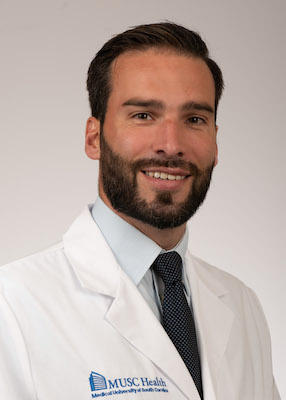
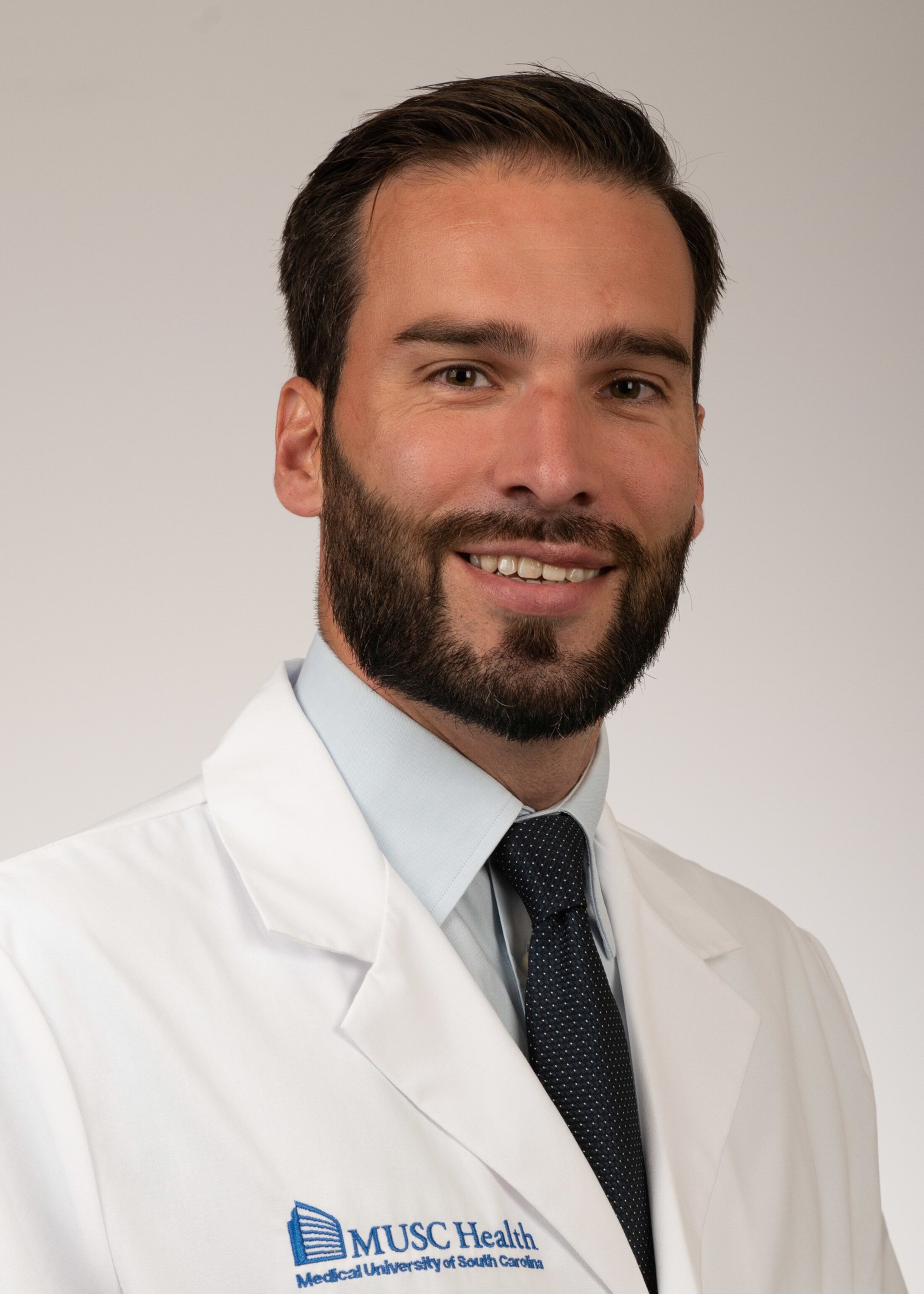
Dirk van der Windt, M.D., Ph.D.
- Transplant Surgery
- Liver Transplant
- Charleston, SC

Margaret Lamb
Margaret Lamb has extensive experience in higher education, health, medical and wellness communications as a writer, editor, spokesperson and manager. A graduate of the University of South Carolina (USC) with a degree in political science, she has worked for USC and Clemson University as well as Hill & Knowlton Public Relations and The Atlanta Constitution.
Recent MUSC News stories