
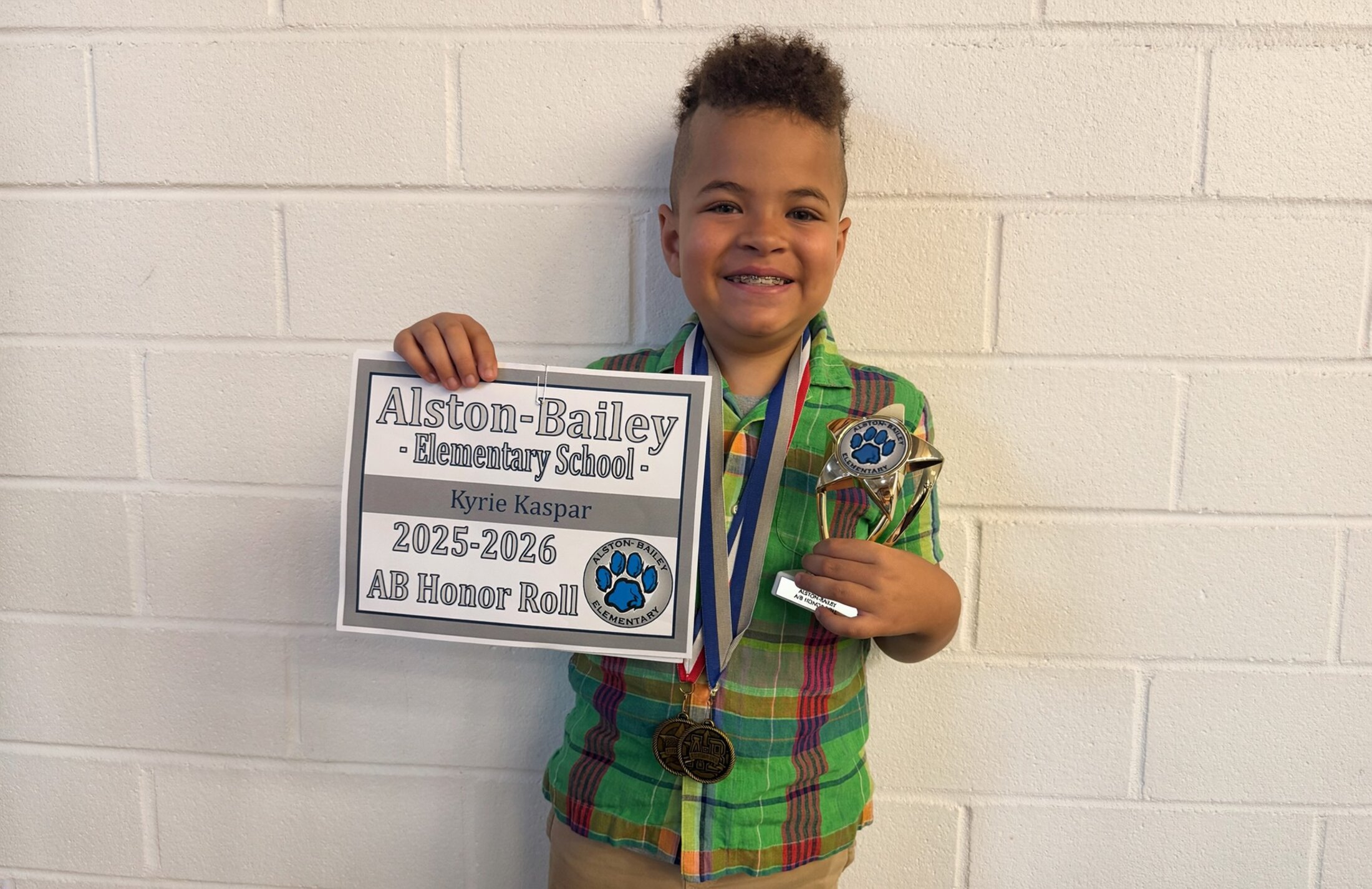
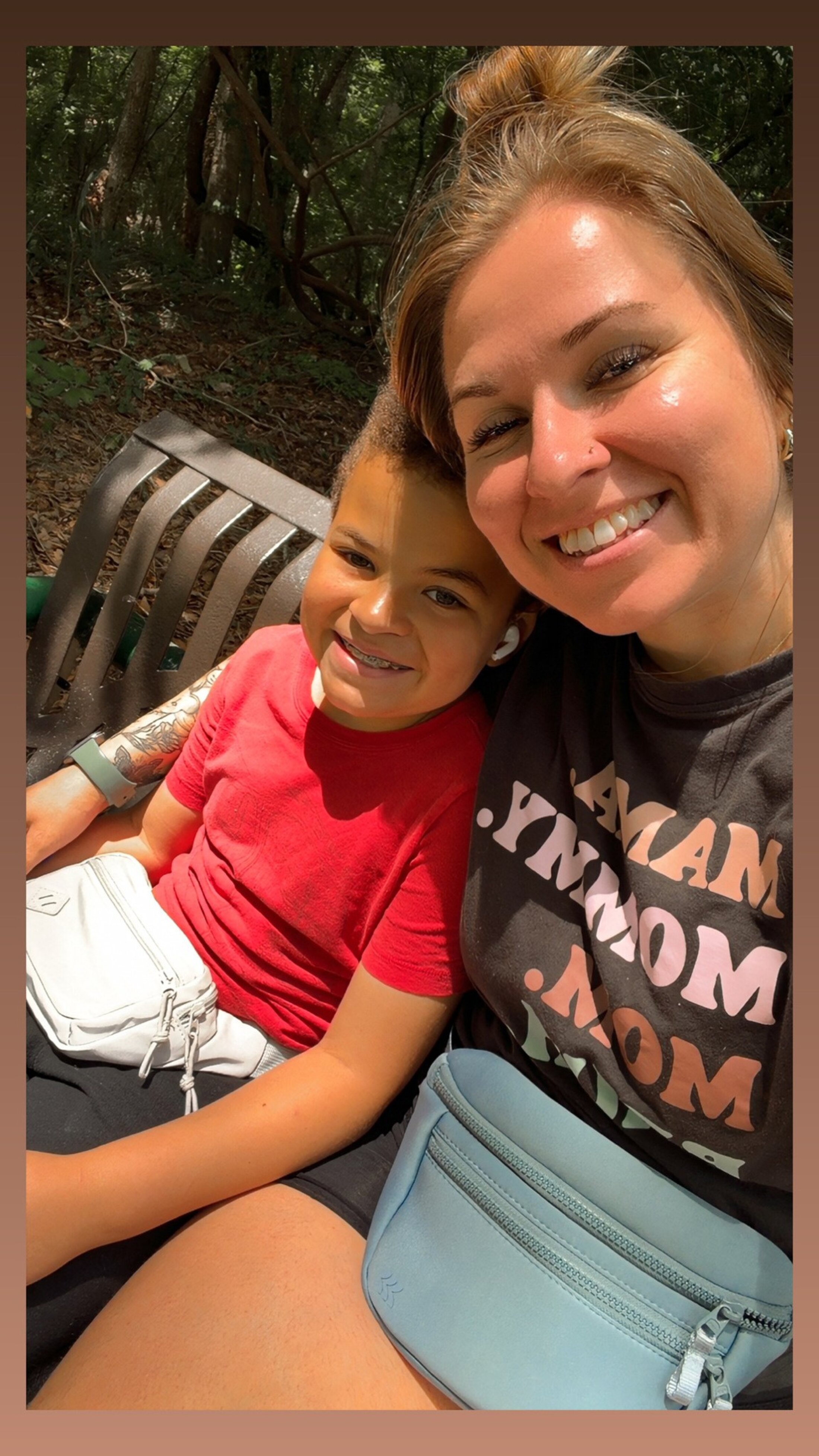
Kyrie Kaspar’s mom is proud of the son she was once terrified she might lose. “You would not even realize anything happened. He made honor roll. He also plays soccer.”
But something did happen when Kyrie was just a baby – something that could have killed him if not for the care team at the MUSC Children’s Hospital, now known as the MUSC Shawn Jenkins Children’s Hospital.
Kyrie’s mom first noticed he had digestive trouble. Then, a routine check of his head size showed another concern.
His head, to me, looked like a normal size.
“His head, to me, looked like a normal size,” said Kerstin Kaspar. “I’d seen babies with big heads. But they measured his head and they're like, ‘OK, so his head is two centimeters too big.’ And I'm like, ‘that's not much.’”
But it was enough for Kyrie’s pediatrician to send him to MUSC Children’s Health for testing. That’s where Kaspar learned something more serious was going on. “They said, ‘Your son has hydrocephalus.’”
Hydrocephalus is the buildup of cerebrospinal fluid in the brain. The fluid’s job is to cushion the brain and spine. But if it builds up, it puts pressure on the brain.
Doctors treated it with an endoscopic third ventriculostomy, a minimally invasive way to create a new path for the fluid to drain. But a short-term follow-up visit, with a repeat MRI, showed a far bigger problem.
Stunning development
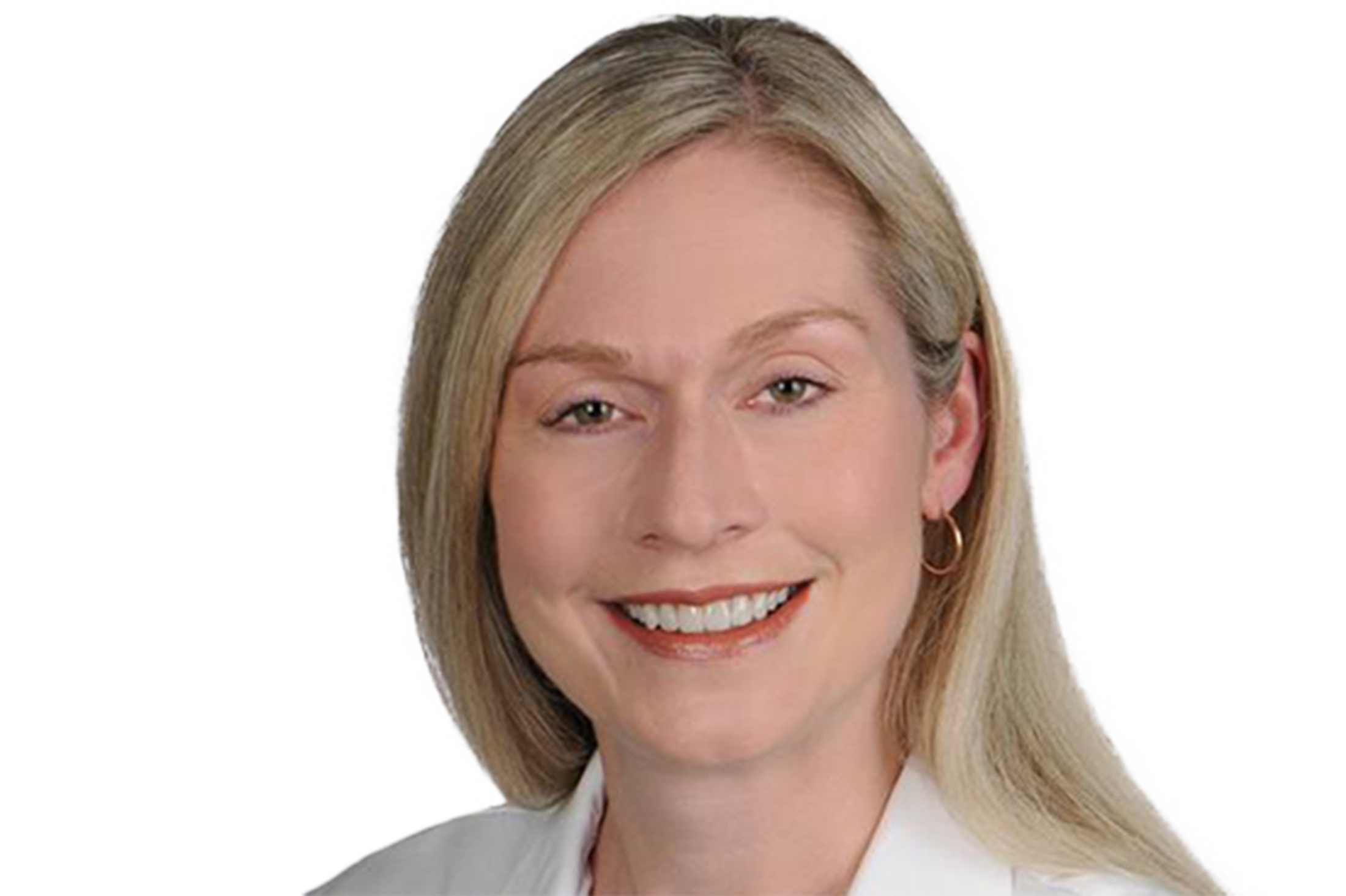
Neurosurgeon Libby Infinger, M.D., described what that MRI uncovered. “What we thought was just a narrowing and thickening of tissue blocking the flow of spina fluid was actually a tumor. It was fast growing and suspicious for a very malignant tumor.”
She gently broke the news to Kyrie’s mother, who was 19 at the time and understandably unprepared for the stunning development. “I started freaking out. I was screaming. I was on the floor. I was crying, obviously, like, you know, losing my mind,” Kaspar said.
Infinger helped the young mother through it, tending to her distress and, when she was ready, explaining in more detail what her baby boy was facing.

Kyrie had an atypical teratoid/rhabdoid tumor, also known as AT/RT. Teratoid refers to abnormal development. Rhabdoid means rod-shaped. Fewer than 100 children are diagnosed with AT/RT each year.
Michelle Hudspeth, M.D., serves as division chief for children’s cancer care at the MUSC Shawn Jenkins Children’s Hospital. “AT/RT is considered an extremely aggressive tumor. About 20 years ago, the average time of survival from diagnosis was around one year,” she said.
“Survival has typically been lowest for children diagnosed at less than one year of age, like Kyrie. Previous clinical trials had very poor event-free survival at 2 years of less than 10%. An important national clinical trial was done through the Children's Oncology Group 2009 through 2013, and improved the four-year event free survival to almost 40%.”
So the statistics were improving - but still very worrying. Kyrie’s mother quit her job to stay with him in the hospital. “I slept next to him. I did not leave.”
Treatment plan
The first step was to remove as much of the tumor as possible, Infinger said. “He had to have two surgeries because the tumor was so big and in a difficult location, but we were able to get it all out.”
When babies have surgeries that young, the way their spinal fluid is absorbed is altered. Kyrie needed another operation to place a shunt to remove excess spinal fluid.
“After he healed from all of his surgeries, that is when the hard work started with chemotherapy and all the adjuvant treatment he needed,” Infinger said.
Adjuvant refers to treatment that made the chemo as powerful as possible. Hudspeth’s pediatric cancer team, the No. 1 program in the state and No. 9 nationally for clinical outcomes based on U.S. News & World Report rankings, led the way on that part of Kyrie’s care. The cancer care team wanted Kyrie to not only survive but also have a good quality of life.
That wouldn’t be easy for the little boy or the team working to save him. “He needed intensive chemotherapy, including three autologous stem cell transplants followed by proton therapy,” Hudspeth said.
Here’s what that means.
- Intensive chemotherapy uses anticancer medication at high doses.
- Autologous stem cell transplants use the patient’s own stem cells, removing them from the body then returning them after chemo to help the child recover more quickly and get ready for the next round.
- Proton therapy uses radiation to try to destroy any remaining cancer cells.
Hudspeth said her team’s status as the only pediatric stem cell transplant center in South Carolina was a critical part of Kyrie’s care. “We were able to make sure that Kyrie could take full advantage of the recent treatment breakthroughs when he was diagnosed and have his transplants close to home.”
They were also able take advantage of a clinical trial in Florida, where he got the proton therapy. Hudspeth said MUSC Health is in the process of bringing proton therapy to her team’s patients in Charleston.
Kyrie’s recovery
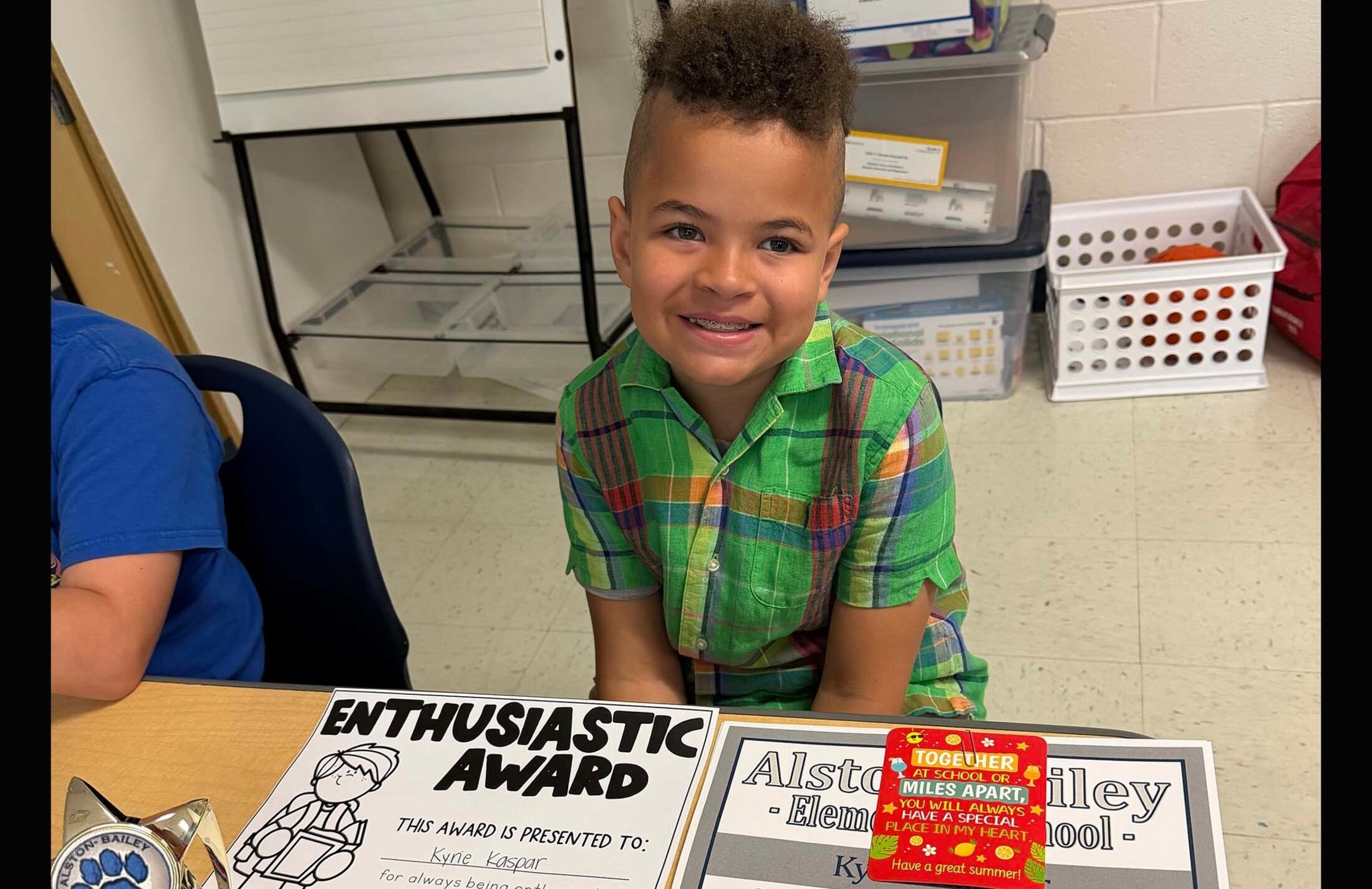
Kyrie, now a 10-year-old student at Alston-Bailey Elementary School in Summerville, still sees doctors at MUSC Children’s Health. “We had a scan back in March, and it came back clear. November means nine years cancer-free,” Kaspar said.
We had a scan back in March, and it came back clear. November means nine years cancer free.
A huge relief after what they’ve been through. Kaspar was inspired by her experience to get a job at the MUSC Shawn Jenkins Children’s Hospital, where she works as a patient care technician. Hudspeth loves seeing her there.
“We are so lucky that his mom works at SJCH. I often run into her in the parking garage as she is leaving the nightshift and I am coming into the hospital. I love getting my Kyrie updates. He has wonderful long-term follow-up through our brain tumor clinic program at the Summey Medical Pavilion,” the children’s cancer doctor said.
Infinger is pleased by Kyrie’s progress, too. “I just hope he goes on to live a great life doing whatever it is he wants to do with himself and grow up to have a family of his own one day. His mom just loves him so much.”
Kaspar’s love for Kyrie means she recognizes how hard it is for other parents with seriously ill kids in the hospital. She uses her experience to help them.
“Even on the chemo unit, if there's a family having a hard time, they'll call me and be like, ‘Hey, can you come up here?’ There's a mom who they could not get to come out of her room for the past two weeks. I got her to come outside with me, walk by the unit, grab some teal. And then we went back to her room, and she fell asleep in my lap.”
She encouraged other struggling families to reach out for help. “That's what I had to learn. I was always like, ‘I don't want to talk to anybody. Nobody understands what I'm going through.’”
There are people who do, she now knows – people who may be able to help. Kaspar knows she and Kyrie are fortunate. “I was blessed beyond measures that we made it through.”
Helen Adams
Recent MUSC News stories