
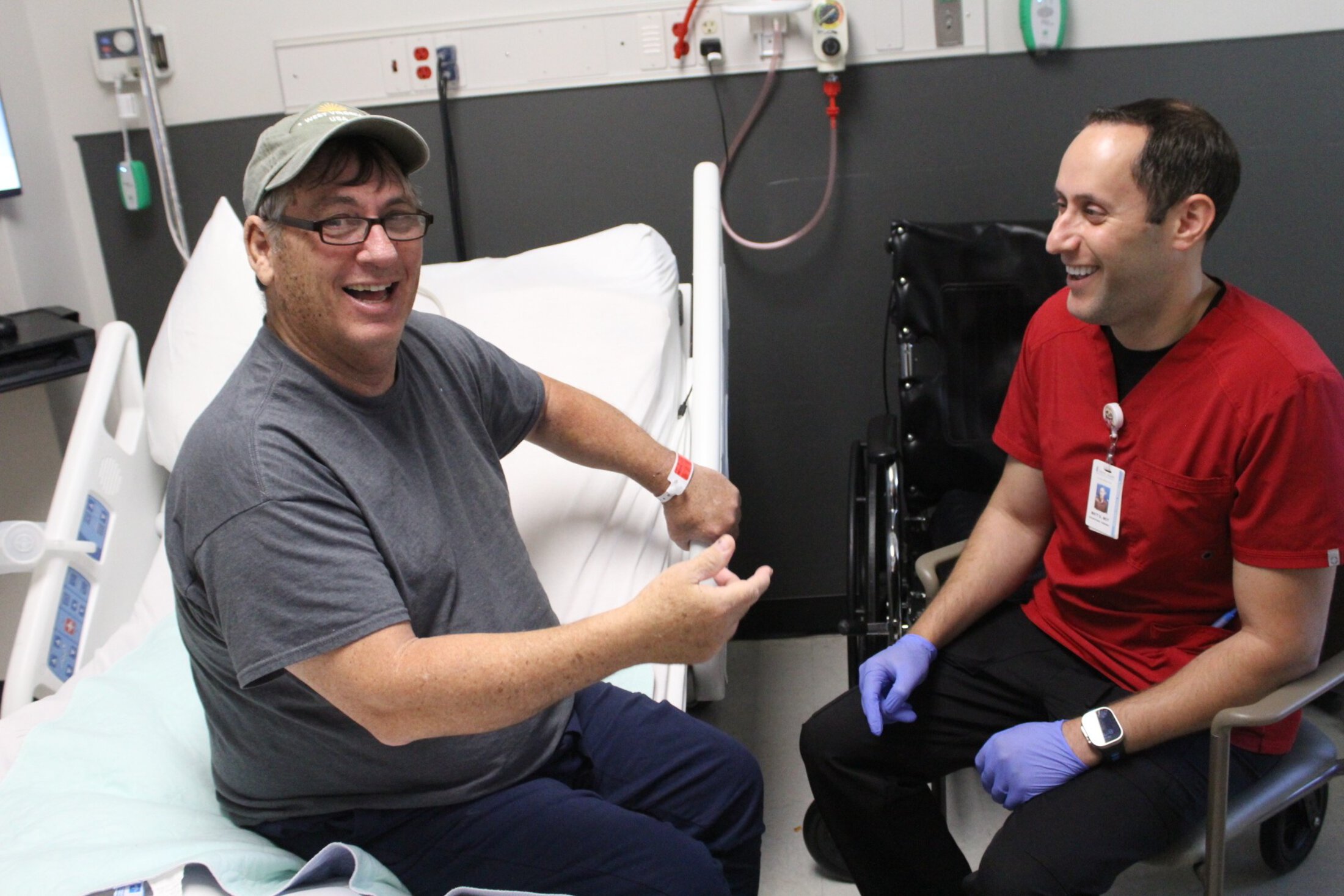
Ted Mosier of Lancaster was used to working hard. As a construction worker for 40 years and then working in maintenance for various Walmart and Sam’s Club locations in the Catawba area, he didn’t really know what it meant to take a break.
He was the guy who would work straight through lunch. If you had a maintenance request, he was the one you could count on to show up and work diligently until the problem was solved. He said he developed that dedicated work ethic while growing up at the Falcon Children’s Home in Falcon, North Carolina, where he lived for a decade.
Recently, Mosier was forced to slow down after suffering a debilitating stroke while he was working on May 4. He recounted that he began vomiting in the parking lot at work. He could tell that his blood pressure was “through the roof” and described it as the feeling that his head was “about to blow.”
What ensued was six weeks in the intensive care unit (ICU), grueling rehabilitation sessions and uncertainty. He underwent surgery just two days after being admitted for a blood clot in his brain, which ended up requiring a second surgery to place a stent.
Cheryl Mosier, Ted’s wife, said the second surgery was very risky because of the small vessels around the area that could close off. Unfortunately, Mosier experienced another stroke following this surgery. That’s when he was sent to MUSC Health in Lancaster, where he suffered three more strokes in a matter of days. By the time he arrived at MUSC Health, he was also septic and dealing with a fever of 105 degrees.
I saw the other side. It’s real. I didn’t want to go. My friend who passed away in 2003 came to see me, but I wouldn’t go with him.
“I saw the other side,” Mosier recalled. “It’s real. I didn’t want to go. My friend who passed away in 2003 came to see me, but I wouldn’t go with him.”
Missed early signs
Mosier, who is 61 years old, reported that nothing struck him as a definitive sign or symptom until things became serious. He said that two days prior to the incident in the parking lot, his ear started bleeding. He also recalled having felt dizzy and weak the day before.
The most common signs of stroke, according to the U.S. Centers for Disease Control and Prevention, are balance loss, vision changes, face drooping, arm weakness and speech difficulties. These can start occurring just hours before a stroke. What Mosier experienced were likely warning signs, he now believes.
His ordeal began on May 4; on June 12, he was finally discharged, with a long road of rehabilitation ahead of him.
Keith Shealy, M.D., medical director of the rehabilitation program at MUSC Lancaster and part of the team that took care of Mosier, was moved by the determination Mosier showed during a challenging period marked by several hurdles.
“Ted’s stroke left him with a weakened right side, impaired balance and a frustratingly tangled vocabulary, but his mind was sharp. Many patients have a predictable path to rehab and recovery; however, Ted’s was anything but predictable. His six-week stay in various hospitals and settings became a game of stop-and-go due to frustrating complications, which severely impaired his progress.”
Shealy explained that over a three-week period, Mosier experienced events that required his medical team to transfer him out of rehab and into the acute care hospital on two occasions.
“For a man used to being active, being tethered to a bed was a mental challenge that can easily break a patient's spirit.”
Mosier reported that his vision and hearing have changed, and his speech is also a bit slurred. The good news is that he can now walk, he said, and he feels lucky that he didn’t lose movement in half of his body. He also reported that his balance has returned and that he can get up and go walking.
Shealy explained that stroke victims can experience physical changes, cognitive changes, emotional and behavioral changes, communication barriers and even vision and hearing loss.
“Once we dialed in the right combination of medications for Ted’s various complications, his grit and determination took over. He worked endlessly with the multidimensional rehab team of physical, occupational and speech therapists along with nurses and aids. He celebrated the day he could sit up without the world spinning and cheered when he finally improved his balance with walking.”
Shealy credits Mosier’s recovery directly to his positive attitude and lively spirit, plus the support he had from his wife and family.
“As a physician, I can prescribe the medications and manage the protocols, but a patient's resilience and a partner's fierce support are the real medicine. Ted and Cheryl proved that even when the road gets bumpy, you can still make it all the way home,” he said.
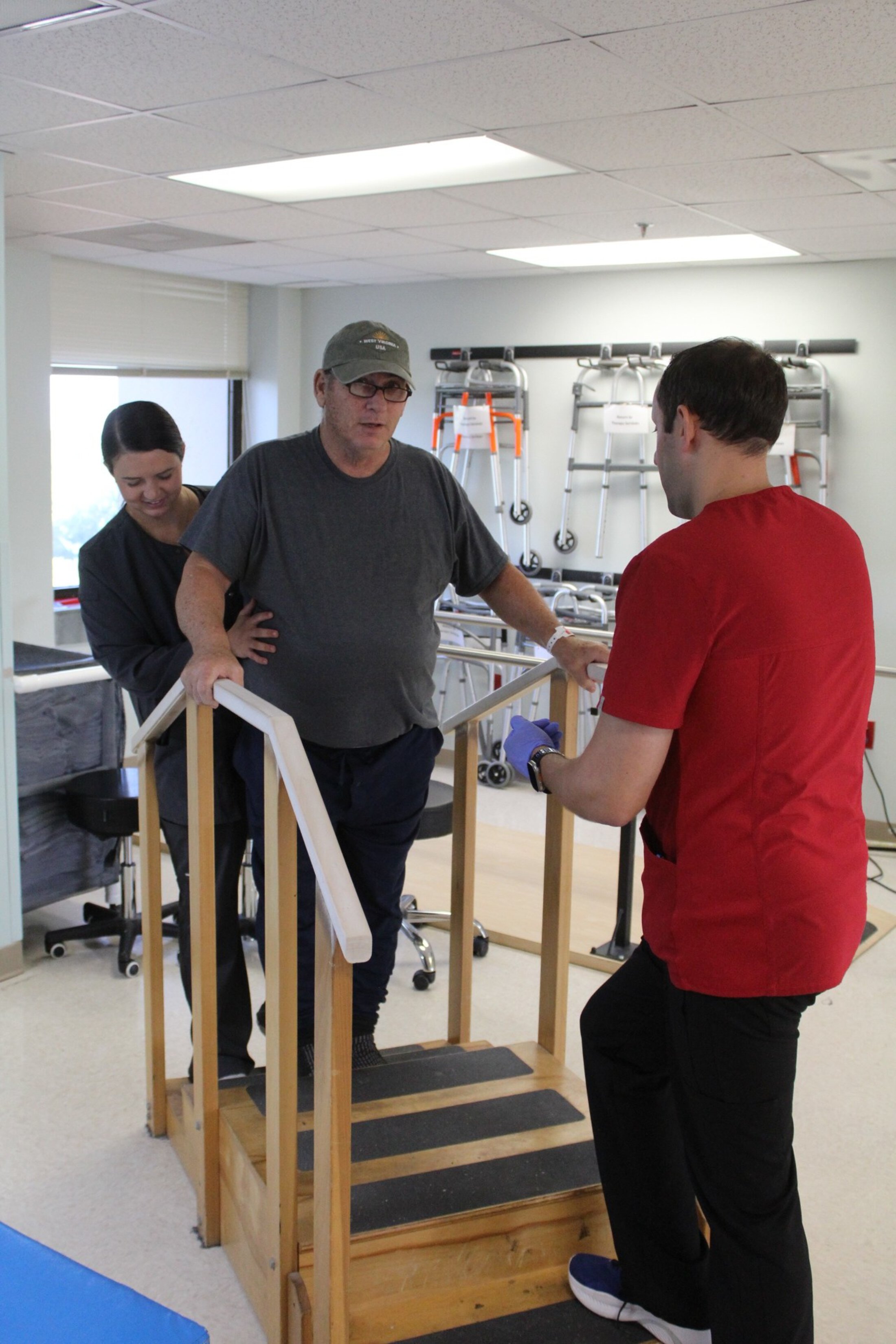
Mosier, in turn, credits Cheryl for being constantly by his side and dealing with the copious paperwork and administrative matters. Throughout the entire process, he and Cheryl had nothing but positive things to say about how Walmart has supported them.
Cheryl said she will be going back to work soon; she has worked at Walmart for 26 years. “I think I handled everything as well as I could,” she said. “You’ve got to take what God gives you.”
Mosier said his brother, Ronald Mosier, was also there for him every step of the way – even though he had been battling cancer. Family support has meant the world to Mosier.
He still has a way to go before he can return to the active pace of maintenance. He plans to take life a little slower and celebrate more of the happy moments, like his son’s recent marriage.
Now, when you ask him how he is doing, he sings, “I feel good, like I knew that I would!”
Theresa Stratford
Theresa Stratford is the editor for MUSC’s newspaper, The Catalyst. She has worked as a writer and editor for 25 years since graduating from the University of South Carolina with a Bachelor of Arts degree in journalism and mass communications. As a writer, she has worked for the federal government in cybersecurity and for the Department of Energy. As both a writer and an editor, she has worked for a variety of syndications, including national magazines, such as Vogue Knitting, as well as many local Charleston and South Carolina publications.