
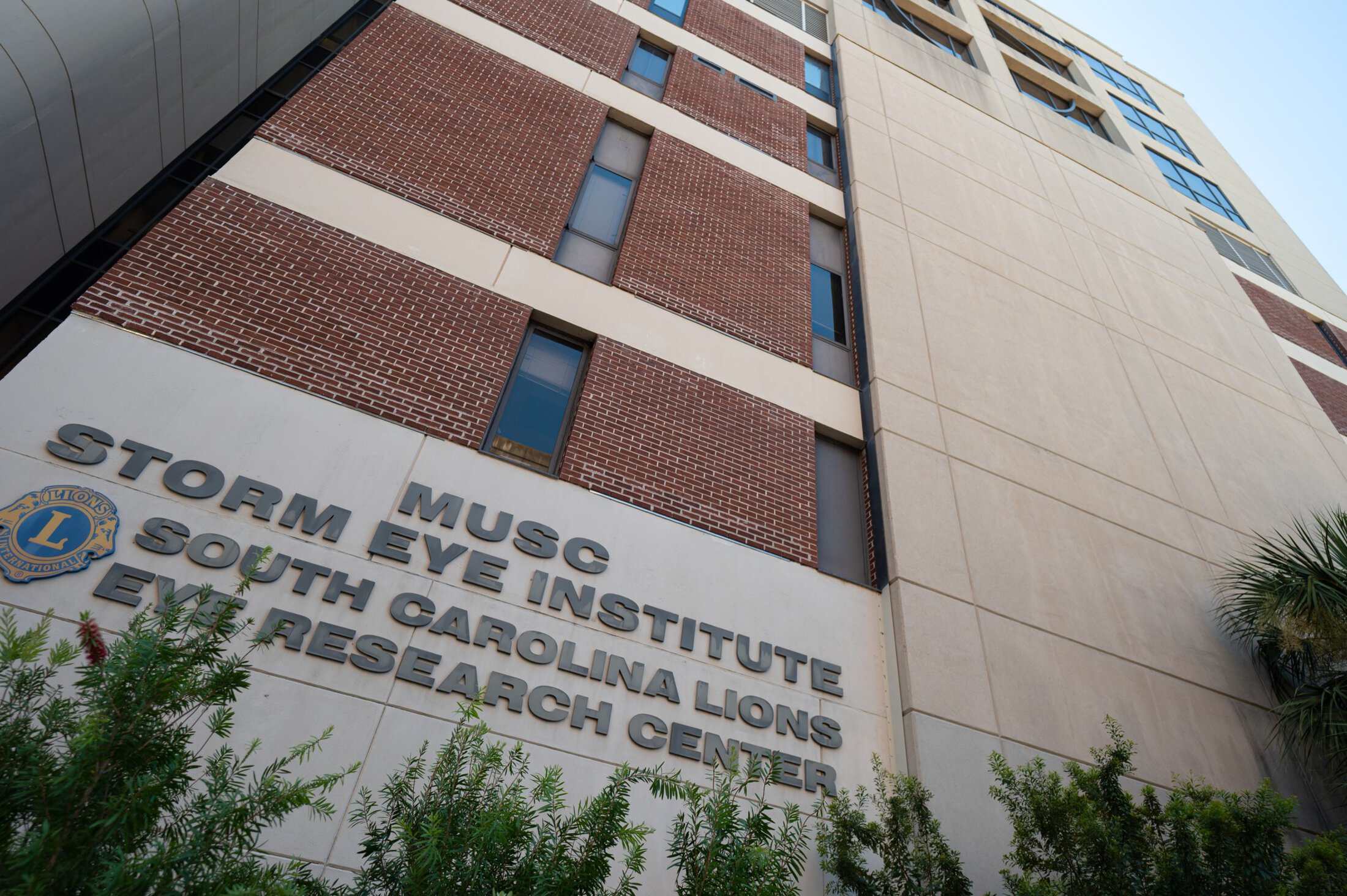
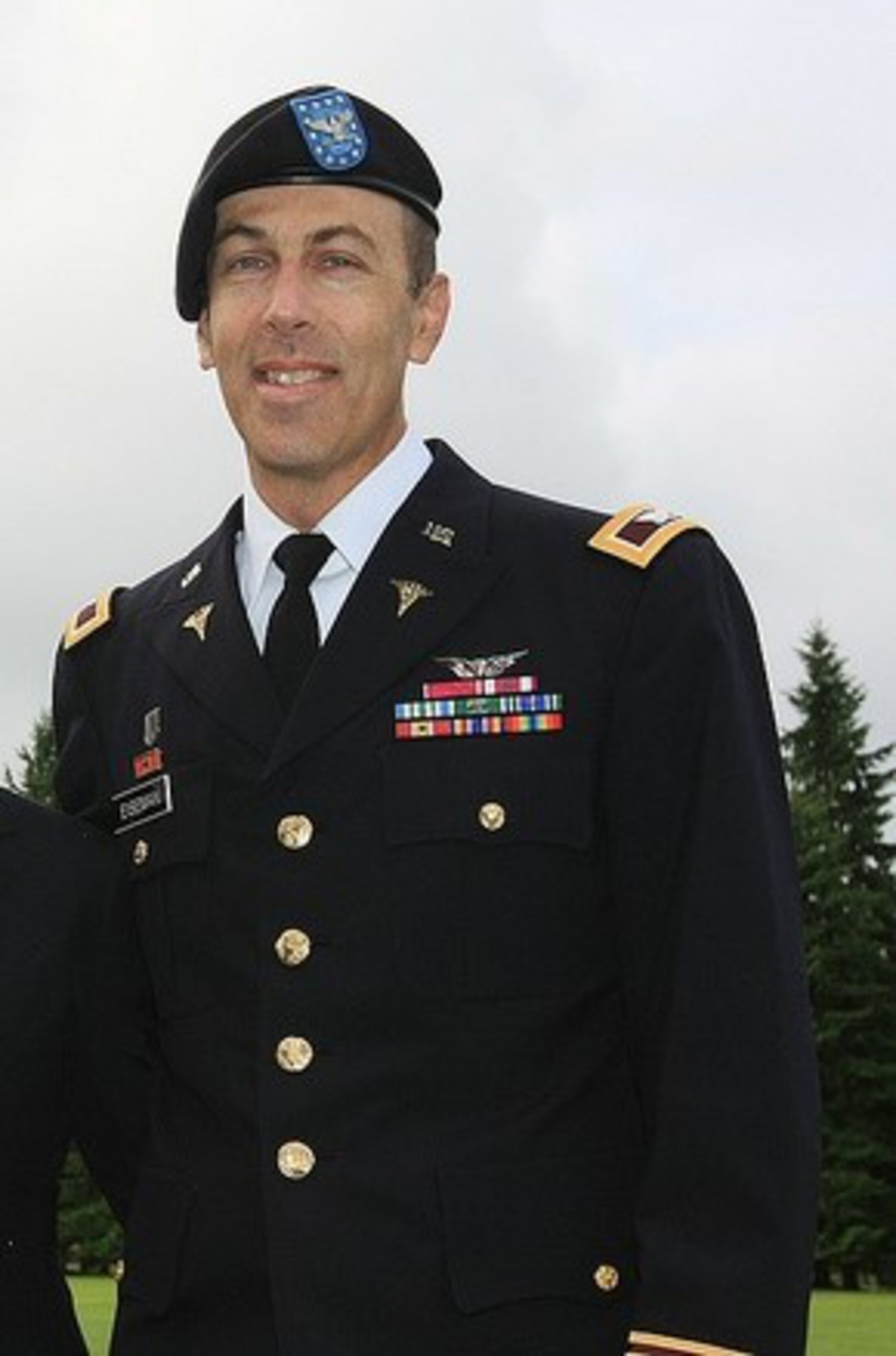
Serving as only the fifth leader of the Storm Eye Institute since its inception 50 years ago, Andrew Eiseman, M.D., rose to the rank of colonel in a 26-year Army career before retiring in 2012 and assuming the helm of the Storm Eye Institute in 2016. It might seem like a unique background for the leader of South Carolina’s premier ophthalmologic center, but according to Eiseman, it was the perfect preparation for the job.
You graduated from West Point before going into the Army. Do you come from a military family?
A lot of West Point graduates have that legacy – their great-grandfather attended and their father attended, but no. No one in my family was in the military, but I was intrigued by the chance to serve while advancing my education, so I investigated ROTC and service academies when I was applying to college. Eventually, I decided that if I were going to join the military, I would jump in with both feet and attend one of the service academies.
I got very fortunate and was accepted to West Point, and that really was a huge turning point for me because West Point is like a leadership laboratory. Upon graduation from West Point, you are commissioned as a second lieutenant, and then typically, you become a platoon leader and are in charge of 40 soldiers. Probably 75% of them are older than you and may have been in the military for five, 10, 15 or 20 years already.
So if you haven’t spent four years learning how to be a follower first, so that you can then learn to be an effective leader, you are going to have a difficult time in the Army. I was never a platoon leader because I went directly to medical school, but I attended the Uniformed Services University of the Health Sciences, the military medical school. This not only allowed me to learn the skills needed for my medical career but also to focus on honing my medical leadership skills. In addition to my medical degree, the military also trained me in Ophthalmology at Walter Reed Army Medical Center and allowed me to train in Ophthalmic Plastic and Reconstructive Surgery at Wills Eye Hospital. I then returned to Walter Reed for 14 years, where I used some of the leadership skills I had developed in my roles as the program director of the Ophthalmology Residency Program and then as the chief of the Ophthalmology Department.
What kinds of injuries did you treat at Walter Reed during the wars in Iraq and Afghanistan, and what did that experience teach you about advances in battlefield medicine?
Walter Reed received the vast majority of the injuries since they were first evacuated to Landstuhl, Germany, and then sent to Walter Reed. We saw over a thousand injured soldiers, sailors, airmen and Marines, and the most common pattern of injury was a traumatic brain injury, extensive facial trauma with an eye injury and extremity injuries.
We saw a significant number of facial lacerations and facial fractures, and many of the injuries were repaired as joint cases, where there’d be me, a neurosurgeon, a facial plastic surgeon, an orthopedic surgeon and a urologist all in the operating room at the same time. The injured would oftentimes get back to Walter Reed within 72 hours of being injured. And if they were critically ill, they were placed on a military aircraft that was basically a flying ICU, and they were intubated and put on life support and would sometimes get to Walter Reed within 24 hours.
The level of care that the injured received, both in the combat arena and the hardened military facilities and hospitals, was amazing. In prior wars, even during Vietnam, many of the injured we cared for would have never made it back to Walter Reed because they would have died on the battlefield. It was truly an honor and a humbling experience to care for these individuals who placed themselves in harm’s way in service to the country!
Does the public health mission at MUSC have parallels to defense?
The Storm Eye Institute has a well-developed and vibrant local, regional and international population health program serving those in need. In the military, we used to perform humanitarian missions in Central and South America. For instance, one of the most rewarding trips I took was with four ophthalmic plastic surgeons who went to Asunción, Paraguay. We went to their trauma hospital and spent a week there performing over a hundred surgeries on all kinds of trauma, tumors and abnormalities that they just didn’t have the capacity to take care of it. Why does the military do that? Two reasons: The first is that it gives us incredible training in an austere environment to take care of complex things, which is what you do a lot of when you’re deployed. It also teaches you to know what to bring, what you need and what you don’t need.
And the other reason is that it is a great way to build appreciation for the U.S. Every person that we treated had a family and friends, so with every person we treated, we made many individuals love the U.S. “This medical care was brought to you by the U.S. government.” It really helps build appreciation and support for the U.S.
The aspect of deploying care away from the main “base,” in the case of South Carolina, away from larger coastal cities, also has parallels to the military here, doesn’t it?
Yes, for really cutting-edge subspecialty care, there’s a huge shortage of subspecialty ophthalmologists. If you are in rural South Carolina and have a car, you can reach an ophthalmologist within 30 minutes. However, if you have a tumor, need glaucoma surgery or corneal surgery, have skin cancer on your eyelid or a tumor in your eye socket, that care is only available in maybe two or three places in the state. And now, you’re looking at driving maybe a couple of hours. But we have all of it at Storm Eye!
Storm Eye is also one of the few places providing eye trauma care 24 hours a day and 7 days a week. We get people flown in or driven in from all over South Carolina, and it is an honor and privilege to provide an outstanding level of care to patients from the Lowcountry, the state of South Carolina and the extended region as well.
We get people flown in or driven in from all over South Carolina, and it is an honor and privilege to provide an outstanding level of care to patients from the Lowcountry, the state of South Carolina and the extended region as well.
One trend in healthcare in South Carolina in recent decades is that even as medicine has advanced, it’s become less available in many areas: How is MUSC addressing that?
Most of South Carolina is quite rural, and healthcare can be sparse. There is a lot of need. One of the great things about Storm Eye is that if you go to MUSC for medical school, there’s a very good chance that when you are ready to practice, you’ll practice in South Carolina. People are obviously going to train wherever they’re going to go. But there’s a great need right here in South Carolina. And some of those doctors will go back to these rural areas and provide outstanding care. Maybe they’ll go to Spartanburg or Greenville, which are not rural but give more access to subspecialty care in those communities. The closer you are to home when you get this care, the better it is for you. We love it if you come to Storm Eye, but we love it more if high-quality care is in your backyard. That is the main reason we have expanded our satellite offices to include Mount Pleasant, West Ashley, Nexton, North Charleston and Berkley County.
We understand there’s more to providing great care than just having it available in one location. You have to provide that great care where the patients will come and be seen, and that’s been huge for us. And, it’s one of the main reasons we’ve been able to grow so much. It’s because we do a great job, and we have moved that outstanding care to different locations in the Lowcountry.
The Storm Eye Institute has a long history of research, as well as the clinical side and the public health mission. How do you find providers who can do one, two or all three of those things?
We have many outstanding faculty members here at Storm Eye who accomplish all three missions and are extremely successful. They’re running training programs. They’re internationally known. They have 100 publications or more and are great clinicians and surgeons. And we love that, but that’s really, really difficult to achieve and sustain. Everyone needs to be a great clinician and surgeon to be successful here, but you don’t have to be a great educator AND a great researcher. Everyone’s got to be a great clinician and surgeon, but if you want to focus more on education, great. If you want to focus more on research, great. If you want to do all three, we support that, but we also understand that with the current demands of the healthcare system, it’s becoming more difficult to maintain such a practice.
Getting back to your military career, in particular, the beginning. Many cadets at West Point quit early in their time there, particularly during the first year. Did you ever think about quitting?
No, but that’s just because my brain doesn’t work that way. I loved West Point; I even thought the first year was enjoyable, even though it was pretty stressful. I served 26 years in the military, but the U.S. government and the military have still given me so much more than I ever gave them, and those aren’t just words. To send me to West Point to teach me how to be a leader, to send me to medical school, to train me in ophthalmology, to train me in ophthalmic plastic surgery, to send me to a great civilian hospital and then to be able to go back to Walter Reed and take care of soldiers, sailors, airmen and Marines who are injured in service to their country – that was an honor.
And then, because of all that, to be able to come to an amazing place like MUSC and the Storm Eye Institute, which is currently celebrating its 50th anniversary, I try to see things to completion. I am also incredibly thankful.
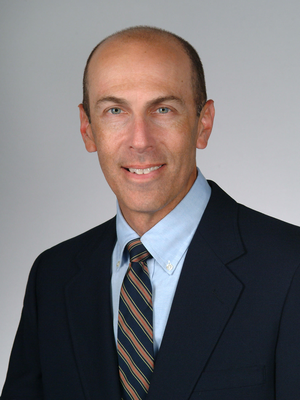
Andrew Eiseman, M.D.
- Ophthalmology
- Oculoplastics
- Charleston, SC
- Mount Pleasant, SC
- Summerville, SC

Will Kilburn
Recent MUSC News stories