
A new approach to treating autoimmune diseases like lupus is taking shape at MUSC – one that could move beyond symptom control to changing how the disease is treated fundamentally. Unlike some traditional therapies that suppress the immune system, this strategy aims to reprogram it.
Historically, treatment has focused on managing symptoms such as tamping down inflammation, preventing flare-ups and slowing the disease’s progression. But most patients end up staying on medication indefinitely, often cycling through different therapies that are inconsistent or lose their effectiveness over time. But now a set of promising treatments known as cellular therapies is emerging at MUSC.
Chimeric antigen receptor (CAR)-T therapy, one of the most advanced of these approaches, involves removing a patient’s immune cells, re-engineering them in a lab to recognize and attack specific disease cells and then infusing them back into the body. The process is intensive and includes frequent monitoring and extensive screening. It may also require hospitalization. Even in such controlled settings, clinicians are direct about the risks.
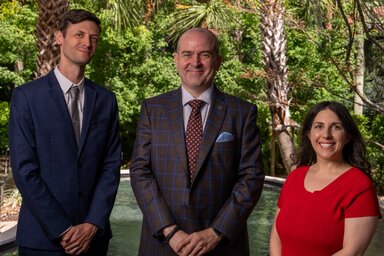
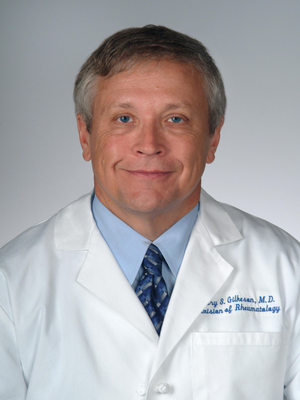
"CAR-Ts do have significant side effects,” said Gary Gilkeson, M.D., Distinguished University Professor.
For people with lupus, many of whom have already spent years navigating unpredictable symptoms and treatments, the decision to pursue something like CAR-T feels like crossing a significant threshold.
Lupus itself is complex and variable. Some patients experience joint pain and skin rashes, while others develop even more serious organ complications. No two cases look exactly alike, and treatment often becomes a process of trial and error. When standard therapies are no longer enough, more intensive approaches like cellular therapy come into play.The shift from cancer to autoimmune disease.
Cellular therapies like CAR-T were developed to treat certain cancers by engineering immune cells to target malignant cells. The infrastructure required to deliver these therapies, like the facilities, safety protocols and inpatient monitoring, has become highly specialized and standardized. And at MUSC, that foundation is already securely in place.
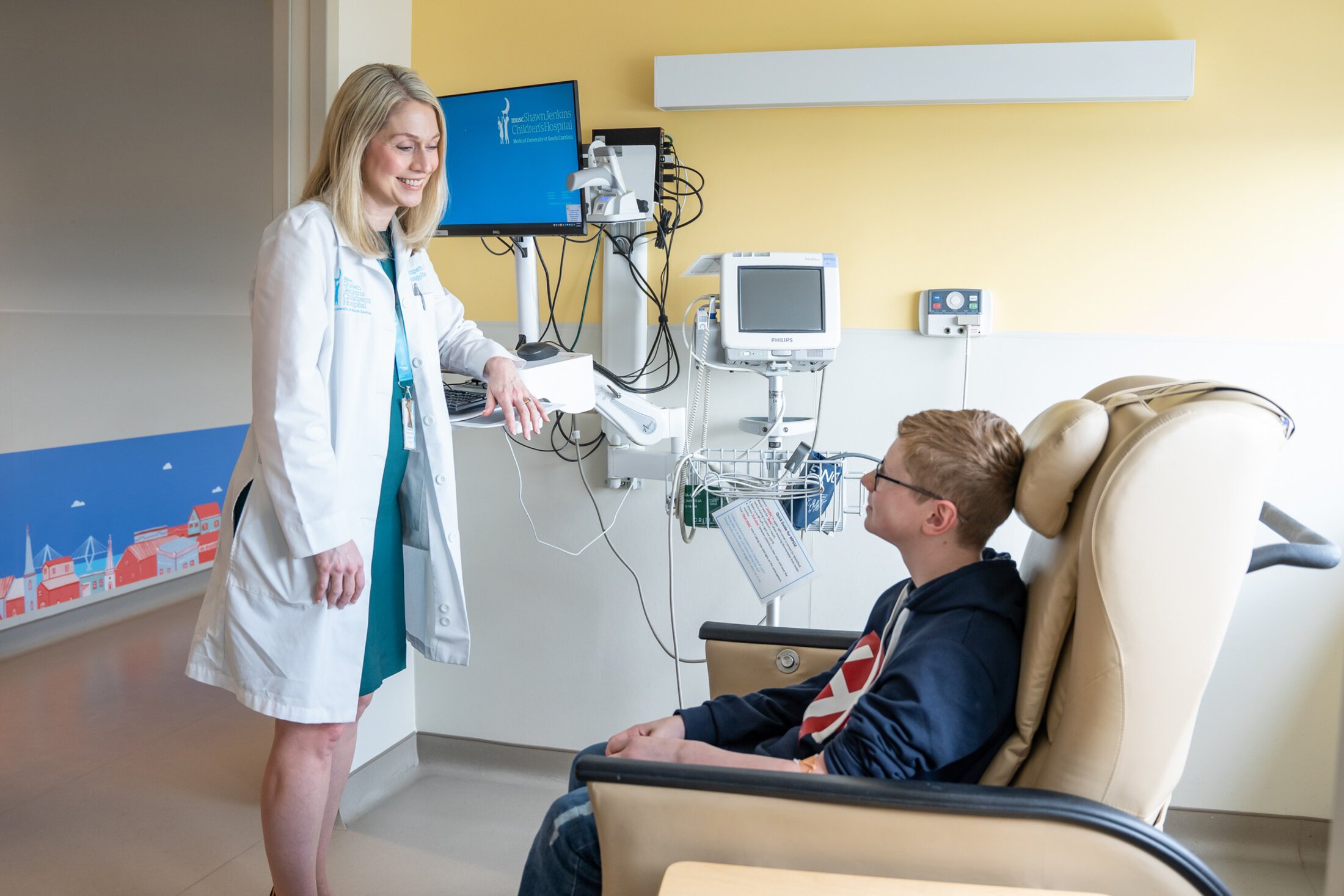
“We have achieved national accreditation status through the Foundation for the Accreditation of Cellular Therapy (FACT); we've been heavily inspected and audited by a national organization that has said we more than meet all these very special criteria to deliver this therapy safely,” said Michelle Hudspeth, M.D., professor of pediatrics, medical director of Adult and Pediatric Blood and Marrow Transplantation and Cellular Therapy and the interim medical director of the Cellular Therapy ICCE.
“We’ve been doing CAR-T since 2017, so we’re approaching the 10-year mark. We've been continuously accredited for stem cell transplant for more than 20 years. Our ability to use stem cell transplantation and cellular therapy to help patients outside of the oncology world is vastly expanding, so much so that MUSC established a new Cellular Therapy ICCE over a year ago,” she explained, referring to an integrated center of clinical excellence.
Now that same system is being extended into rheumatology through interdepartmental teamwork.
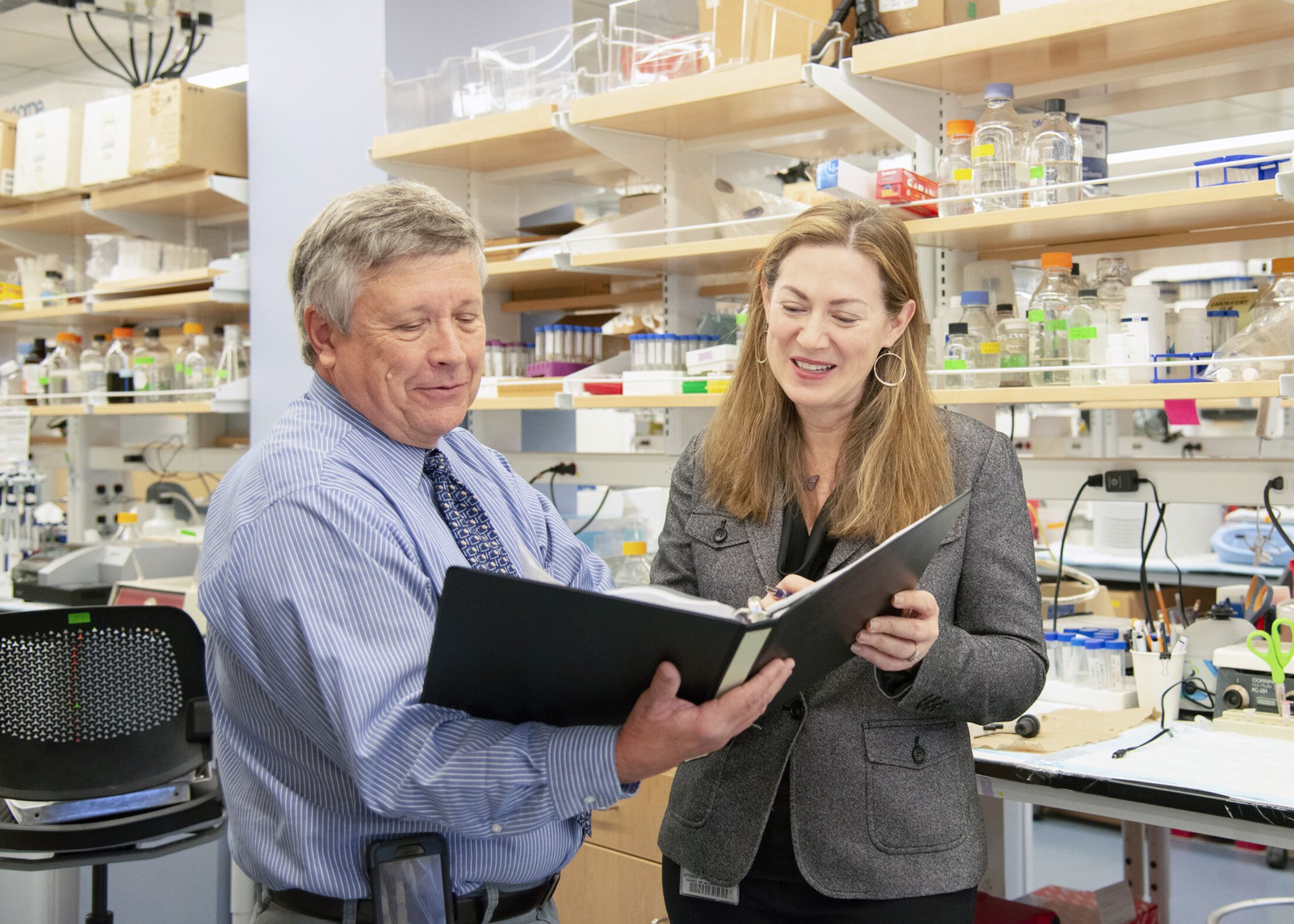
“Oncology has been doing CAR-T therapy for a number of years, and we are collaborating with them. It’s been a really beautiful startup collaboration,” said Melissa Anne Cunningham, M.D., Ph.D., associate professor of rheumatology and immunology.
MUSC clinicians are clear that applying these therapies to lupus is still new territory. “We have standard operating procedures and everything in place, but in terms of boots on the ground experience, we’re still early on the rheumatology side,” said Cunningham.
The result is a hybrid model where the cellular therapy team provides the infrastructure and experience, and rheumatology brings its disease-specific expertise.
Two paths in cellular therapy
Cellular therapy is an umbrella term that encompasses a range of approaches. One example is CAR-T. Another involves mesenchymal stromal cells (MSCs), which are being studied for their ability to modulate immune activity.
“They don’t suppress the immune system. They modulate it, so there’s no increased risk of infection and no increased risk of cancer,” said Gilkeson.
These cells are derived in lab settings before being administered. “They are basically taken from umbilical cords, expanded in a clean-cell facility and then infused into the patient. They have regenerative and immunomodulatory properties,” explained Cunningham.
At MUSC, MSC research represents a more established track in lupus. “The MSC trial is much farther along; it’s been active on campus for years,” added Cunningham.
Early results have shown encouraging signs in small groups of patients who had not responded to standard therapies. A multicenter placebo-controlled Phase 2 trial of MSCs in lupus was just completed, with MUSC being the lead site. Eighty-one patients from eight lupus centers across the country participated.
MUSC Clean Cell Facility produced all the MSCs used in the trial. As expected, no serious adverse effects were attributed to the cell infusion, confirming the safety of this therapy.
The efficacy data is being analyzed to determine whether patients receiving the MSCs had less disease at the end than those who received the placebo. The trial was sponsored in a partnership between the National Institutes of Health (NIH) and the Lupus Foundation of America.
“In the Phase I trial done prior to the Phase 2 trial, five out of the six patients whose conditions had not responded to standard treatment did much better and improved on the therapy, three achieving clinical remission,” said Gilkeson.
Addressing patient concerns
For patients, the hesitation around CAR-T cell therapy is both practical and emotional. This treatment requires a significant time commitment, with frequent weekly visits and close monitoring early on, noted Cunningham. And not every patient is a candidate. Patients must be sick enough to need the treatment, having failed currently available treatments, but also stable enough to undergo it safely.
“It can be scary to think about,” Cunningham added, referencing how patients have their cells removed, engineered and then reintroduced. But the team emphasizes that this treatment is delivered by very experienced clinicians within an established safety system.
“Patients should feel very reassured that there’s a team that’s been doing this together for years,” said Hudspeth.
Patients should feel very reassured that there’s a team that’s been doing this together for years.
Where this is headed
Cellular therapy in lupus is still in the early stages. For CAR-T in particular, patient experiences remain limited, and many questions and long-term outcomes are still being studied. However, momentum is building as MSC and CAR-T approaches continue to evolve.“I do think they’re both very promising and both are going to have a role in treating various autoimmune diseases,” said Gilkeson, noting how some immune disease treatment is shifting toward individualized care.
“All of medicine is looking toward what we call precision medicine, having more specifically tailored treatments to a specific patient. CAR-T therapy is really a wonderful example of personalized medicine,” said Hudspeth.
At MUSC, this shift is being driven not by one single specialty but by a meeting of minds. The goal is to replace years of trial and error with more targeted interventions. MUSC is investing in these cellular therapies by building a new, expanded Clean Cell Facility, doubling the capacity, making it one of the larger facilities in the country.
“We're excited. We have a world-class rheumatology program here at MUSC. We have a world-class cellular therapy program at MUSC. And so I think this is just a really great collaboration between our two groups to help patients who need it the most,” said Hudspeth.
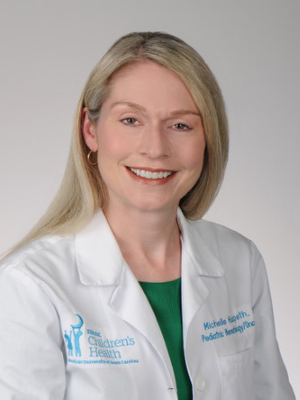
Michelle Hudspeth, M.D.
- Pediatric Cancer
- Blood & Marrow Transplant
- Pediatric Hematology/Oncology
- Sarcoma Cancer
- Charleston, SC

Jennifer Sweenie
Recent MUSC News stories