
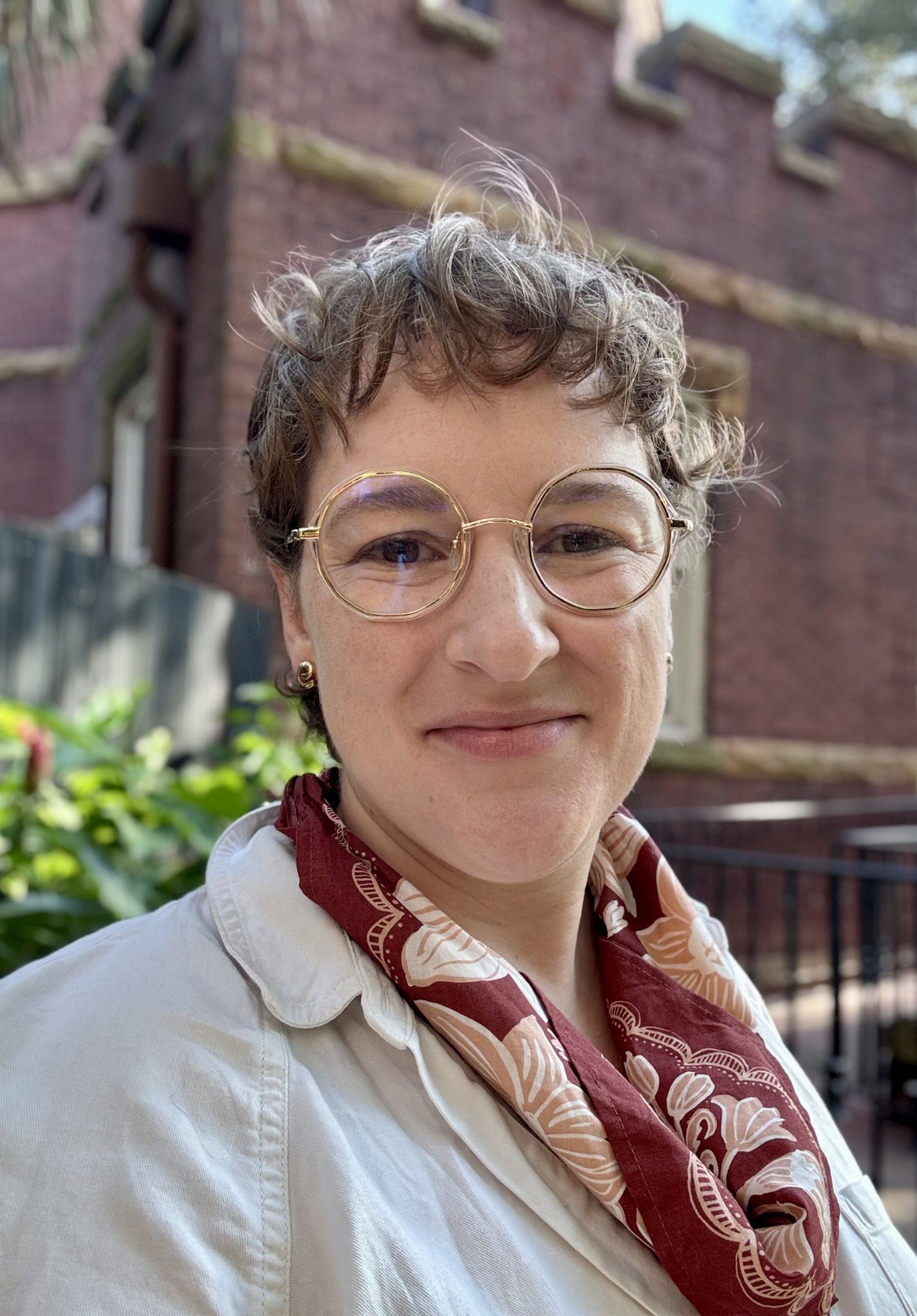
Ask Kate Glorioso what she does, and you might get two different answers. It’s not that the third-year biomedical Ph.D. candidate is confused. To the contrary, she knows exactly what she’s talking about. And she wants to make sure that we do, too.
That’s why she’s spent years learning and practicing how to translate complex research into words that a lay audience can understand. It’s a skill that also earned her national recognition in the prestigious Three Minute Thesis (3MT) competition in 2025.
A former teacher, Glorioso is passionate about making science understandable, and she’s learned just the right formula for mixing science and communication.
“Scientific communication shouldn’t be fluff. We’re not trying to meet a word count, and you don’t want to overwhelm your reader so they can’t take in what you’re writing. You want them to easily follow your train of thought,” she said.
She uses her own research in the nephrology lab of Josh Lipschutz, M.D., and Oleg Palygin, Ph.D., as an example: “I work in nephrology and study the RAS-mediated activation of nitric oxide and calcium signaling in glomerular cells and how it affects the health of the kidneys.
”Asked to explain her work to a lay person whose knowledge of chemistry doesn’t extend beyond the definition of solution, mixture and compound, Glorioso doesn’t miss a beat: “Nitric oxide and calcium signals can make our blood vessels relax and contract. When this happens in the kidney, it can change our blood pressure and how well our blood is filtered. Our lab is looking specifically at new medications that act on these signals and how they affect kidney health.”
As the child of a general practitioner and a cardiac rehab nurse, Glorioso grew up hearing medical talk in her York, Pennsylvania, home. “Medicine was a common topic of discussion at the dinner table. Plus, I was the third of four kids, so my parents entertained a lot of curious questions, and they always answered them in a language that I could understand.”
It was a lesson that Glorioso learned thoroughly and one that served her well when she became a science teacher in Beaufort.
“Teaching was the first time I was introduced to the importance of communicating a complex set of ideas to different audiences,” she said. “I was teaching students in pre-K through grade 12 and had to adapt my lessons for different audiences, especially for my anatomy and physiology high school seniors.”
She did so by creating and building on foundations and not going to the next step until students learned and understood the first foundation. By that time, Glorioso had fallen in love with science and aspired to a career in research. She enrolled in MUSC’s biomedical sciences Ph.D. program.
In addition to delving into cellular biology and pathobiology at MUSC, Glorioso began to hone her communication skills through the required writing class and the 3MT talks, so named because presenters are limited to three minutes to describe their research. She also worked with MUSC’s writing center team and attended a seminar hosted by Sean Fourney, Ph.D., director of the Patricia McArver Public Speaking Lab at the Citadel.
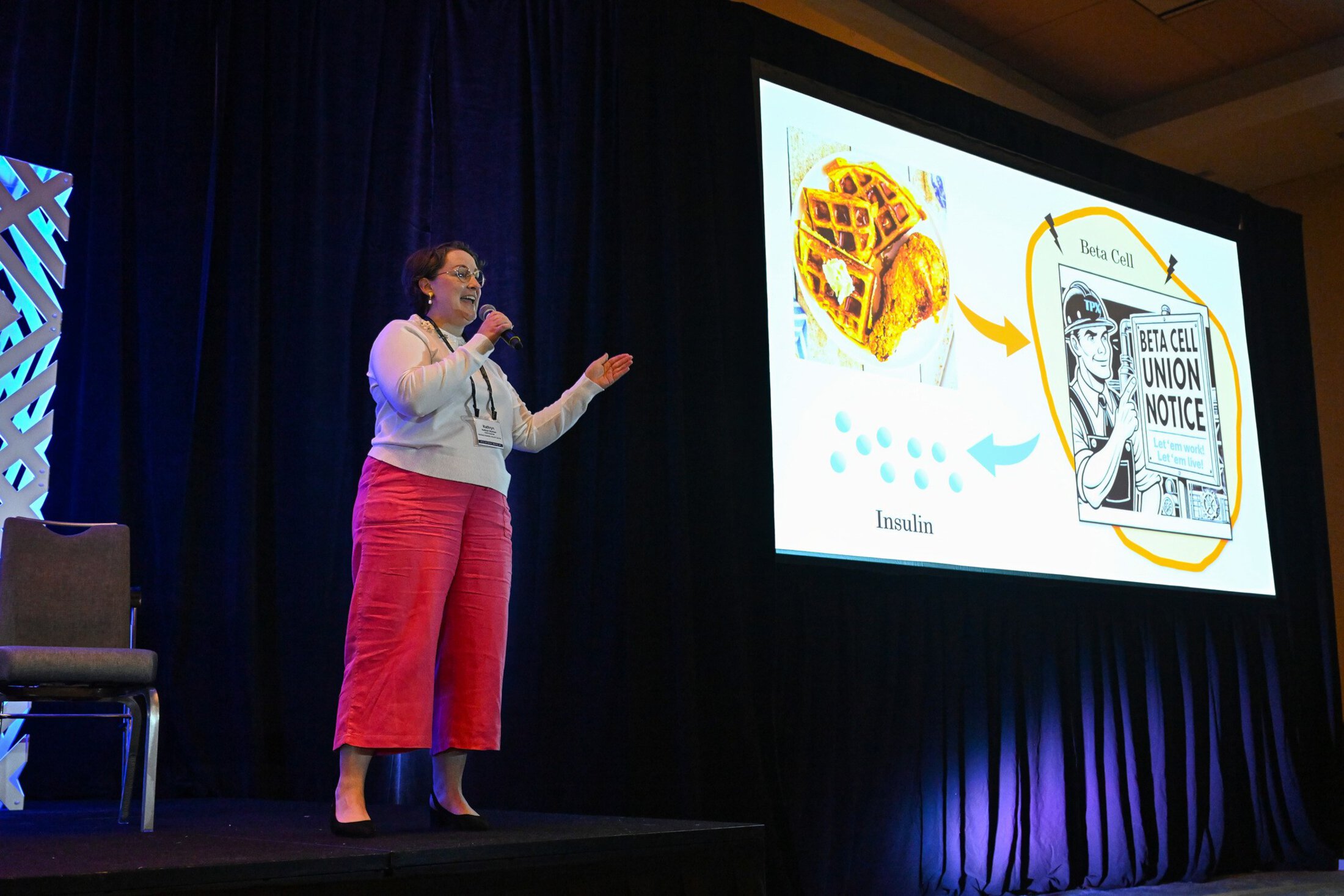
By her second year, Glorioso felt confident enough to enter MUSC’s annual 3MT competition. Her presentation on the pancreas and diabetes captured first place. She advanced to the Southeastern Regional competition at Southern Methodist University in Dallas, Texas, and ultimately the international competition in Washington, D.C. Sponsored by the Council of Graduate Schools, the field had been winnowed to 12 graduate students from universities across the United States, Mexico and Canada.
Glorioso returned to MUSC with the competition’s top honor, the People’s Choice award. She credits MUSC with her success.
“I’ve received a lot of instruction and practice in communicating ideas and learned how to intentionally choose words that are concise and clear with a message that has a meaningful point,” she said. “I think you learn good science from good scientists and good communication from good communicators, and those are not necessarily the same people. At MUSC, I’ve had both.”
I think you learn good science from good scientists and good communication from good communicators, and those are not necessarily the same people. At MUSC, I’ve had both.
Glorioso, who aspires to a career combining research and writing, said science communication can’t be a half-hearted effort and must be strategic.
“It needs to be clear why your work is vital and why it could save time, lives and money. I’m passionate about this. Because our research is publicly funded, it belongs to the public, so it’s not just important but almost required to clearly communicate the impact of our research to the public. It’s important that we inform people about not just what we find interesting or novel but what the public finds valuable and impactful.”

Margaret Lamb
Margaret Lamb has extensive experience in higher education, health, medical and wellness communications as a writer, editor, spokesperson and manager. A graduate of the University of South Carolina (USC) with a degree in political science, she has worked for USC and Clemson University as well as Hill & Knowlton Public Relations and The Atlanta Constitution.
Recent MUSC News stories