
For a man who once loved to run, his latest race has rejuvenated his thought process in seeking new ways to advocate for amyotrophic lateral sclerosis (ALS) awareness. As a passionate runner, 53-year-old Devon Woodard participated in many races until ALS caused him to redefine what it meant to cross the “finish line.”
“I live every moment and take it one day at a time. With that being said, it takes a village and your whole family and friends to support you through an illness like this,” said Woodard.
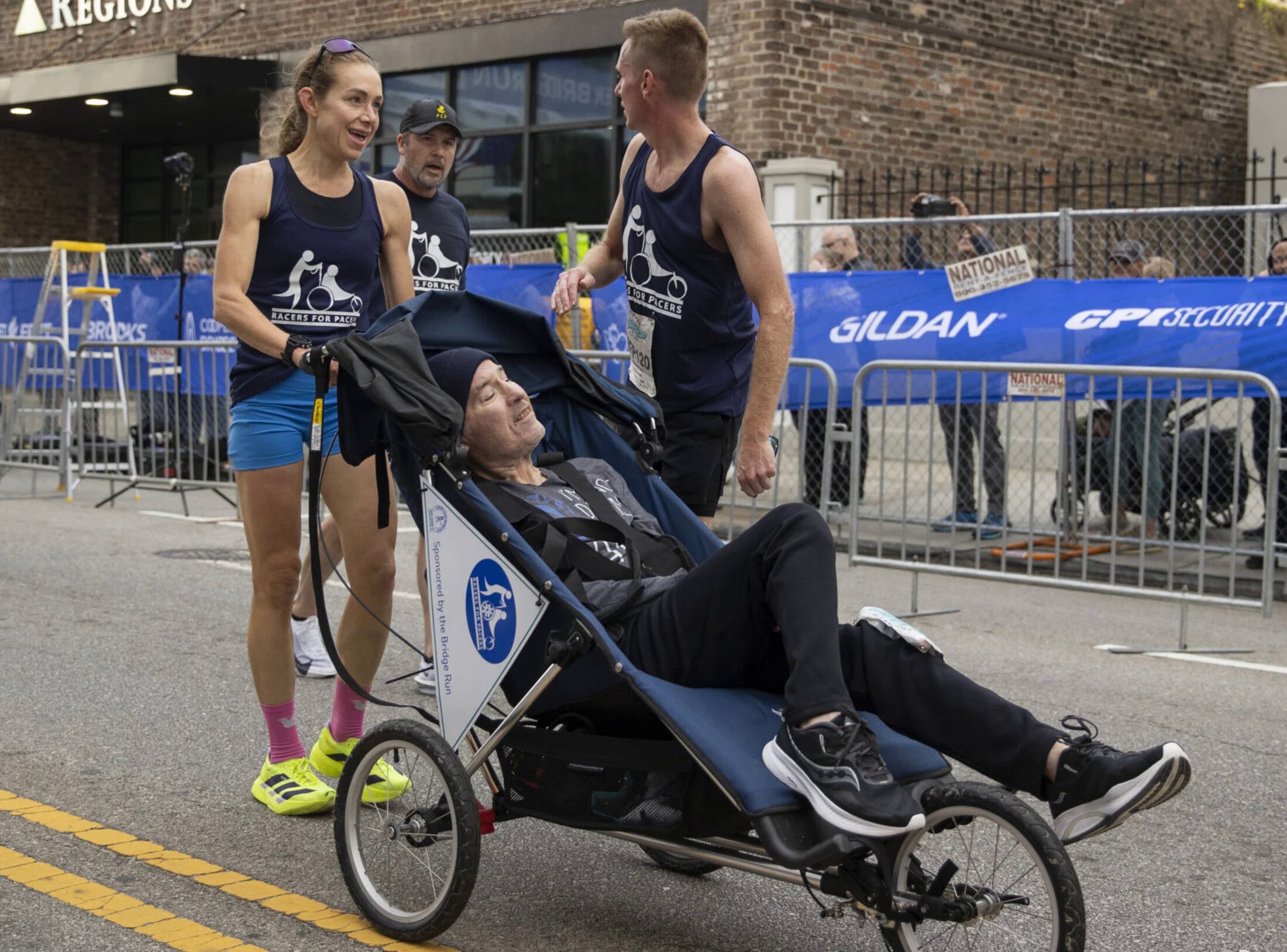
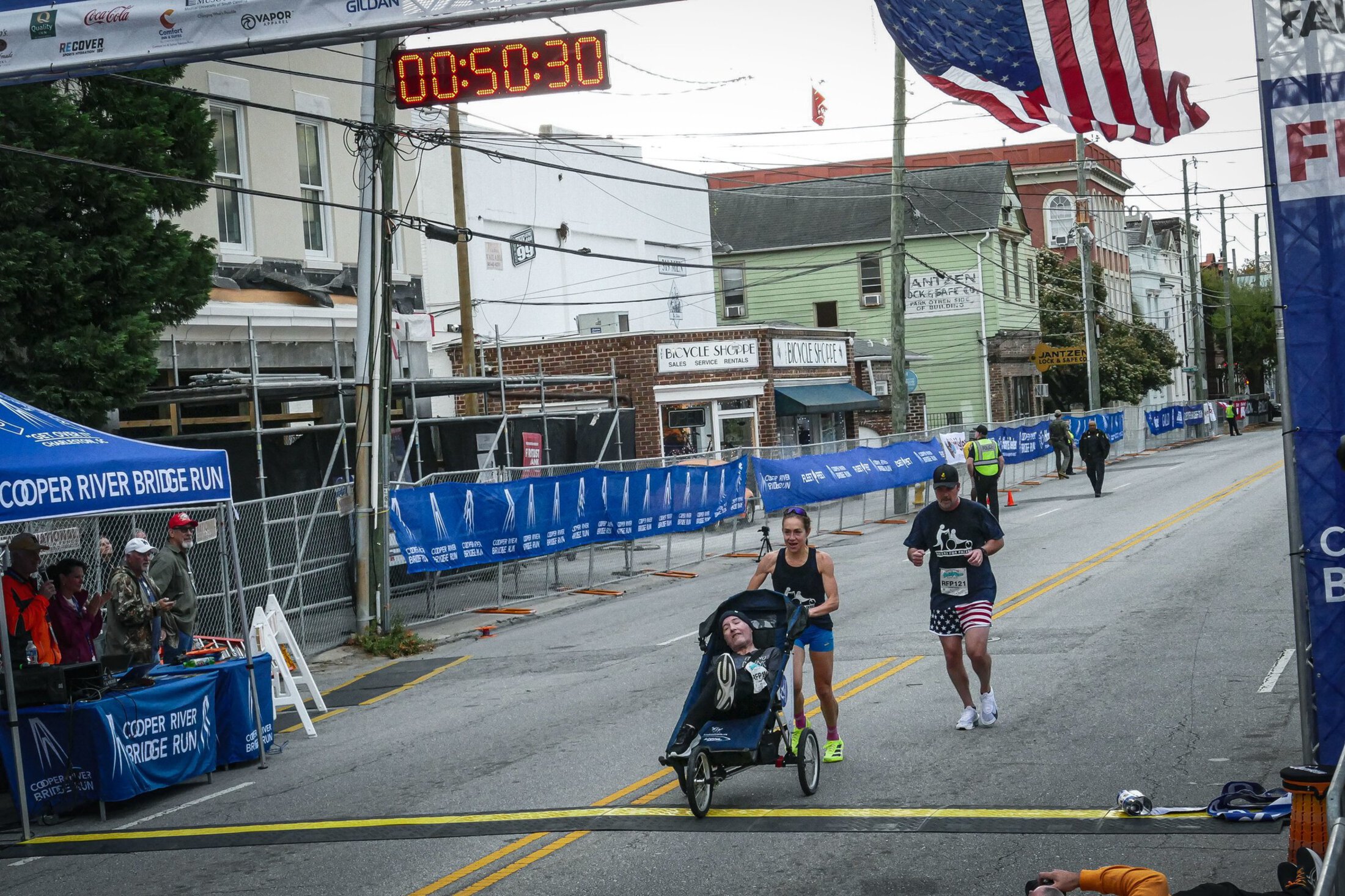
During the 49th annual Cooper River Bridge Run in Charleston, Sarah Breevoort, M.D., medical director of the MUSC ALS program, and her team pushed Woodard over the bridge to the finish line in a powerful act of compassion and resilience, fulfilling his lifelong dream in what would likely be his final opportunity to compete in the iconic race.
“It was overwhelming and very joyful. Everyone at the end was shouting my name, and it’s something I will never ever get over,” said Woodard. “I told my wife on the way home that it was the best thing to me to have people come together to support me.”
According to the American Brain Foundation, ALS is a rapidly progressing neurodegenerative disease that attacks the nerve cells in the brain and spinal cord that control voluntary muscle movement. As these nerve cells, called motor neurons, decline, they stop sending messages to the muscles. This causes the muscles to weaken, twitch and atrophy – lose muscle mass and deteriorate.
Woodard discovered running several years ago as a way to rise above personal struggles and build a healthier, more hopeful chapter of his life. He quickly became a familiar face in the local running scene, often completing at least one race every month throughout the Lowcountry, until his ALS took a toll on his muscles, and he visited Breevoort at MUSC Health in Charleston.
Over the past year, Woodard and Breevoort built a deep, personal bond centered around the sport they both love.
During this time, Breevoort was navigating her own long, uncertain road back to running, following two severe knee injuries and multiple surgeries beginning in 2024. Often entering clinic on crutches or in a cast, she found Woodard cheering her on, even as he grappled with his own physical losses.
The disease doesn’t stop Woodard from having a positive outlook on life and shining a bright light in others’ lives, like Breevoort, who wanted to give back to him for his strength and encouragement. She did everything in her power to get him in the race.
The idea came to Breevoort a couple of weeks before the race, when she made a call to Sean Glassberg, founder and president of Racers for Pacers. Racers for Pacers, founded in 2011 by Glassberg, provides running chairs for people with disabilities who cannot run on their own and pairs pacers to push the chairs for children and young adults with disabilities – the racers. Securing an adaptive chair for an adult with ALS was outside the organization’s usual scope, but Glassberg partnered with Breevoort to secure the specialized racing chair on extremely short notice for Woodard.
“Sean didn’t hesitate,” Breevoort said. “He understood what this would mean to Devon, to his family, to our clinic and to our community. In true Charleston fashion, people rallied immediately.”
On race day, with the adaptive racing chair secured and Breevoort’s team in place, they all made it over the Cooper River Bridge in a powerful display of unity and hope.
“Running over the bridge was more than just a run in my mind. It's also this symbolic act of hope. The bridge is symbolic for bridging the divide between the lack of control and loss with gaining momentum, movement and achieving goals,” said Breevoort. “I think that this is more than just Devon's journey, but very symbolic for MUSC and our approach to treating and helping people live with ALS.”
For Woodard’s wife, Kris Woodard, this race meant more than reaching the finish line. It showed that life doesn’t stop because of the disease, and with the right people by your side, anything is still possible.
“We can do all things through Christ who gives us strength. If you persevere, life doesn’t stop once you get the diagnosis. There’s a lot of life to live,” his wife said. “To see him there with people cheering him on just like they did when he was still running gave me hope to know there’s still more Devon can do. It was a significant moment between his doctors and him.”
For everyone involved, this was far more than a race, Breevoort said. It was a celebration of community, a testament to resilience and a powerful reminder that while ALS may affect the body, it cannot extinguish hope, dignity or human connection.
“Since being in a wheelchair, there’s more people that will stop to say hello or offer help if I’m struggling. Experiences like those and this race have restored my faith in humanity,” said Woodard.
Kristin Merkel
Recent Enterprise stories