
Being a pioneer isn’t easy, and it can take a long time to realize any enterprising vision. Novel and disruptive ideas can be met with considerable resistance.
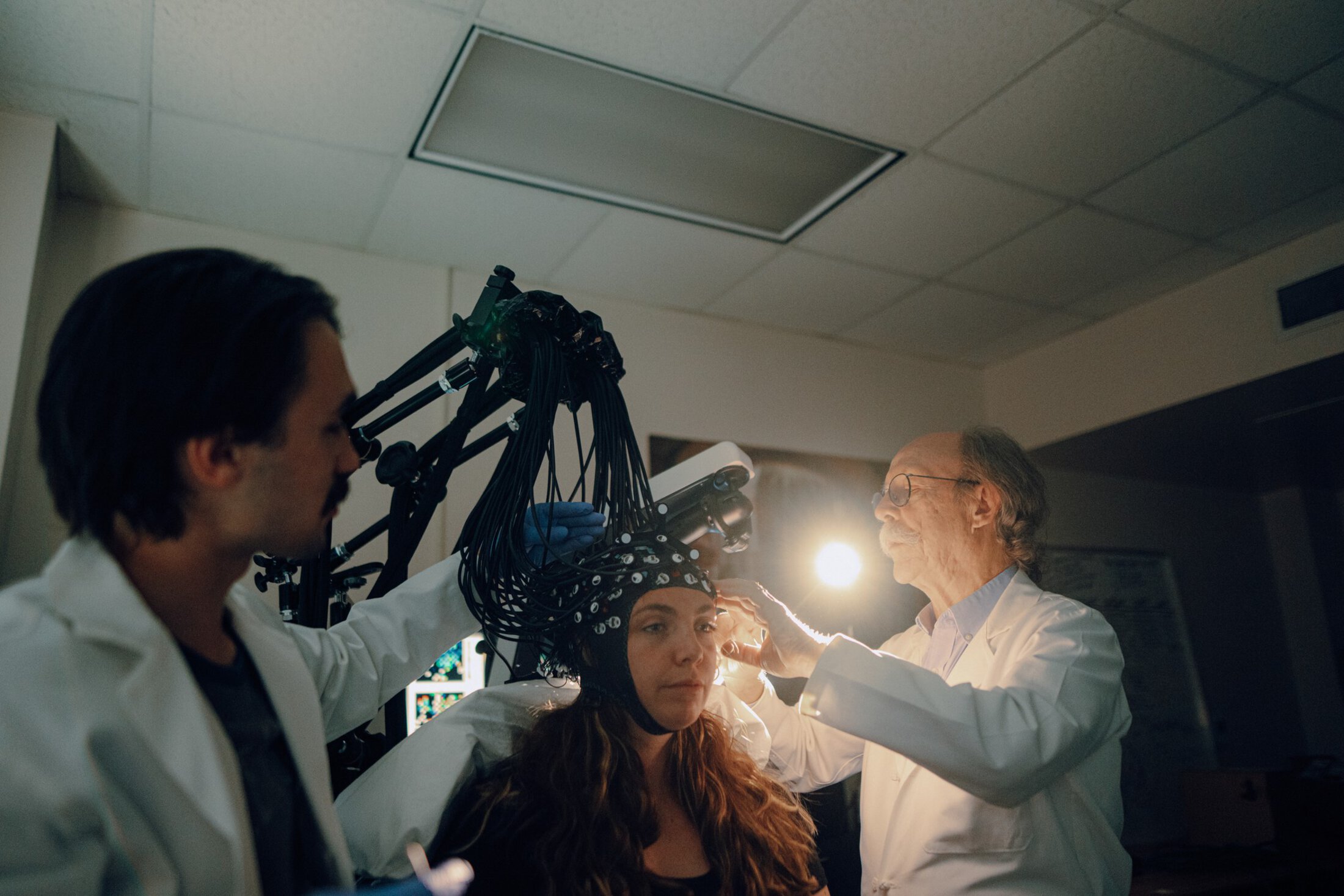
About 35 years ago, Medical University of South Carolina neuropsychiatrist Mark George, M.D., the Layton McCurdy Endowed Chair in Psychiatry and director of the Brain Stimulation Lab in the Department of Psychiatry and Behavioral Sciences, had a transformative idea: to apply transcranial magnetic stimulation (TMS) to the brain.
“Applying magnetic stimulation to the brain has gone from just an idea – a heretical idea – to finally getting FDA approved in 2008 for treating major depressive disorder,” said George.
Appreciating TMS
Although TMS had previously been used on peripheral nerves in the arms and back, George was the first to apply TMS to the brain for treating depression. Today, MUSC – where George has called his professional home ever since returning in 1995, following medical school and residency – is a world leader in TMS.
George and colleagues are researching state-of-practice Stanford Accelerated Intelligent Neuromodulation Therapy (SAINT), which is a rapid, personalized form of TMS that depends on brain imaging and AI-guided targeting to deliver intensive stimulation over a few days, thus resetting dysfunctional brain circuits in depression and other forms of mental illness.
“SAINT is looking at patterns in the brain to say, ‘Here is the best spot to treat this individual,’” said MUSC neuropsychiatrist Baron Short, M.D., medical director of the Brain Stimulation Service at MUSC Health and professor in the Departments of Psychiatry and Behavioral Sciences and Internal Medicine.
SAINT compresses what used to be a six-week course of TMS into a single, intensive week of treatment. Patients receive multiple sessions of TMS per day over five days. Concurrently, patients can also receive cognitive behavioral therapy, as the brain is particularly receptive to talk therapy following magnetic stimulation, according to Short.
Targeting pathways
Short stressed that the reason TMS works to alleviate depression is that, at its foundation, depression is a circuit problem.
“The brain is an electrochemical organ,” he said, “and when medications aren’t enough, we can directly stimulate the brain’s circuits to help restore how those networks function.”
TMS uses magnetic fields to stimulate a part of the brain called the prefrontal cortex, thus helping to improve the brain’s regulation of emotions.
“After a course of TMS, the dendrites are bigger, juicier, and there are more of them – your brain is better connected,” stated George.
Help with mental illness
TMS and related interventions like SAINT are remarkably safe when performed properly, stressed Lisa McTeague, Ph.D., an MUSC clinical psychologist and associate professor in the Brain Stimulation Laboratory. Specifically, seizures related to TMS are very rare.
“We are running numerous accelerated rTMS trials, and we routinely see improvements across different types of difficulties, including mood, anxiety and cognition,” said McTeague.
In our trials, the vast majority of patients feel so much better after only three days. This is so promising as it suggests we can get people better faster.
Beyond depression, TMS is used for a variety of different psychiatric conditions. In 2018, it was approved by the U.S. Food and Drug Administration for obsessive-compulsive disorder (OCD), and it was later approved for smoking cessation in 2020.
Off-label, TMS is used to treat post-traumatic stress disorder (PTSD) and pain conditions.
Treatment-resistant depression
George explained how TMS was designed for people who have depression that has not responded to treatment with medications.
“For the one-third of people with depression who don’t respond to medications, they lead lives of misery,” said George. “TMS has historically been used for those people who’ve tried and failed with medications and talking therapies. And in those people, we get good results.”
George said that two-thirds of patients with treatment-resistant depression who receive TMS feel “at least halfway better.”
Looking forward
A priority for George and his team is to raise awareness of SAINT moving forward.
“Less than 1% of all depressed patients will get TMS. That’s remarkable. We’ve got a brand new treatment that works, and it gets them really well and is relatively side-effect free,” explained George.
As TMS and precision medicine continue to advance, faster and more personalized treatments are being explored. Eventually, Short and colleagues envision TMS as a kind of mental health tune-up – akin to refilling a tire that’s low on air. Notably, the military has taken an interest in TMS to treat soldiers with depression and suicide risk, with the Defense Advanced Research Projects Agency (DARPA) funding the lab’s research efforts.
Short said that advances in treatments like SAINT are offering new hope to patients with depression and other mental illnesses. “We’ve never had more tools to help – people just need to know they exist.”

Naveed Saleh
Recent MUSC News stories