
For years, Medical University of South Carolina emergency medicine (EM) physician Nathan Roberts, M.D., Ph.D., thought he would someday become a neurosurgeon. But a chance encounter while he was pursuing his doctorate changed all that.
Roberts met emergency medicine physician Frederick Korley, M.D., Ph.D., a pioneer in biomarkers of injury, and developed a strong interest in developing clinical markers for traumatic brain injury (TBI) in the emergency setting. After completing a dual doctorate, Roberts moved to the University of Michigan, where he was mentored by Korley and helped to implement a blood test developed by Abbott Laboratories – called i-STAT TBI – that detects TBI without the need for a CT scan.
“I started working with Dr. Korley and worked with him throughout my residency, and he's still very much a mentor,” said Roberts. “A lot of EM doctors are just clinicians. Here is a guy who is a true physician-scientist.”
After completing EM training, Roberts accepted a faculty position at MUSC. After his arrival, he connected with Nikolina Babic, Ph.D., medical director of Clinical Chemistry and Toxicology in the Department of Pathology and Laboratory Medicine, and they began collaborating on efforts to implement the TBI biomarker testing at MUSC.
At the time of this collaboration, Babic had already been leading efforts to evaluate novel TBI biomarkers in the MUSC patient population. Her work focused on validating a new Abbott assay designed for automated, high-throughput testing in the core clinical laboratory, called the Alinity i TBI test. Unlike the i-STAT device previously studied by Roberts and intended for point-of-care use, this centralized approach would enable significantly lower costs without compromising turnaround time.
What began as a collaboration between Babic and Roberts quickly expanded into a broader, multidisciplinary effort that included key contributors such as Catherine Mills, Ph.D., a clinical chemistry fellow at the time who now serves as associate medical director of Clinical Chemistry and Immunology, as well as EM residents Katelyn Fritsche, M.D., and Drew Merideth, D.O.
This type of team-based approach is essential to the successful introduction of a new test into clinical practice. By combining laboratory and clinical expertise, the team can ensure that the test works as intended, is used for the appropriate patients and delivers accurate and meaningful results.
The findings of the study were recently published in The Journal of Applied Laboratory Medicine, with Roberts and Mills as lead authors. This MUSC study clearly demonstrates the potential of the TBI blood test to reduce the need for imaging for Emergency Department (ED) patients. These results support the clinical implementation of the assay at MUSC in Charleston and position the institution as an early adopter of this testing approach, both within the state and nationally.
Understanding the costs
Concussions and other types of TBIs are common, with nearly 5 million annual ED visits for suspected TBIs.Even a moderate TBI can lead to disability and a diminished quality of life, making early detection and treatment critical to preventing or reducing symptoms such as cognitive, mood and behavioral changes.
At the same time, determining when imaging is warranted remains an important part of TBI care. When clinical findings indicate a low risk of serious injury, CT scans may not be necessary. Roberts estimates that more than 90% of patients getting CT scans are normal. Currently, about 80% of patients suspected of having TBIs receive CT scans.
“In this case, we have a huge population of patients who are getting unnecessary radiation in the form of a CT scan,” Roberts said.
In this case, we have a huge population of patients who are getting unnecessary radiation in the form of a CT scan.
Understanding the test
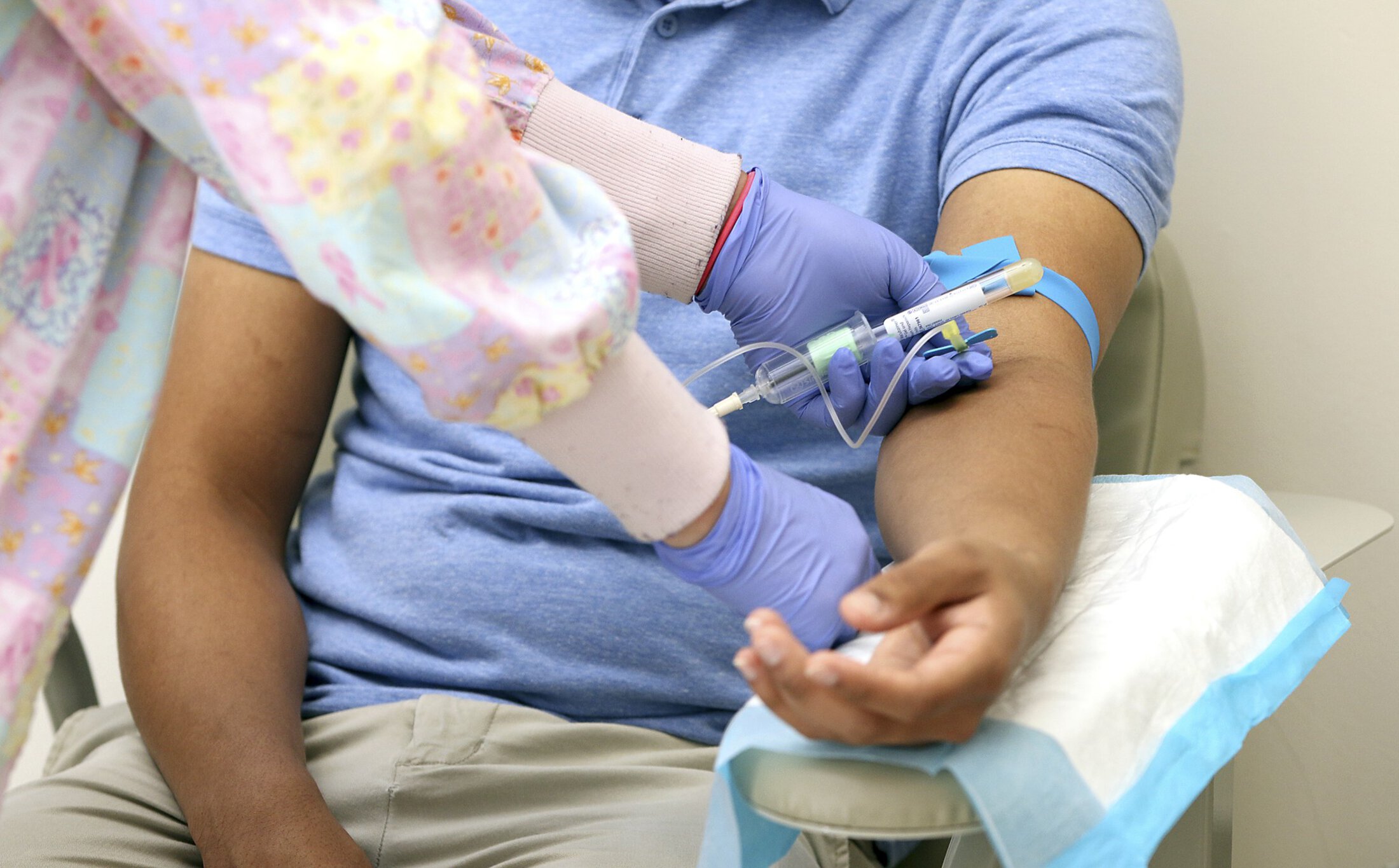
Abbott's Alinity i TBI test is an FDA-approved assay that detects two proteins, glial fibrillary acidic protein (GFAP) and ubiquitin carboxy-terminal hydrolase L1 (UCH-L1), which are released into the bloodstream after a brain injury and can be detected shortly afterward.“Whenever you detect these proteins at or above specific levels, that would be an indicator of a potential brain bleed. If both protein levels are below those specific levels, then you can safely exclude TBI,” Mills explained.
The MUSC team found that the TBI test is highly sensitive but not sufficiently specific in certain patient populations. In other words, although the test does a good job of ruling out TBIs, it still results in a number of false positives. The eventual goal is to make the test more specific.
Although the test is more specific in younger individuals, false positives are more common in adults over 65, who are more likely to test positive due to age-related increases in biomarkers, said Roberts.
“Some of the next big steps in the field are going to be teasing out how we can adjust the biomarker thresholds to what we consider a positive test, especially in older adults, to account for age-related elevations in biomarkers,” said Roberts.
“We think that these elevated levels are related to neurodegeneration in older adults. They have higher baseline levels of these biomarkers,” he added.
Unlike a CT, which can take several hours to complete, assay results are available within an hour or less. Shorter wait times may make patients more likely to seek evaluation, for their own peace of mind, said Mills.
“People may feel more comfortable coming in to get checked out if they know that, with negative results, they’ll be able to leave quickly rather than face a prolonged stay,” she said.
People may feel more comfortable coming in to get checked out if they know that, with negative results, they’ll be able to leave quickly rather than face a prolonged stay.
Building on this work, Roberts and his colleagues are examining the use of central nervous system biomarkers in the ED to detect a broader range of neurologic injuries beyond TBI, including severe spinal cord injuries, such as spinal cord compression.
“Researchers have begun exploring how these biomarkers might help to detect stroke,” Roberts explained, “and that work is starting to gain momentum. But far less attention has been paid to how they might help to identify spinal cord injuries.”
In parallel with these efforts, Babic and Mills are leading laboratory-driven initiatives to expand TBI biomarker testing across the MUSC Health system, building on improvements to the clinical pathway established at MUSC Charleston. Broader use of this approach has the potential to reduce the need for CT scans significantly, lowering costs while minimizing unnecessary radiation exposure. In addition, the ability to rule out TBIs more rapidly may help to decrease ED lengths of stay, improving overall patient experience and efficiency of care delivery.

Naveed Saleh
Recent MUSC News stories