

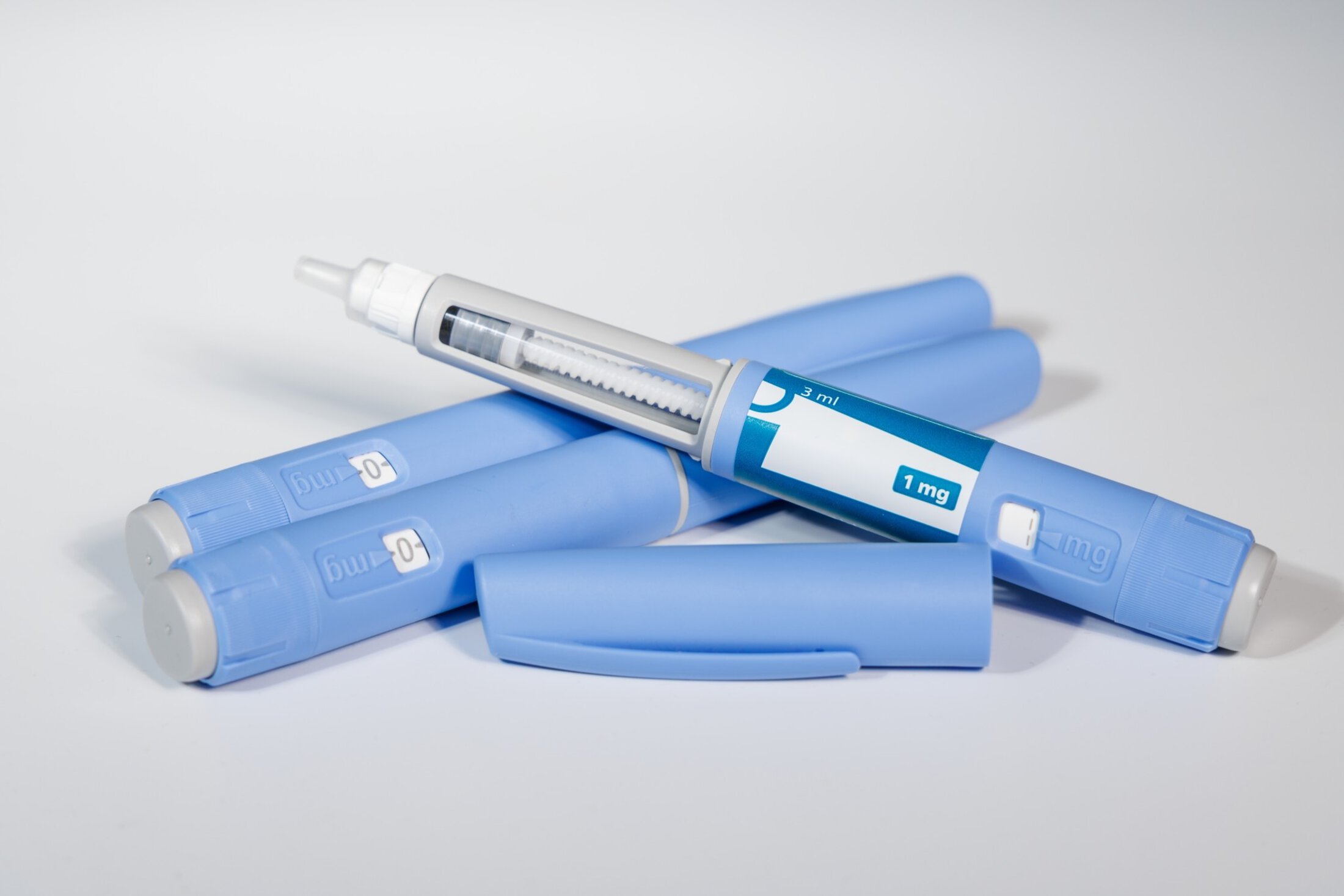
For many patients on the weight-loss medications known as GLP-1s (glucagon-like peptide-1s), such as semaglutide, tirzepatide and liraglutide, the question of when or whether to stop is inevitable. The assumption is often that once a goal weight or certain lab numbers are reached, the hard part is over and the results will hold. But the medications were not designed to leave the picture quietly.
“There’s no evidence that they have any sort of substantially lingering effect once you stop taking them,” said Patrick O’Neil, Ph.D., director of the MUSC Weight Management Center and a professor in the Department of Psychiatry and Behavioral Sciences. “Obesity is a chronic disease, and it requires chronic management."
The biology that drives weight gain in the first place doesn’t disappear, he explained – it simply picks up where it left off.
“We don’t have a good off-ramp right now. These are meant to be indefinite medications,” said Joshua Neal, M.D., chief of the MUSC Health Wellness and Human Performance Integrated Center of Clinical Excellence (ICCE) and an obesity medicine physician.
Research supports this. In a 2021 randomized clinical trial published in JAMA, participants who stopped semaglutide regained roughly two-thirds of their prior weight loss within a year, while those who continued maintained or lost additional weight.
GLP-1 medications are used to manage Type 2 diabetes and promote weight loss. They work by mimicking natural hormones to regulate the appetite and blood sugar levels. They don’t simply reduce appetite – they alter hormonal signaling, metabolism and the brain’s relationship with food. When the medication stops, those underlying signals resume.
So what actually happens when you stop taking a GLP-1?

The reality of regain
For patients coming off GLP-1 medications, the main expectation is straightforward: weight regain is common because obesity is a chronic condition.
“It is a biologically driven disease. Most people will regain weight,” said Neal. “It is a mix of behavior and biology, but I would say it leans heavily toward biology.”
When you lose weight, the body employs a number of defense mechanisms. “The body has a number of tricks up its sleeve to try to regain that weight,” explained O’Neil.
These "tricks" include increased hunger, intensified cravings and a slower metabolism.
“If you lose a significant amount of weight, your metabolic rate slows down,” O’Neil continued. “A portion of that loss comes from lean muscle tissue, which is what primarily burns calories. Fat tissue primarily stores calories, so you’re losing part of the calorie-burning component of your body composition. That sets the stage for weight regain.”
GLP-1 medications temporarily blunt that biological pushback. “You were losing weight more readily because you started taking a medication that works on your physiology and your brain neurochemistry and makes it easier for you to eat fewer calories,” O’Neil said.
Once the medication stops, that assistance disappears. “Most overall consumption, as far as quantity of food is concerned, is biologically driven by hormonal signaling,” said Neal.
The result is a body that burns fewer calories and sends stronger hunger signals. While the timeline varies, with some people regaining weight quickly and others taking two years, the trajectory is consistent.
What about ‘food noise’?
For many patients, the most jarring change after stopping a GLP-1 isn’t what happens on the scale; it’s what happens in their head.
While on the medication, people often describe a quieting of food noise, the constant mental hum of negotiating cravings and thinking about the next opportunity to eat.
“That food noise does come back if you come off the medicine,” Neal said.
For patients who experienced relief from that noise, its return can feel like losing a safety net.
“Take advantage of that help when you're getting it,” advised O’Neil. “Try to get some patterns in place, understanding that you may need to work a little harder at those changes if you come off of the medication.”
Recognizing this shift can help patients to prepare, rather than mistake it for personal failure.
No clear exit ramp
GLP-1 medications function less like temporary diet aids and more like a treatment for a chronic condition. They’re often viewed as tools to reach a target weight and then leave behind, but the risk of obesity doesn’t go away when a goal is met.
Some patients look for middle-ground strategies, including taking lower maintenance doses, but Neal said that the evidence for that approach is limited.
“I have not seen any data to support microdosing,” he said.
For those who choose to discontinue the medication, preparation and clear expectations matter.
How to come off a GLP-1
You can soften the landing by building solid systems and maintaining high awareness with these core strategies:
Prioritize consistent data: You may be inclined to avoid the scale out of fear after stopping the medication, but consistent data is the best defense.
“We encourage people to weigh themselves once a day, same time and conditions each day,” said O’Neil.
Tracking trends with a weight management graph can help to make a 3-pound gain easier to address before it becomes 20. However, O’Neil added an important caveat, reminding patients not to make too much of day-to-day gains or losses.
“Water weight shifts much, much faster than fat weight,” he explained. “It only takes one pint of water to make a pound on the scale. The value of the graph is that it lets you see the longer-term trend,” he explained.
Use a “rehearsal space” mindset: Treat your time on the medication as a window for observation.
“Pay attention to your diet, exercise and behavioral patterns before you go on the medication and after. There's a lot to be said for ‘know thyself,’” said O’Neil.
Gather intel: Identify which meals are truly satisfying and which emotional triggers persist even when hunger is dampened.
Establish permanent guardrails: Successful maintenance relies on nonnegotiable behaviors.
Neal recommends:
● Regular monitoring: Weighing yourself at least once a week.
● Robust physical activity: 30 minutes of moderate- to high-intensity exercise, four to five days a week.
● Quality over quantity: As your appetite returns, focus on food quality to fill your plate.
“Really focus on nutritional quality as much as quantity,” said Neal.
Protect your metabolism: Because weight loss often involves losing lean muscle, the body's primary calorie-burner, sustaining your results will require active maintenance of your body composition.
O’Neil noted that research consistently shows that most patients regain a significant amount of their weight once medication treatment stops. Because GLP-1 medications are intended for long-term use, maintaining results will require ongoing diligence. That reality, according to O’Neil, paints a broader clinical picture: Weight gain is more than just a number on a scale; it’s a serious health risk.
“The critical thing is developing the mindset that we’re addressing a chronic condition,” he said.



Jennifer Sweenie
Recent MUSC News stories