
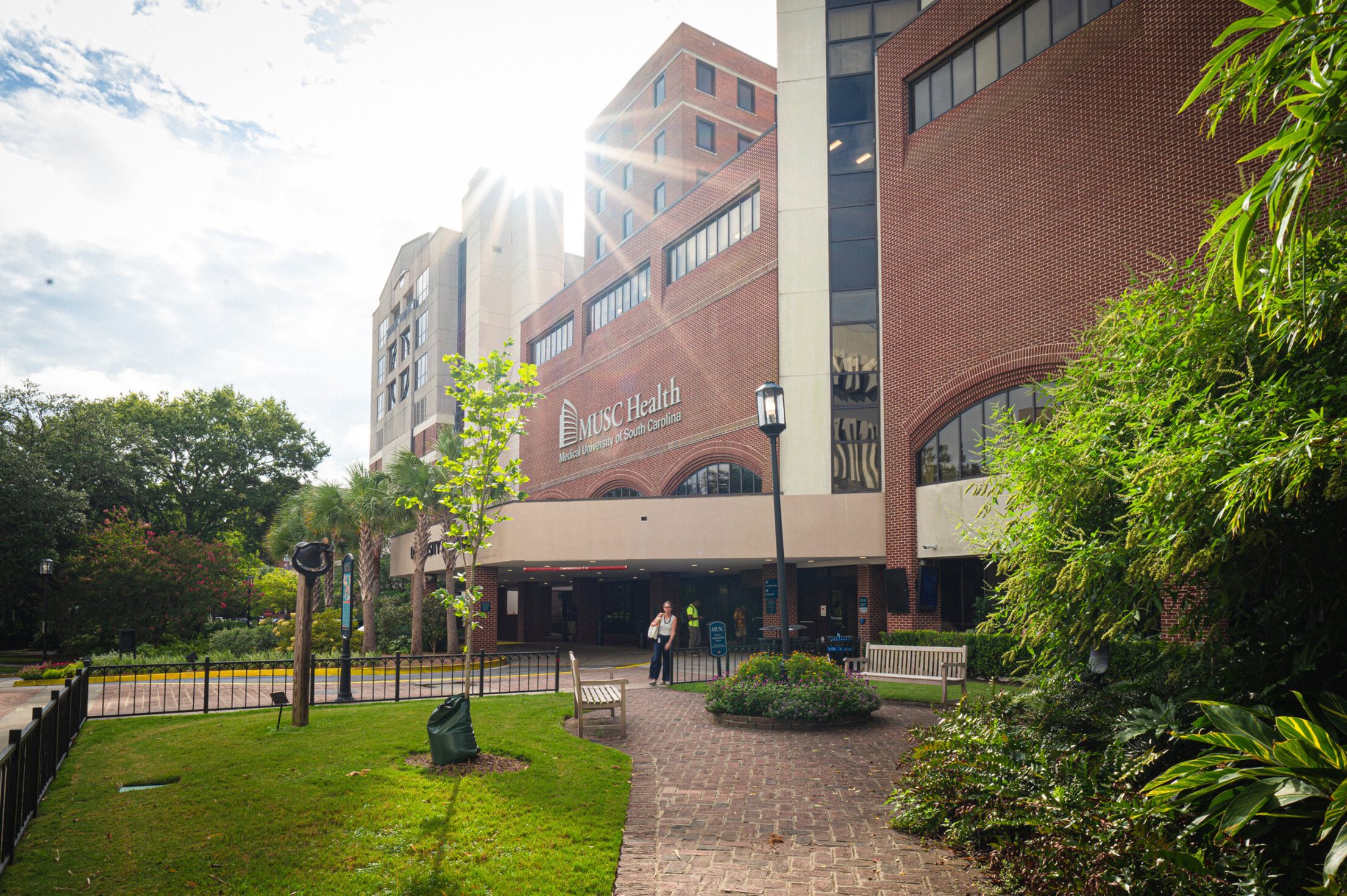
The National Institutes of Health Centers of Biomedical Research Excellence (COBRE) grants have supported the development of several MUSC research centers and are directly responsible for nearly $160 million in funding for research at MUSC.
In fact, MUSC ranks as the top-funded institution for COBRE grants in the country, followed by the University of Louisville with about $140 million. Timothy L. Stemmler, Ph.D., vice president of Research at MUSC, explained how important the COBRE grants have been to the institution’s research efforts. “By investing in our people and our programs, COBRE awards help MUSC to expand its research capacity in meaningful and lasting ways. These awards fuel faculty development, student training and the infrastructure that supports discovery, particularly in the fields where our faculty are national leaders.”
The Office of Research Development (ORD) has worked closely with the COBRE research teams, providing guidance during the grant process to strengthen the applications. Securing this designation reflects the strength of MUSC’s research enterprise and the collaborative efforts behind these proposals. With funding secured, the teams can move forward with projects designed to expand MUSC’s research programs and drive scientific discoveries. Carla Stipe, director of the ORD at MUSC, added that their team is highly invested in the COBRE grant application process. “We are determined to submit the most thoughtful research plans and strongest applications. It’s a rigorous process. Some other institutions do not have an Office of Research Development like ours, which began at MUSC in 1993.”
What the grants have funded at MUSC
One of the most successful COBRE grants funded MUSC’s Research Center for Stroke Recovery, which began in 2014 and continues through 2029 with its recent renewal: COBRE for Restoration of Neural-Based Function. It continues to play a key role in advancing stroke rehabilitation research at MUSC by supporting investigators and shared research resources. As the program enters phase 3 of funding, MUSC plans to expand its focus to support research on restoring neural-based function across a broader range of neurological conditions and patient populations.
The South Carolina Building Resilience through innovative Interventions to promote Growth and Health after Trauma (BRIGHT) COBRE has also proved successful. Awarded in 2025, the goal of the BRIGHT Center is to strengthen the immediate and long-term capacity of early-stage investigators to conduct high-impact independent research. This research focuses on the development and rigorous testing of innovative interventions and implementation strategies to improve access and/or quality of care among individuals affected by trauma and adversity. MUSC aims to better the odds for trauma survivors by equipping new generations of trauma researchers with state-of-the-art resources and tools so that they can expand the impact and reach of trauma interventions.
In 2023, a COBRE focused on neurodevelopmental conditions was awarded to MUSC. This COBRE, the first phase lasting until 2028, funds a critical mass of researchers and clinicians investigating common neurodevelopmental conditions, such as autism, attention-deficit and hyperactivity disorder and intellectual disability. If awarded, phases 2 and 3 will continue for an additional 10 years, beginning in 2028. The program’s goal is to create a collaborative multidisciplinary research environment with pilot project programs, mentoring and training.
The Center for Redox Biology and Signaling was awarded in 2011 to focus on oxidants, redox balance and stress signaling. The grant expires in July of this year, thereby completing its transition to long-term sustainability as a nationally competitive multidisciplinary research program in redox pathobiology.
The MUSC Center of Biomedical Research Excellence (COBRE) in Digestive and Liver Disease began in 2020 and will run through 2030, with the potential to expand an additional five years. This COBRE is responsible for recruiting, mentoring, training and retaining a cadre of early career scientists who will become independently funded investigators in digestive and liver disease research and develop sustainable scientific core resources to support digestive and liver disease studies.
MUSC’s long history of securing COBRE funding to support major research initiatives also included a grant awarded in 2001 that remained active for 16 years focused on developmentally based cardiovascular diseases. Another, awarded in 2002, supported research in lipidomics and pathobiology through 2017. A third COBRE, also launched in 2002, funded oral health research for 15 years. These grants helped to build sustained programs in each of these important areas of research.
How do the COBRE grants work?
The COBRE program supports the development of biomedical and behavioral research centers at institutions in states that historically receive lower levels of NIH funding. It operates under the Institutional Development Award (IDeA) program, which includes states such as South Carolina and others eligible for enhanced research capacity support.
COBRE funding is structured in three sequential five-year phases:
- Development phase – Establishes new research centers.
- Expansion phase – Strengthens and broadens research capacity and infrastructure.
- Sustainability phase – Positions centers for long-term success and independent funding.
Together, these phases build durable research programs that strengthen institutional competitiveness and impact.
Stemmler said that in addition to the many fruitful careers that have been launched over the years through the COBRE grants, countless patients have benefited from the research developed. ORD’s Stipe agreed. “It truly has been a labor of love,” she said. “We have so much more we can do, and we are always looking for the next research opportunity. But thanks to COBRE, we have accomplished so much.”
Currently funded MUSC COBREs and their leadership include:
COBRE in Oxidants, Redox Balance and Stress Signaling – program director: Kenneth Tew, Ph.D.
COBRE for Restoration of Neural-Based Function – program director: Steve Kautz, Ph.D.
COBRE in Digestive and Liver Disease – program director: Steve Duncan, Ph.D.; associate director: Don Rockey, M.D.
COBRE in Neurodevelopment and its Disorders – program director: Christopher Cowan, Ph.D.; associate directors: Laura Carpenter, Ph.D. and Stephen Tomlinson, Ph.D.
SC BRIGHT COBRE – program director: Carla Kmett Danielson, Ph.D.; associate director is Kenneth Ruggiero, Ph.D.
Theresa Stratford
Theresa Stratford is the editor for MUSC’s newspaper, The Catalyst. She has worked as a writer and editor for 25 years since graduating from the University of South Carolina with a Bachelor of Arts degree in journalism and mass communications. As a writer, she has worked for the federal government in cybersecurity and for the Department of Energy. As both a writer and an editor, she has worked for a variety of syndications, including national magazines, such as Vogue Knitting, as well as many local Charleston and South Carolina publications.
Recent MUSC News stories