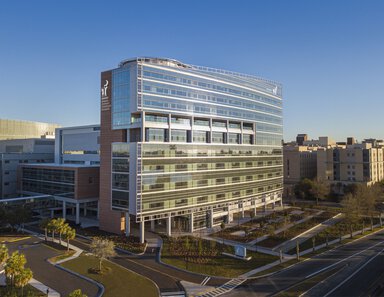

Thirteen-year-old Brenley Gulledge of Myrtle Beach has been a patient at MUSC Children’s Health since infancy. Over the years, she and her mother, Jodi Schleichardt, have made the trip to Charleston for two heart surgeries and two leg procedures to address walking issues related to cerebral palsy. Now, they come to the R. Keith Summey Medical Pavilion for Brenley’s orthopedic follow-up appointments with Robert F. Murphy, M.D., chief of pediatric orthopedics at MUSC Children's Health.
“Brenley was transferred to MUSC not even 24 hours after she was born. So, we've been coming here for almost 14 years now. Lots of appointments and visits here,” said Jody. “We love Dr. Murphy. He and his team are amazing and so good with kids.”
During Brenley’s appointments, it’s normal for her to have several X-rays as her doctor monitors her cerebral palsy.
“I've had multiple X-rays and an MRI. I don't like getting X-rays often,” said Brenley.
Regular X-rays can be time-consuming and may require patients to change positions multiple times. They also expose patients to radiation. That’s why Murphy and his team have led the charge to bring an innovative technology to MUSC Health that decreases the time it takes to X-ray a child while also reducing exposure to radiation.
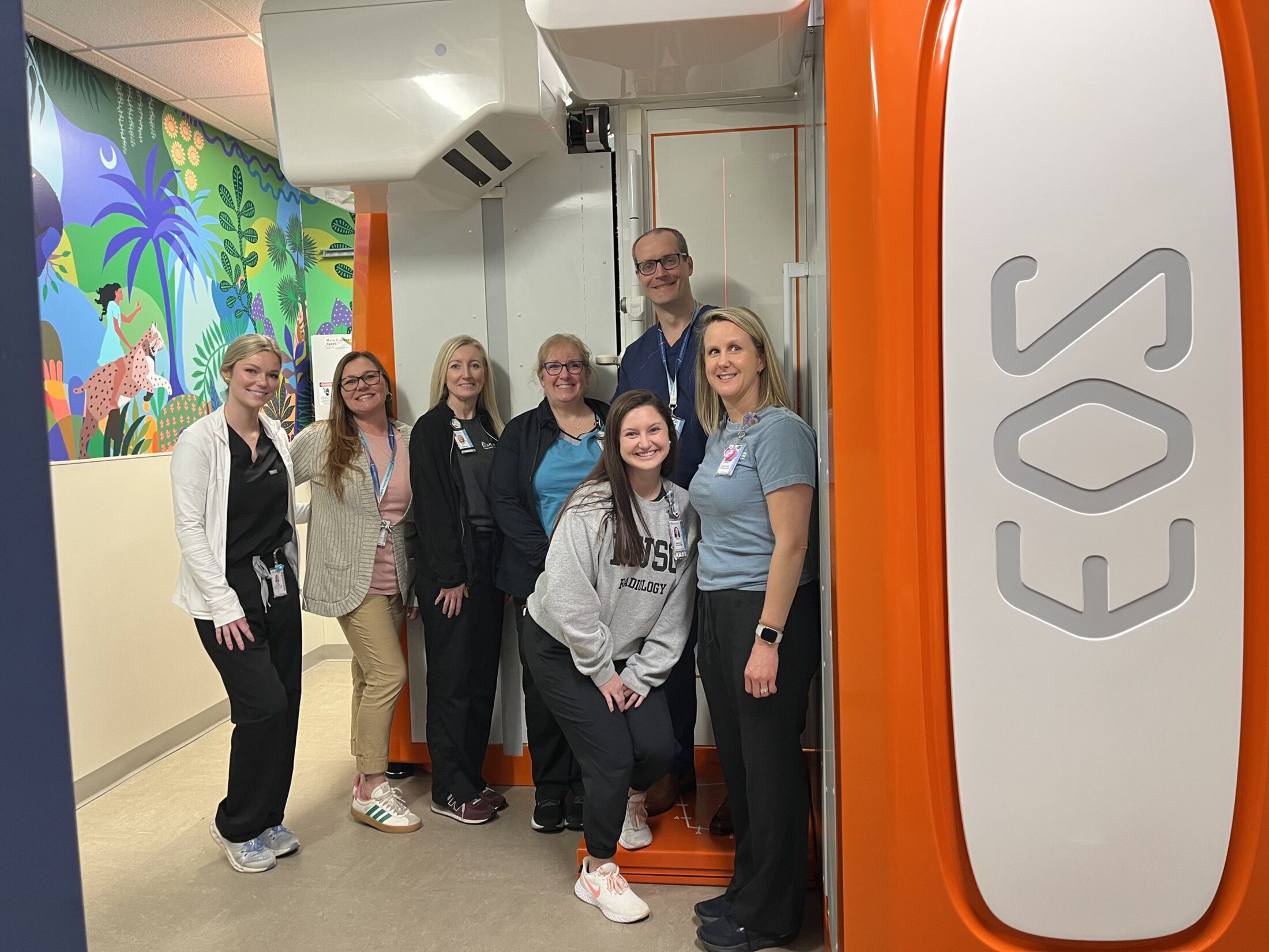
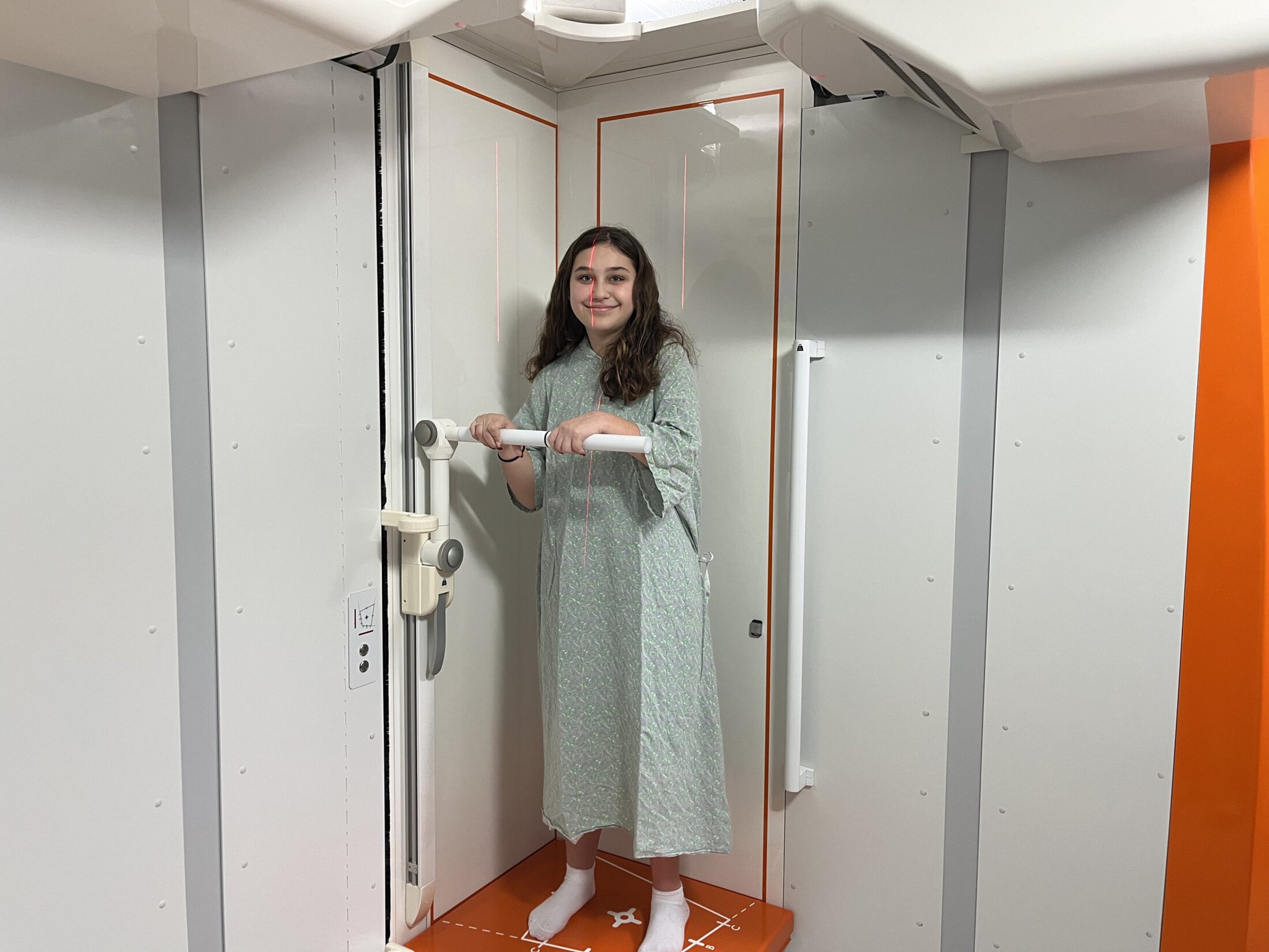
The MUSC Children’s Health R. Keith Summey Medical Pavilion has introduced EOS imaging, an advanced technology that captures full-body, upright images from both the front and side simultaneously while greatly reducing radiation exposure. This technology will enhance imaging for children being treated for spinal conditions, such as scoliosis, and for neurological conditions, such as cerebral palsy. It will also benefit children with lower-extremity concerns, including growth differences and angular deformities, like knock knees or bowlegs, and various hip conditions.
“I'm so excited that we are able to offer this state-of-the-art technology for upright alignment-based imaging to the children of our state, and that our institution really valued the innovation associated with this technology. It was a team-based approach,” said Murphy.
Brenley isn’t the only patient who has had the chance to test out the new technology. Fourteen-year-old Katelynn Rini also underwent EOS imaging at one of her routine scoliosis appointments.
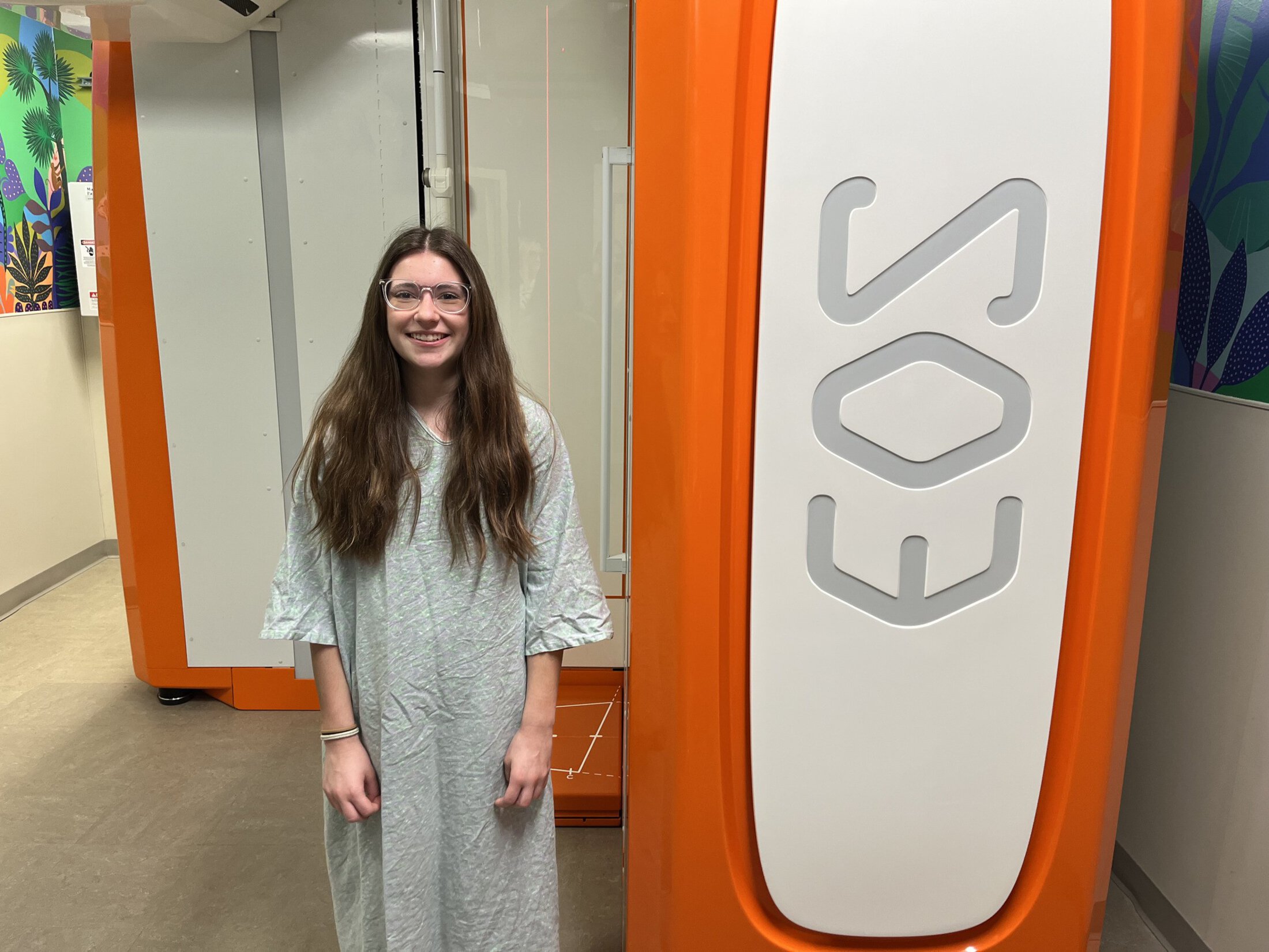
Since being diagnosed with scoliosis at 10, Katelynn has had many X-rays. She shared how time-consuming they can be, but she thought the new EOS imaging machine was different.
“The machine was very fast. During other X-rays, it’d have to be done at different angles or redone because it didn’t turn out right,” said Katelynn. “I was kind of nervous that I was going to be one of the first ones using it. But it was cool!”
Brinley’s mother believes that the reduced radiation exposure is one of the most important benefits of this new technology.
“It makes me feel so good knowing that she can get X-rays with less radiation. She always has to get more and more X-rays,” said Jodi. “The lower radiation is going to be so helpful for kids. And if the images are better, it’s a win – win, right?”
As patients like Brenley and Katelynn continue their pediatric care into their late teenage years, advancements like EOS imaging ensure that the appointments they once dreaded are quicker, safer and one less thing to worry about.

Kristin Merkel
Recent Enterprise stories