
Perhaps you’ve noticed a newer item being sold at dollar and grocery stores: at-home, over-the-counter urine-testing kits. For a low price, they claim to detect exposure to tetrahydrocannabinol, or THC, the main psychoactive ingredient found in marijuana. Other tests are advertised as being able to find traces of cocaine, opiates, methamphetamines or prescription drugs.
These tests, however, tend to be inaccurate, said Medical University of South Carolina addiction specialist Sarah Book, M.D., a clinical psychiatrist who serves as medical director of the Center for Drug and Alcohol Programs, an outpatient addiction program.
“That poor accuracy is why the manufacturers have a caveat on there that says any positive test has to be followed up with higher-level testing,” said Book.
She explained that despite their limitations, at-home drug tests appeal to consumers because they are inexpensive, widely available and ensure privacy. Families and caregivers may also turn to them when they are worried about a loved one’s substance use, while others use them to check their status before formal testing for employment or legal issues. What these kits can’t provide, she said, is the accuracy or clinical context needed to make informed medical decisions.
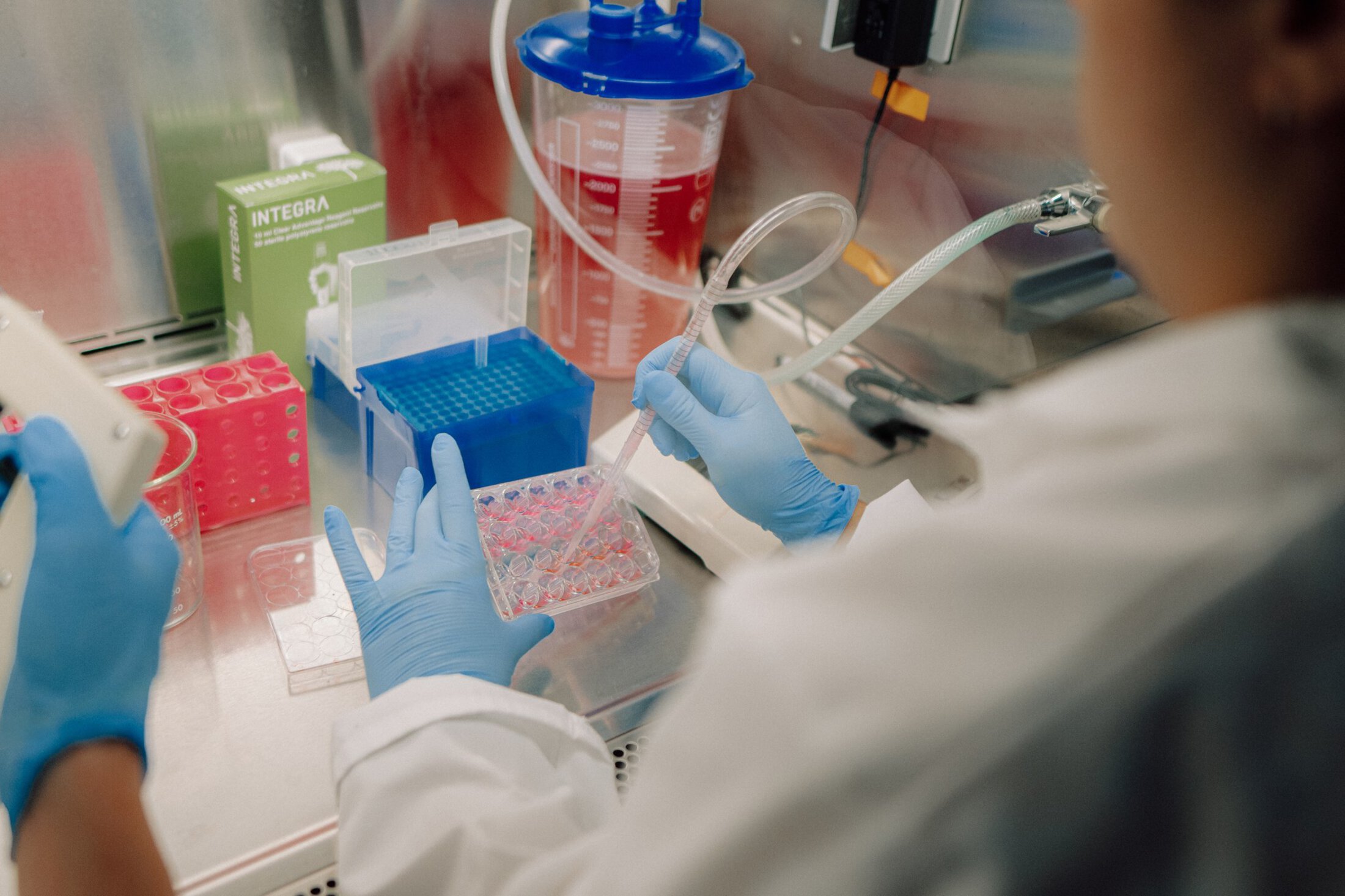
That type of high-level confirmatory testing is offered at the MUSC Clinical Neurobiology Laboratory, directed by Book. Physicians across MUSC rely on the lab when monitoring drug or alcohol use in the clinical context, such as substance use disorder treatment and alcoholic-related liver disease, where accuracy is critical. The lab is part of the Department of Psychiatry and Behavioral Sciences.
Immunoassays: a specific test
Book noted how false positive results in drug and alcohol testing are rampant. She often must instruct colleagues about the limitations of lower-level testing.
“Clinicians often view lab values as definitive, but they’re not,” she said. “Many factors influence lab results, and I frequently have to help put those findings into proper clinical context.”
Book recommends that if a result on an over-the-counter drug test, like those found in the dollar store, is positive, the test should be followed up with a lab immunoassay or other high-level testing. An immunoassay is a common laboratory technique that uses antibodies to target antigens, or specific molecules in the sample. In the over-the-counter tests, antigens refer to the drug target of interest, like THC.
“The assay is antibody-based, so it's reacting to the antigen in the sample. Think of it as a lock and key approach that is specific to the drug being tested for,” said William Griffin, Ph.D., associate director of the Clinical Neurobiology Laboratory, where the antibody-antigen levels are then quantified using an analyzer.
THC is considered a signal of marijuana or cannabidiol (CBD) use. When THC is present, depending on the concentration, it can cause a “high.” While marijuana contains copious amounts of THC, CBD has only trace amounts. Consequently, CBD itself doesn’t cause a high and is often used to self-treat anxiety, depression and chronic pain.
LC-MS: a more specific test
Even more accurate than the immunoassay is the liquid chromatography-mass spectrometry (LC-MS) assay. Whereas immunoassays can cross-react with different (but similar) molecules, LC-MS assays precisely measure the molecular weight of the target compound and other compounds in a sample.
“We are able to detect and measure the mass of these molecules as well as some other characteristics which leads to positive identification and quantification.” said Griffin.
For example, based on the amount of THC detected, the lab can distinguish between marijuana use and CBD products, said lab manager Lorie Robertson.
“We can say, ‘Yeah, they were taking marijuana,’ or ‘No, this is just CBD.’”
Recently, Griffin and his MUSC colleagues have developed a novel type of LC-MS assay that can be used to measure levels of a metabolite called phosphatidylethanol, also known as PEth. This blood biomarker is highly specific for alcohol consumption and can be used by physicians monitoring outpatient treatment for alcohol dependence. Gastrointestinal specialists treating liver disease also utilize this test to determine whether their patients are still drinking, thus undermining the treatment of liver disease.
LC-MS can also differentiate between various types of benzodiazepines, such as Ativan and Xanax, a highly addictive class of sedatives, most commonly prescribed for the short-term treatment of anxiety and other related conditions. For pain management physicians, LC-MS can be used to determine whether the patient is taking the opioid as prescribed or diverting it for purposes other than treatment.
Sometimes, a person doesn’t even know they are taking a drug, and LC-MS can help to resolve the mystery. Book points to cases where patients have mistakenly taken prescription medications found in their drug cabinets, only to later complain of cognitive impairment of unknown origin. LC-MS can identify the offending drugs in such cases.
LC-MS can also be used to detect fentanyl, which Book warns is found in a variety of drugs – not just illicit opioids like heroin. For instance, fentanyl has been found in marijuana because drug dealers often prepare opioids on the same surface that they prepare marijuana, said Book.
Unlike other drugs of interest, however, there is currently no commonly used test to determine how much fentanyl is in any drug.
“The people that make these assays just haven't gotten to that point yet,” said Robertson.
Book said that while at-home urine tests may promise quick answers, their limitations can leave patients and clinicians with more questions than answers. Advanced laboratory testing at MUSC goes far beyond a simple positive or negative result, she explained, offering precise, reliable data that can guide diagnosis, treatment decisions and patient safety.
“By combining clinical expertise with sophisticated tools such as immunoassays and LC-MS, MUSC’s Clinical Neurobiology Laboratory provides the level of accuracy needed to understand substance use more fully and support better outcomes for patients across a wide range of clinical settings.”

Naveed Saleh
Recent Enterprise stories