
On Jan. 23, 2025, a historic winter snowstorm paralyzed the Southeast. For 52-year-old Johnny Prince of Georgetown, South Carolina, it was supposed to be just another slick, challenging day on the job.
But as he went to unload a 14,000-pound excavator from a flatbed truck, the massive machine lost traction on the ice. In a split second, it slid off the truck and landed on his face – pinning Prince to the ground.
The impact resulted in devastating, life-altering injuries.
“It crushed the left side of my face and knocked my teeth out,” said Prince. “I had compound fractures, and my jawbone had been pushed into my ear canal.”
Prince was airlifted to Grand Strand Hospital in Myrtle Beach, where he spent 15 days recovering from the trauma. The accident’s lasting effects were profound and resulted in hearing loss in one ear and complete facial paralysis on one side of his face, making basic functions such as closing his eye and chewing difficult.
It crushed the left side of my face and knocked my teeth out. I had compound fractures, and my jawbone had been pushed into my ear canal.
While many of these types of injuries will gradually improve on their own, complete facial paralysis immediately after trauma can indicate a serious facial nerve injury. Given the critical role facial movement plays in everyday function and quality of life, Prince was referred to Michelle Hwang, M.D., a facial plastic and reconstructive surgeon at MUSC Health’s Facial Nerve Center.
The MUSC Facial Nerve Center is one of only a few in the Southeast. The team of four surgeons, a physical therapist and social worker brings a multidisciplinary approach to comprehensive care and treatment of surgical and nonsurgical conditions in adult and pediatric patients.
Hwang met with Prince approximately one month after his accident. After assessing his condition, she decided to give his nerves more time to recover on their own while she followed him closely over the next few months.
“There’s always hope that nerves may recover on their own after severe trauma, so part of the challenge is balancing patience with acting before a window of opportunity closes,” said Hwang.
I didn’t want to leave the house because I didn’t want anyone to see me.
After six months had passed, Prince had not regained any meaningful facial function, indicating that spontaneous recovery was unlikely. His quality of life was severely impaired.
“I couldn’t eat solid food; my eye and mouth were rough and uneven. I didn’t want to leave the house because I didn’t want anyone to see me,” he said.
Hwang and Prince agreed that it was time to proceed with reconstructive facial reanimation surgery. The intricate procedure was set for July.
“Facial reanimation surgery is rare as a whole, as few hospitals across the country perform this type of surgery.” Hwang said, “But this is absolutely the type of patient we are comfortable with at the MUSC Facial Nerve Center.”
Because Prince could not fully close his eye, it remained exposed and at risk of dryness, irritation and damage that could threaten his vision. To protect the eye, Hwang placed a small weight in his upper eyelid and tightened the lower lid, making it easier for him to blink naturally and close his eye.
The next step was restoring balance to his face. Hwang used a small piece of strong connective tissue from Prince’s leg to create support within the paralyzed side of his face.
“It acts like an internal support system, helping restore symmetry and lift areas that have lost their natural position because of paralysis,” she said.
To help Prince to regain movement, Hwang also performed a masseteric nerve transfer. By connecting a nearby working nerve to the facial nerve, she created a new pathway that would allow him to smile and move the lower part of his face again.
“In this procedure, a nerve normally used for chewing, the masseter nerve, is connected to a branch of the facial nerve responsible for smiling. The concept is that rather than waiting for an injured nerve that may never recover, we redirect healthy nerve signals to create a new source of movement,” she explained.
Although the eight-hour surgery was a success from the technical standpoint, for Prince, it was just the first step in a long, arduous journey toward reclaiming facial function and a sense of normalcy.
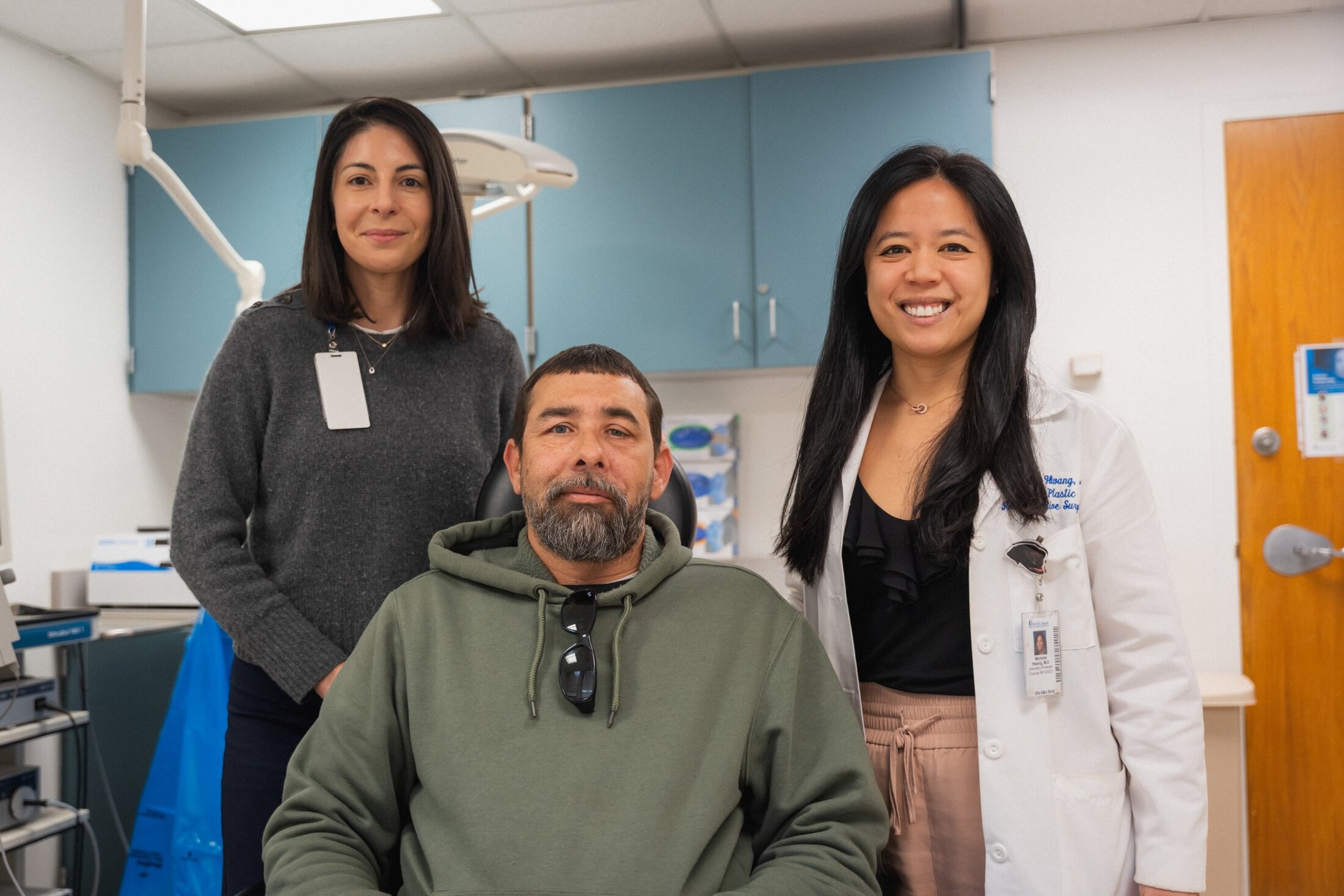
“In recovery from facial reanimation with nerve transfers like Johnny had, the brain must learn a new language,” Hwang said.
Enter Sarah Murphy, DPT, South Carolina’s only physical therapist trained in facial therapy. Murphy, who described her approach as patient-focused and collaborative, began working with Prince in January.
“It’s important for me to get to know my patients and understand what they hope to achieve from therapy,” Murphy said. “Only after that conversation can we begin to work toward common goals.”
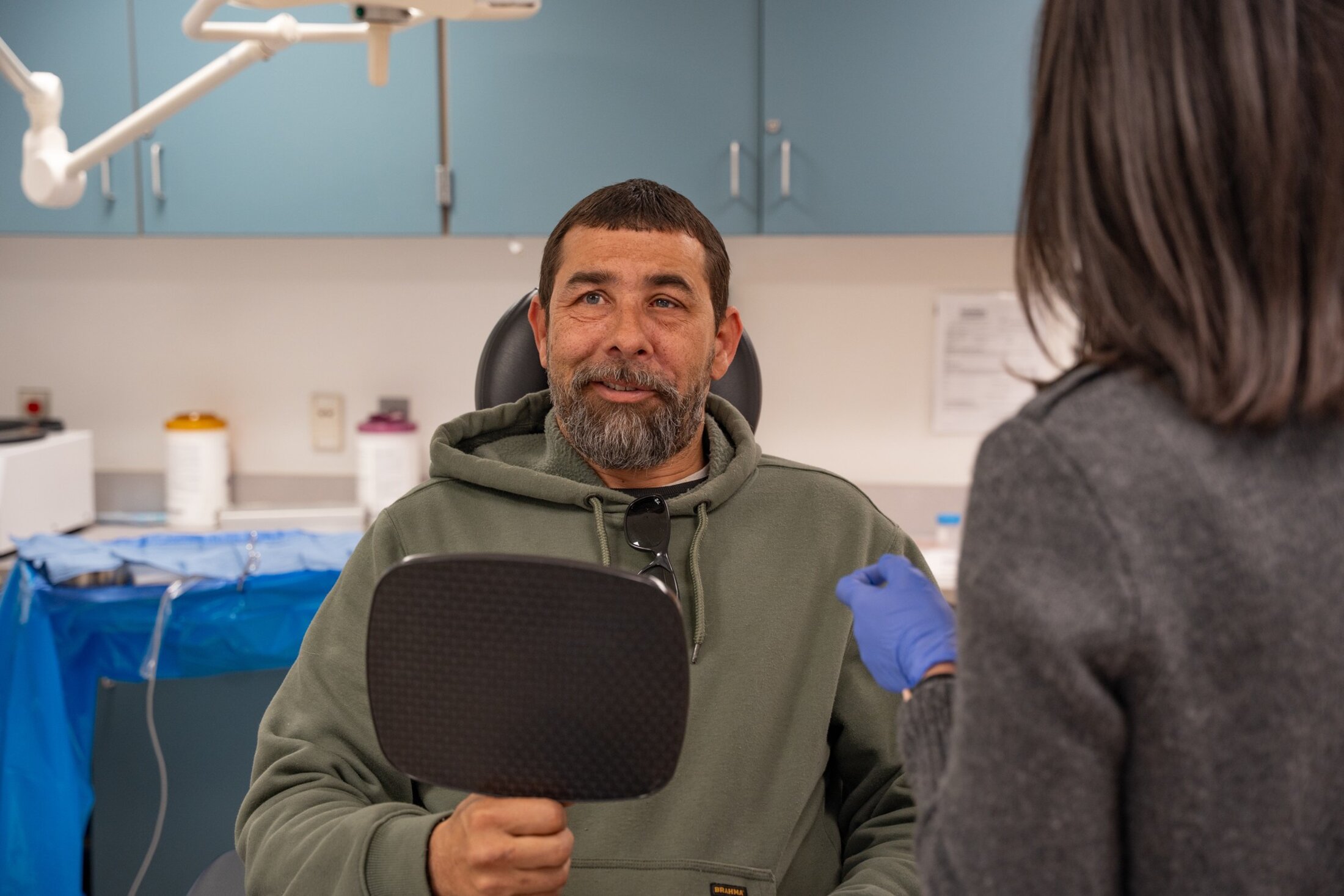
For Prince, success meant regaining the ability to smile, chew his food and close his eye while restoring as much facial symmetry and function as possible. That meant learning to build a mind-muscle connection through therapy that emphasized neuromuscular re-education, proprioception training, gentle stretching and soft-tissue mobilization. Over time, working closely with Murphy on his facial rehabilitation, Prince learned that biting down could activate his smile.
I have movement in my face. What I’ve learned to do is amazing.
Prince, who is still undergoing therapy with Murphy, said his therapy has been “spot on” and he is delighted with his progress. “I have movement in my face,” he said. “What I’ve learned to do is amazing.”
His results have translated into a renewed sense of confidence in himself and in the team that got him there. “Everybody is complimenting me. I can’t believe the difference, and I don’t mind going anywhere. Hwang told me exactly what she was going to do, and it turned out exactly as she said. She and Sarah Murphy are awesome.”
“Regaining facial expression is powerful for patients,” Murphy said. “Being able to walk into a room unnoticed is very rewarding to them. It is very rewarding to help restore a person’s self-confidence.”
Different patients, different paths
Prince’s experience represents one path through the Facial Nerve Center, but facial paralysis and other movement disorders can have many causes – and treatment can look very different from one patient to the next.
Tyler Rist, M.D., a facial plastic and reconstructive surgeon who works with Hwang, said patients at the center are treated for conditions ranging from Bell’s palsy and facial weakness caused by stroke to congenital conditions and paralysis resulting from trauma or head and neck cancer.
“Not every patient requires a nerve transfer, and not every patient needs surgery. Treatment depends on the individual and on the cause of the facial weakness.”
Treatment can include injections, medications, physical therapy and biobehavioral therapy as well as surgery, depending on the patient’s condition and goals.
“No two patients are alike, and much depends on the cause of the weakness and how long the weakness has been present,” Rist said. “We have treatment algorithms. Some patients may only need physical therapy and/or injections. If those don’t work, then we begin to consider surgery. That’s why it’s so important to have a multidisciplinary team approach, which allows us to determine what works best for each patient.”
We can offer treatment for incidents that occurred years ago or developed last week.
And patients whose facial weakness began years earlier shouldn’t necessarily assume they have waited too long to seek treatment.
“We can offer treatment for incidents that occurred years ago or developed last week,” Rist said. We want individuals to know that the window of opportunity does not close at MUSC’s Facial Nerve Center.”
For Prince, that individualized approach has meant far more than undergoing a successful surgery. His recovery has required time, rehabilitation and learning an entirely new way of making his face move.
Today, he continues to make progress. He can smile, chew, and better protect his eye – milestones that once seemed out of reach after his accident. While his recovery journey is ongoing, he no longer minds going places or having people see his face. For a man who once didn’t want to leave his house because he didn’t want anyone to see him, that may be one of the clearest measures of how far he’s come.
“Johnny’s outcome is a testament not only to his tenacity but also to advances in facial nerve treatment and what can be achieved when patients and providers work together,” Murphy said. “Our goal is always to help patients regain function, gain confidence and return to the activities and interactions that matter most to them.”

Margaret Lamb
Margaret Lamb has extensive experience in higher education, health, medical and wellness communications as a writer, editor, spokesperson and manager. A graduate of the University of South Carolina (USC) with a degree in political science, she has worked for USC and Clemson University as well as Hill & Knowlton Public Relations and The Atlanta Constitution.
Recent MUSC News stories