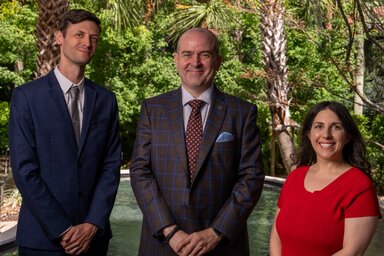

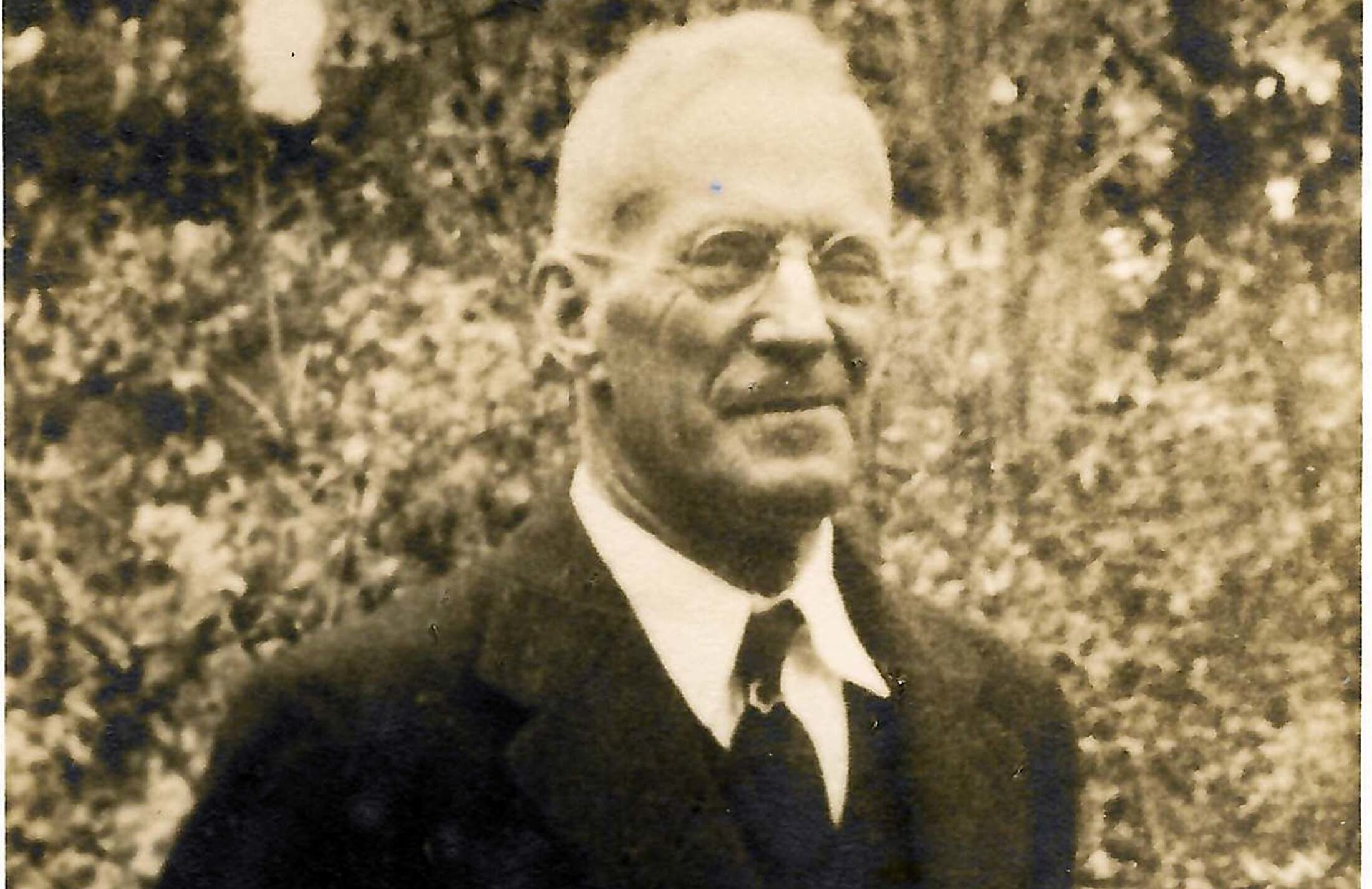
When Marion “Ed” Wilson, M.D., former chairman of the Storm Eye Institute, toured the facility on its opening day in 1976, he could never have envisioned what it would become. He was a first-year medical student at the time.
“I hadn’t decided to go into ophthalmology, but I couldn’t believe that ophthalmology needed a whole building for eye care,” Wilson said. “Everything was under one roof, and it was very innovative at the time.”
That was then, and this is now – 50 years later to be exact. Today, that “whole building” has nearly doubled in size and, as Storm Eye celebrates its 50th anniversary on Sept. 10, innovation continues under the direction of Andrew Eiseman, M.D. Storm Eye enjoys a world-class reputation, with specialists and subspecialists who draw patients from around the country and the world.
Indeed, it was a patient whose bequest and vision laid the foundation for The Albert Florens Storm Memorial Eye Institute. In 1961, William “Willie” Groesbeck Chapman Storm honored her late husband, Albert Florens Storm, with a $500,000 bequest to “expand eye care and research for the poor.”
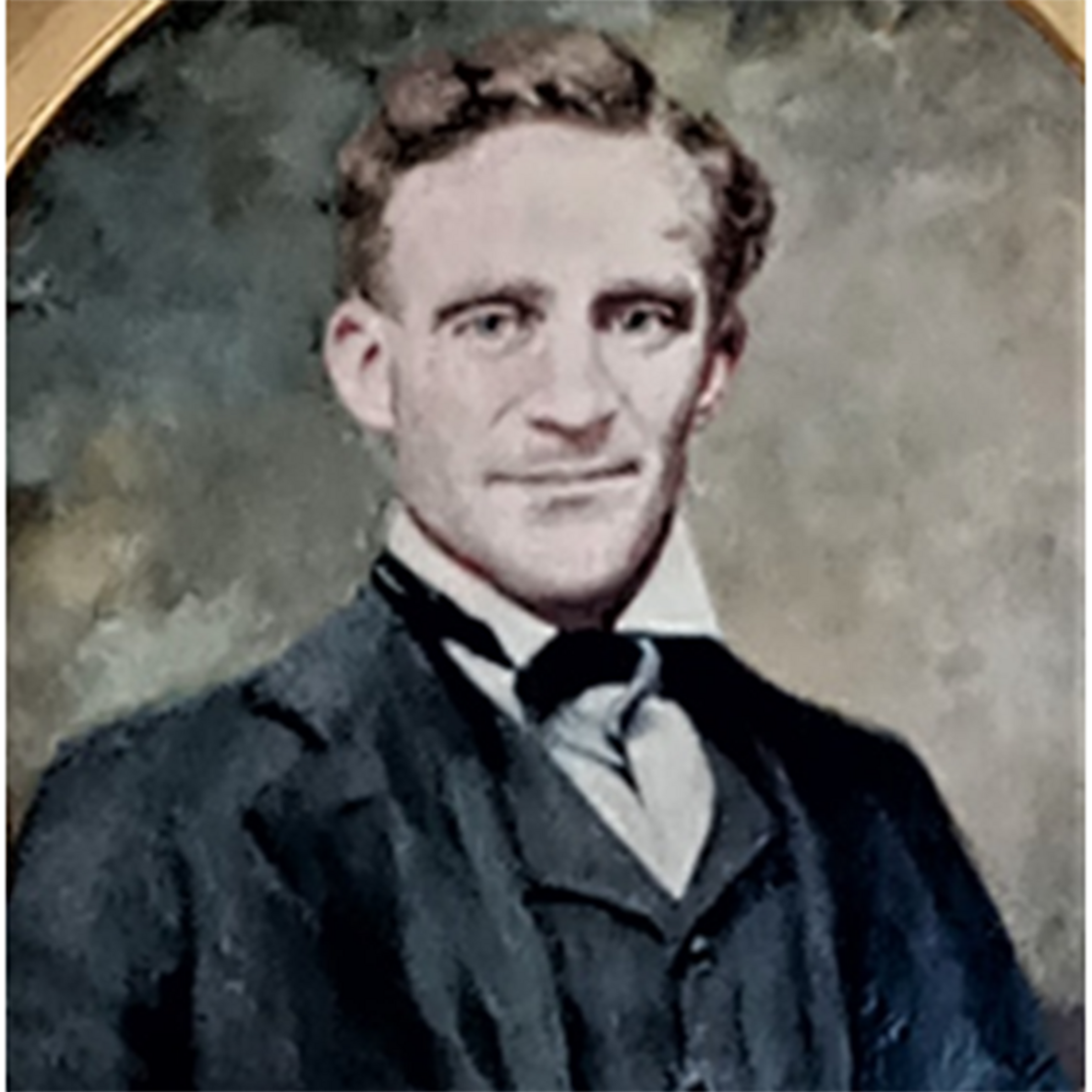
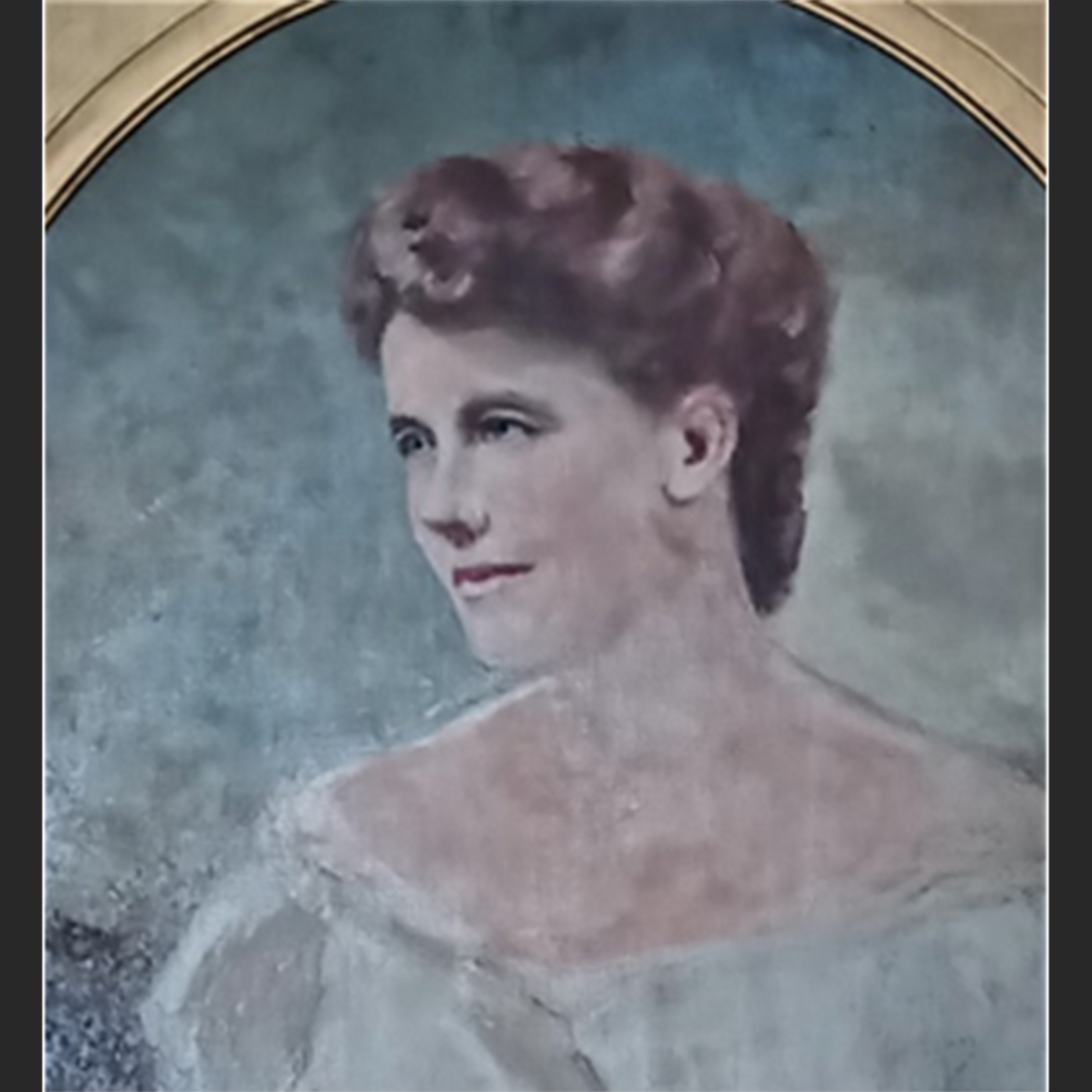
Mrs. Storm was a patient of Pierre Gautier Jenkins, M.D., who practiced ophthalmology in Charleston for 50 years and served as the part-time chairman of the ophthalmology department at the then-medical college. After her death in 1967, Jenkins resigned to spearhead the fundraising efforts of the newly formed Storm Memorial Committee.
He was succeeded by William Vallotton, M.D., who was recruited as the first full-time chair of ophthalmology and served until 1986.
Groundbreaking for the five-story building, which cost $3.5 million, took place on June 5, 1974. Even then, leaders had an eye on the future, approving a structural foundation that would support a 10-story building.
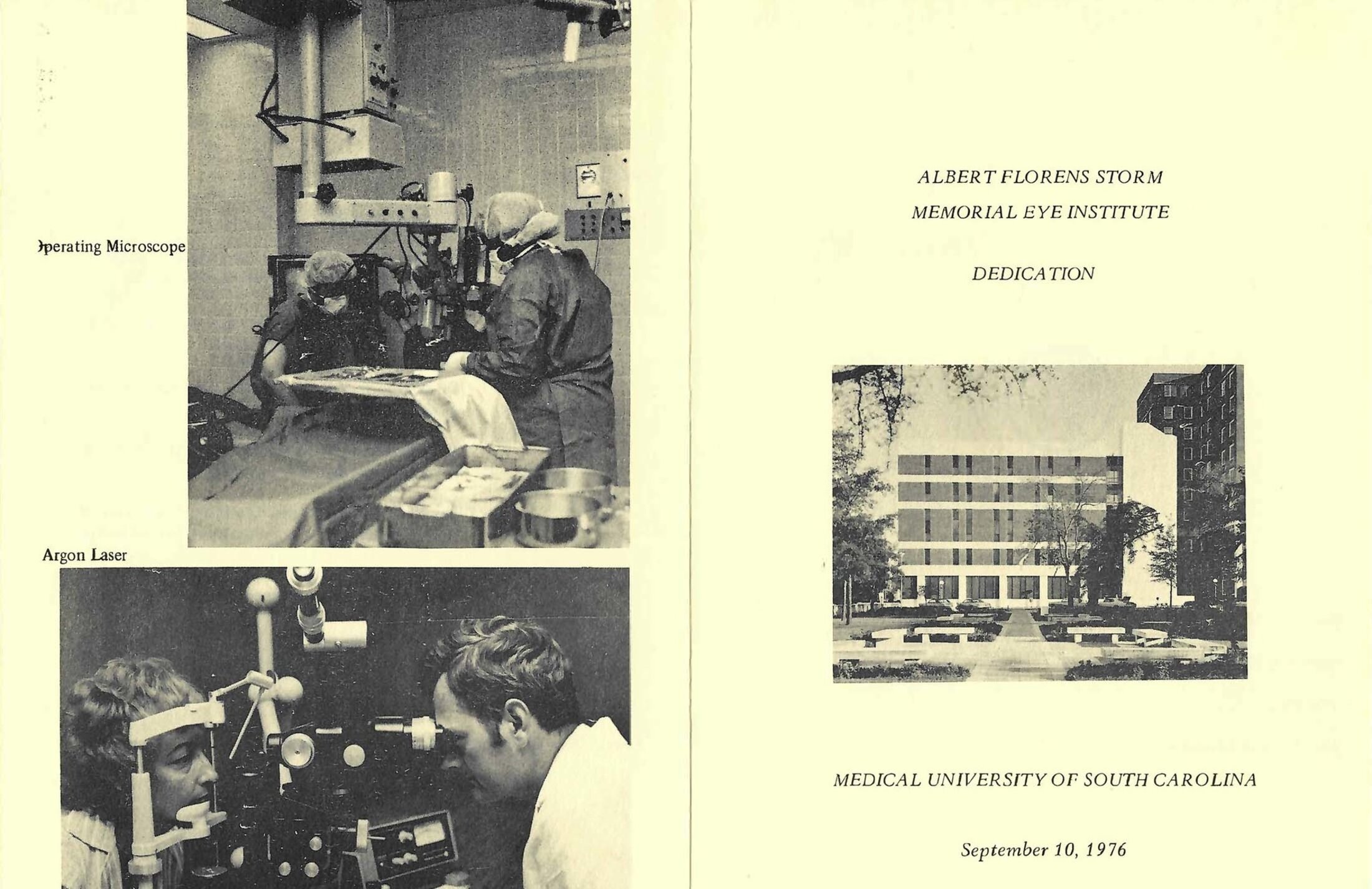
When the 50,000-square-foot building opened on Ashley Avenue in 1976, it was featured in the American Journal of Ophthalmology. Two floors were devoted to outpatient care; one was for research, and two were for surgery and inpatient care.
The building was way ahead of its time in technology and design, Wilson said.
“Putting researchers and labs in the same building with clinicians and patients was a new concept, but it made sense for access and sharing of ideas,” Wilson said. “The building had TV cameras built into the microscopes so you could watch the surgeries from the lounge and offices. It also had a wet lab for learning surgeries.”
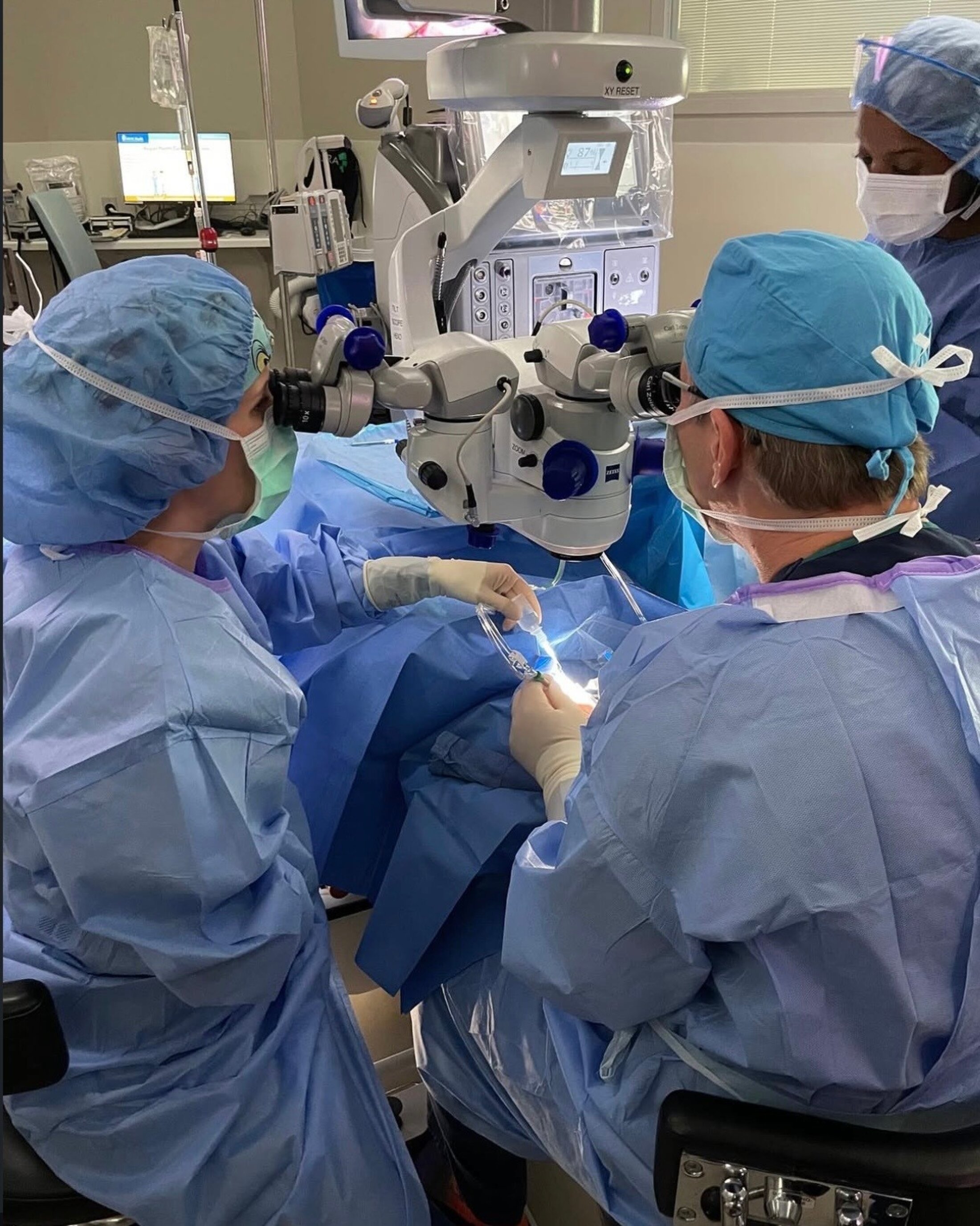
A donation from the South Carolina Lions, matched by Lions Club International, was the organization’s first to Storm Eye in what would become a long-term partnership. This gift funded the purchase of a phacoemulsification machine, novel at the time, which allowed surgeons to make much smaller incisions in cataract surgery. MUSC became the first medical school in the nation to teach ophthalmology residents the new surgical technique using phacoemulsion, Wilson said.
When Vallotton retired in 1986, he was succeeded by David Apple, M.D., a pathologist and ophthalmologist and an international authority on intraocular lenses (IOL). Wilson credits Apple, who served as chair from 1988 to 1996, with putting Storm Eye on the international map.
“Under David Apple’s leadership, Storm Eye became a World Health Organization-designated collaborating center,” Wilson said. “He also established a Center for Intraocular Lens Research and a Center for International Ophthalmology. During that era, MUSC published more scientific articles on the safety and effectiveness of IOLs than anywhere else in the world. Also, Storm Eye doctors began making international mission trips aimed at skills transfer and capacity building in the developing world.”
In 1989, the institute earned international attention when Apple, to commemorate the 40th anniversary of the first IOL implantation, invited the world’s top cataract surgeons to a conference in Charleston.
Among the visitors was Harold Ridley, M.D., a highly regarded British surgeon who had performed the world’s first intraocular implant in 1949 in London. MUSC awarded Ridley an honorary degree.
Although the degree turned out to be Ridley’s only honorary doctorate, it was not his only recognition. Ridley was later knighted by Queen Elizabeth.
Through the board’s leadership and dedication, we were able to make a lot of advancements.
The 1990s were a time for expanding partnerships, service and research. By then, the Storm Memorial Eye Committee, which had been renamed the Storm Eye Institute Advisory Board, had cultivated an impressive number of generous donors.
“Through the board’s leadership and dedication, we were able to make a lot of advancements,” Wilson said. “The board’s support, with the backing of the influential MUSC President James B. Edwards, D.M.D., a former governor and cabinet secretary under President Reagan, was incredibly important.”
A 1996 “Raise the Roof” event in October, attended by then-Sens. Ernest F. Hollings and Strom Thurmond, signaled an $8.8 million expansion of the building. Half the funds had come from private sources, including Stiles Harper, an Estill business leader and philanthropist who served as the advisory board chairman from 1975 to 1999, and his wife, Virginia, and also Stanley Feldberg, a prominent business leader who helped to build the Zayre chain of discount stores, and his wife, Teddy. The SC Lions Clubs, for which the Storm Eye research center is named, also made significant donations to the institute’s research program.
Four floors were added to meet the demand for additional clinical and research space, which also included an auditorium named for the Feldbergs.
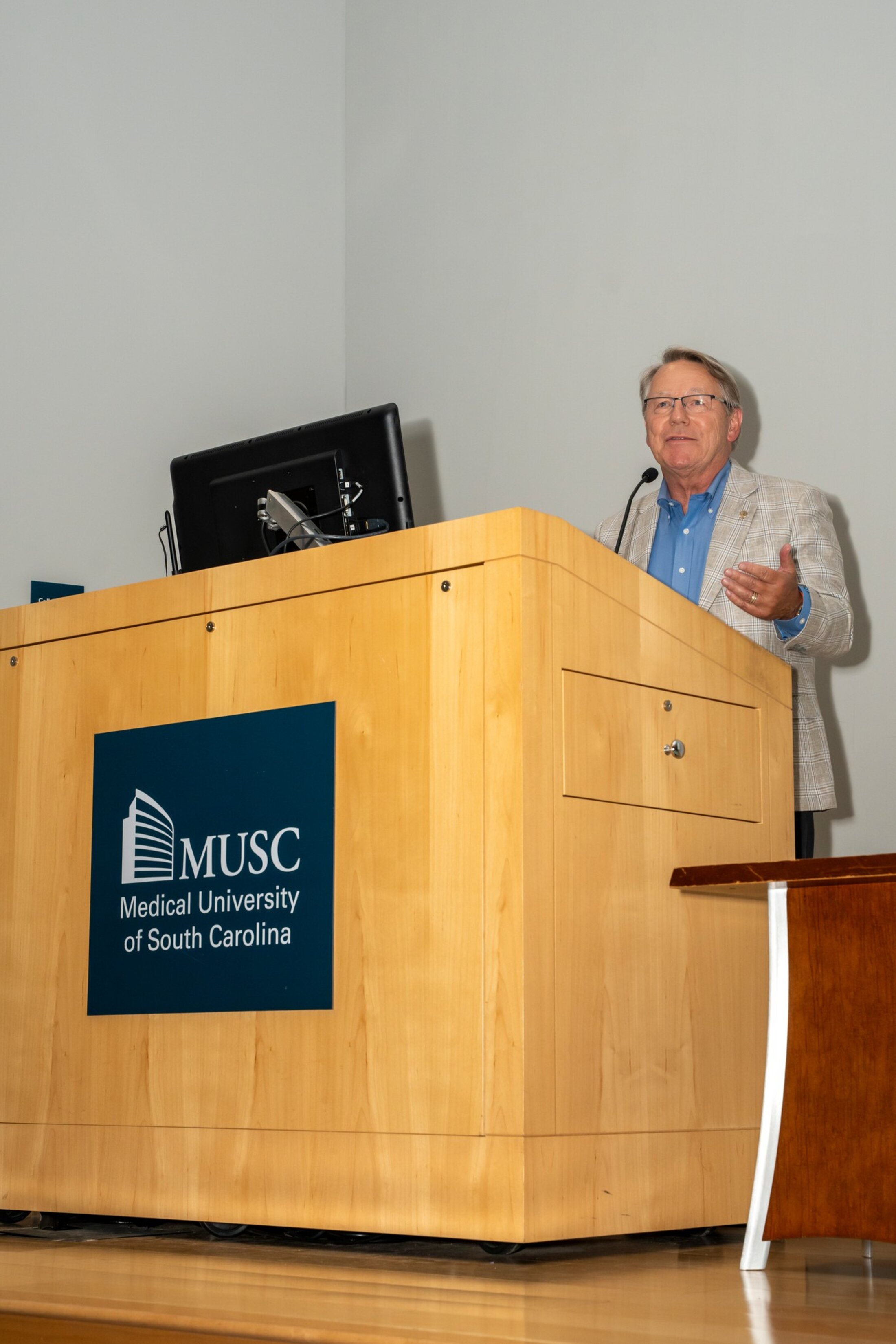
During Wilson’s tenure as chairman, from 1996 to 2011, Storm Eye increased its research funding from $452,000 to $4.2 million a year; the number of clinicians doubled from 7 to 15; annual patient visits exceeded 52,000, up from 24,000; the number of endowed chairs went from two to eight; the total number of faculty members increased from 12 to 25; and Storm Eye foundation funds quadrupled from $5.7 million to $20.1 million.
As the 21st century dawned and Storm Eye embarked on its second 25 years, the institute was well-positioned for the growth that lay ahead in the Tri-county region and across the state.
In 2001, Kathleen O’Brien, a niece of the Storms, made a $2.5 million gift to Storm Eye. Buoyed by a robust research program, the Department of Ophthalmology broke into the top 10 nationally for National Institutes of Health basic science research funding, and, in 2005, a $9 million Vision Research Program was funded by the South Carolina SmartState Program.
Storm Eye has nearly doubled in size and patients since 2018.
Eiseman has described the institute’s growth in the last 10 years as “nothing short of exponential.”
“Storm Eye has nearly doubled in size and patients since 2018,” he said. “The number of patients increased from 49,000 to 79,413, and in 2025, 5,063 surgeries were performed. We’ve hired more than 20 new doctors over the last decade, and we have increased the depth and breadth of services that we offer.”
The institute has added several ophthalmic subspecialists in ocular oncology, ocular trauma and global ophthalmology. It also has the state’s only pediatric cornea specialist, fellowship-trained dry eye expert, ophthalmic pathologist and neuro-ophthalmologist.
Multiple Storm Eye satellite clinics have opened in the metropolitan area. Doctors perform complex and cutting-edge surgical procedures in a new ambulatory procedure center in Mount Pleasant, and a Dry Eye Center has been added to the West Ashley Medical Pavilion at Citadel Mall to provide advanced dry eye care and procedures.
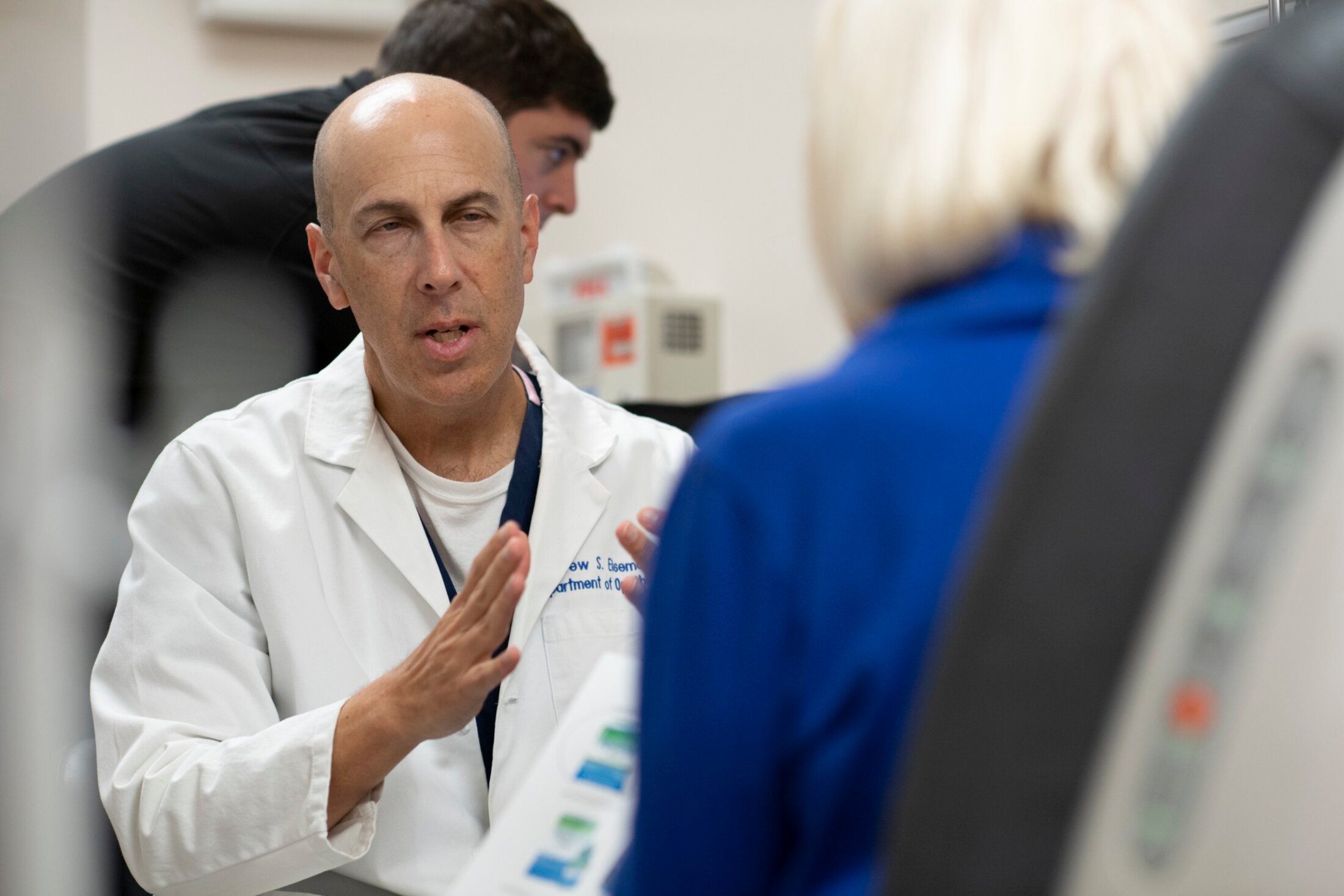
All the floors of the Storm Eye Institute have been fully renovated, with the exception of the fourth, which is currently undergoing a $5 million expansion and renovation and is expected to be completed in the next year.
For Eiseman, Storm Eye’s 50-year legacy – built by generations of dedicated leaders, faculty and staff – provides the foundation for what comes next.
“We plan to continue growing to expand the depth and breadth of services and access to the outstanding care we provide. It is truly an honor to provide the highest level of care to all our patients, especially the citizens of South Carolina, and we look forward to continuing our legacy of excellence for decades to come.”

Margaret Lamb
Margaret Lamb has extensive experience in higher education, health, medical and wellness communications as a writer, editor, spokesperson and manager. A graduate of the University of South Carolina (USC) with a degree in political science, she has worked for USC and Clemson University as well as Hill & Knowlton Public Relations and The Atlanta Constitution.
Recent MUSC News stories