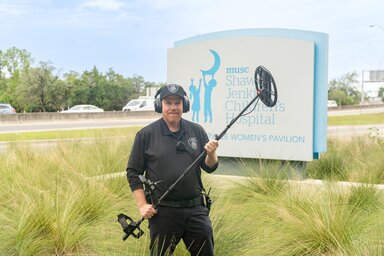

Lee Moultrie, a local community leader, insurance agent and resident of North Charleston, was initially interested in attending MUSC’s Science Cafe events because, as he put it, he is a genuinely curious person. He also found that he could share the valuable information that he learned from the experts at the events with his family members, business associates and community members.
Moultrie appreciates the Science Cafe’s informal format, which allows the public to learn directly from MUSC researchers about their work without the complex technical jargon and complicated medical terms.
“I would recommend attending a Science Cafe to anyone,” Moultrie said. “You can speak and engage with the team of experts and learn about a particular disease. You can ask questions about the project versus reading about it on some portal. For me, as I am out in the community, I can point people to a researcher who might be able to help them. The Science Cafe events tear down the barriers because the research we learn about is for everyone: men, women and all races.”
Science Cafe has been educating the public on the research conducted at MUSC since 2015. It has proved to be an innovative way for the public to have more direct access to MUSC’s researchers so they can learn about the work being done; ask questions in an informal, unintimidating atmosphere; and perhaps get involved with clinical trials.
Instead of presenting a one-way scientific talk, at each gathering, researchers give participants opportunities to ask questions, test assumptions and hear directly from those conducting the work.
Held monthly from 2015 until 2020, when COVID restrictions went into effect, Science Cafe covered topics from heart failure and Alzheimer’s to weight management and staying protected from COVID and the flu.
Science Cafe then shifted in late spring of 2020 from in-person events to a podcast called Science Never Sleeps, which lasted through 2024. In July, Timothy Stemmler, Ph.D., vice president for Research, worked closely with his team staff to relaunch Science Cafe that month.
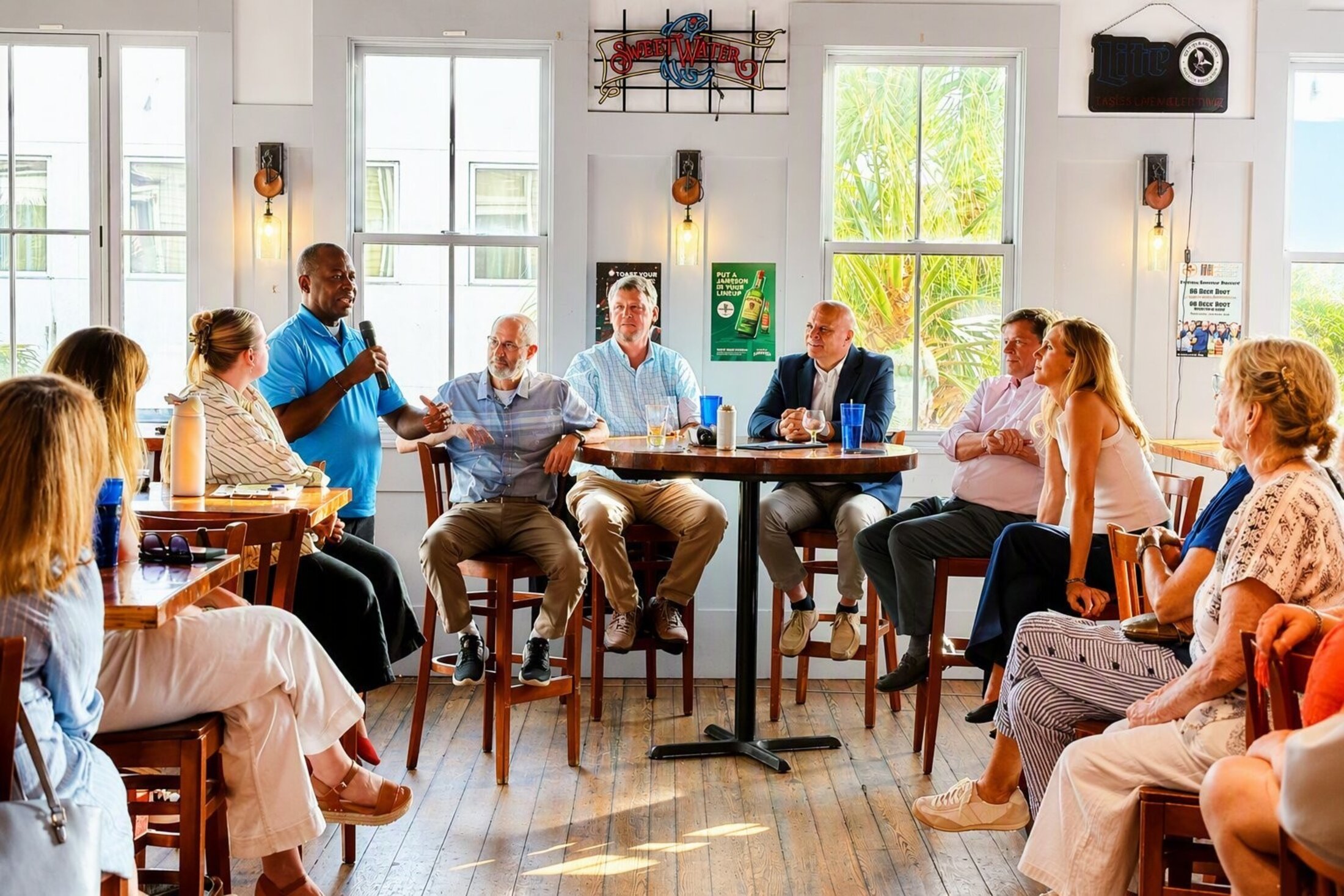
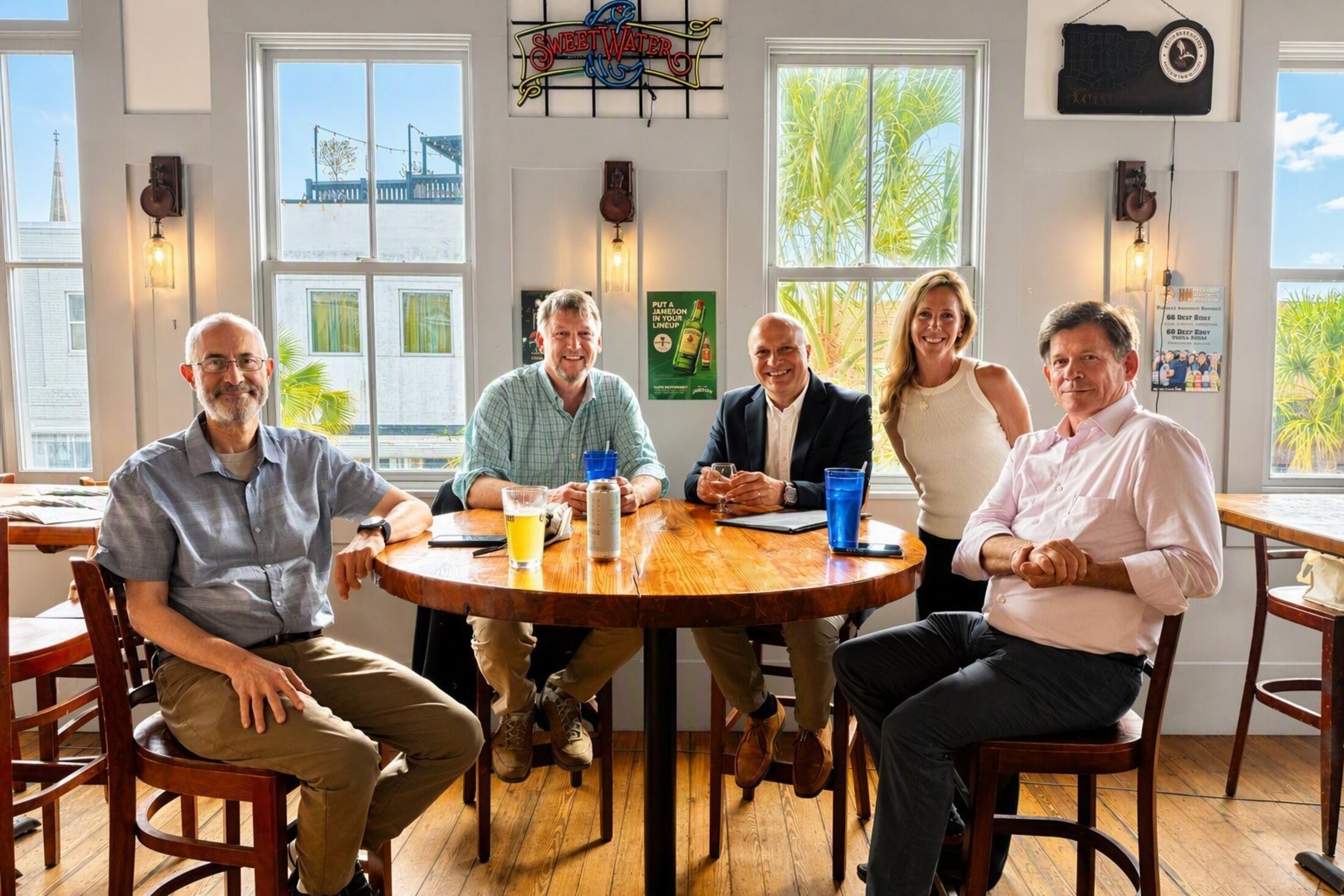
The first of the new Science Cafes was held at Charleston Beer Works in downtown Charleston and focused on the fundamentals of biomedical research: what it is, why it’s essential to improve healthcare, how it affects the local community and how members of the public can evaluate evidence and advocate for research.
The plan is to hold the events quarterly. The next one is scheduled for Nov. 10 and will feature Jen Dahne, Ph.D., and Evan Graboyes, M.D., who will discuss their research into the mental health of cancer survivors through the IMPACT trial. IMPACT stands for IMproving Proactive Approaches for Cancer Survivors’ Mental Health Treatment. The purpose of this research study is to evaluate a mobile application for depression treatment called Moodivate among cancer survivors, which was developed by this research team.
Future sessions are expected to feature scientists and experts, discussing their research on health topics affecting South Carolinians and answering the questions that matter to local communities.
Science Cafe is more than a chance to inform the public about research at MUSC. It’s an opportunity for meaningful dialogue.
“Science Cafe is more than a chance to inform the public about research at MUSC. It’s an opportunity for meaningful dialogue. We want to share discoveries that have the potential to improve lives, while also listening to our community members and learning what they want to know more about,” Stemmler said.
Tara Pittman, recruitment manager for the South Carolina Clinical & Translational Research (SCTR) Institute, explained an important benefit of Science Cafe. “I think one of the most important messages we can relay to the community, regardless of the research topic discussed, is that their involvement in research is what enables us to turn scientific discovery into actual therapeutic results. The interventions, treatments and medications we take for granted now wouldn’t be available if individuals didn’t volunteer to participate in clinical trials.”
She said that even if participating in a study isn’t possible or right for them, they can still make an incredible difference by sharing what they learn with their friends and family and helping to demystify scientific research.
That’s Moultrie’s philosophy as well. He is particularly interested in how the community, and society as a whole, can use the data from these studies to implement change based on research outcomes.
“There’s a lot of good that comes out of the research done at MUSC,” he said. “It’s interesting to learn about and exciting to see where it can go.”
To register for the Nov. 10 Science Cafe, visit: https://redcap.link/sciencecafenov10.
Theresa Stratford
Theresa Stratford is the editor for MUSC’s newspaper, The Catalyst. She has worked as a writer and editor for 25 years since graduating from the University of South Carolina with a Bachelor of Arts degree in journalism and mass communications. As a writer, she has worked for the federal government in cybersecurity and for the Department of Energy. As both a writer and an editor, she has worked for a variety of syndications, including national magazines, such as Vogue Knitting, as well as many local Charleston and South Carolina publications.
Recent MUSC News stories