
Evan was born with his bladder on the outside of his body – a rare condition known as bladder exstrophy affecting 1 in 30,000-50,000 patients - that affects how the bladder and surrounding tissues develop and function. Constant care and maintenance made going to school and living life as a typical kid challenging. Living in a small town in South Carolina meant limited access to treatment options and surgeries while he was growing up.
“He’s had smaller surgeries before, but they were never the right ones for us,” his grandmother, Liz Brandon, shared. “We didn’t have a doctor here for years that had any kind of special surgery for kids with bladder issues.”
Even after applying for surgeries in bigger cities, the waiting process was arduous. For almost 14 years, Evan and his grandmother have been searching for the right care. Things were looking up when a local nurse suggested a trip to the Northeast for surgery, but after waiting almost nine months to see if Evan would be approved, a letter finally came.
He had been denied.
Shortly after, Brandon discovered that MUSC’s Charleston location had recently recruited a new doctor. Chad Crigger, M.D., MPH, a reconstructive pediatric urologist, was offering a new kind of surgery known as single-port robotic surgery, and Evan would be the first pediatric patient in the state to undergo it. Finally, they had hope.
Single-port robotic surgery differs from multi-port and more typical robotic surgery in that it uses only one small incision to access the surgical site, making it significantly less invasive than traditional robotic surgeries, reducing scarring and improving precision and recovery times considerably.
“A robotic surgery definitely sounded scary at first,” said Brandon. “But now, Evan’s all about robots – he’s even interested in them at school.”Despite Evan and his grandmother’s initial apprehension, Brandon shared that Crigger and his care team played a major role in making them feel secure and cared for. “He loves to draw pictures to show you things, and he explained everything so thoroughly,” she said.
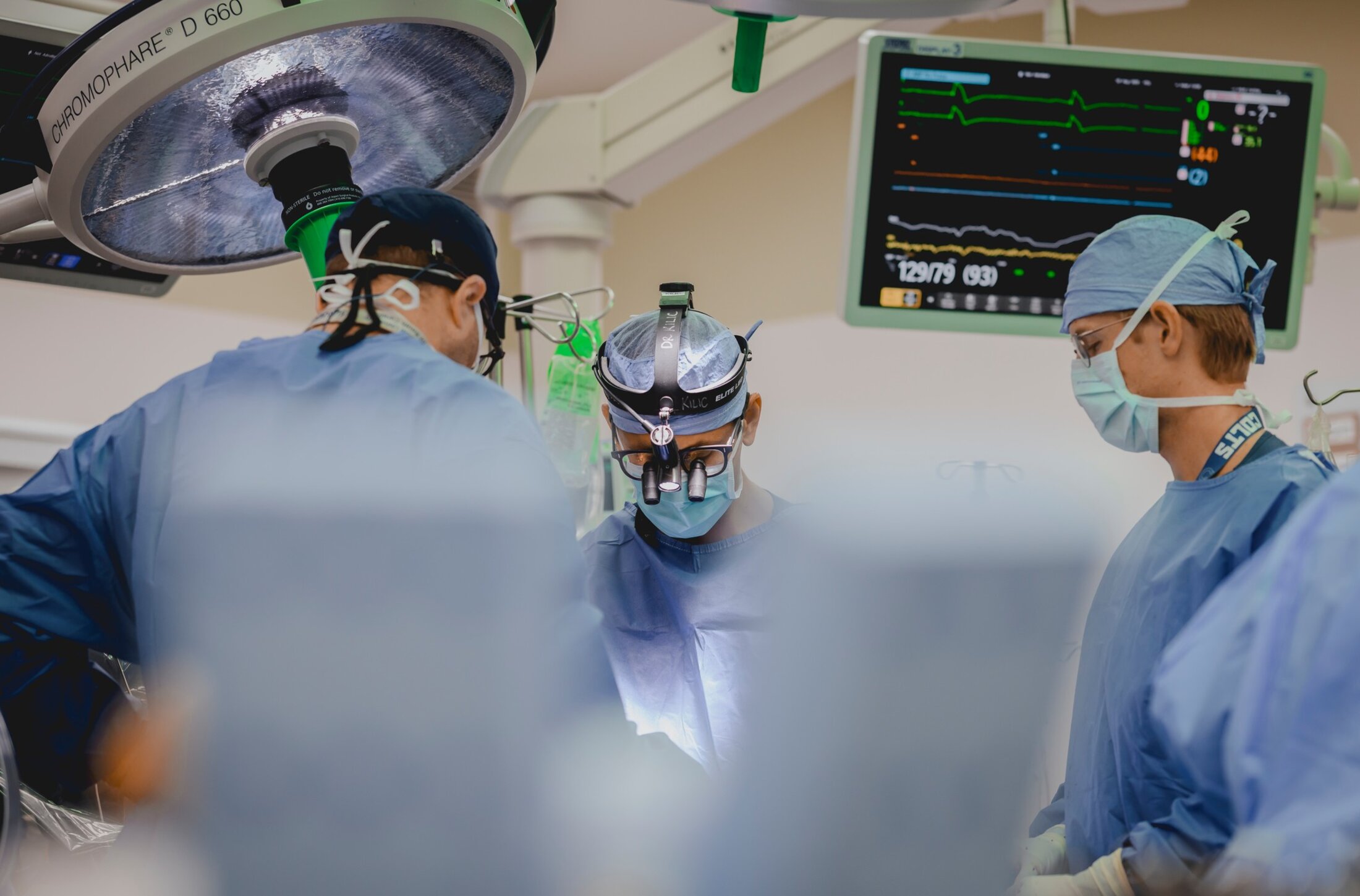
On surgery day, Crigger and his team were prepared to care not only for Evan, but for Brandon and her concerns as well. Evan’s surgery was going to be twelve hours long. He was facing an entire bladder reconstruction.
“He and his team called me every two hours during that whole surgery,” said Brandon. “I don’t think I’ve ever known another doctor that would give you his cell number.”
Luckily, the surgery was a success. Crigger reconstructed Evan’s bladder and slightly enlarged it, improving the organ’s capacity and kidney functions as well.
Now that the most arduous part of the process is over, Brandon shared how grateful she and Evan are for the incredible care that Crigger and his team have shown them.
“He’s just so dedicated to what he’s doing and what a difference he has made, and all the parents I’ve met say the same thing. We talk about him every day. I know his ears must be burning,” she said with a laugh.
Since completing his surgery, Evan’s been returning every week for routine check-ups and minor procedures to ensure a smooth healing process. More than anything, Brandon shared that Evan is excited to have a normal routine when he starts high school in the fall.
“Being in middle school and having those issues was sometimes very tricky,” she said. “We’ve been very blessed to have great nurses and doctors that have helped him navigate it.”
Now, as Evan prepares for high school, he and his grandmother are looking ahead to a future defined less by medical challenges and more by the opportunities that await him.
Editor’s note: The names have been changed to protect the privacy of the patient and family.

Sarah Majer
Recent Enterprise stories