
Mindy Engevik, Ph.D., is a woman on a mission.
Make that TWO missions.
Her vocation is studying the interaction between gut microbes and the gastrointestinal tract. Her avocation is advancing the careers of young women in science.
She’s passionate about both goals, and she’s recently earned two prestigious national awards recognizing her achievements.
In June, Engevik, an associate professor in MUSC’s Department of Regenerative Medicine and Cell Biology, was honored with the Marilyn G. Farquhar Early Career Award for Exceptional Achievement in the Advancement of Women in Experimental Pathology.
A pioneering cellular biologist whose research on the kidney deepened the understanding of kidney disease, Farquhar, who died in 2019, worked at Yale University and the University of California San Francisco.
“Receiving this award is such an honor and very special to me. Marilyn Farquhar was a trailblazer and an amazing scientist in her own right,” Engevik said. “Throughout my career, I’ve had the privilege of learning from exceptional mentors and working alongside inspiring colleagues and trainees who have shaped my science and my commitment to mentorship.”
The award recognizes individuals who demonstrate exceptional achievement in the advancement of women experimental pathologists during the early phases of their careers. These include accomplishments related to recruiting, training and mentoring women, leadership, promoting science through community service and contributions to the society.
In May, Engevik also received the American Gastrointestinal Association’s Young Investigator Award in Basic Science. Engevik said the AGA honor was particularly meaningful because it represented recognition from colleagues and leaders in the field she has dedicated her career to studying.
She attributes her success to the generations before her who left the ladder down for young women eager to take their first step in a science career. “There are a lot of women in gastroenterology whom I admire. I liked seeing their passion, and they inspired me,” she said.
Engevik vowed to become intentional about opening doors for women and minorities in science during her graduate school training. “I entered science at a time when many of the barriers faced by previous generations of women were beginning to change, but the effects of those barriers were still very visible.”
“So many other women had to fight hard for acceptance in their field. Thanks to their determination, they made it possible for women like me, and I’m benefiting from their hard work. Here at MUSC, everyone is supportive, from my colleagues to the leadership. And now I’m just trying to do my part.”
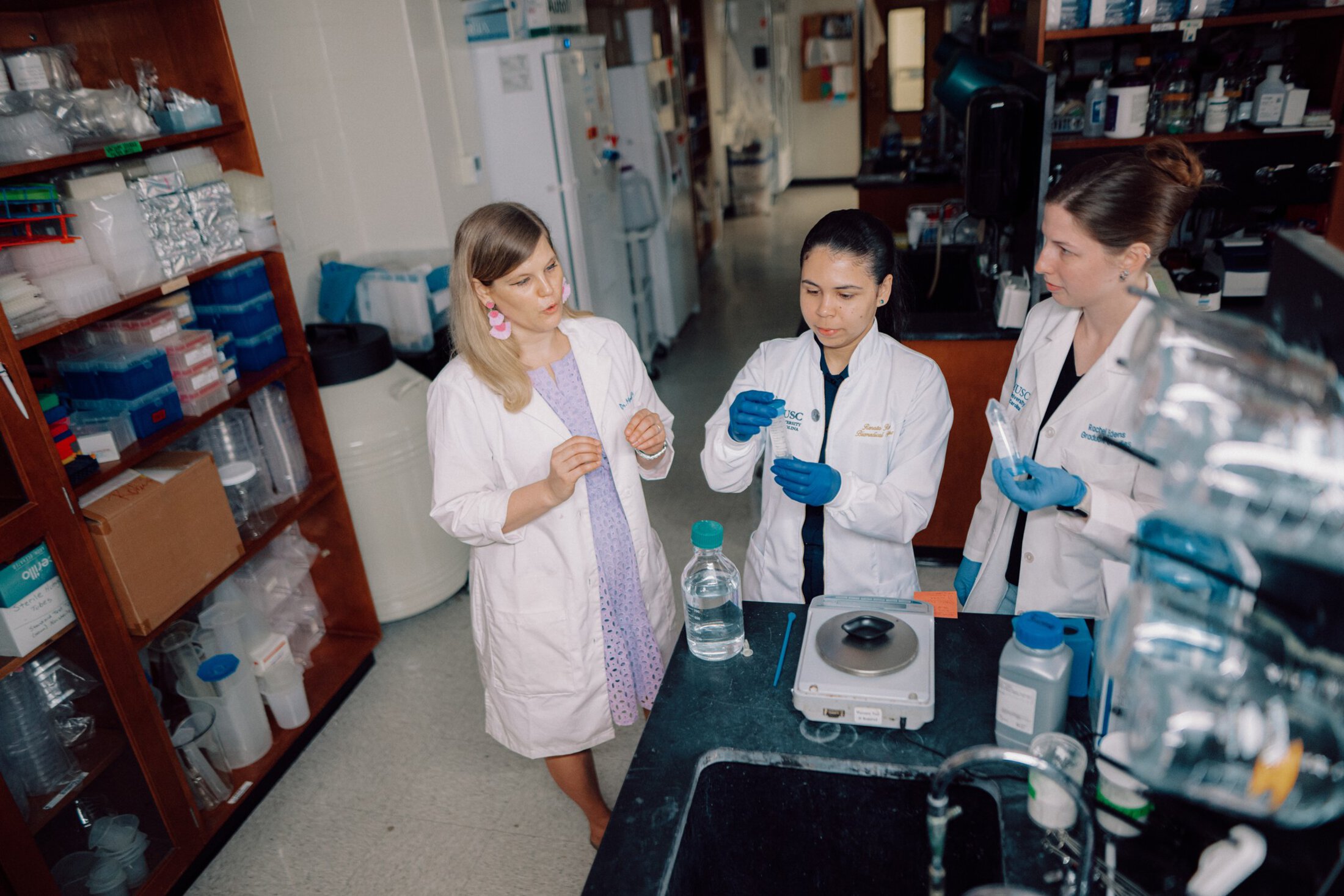
And now Engevik is an ambassador who talks the talk and walks the walk. She runs an all-female lab that comprises two post-docs and four graduate and four undergraduate students. She is a member of the Association for Women in Science and is a frequent guest on national panels. She also speaks and talks regularly with middle- and high-schoolers about her career path and uses herself as an example of what they can become.
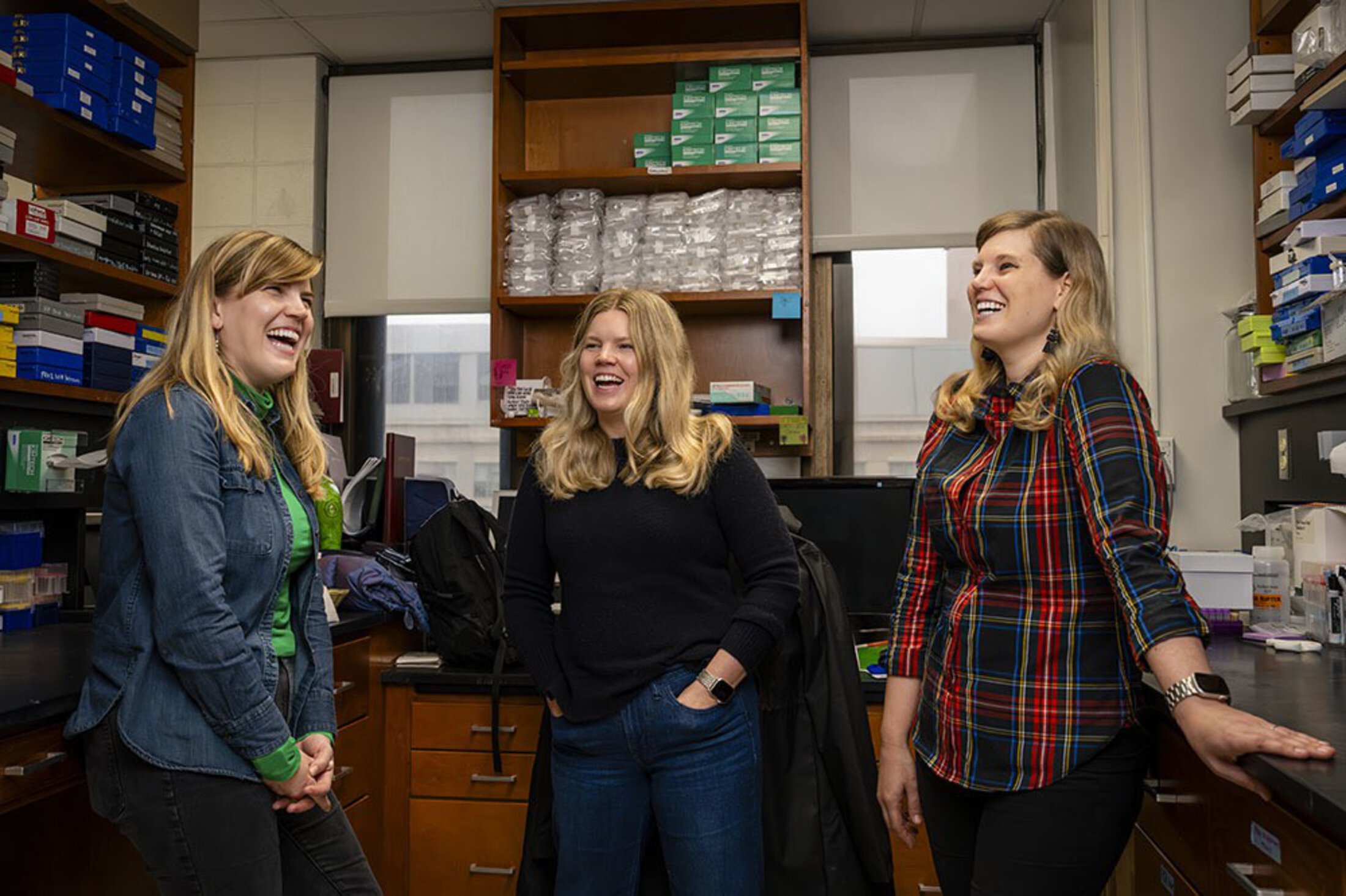
“I tell them about my life in the sciences and the steps I took to get where I am today,” she said. Those include a degree from Biola University, graduate school at the University of Cincinnati and post-doctoral research at Baylor College of Medicine. And while she is the daughter and great-granddaughter of physicians, she said her parents never pressured her or her sisters to go into science or medicine. In fact, she wanted to be an artist. Nevertheless, she, along with her two sisters, went into science, and all three are at MUSC, running their own labs.
While gut microbes may not be everyone’s cup of tea, when Engevik talks about falling in love with microbes, her enthusiasm is infectious, especially when she uses words like “cool” to describe microbes in the gut. And when she describes how our gut microbes talk to distant organs and influence behavior through the production of neurotransmitters, it’s like the power of persuasion.
“I’ve always been fascinated by the microbes that live in our bodies,” Engevik said. “I fell in love with growing microbes in the lab, and the gut was especially interesting to me because of the incredible number and diversity of microbes that live there.”
And then she talks about the implications of microbes and her long-term goal. “Through cutting-edge research, we aim to transform our understanding of disease etiology, pathogenesis, diagnosis and treatment and ultimately improving human health,” she said.
“In short, I think we can harness microbes to do good things for us.”

Margaret Lamb
Margaret Lamb has extensive experience in higher education, health, medical and wellness communications as a writer, editor, spokesperson and manager. A graduate of the University of South Carolina (USC) with a degree in political science, she has worked for USC and Clemson University as well as Hill & Knowlton Public Relations and The Atlanta Constitution.