

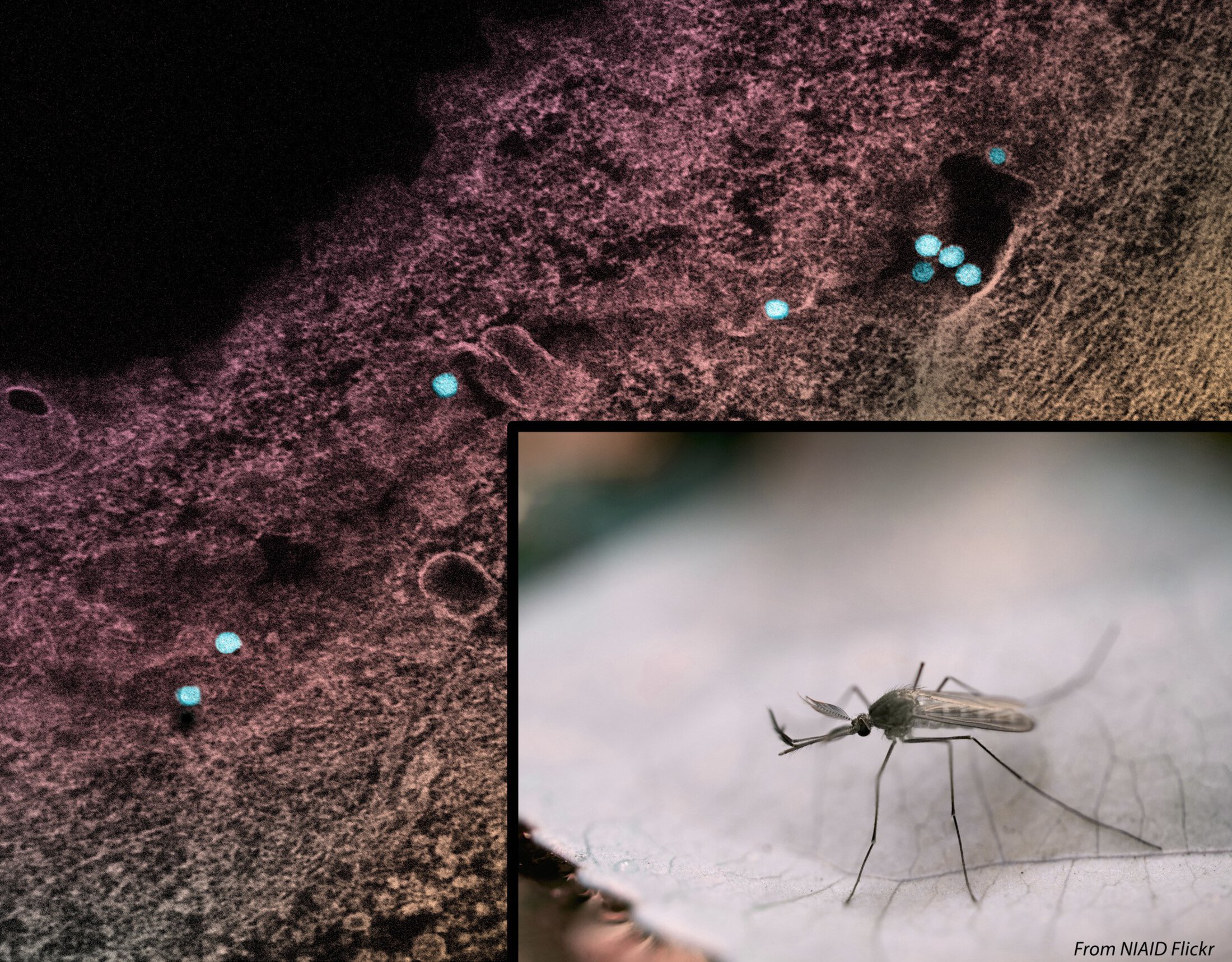
With an outbreak of West Nile virus in the Pee Dee region of South Carolina, an infectious disease doctor in that area expects further infections. “There will probably be several more cases,” said Temujin Chavez, M.D., at MUSC Health Florence Medical Center.
“West Nile virus usually pops up in South Carolina every three to five years. It's seasonal in that the infections generally occur from July to September. You just have to protect yourself for a short time period.”
During that period, most people who are infected by the mosquito-borne virus won’t even know they have it. “Usually, one out of five people who get West Nile do have symptoms. And those symptoms are very nondescript. They may feel like they’re sluggish; they’re achy; they have a headache. They might have a rash. And so it kind of gets confused with a summer flu.”
But in rare cases, the virus can take a much bigger toll. “Once in a while, it can be what we call neuroinvasive, meaning it affects our nervous system. And those are the cases that people are worried about. They have to go to the hospital, and they may have encephalitis or meningitis; maybe there’s a seizure. In very rare cases, they can have flaccid paralysis.”
Encephalitis means inflammation of the brain. Meningitis involves “inflammation of the protective membranes that surround the brain and spinal cord,” according to the American Brain Foundation. Flaccid paralysis refers to muscle weakness or paralysis.
Chavez said those at higher risk include people 65 and older and people with weakened immune systems.
Prevention
To reduce your risk, keep in mind that mosquitoes can strike day or night, according to the Department of Public Health. But Chavez said the types of mosquitoes that tend to spread West Nile virus, Aedes aegypti and Culex, are more active at dusk and dawn. “So if anyone is walking outside, maybe later in the evening around sunset, for example, they should be using DEET mosquito repellent.”
Other repellents recommended by the health department include picaridin, oil of lemon and eucalyptus.
Chavez said your wardrobe can also serve as protection. “They can consider wearing clothing treated with the insecticide permethrin, along with things like long-sleeved shirts and pants that protect the skin.”
However, he cautioned, mosquitoes can get through some fabrics. “So wearing a thin, long-sleeve shirt is not overly protective unless that clothing has the insecticide permethrin on it. You can apply that to your own clothing, or you can buy clothing that already contains permethrin.”
Bottom line, Chavez said: be aware of the risk while keeping in mind that for most people, that risk is low.
“I don’t want people to not go outside and not have their children playing sports. Just be aware. A lot of schools are starting up football and soccer. So there’s a lot of kids and young people outside, family members watching kids outside. I would never say, ‘Don’t go outside because of West Nile.’”