
Enduring an acute stroke is a life-altering event with lasting consequences. Between 50% and 75% of stroke survivors experience mild to moderate cognitive impairment, most commonly affecting executive function – the ability to initiate actions, monitor behavior and self-regulate. Research indicates that executive function is the strongest predictor of post-stroke functional recovery, underscoring the importance of its assessment and monitoring for patient outcomes.
The challenge is that many patients are evaluated for signs of executive function only at clinic appointments, which can be weeks apart. These infrequent checks leave a lot of clinical data on the table – results that could better inform post-stroke assessments.
“The biggest problem with clinical workflows is the frequency with which you can make measurements,” said Medical University of South Carolina clinical pathologist Christopher Metts, M.D., associate professor of Pathology and Laboratory Medicine. “By collecting data repeatedly throughout daily life, researchers can observe how symptoms fluctuate in real-world settings rather than relying on occasional clinic visits.”
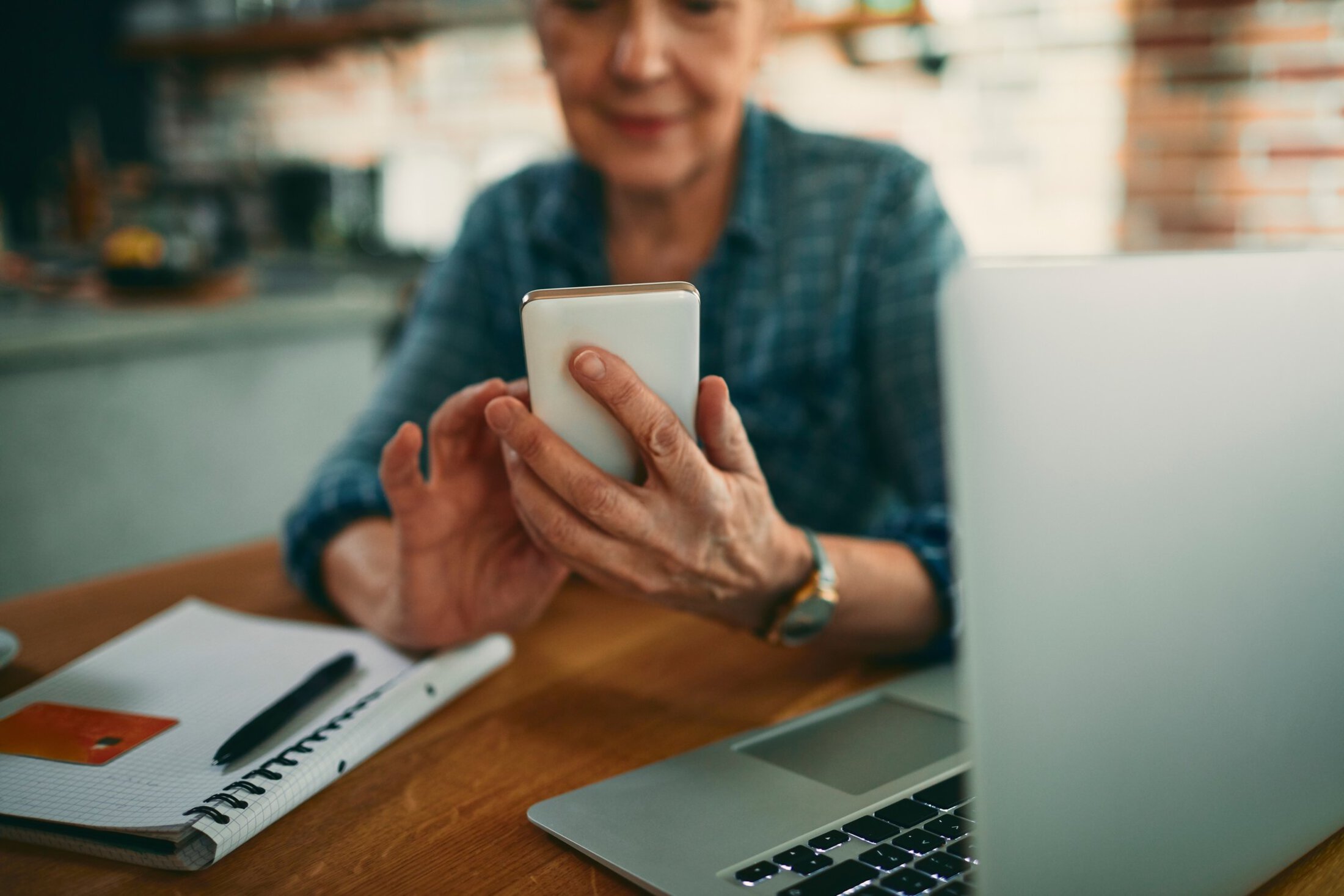
In a recent study published in the Archives of Physical Medicine and Rehabilitation, Metts and co-authors explored the use of an iPhone app to monitor post-stroke executive function.
More readings
In the study, Metts and co-authors collected recordings from self-administered mobile assessments of cognitive function in 20 patients with mild-to-moderate cognitive dysfunction. The average age of the participants was 55.5 years; 60% were men, and 70% experienced ischemic stroke, which occurs when a blood clot or fatty plaque blocks a blood vessel in the brain, thus starving the brain of oxygen.
It’s important to stress that the goal of the pilot study was not to prove the effectiveness of using an iPhone to monitor executive function but rather to determine whether patients could successfully use the technology at all.
The test showed it was feasible, and that people who had cognitive decline were able to use it. It showed a pretty high compliance. We were giving people six surveys to do per day, and we reached a compliance of around 80%.
“The test showed it was feasible, and that people who had cognitive decline were able to use it. It showed a pretty high compliance. We were giving people six surveys to do per day, and we reached a compliance of around 80%,” said Metts.
Even though the smartphone app’s efficacy was not a focus of the study, the researchers found that the results correlated well with certain clinical tests.
“The spatial memory forward was shown to have a significant correlation with the similar test done in a clinic-based setting,” stated Metts.
The spatial memory forward test assesses how well a person can remember spatial relationships rather than relying on language.
“The tasks that we're using were actually developed by Apple,” said Metts. “We work with some very good neuropsychology experts at Northwestern University. They were making sure that these active tests performed as closely as they could to the same test that you would get in a clinic-based setting.”
Metts’ role
Metts served as the technology developer and platform provider who created and maintained the digital health infrastructure of the study. In other words, he coded the technology used in the study.
“I’ve built a platform that’s just one app in the App Store,” he said. “But that one app has been used to run dozens of studies at 15 academic centers across the country.”
In particular, use of the app has resulted in eight peer-reviewed publications on post-stroke management.
“The research that I'm involved with directly compares what it looks like to do something on an iPhone with a clinic-based method of analyzing a patient and seeing if there's any correlation there.”
Improve patient assessments
Metts explained that smartphone testing does not replace clinical work but augments patient assessment by increasing the amount of data collected.
“On projects that are active now, the clinical team is able to asynchronously view videos of participants performing tasks to determine if they are being performed correctly,” said Metts. “With the high frequency of data points coming in, you can actually start to build reference ranges for this person rather than based on some population health construct.”
In particular, more data may reveal waxing and waning cognitive ability that would not be evident in occasional clinic visits, Metts said.
In sum, the technology permits clinicians to monitor a patient’s stroke recovery continuously, identify changes in cognitive or physical performance between visits and use this data to guide rehabilitation discussions and personalized feedback.
Metts chose to use Apple technology because of its increased security measures. From the start of his career, Metts has recognized the importance of patient privacy.
“We built an entire system so that the patient has full 100% control over who has access to their data and what they can use it for.”

Naveed Saleh
Recent MUSC News stories