
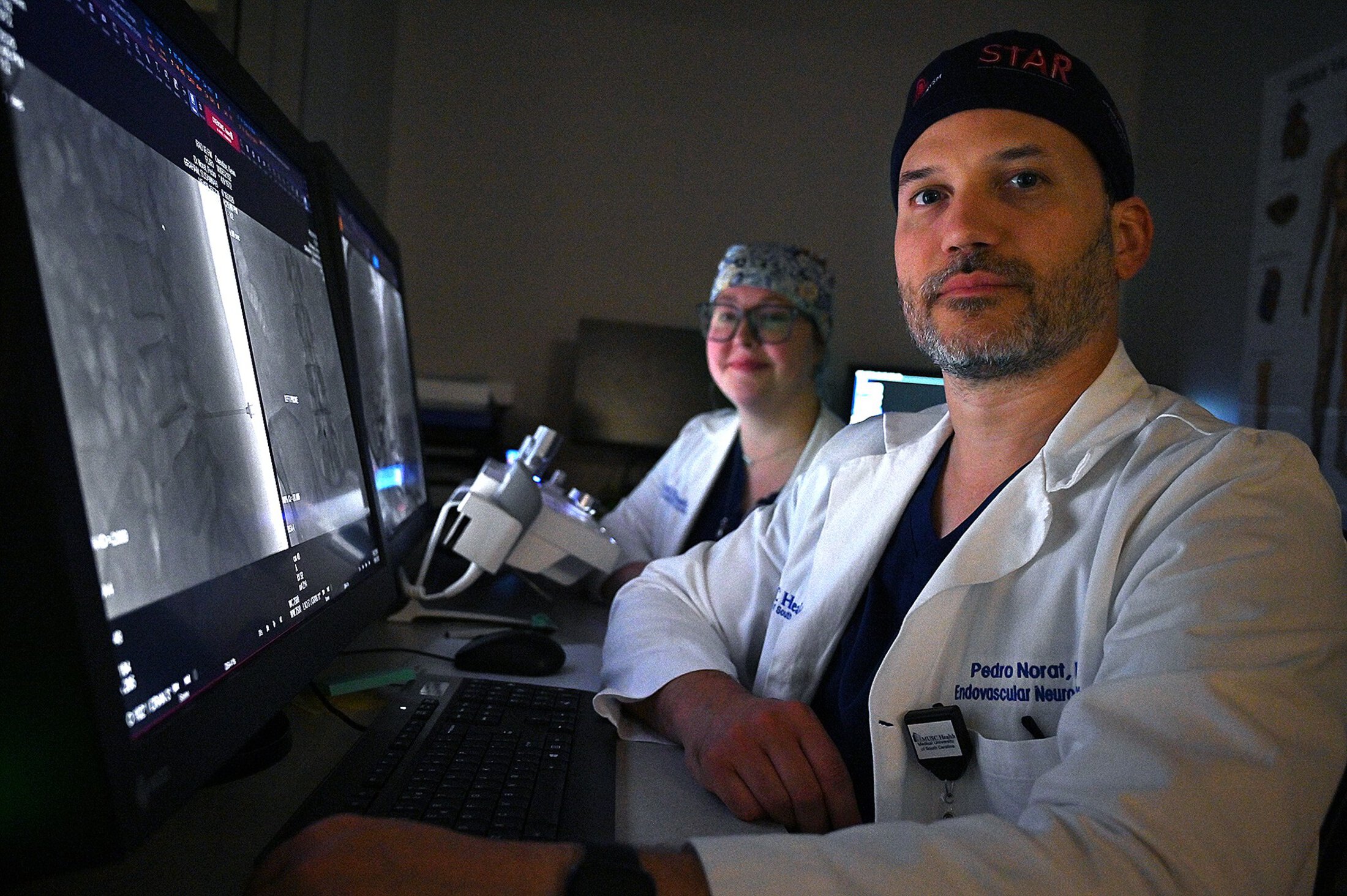
A Florence neurosurgeon is offering local care for people with normal pressure hydrocephalus, the strange-sounding brain disorder that hit performer Billy Joel last year. The condition tends to affect people age 60 and up, with symptoms easily mistaken for other conditions. If left untreated, the condition progresses and could cause permanent impairment.
Pedro Norat, M.D., said he saw the need for normal pressure hydrocephalus care in the Pee Dee area. “I have seen some reluctance from patients in this region to drive down to Charleston.”
So he set up a process for them to get tested and treated at MUSC Health Florence Medical Center. “So far, we’ve seen three patients, and all three showed some benefit.”
What’s happening in the brain
In people with normal pressure hydrocephalus, cerebrospinal fluid builds up in the brain’s ventricles without causing a marked increase in intracranial pressure – hence the term normal pressure. As for the word hydrocephalus, hydro refers to water or liquid. Cephalus refers to the head.
In most cases, doctors aren’t sure what causes normal pressure hydrocephalus. But in others, they’re able to link it to problems such as head injuries, tumors, bleeding or brain infections.
Symptoms
Norat said there are three symptoms to watch for:
-Changes in how a person walks. “Patients will take baby steps and may feel like they have magnets in their feet, making them stick to the floor.
-Cognitive decline. “So kind of a dementia.”
-Urinary incontinence. “The patient will be leaking; they will be going to the restroom all the time. And that's the typical presentation for NPH.”
Diagnosing normal pressure hydrocephalus
Traditionally, the first step in diagnosing normal pressure hydrocephalus is getting an imaging test called an MRI. “We want to see if the ventricles are enlarged,” Norat said. “And that there’s no obstructive hydrocephalus.”
In obstructive hydrocephalus, a blockage prevents spinal fluid from flowing normally. In normal pressure hydrocephalus, the problem is different: The ventricles enlarge even though the measured pressure may be normal or only intermittently elevated.
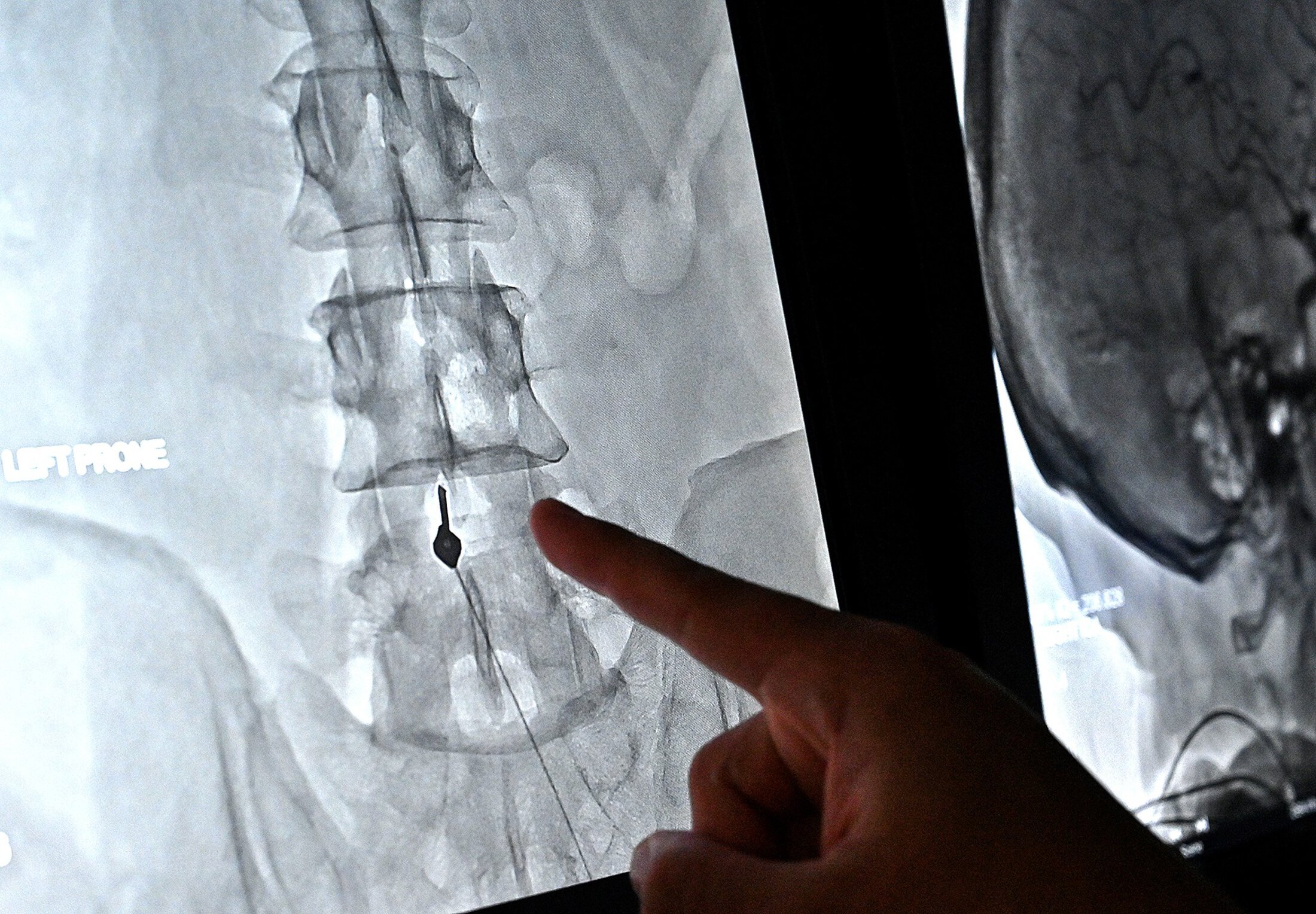
“And then the second step is to send patients for a lumbar puncture,” also known as a spinal tap, Norat said. “And ideally, you want to remove a high volume of spinal fluid. That can temporarily mimic what a shunt would do, helping doctors see whether symptoms improve.” A shunt is a surgically implanted tube that drains excess cerebrospinal fluid into the belly.
They and their loved ones then try to judge whether the symptoms improved, which is subjective. Another problem is that by the time patients return to the doctor’s office, they’re back to where they started in terms of symptom improvement.
Adding direct analysis to the process
“But we have a new process that mitigates that problem,” Norat said. “We do a very direct analysis of the patient.”
The neurologist now does what’s called a MOCA test – short for Montreal cognitive assessment. It measures mild cognitive impairment. “The patient receives a score based on points they got for correct answers,” Norat said.
Then the patient goes to the hospital, where a physical therapist does walking tests that also generate scores. And Norat removes spinal fluid several times a day to understand what may be happening, draining it through a temporary catheter in the back. The results simulate the effect that permanent surgery might have.
The patient stays in the hospital for two days. Then they redo all the tests and rescore the patient. If they see enough improvement, they may talk with the patient about getting a shunt, which would be adjustable in terms of how much fluid it drains.
“With a shunt, we normally start with a certain pressure of fluid drainage. If the patient says, ‘I'm not improving,’ we can change the pressure, and we can drain more or less fluid. So we can just find that sweet spot where they have improvements and but don't develop complications with overdraining,” Norat said.
Normal pressure hydrocephalus is considered rare. But when it occurs, it requires specialized care, Norat said.
“With these new options, we’re definitely offering better care for our patients. We’re the first to have an NPH clinic in this area and do the comprehensive in-hospital assessment of these patients.”
Helen Adams
Recent MUSC News stories