
By the time Katie Sacra’s son received the correct diagnosis, he had already spent years in and out of the healthcare system, cycling through hospitalizations and undergoing test after test, all while symptoms piled up that no one could fully connect. He received his first diagnosis by a geneticist at MUSC at 18 months, but it would take five years to understand the type of peroxisomal condition he suffered from.
That kind of diagnostic journey is common for children with rare metabolic and multisystem conditions, whose care is often divided across specialists and for whom critical signs can be missed.
Sacra, who is based in Myrtle Beach and the director of family and community engagement at the Global Foundation for Peroxisomal Disorders out of Tulsa, Oklahoma, experienced this firsthand. “That lengthy diagnostic odyssey was incredibly stressful. It's burdensome financially, emotionally, mentally and, then, also on the healthcare outcome for my son himself,” she said.
At MUSC Health, a new initiative aims to change that type of frustrating and costly experience by bringing genetic, gastrointestinal, liver and nutritional care together in one place to shorten the path to diagnosis and coordinate care from the start. Sacra’s son, now 26, is among the patients seen at MUSC Health’s Inherited and Metabolic Liver Disease Clinic.
A problem of fragmented, delayed care
Like Sacra’s son, many children throughout the country with rare metabolic and multisystem conditions spend years moving between specialists, undergoing repeated testing and accumulating symptoms that don’t cohesively point to a single answer.
“A lot of these multisystem conditions become so compartmentalized, where you have the cardiologist just focusing on the heart or the ophthalmologist just focusing on the eyes. So having this more holistic, collaborative approach is incredibly beneficial,” said Neena Champaigne, M.D., chief of medical genetics and genomics and a clinical professor of pediatrics at MUSC.
Typically, it falls on a parent to be that care coordinator and try to understand all of those different nuances. And so this is just kind of the beginning of pulling together some of the key specialists who can take that burden on and help facilitate that care for the patient.
In such a fragmented system, parents are often left to track symptoms, juggle appointments and relay information between their providers, effectively acting as the command center.
“Typically, it falls on a parent to be that care coordinator and try to understand all of those different nuances. And so this is just kind of the beginning of pulling together some of the key specialists who can take that burden on and help facilitate that care for the patient,” said Champaigne.
A first-of-its-kind combined clinic
These gaps, in large part, prompted MUSC Health to launch a first-of-its-kind clinic that brings metabolic genetics and pediatric hepatology into a single, coordinated setting. In this integrated model, specialists collaborate on each case in real time, often reviewing patient histories together before the visit, aligning on testing and strategy and continuing discussions after labs and results come back. Instead of operating on separate tracks, the team works from a shared plan.
The clinic also includes a metabolic dietitian who translates nutritional needs into day-to-day management and a genetic counselor who guides families through testing. Administrative support is also built in, navigating scheduling and insurance approvals.
“The uniqueness is that it is a combined clinic between metabolic and hepatology specialists. It's specifically targeting inherited genetic conditions that are specifically biochemical or metabolic in origin,” said Champaigne.
Earlier diagnosis leads to better outcomes
The clinic comes at a time when earlier diagnosis is a greater possibility. Expanded newborn screening and advances in testing are identifying more children with rare metabolic and multisystem conditions, but test results alone don’t necessarily provide clear answers. Many cases still require deeper interpretation across specialties to understand what’s driving abnormal labs or symptoms.
The earlier those interpretations and diagnoses happen, the more significant the impact can be. For some conditions, a timely diagnosis can be lifesaving and allow clinicians to move more quickly from testing to treatment, avoiding the cycle of duplicated labs and delayed decisions.
Earlier diagnosis also enables more proactive care. Many of these diseases affect multiple systems, and without coordination, critical signs can be missed. In a more integrated model, clinicians can anticipate those risks and screen for issues like hearing and vision loss, endocrine dysfunction or bone disease before they escalate.
“There are a lot of things that could have been missed, that could have been fatal even, so this is actually lifesaving. This isn't just about improving health outcomes. When you can identify individuals at a younger stage, all the way to newborn screening, you're saving lives as well,” said Sacra.
What care actually looks like
The model is designed to collapse what would typically require multiple appointments into a single, coordinated visit. Instead of seeing individual specialists weeks or months apart, families meet with a team prepared to execute a plan together.
“Much of pediatric liver disease has a genetic basis. This clinic was developed to facilitate earlier diagnosis,” said Janaina Nogueira Anderson, M.D., associate professor of pediatrics and a pediatric gastroenterologist and hepatologist at MUSC Health. “It streamlines care for patients with genetically mediated liver disease as well as for those who have not yet received a definitive diagnosis.”
“It’s not just multidisciplinary; it’s interdisciplinary,” said Sacra.
For families, this means fewer appointments, less time off work, fewer logistical hurdles and reduced travel. It also removes the expectation that parents will serve as the go-between, coordinating their child’s care.
“ We work together to discuss the management, the labs, the screening to make sure we're not replicating testing or wondering what the other specialty is doing. Every patient that we see, we discuss before the patient comes in. We make sure we're on the same page with their care and that we agree on the labs, workup and recommendations for that patient,” said Lauren Thompson, D.O., a clinical and biochemical geneticist and director of genetic inpatient services at MUSC Health.
Every patient that we see, we discuss before the patient comes in. We make sure we're on the same page with their care and that we agree on the labs, workup and recommendations for that patient.
A model built for expansion
Even in its early stages, the clinic is already drawing patients from beyond South Carolina. Families are willing to travel long distances for this level of coordinated, specialized care that is difficult to find elsewhere.
Clinicians see the model as a potential blueprint, as many rare and complex conditions present similar issues for healthcare systems across the country. At MUSC, the team hopes to incorporate additional specialties over time, building toward a more comprehensive, “one-stop shop” for multisystem diseases. Advances in genetic medicine are also opening the door to new treatments, making early, coordinated care even more important for connecting patients to emerging options.
For families like the Sacras, this shift is practical as much as it is clinical. Fewer missed signals, fewer delays and less time spent navigating the system alone can significantly change the course of care.
“When you bring this collaboration into real time, you're improving healthcare outcomes,” said Sacra.
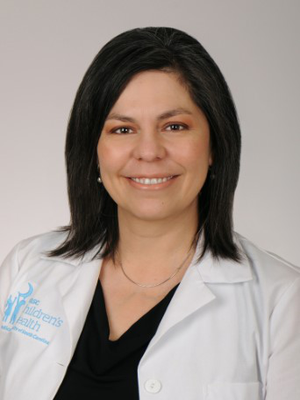
Neena Champaigne, M.D., FAAP, FACMG
- Genetics
- Metabolic Genetics
- Pediatric Genetics
- North Charleston, SC
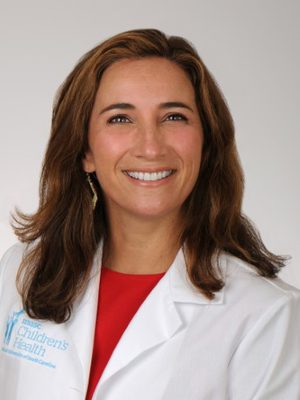
Janaina Anderson, M.D.
- Pediatric Gastroenterology
- Pediatric Hepatology
- Mount Pleasant, SC
- North Charleston, SC
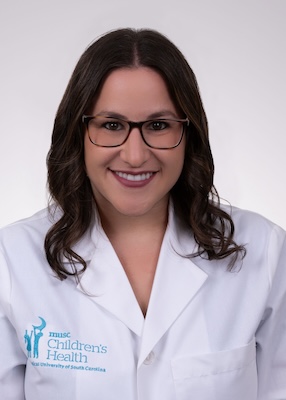
Lauren Thompson, D.O.
- Genetics
- Metabolic Genetics
- Pediatric Genetics
- North Charleston, SC
- Summerville, SC