
What do you get when you bring some of the world’s most prolific Ehlers-Danlos syndrome (EDS) experts together in one room to talk about the state of diagnosis and treatment?
A palpable dose of frustration? Absolutely. But also a refreshing amount of hope, momentum and agreement – and no shortage of urgency.
At MUSC’s MIND 2026 Symposium, three sessions and 16 presentations focused on EDS from multiple perspectives – from invisible pain and the “trifecta” of EDS, POTS and MCAD/MCAS to genetics, resilience and the neuro-immune interface. And running through the broad array of topics was a common theme: After years of fragmentation and misunderstanding, the field appears to be approaching a turning point.
With laser-focused attention on the importance of integrated care and efforts to improve diagnostic clarity, researchers and clinicians are working to translate the vast, multisystem complexity of the disease into more actionable answers for patients and providers alike.
The bottom line? EDS is not standing still. And experts are no longer willing to see it reduced to a loose collection of puzzling symptoms or dismissed as a passing trend that calls patients’ sanity into question.
That shift matters. For years, patients with EDS and hypermobility spectrum disorders have described the tribulations of a medical landscape marked by misdiagnosis, disbelief and siloed treatment. But the work now underway at MUSC, alongside efforts nationally and internationally, is pushing toward something far more practical: clearer diagnostic frameworks, coordinated clinical pathways, more biologically grounded research and models of care that reflect how these conditions actually present in real life.
A snapshot of expertise
Throughout the day, speakers brought not only expertise but lived experience, passion and a shared determination to move the field forward. They spoke about what they see every day in clinics, labs and their own lives and the progress they are working toward.
Most are patients themselves or have family members living with EDS. For an audience eager for answers, long dismissed as anxious, dramatic or hypochondriacal, the day was more than informative – it was intensely validating and reassuring.
Anne Maitland, M.D., Ph.D., director of the MUSC EDS Center, spoke about the need for clinical integration – recognizing not just hypermobility but the broader neuro-immune profile that many patients live with. In 2025, MUSC recruited Maitland, an internationally recognized specialist in EDS and immune-mediated disorders, including mast cell disease, as a key step in connecting research and clinical care.
A commanding voice in this evolving field, she believes EDS is bigger than joints and must be recognized as multisystem manifestations of environmental triggers of neuroimmune dysfunction. These disorders are highly complex and commonly involve multiple organ systems, meaning patients may enter care through different pathways – neurology, dermatology, mental health, rheumatology and several surgical subspecialties. In today’s fragmented healthcare system, that complexity often leaves patients cycling for years through evaluations with multiple providers and specialists, resulting not only in care falling short – but also in confusion and, at times, traumatizing experiences.
So Maitland asked a fundamental question: “Who is responsible for treating what?”
That challenge is only becoming more urgent.
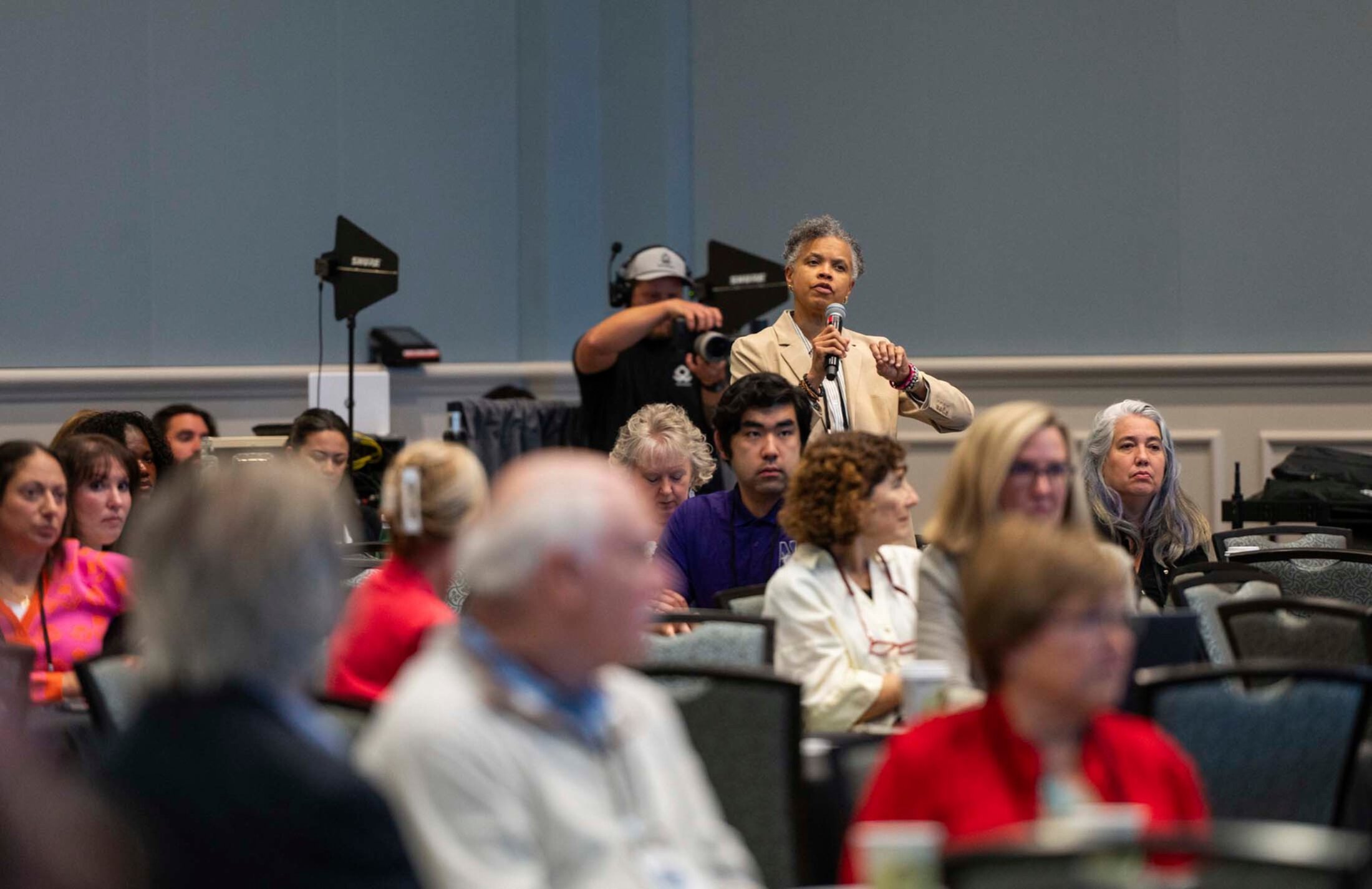
In an after-session Q&A, she spoke candidly about the current state of care and the persistent gaps she sees across medical education, clinical practice and legislative support – realities she confronts daily and is working to change. Asked about the most important step forward, she didn’t hesitate: “Political action. This is real. This is costly. This is not small or rare.”
Alongside the need for earlier diagnosis and intervention, Maitland emphasized patient and practitioner education, expanded research, clinical trials and stronger community engagement.
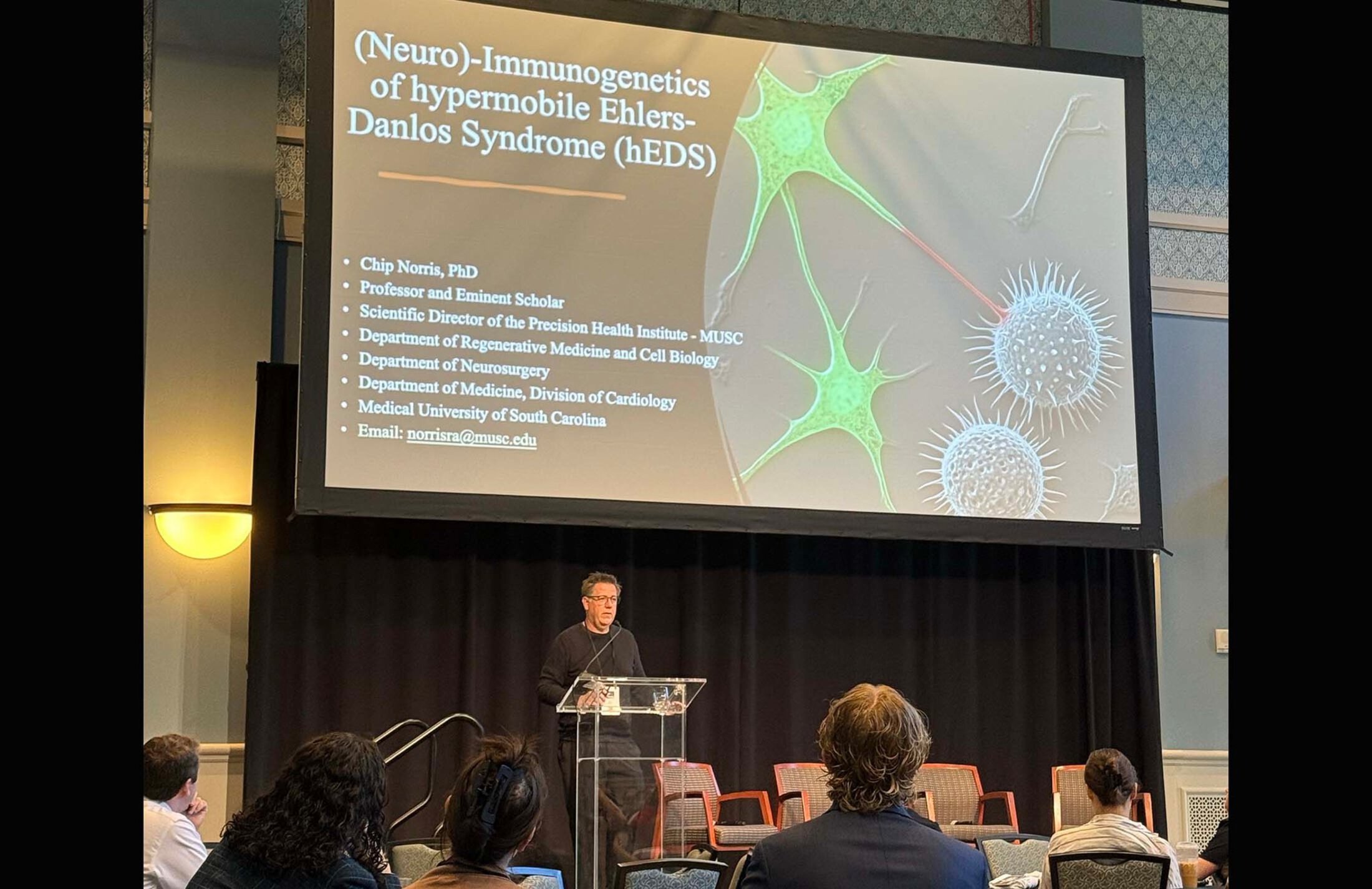
Chip Norris, Ph.D., of the Norris Lab at MUSC, highlighted the research frontier, pointing to emerging evidence that is reshaping how EDS is understood. Rather than viewing joint hypermobility as an isolated musculoskeletal issue, he described it as a marker of broader neuroimmune and autonomic dysregulation.
“Our research is increasingly pointing to EDS as more than a connective tissue disorder,” Norris said. “We’re seeing strong evidence of immune system involvement, including mast cell activation, and, in many cases, triggering events that seem to unmask or worsen symptoms. It suggests we need to think about this as a broader, immunological condition.”
These themes have become central to the work of the Norris Lab at MUSC, where Norris is widely credited as the driving force behind the institution’s emergence as an international leader in EDS research. Recognizing early the need for more robust data, deeper biological understanding and new approaches to studying these conditions, he established a research framework that integrates clinical insight with patient-driven discovery.
Working closely with patients, scientists and clinical leaders, including Maitland, Norris has been instrumental in developing and advancing the patient-scientist model and building the research and clinical infrastructure that now supports MUSC’s expanding EDS efforts. During the conference, colleagues frequently pointed to his ability to connect emerging science with real-world patient experiences as a catalyst for much of the institution's progress in the field.
In his presentation, he explored the genetic, immunologic and neurologic mechanisms that may link connective tissue disorders with mast cell activation and autonomic dysfunction, helping to explain the complex, multisystem patterns many patients experience. He also emphasized the importance of distinguishing benign joint hypermobility from hypermobility syndromes that may signal underlying pathology, as well as recognizing clinical red flags that warrant evaluation beyond the musculoskeletal system.
For many patients and patient-scientists in attendance, Norris’ emphasis on recognizing broader clinical red flags validated years of frustration with symptoms that were too often viewed in isolation and the burden of quarterbacking their own care across multiple specialties.
Lara Bloom, president and CEO of the Ehlers-Danlos Society, brought a global perspective grounded in both leadership and lived experience. An EDS patient herself who speaks openly about years of medical gaslighting, Bloom has made it a priority to embed patient voices into every aspect of the conversation.
At the symposium, she framed the upcoming diagnostic update as an important opportunity to improve diagnosis and expand access to care, while emphasizing that continued progress in the field could ultimately lead to more practical clinical tools and approaches. Through the Ehlers-Danlos Society’s Road to 2026 initiative, Bloom pointed to the importance of broader efforts focused on research, coordinated care, government recognition and funding and equitable access for patients worldwide.
When Maitland asked Bloom to share words of wisdom, Bloom took a moment to speak candidly. “I’m going to have a moan, actually,” she said, her English lilt softening the truth of what followed.
She explained how depressing it is that the only people who have come forward to fund research have been parents of people with the condition. “It’s the lived experience community that is driving progression because no one else is doing it for us. And I’m talking about maybe six people have raised that level of funding, which is astonishing and remarkable and incredible – but so unsustainable and scary. We need federal funding.”
She added that industry must also begin to pay attention, noting the absence of large-scale clinical trials. “There is no excuse why industry isn’t paying attention to this,” she said.
Her final message was clear and reflected the opinion of many: EDS remains one of the most neglected and underfunded conditions of our time.
Erin Nance, M.D., an orthopedic surgeon, shared her own long path to an hEDS diagnosis, using her personal experience to confront one of the most emotionally charged subjects in the field: medical gaslighting and the cost of not being believed by those meant to provide care. Capturing the audience’s attention, Nance connected through both lived experience and clinical insight. Through her work and a following of nearly 100,000 on Instagram, she has become a voice for patients who have been misdiagnosed, dismissed or overlooked.
She distilled her message into three key principles:
1. Believe first, test second. “Validation is a therapeutic tool,” she said, emphasizing the importance of telling patients, “Your symptoms are real and worth understanding.”
2. Stop and think. Providers should listen for alarm bells and red flags in their patients’ symptoms. “Don’t be blind to them,” she said.
3. Partner, don’t presume. “We can’t underestimate the power of lived experience,” she said. “Providers and patients must collaborate for the best outcomes. Tell patients, ‘Your symptoms make sense to me.’” She explained that patients feel as though they’re living on their own islands, left to make sense of seemingly disconnected experiences; it’s up to providers to connect the dots.
“Misdiagnosis,” she said, “is not a failure of intelligence. Gaslighting is not a failure of kindness. They’re failures of imagination and curiosity.”
Symposium highlights
Esprit de corps enveloped the room throughout the day as more than a dozen speakers examined EDS through scientific, clinical and patient-focused lenses, united by a common goal: improving the lives of people living with EDS and related conditions. Beyond the science – beyond the clinical discussions was a shared recognition that the stakes were deeply personal for many in attendance.
Midday, the symposium paused for a session centered on lived experience. In “What It Took to Be Heard: Patient Stories from the EDS Diagnostic Journey,” three patients shared the decades-long paths that led them to diagnoses.
By day’s end, participants left with a renewed sense of clarity – and cautious optimism. For those who had ever been told they were imagining or exaggerating their symptoms, the idea of being heard and believed carried real weight.
Several themes emerged:
1. EDS is being redefined. Not because patients’ experiences have changed, but because medicine is beginning to catch up to them. As Maitland, Norris, Nance and Bloom emphasized, patients must be listened to – and believed.
2. The future is integrated. The symposium topics told the story: pain, genetics, immune function, dysautonomia and fatigue are interconnected parts of a whole.
3. The patient voice is central to the science. This was one of the clearest throughlines of the day. At MUSC, in the Norris Lab and Maitland’s center; through the Ehlers-Danlos Society’s Road to 2026; and in Nance’s work amplifying patient experiences, lived perspective is no longer an afterthought – it’s driving the questions, shaping the science and redefining care.
4. As diagnostic approaches continue to evolve, updated expert-informed criteria could represent an important step forward – but implementation will be key. Ultimately, experts like Norris say the impact will depend on how broadly that understanding translates into better care.
If there was a single takeaway from the symposium’s EDS focus, it was this: The future of EDS will be built where lived experience, rigorous science and coordinated care finally meet.

Mikie Hayes
Mikie Hayes is director of writing services and enterprise copy editor at MUSC. A seasoned communications, crisis management and development professional, she has served as a trusted speechwriter to three MUSC presidents, numerous deans and department chairs. She has written and edited extensively for MUSC’s publications. She previously led a U.S.-based organization with global reach that worked closely with global media outlets and government partners worldwide, developing a range of complex strategies and specialized publications to support high-level initiatives. With experience spanning health care, scientific research, higher education and national and international security, she brings more than 35 years of experience in writing, editing, strategy and program development. An experienced public speaker, she has presented to audiences nationally and internationally.
Recent MUSC News stories