
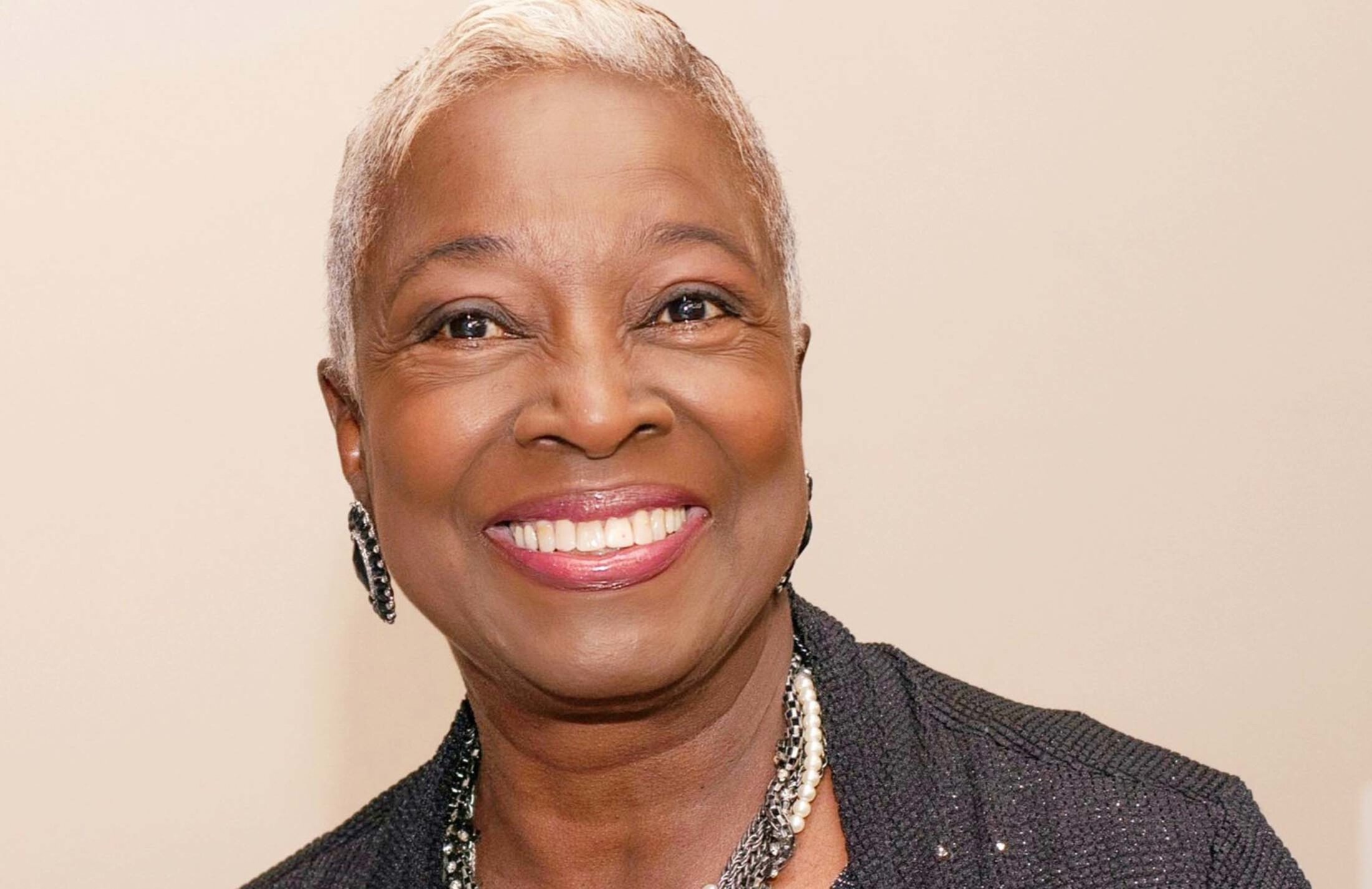
Gwyn Hargrett was training for the Cooper River Bridge Run in Charleston, South Carolina, when she saw the first sign that something was wrong.
“I took about 12 steps, and all of a sudden, I started gasping for air. I was like, ‘Oh my God, I can't breathe.’ And so, fortunately, I was very near a bench, and I made it to the bench and sat down. And I was like, ‘Oh, I guess I didn't stretch well enough, so I can't breathe.’”
Hargrett caught her breath, stretched a little more and tried it again. “The exact same thing happened. I was gasping for air. I could not breathe. I finally made it to my car and went straight to an urgent care clinic.”
That terrifying ordeal, on February 2021, was the beginning of a medical mystery that would eventually bring her to Denise Sese, M.D., at MUSC Health, who went on to facilitate life-saving treatment for Hargrett.
Bronchitis?
At the urgent care clinic on that first day she felt out of breath, Hargrett was treated for bronchitis. “Within a week and a half, I went back to the same urgent care three times. So at first, it was just minor bronchitis. And then the second time, it was acute bronchitis, and the third time, she gave me a nebulizer and said, ‘You just have a really bad case of bronchitis.’”
At that point, Hargrett, a retired executive project manager from New Jersey who’d recently moved to the Charleston area, was skeptical. “I've had bronchitis before. This is not bronchitis. And in the meantime, I Googled to find out what was going on. And I stumbled into something about blood clots. And so I asked this urgent care doctor, ‘Would you test me?’ And we set up an appointment to test for blood clots.”
An alarming finding
Hargrett drove herself to that appointment, assuming it would be a quick visit. “But as I'm lying on the table, the technician is running the sonogram over my leg and up my thigh. And she hit the back of my knee. I said, ‘Ouch. Is that my clot? ‘And she said, ‘Oh, you have a clot.’”
But not just one clot. “She kept moving it up my thigh, my inner thigh along my vein. And then all of a sudden, the room started filling with people. I kept watching people come into the room, looking at the monitor and talking to her. And finally, I reached up on my elbow, and I was like, ‘Listen, can you tell me what's going on?’”
A doctor confirmed that Hargrett had a large clot behind her left knee. But that wasn’t all. “She said, ‘Your lungs are full of blood clots. But we have a bigger concern. A clot is moving, and it's headed toward your heart.’ She said, ‘If you had waited one more day, you would not be here.’”
The care team put Hargrett on a heavy dose of the blood thinner heparin to try to dissolve the clot heading for her heart. “I came home, and I think maybe two weeks later, I ended up driving myself back to the hospital because I could not breathe again. I was having right-sided heart failure. So they kept me overnight and stabilized me. And I went to see the pulmonologist. He said, ‘You know, something more is going on with you. I really need to refer you to a specialist.’ And I was like, ‘Please do.’ So he referred me to MUSC.”
Finally, an answer
That’s where Hargett met Sese for her first appointment. Sese, a lung and critical care specialist, got down to business. “The doctor went straight into the computer, and she says, ‘I know what's wrong with you,’” Hargett remembered.
Sese diagnosed Hargrett with chronic thromboembolic pulmonary hypertension, also known as CTEPH. It can develop, as Hargrett experienced, when blood clots that formed in the legs travel up to the lungs. There, they block blood flow. Most clots are treatable when caught in time. But in some cases, the trouble persists, leading to CTEPH.
“That clot tissue has lodged in the very lower parts of the arteries within your lungs,” Hargrett remembered Sese telling her.
“And she said, ‘Your heart is pumping blood and oxygen, but your lungs can't receive, and it's pushing that fluid back into your heart cavity.”
Sese told her CTEPH is a rare disease. “It only happens to about 2% to 5% of the population. We don't know why it happens, but it's treatable,” Hargrett said.
“I was elated to finally know what was wrong. Then Dr. Sese puts her hands on my shoulders, and she says, ‘But right now, I want you to go to ER.’ And I was like, ‘What for?’ And she said, ‘You're in cardiac arrest. Do you want me to call an ambulance or do you want your sister to take you?’”
Cardiac crisis
The disease had caused a dangerous buildup of fluid around Hargrett’s heart. “I was in the hospital three and a half weeks, trying to get that fluid from around my heart and keep me from having a heart attack,” she said.
Other symptoms of CTEPH include leg swelling, dizziness, fatigue, tightness in the chest or stomach and coughing up blood.
Once Hargrett was stabilized, she went to the Cleveland Clinic, where Sese had done her fellowship. It was one of a handful of hospitals at the time that did surgery for CTEPH. “Over the course of the next two years, I had five surgeries to remove that tissue from my lungs,” Hargrett said.
Treatment now available at MUSC Health, only site in South Carolina
Since then, MUSC Health has started offering that same type of procedure, balloon angioplasty, to people with CTEPH, becoming the first in the state. Read more about that in this related story.
“I think having a unit like that at MUSC is a no-brainer. It will help patients tremendously,” Hargrett said.
Patients like her, suffering from a condition that requires the right specialist to diagnose it and guide them through treatment. Hargrett gives Sese a huge amount of credit. “It was having a well-informed physician who kept searching with me. She didn't leave me alone. You know, her kindness. I am a lifelong patient of hers.”
Hargett wants to help others by sharing her story. “I want to pay it forward. I want to make it easier for other patients to ask those questions and then have the right treatment available.”
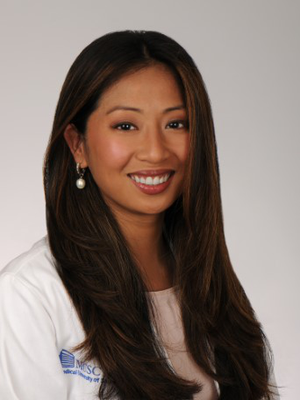
Denise Sese, M.D.
- Critical Care Medicine
- Pulmonology
- Charleston, SC
- Mount Pleasant, SC
Helen Adams
Recent Lung Care stories