
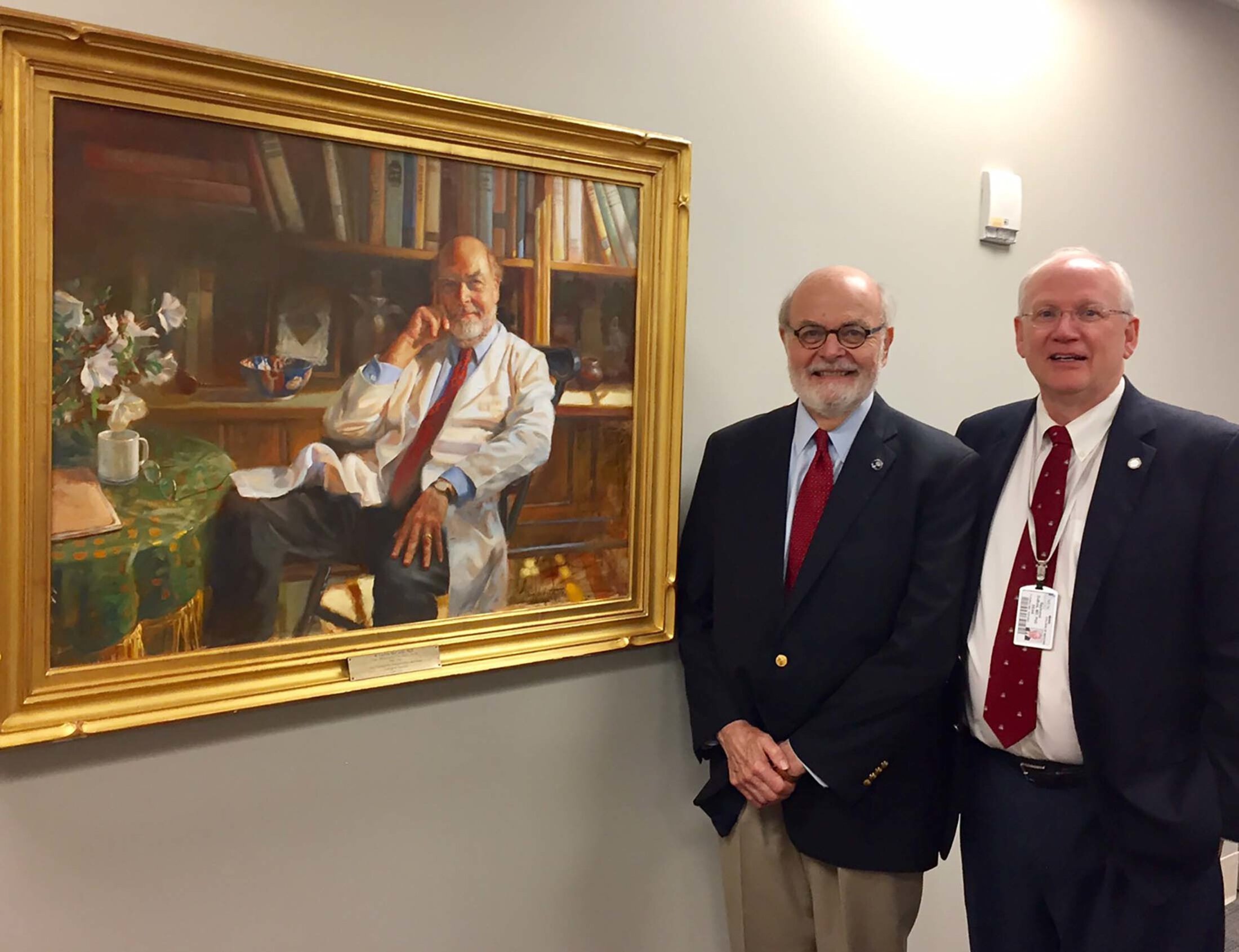
Robert Layton McCurdy, M.D., a psychiatrist, Distinguished University Professor and Dean Emeritus of the Medical University of South Carolina College of Medicine, died on Jan. 26, at the age of 90. His passing marked the loss of a singular leader whose influence continues today – across MUSC, the city of Charleston and the broader landscape of academic medicine.
Even decades after his retirement, Dr. McCurdy’s name remains woven into conversation – spoken in offices and lecture halls, quoted in board meetings, ingrained in institutional memories. It is a testament not only to the roles he held but to the way he held them: with steadiness, sharp intellect and an unmistakable sense of dignity that shaped both people and programs.
Dr. McCurdy carried himself with a quiet refinement that mirrored his approach to leadership. He was always a step ahead, meticulous, witty and gracious; his careful attention to detail reflected a sincere respect for others. Those who knew him best recall his warmth as a leader who listened intently, laughed generously, spoke thoughtfully and made space for others to rise.
Dr. McCurdy’s legacy at MUSC spans more than half a century and touches nearly every dimension of the institution’s mission. As chairman of the Department of Psychiatry and Behavioral Sciences, he elevated the department to national prominence. As dean of the College of Medicine and vice president for Medical Affairs, he led a period of growth that strengthened research, expanded academic programs and reshaped the culture of the medical school. Beyond MUSC, he was widely respected as a national leader in psychiatry, academic medicine and public service.
To define Dr. Layton McCurdy solely by titles would miss the essence of his impact. He was, above all, a steward – of people, ideas, culture and institutions. A steward whose influence endures because it was grounded in purpose, principle and care.
“Dr. Layton McCurdy was a nationally recognized medical leader who made a significant impact on so many lives,” said David J. Cole, M.D., FACS, MUSC president. “He built a foundation that continues to benefit patients, our institution and communities across the state. His kindness and steady demeanor will long be remembered, as will his legacy in the world of medicine. Dr. McCurdy showed us that meaningful change comes from both vision and compassion, and I am saddened by his passing.”
Destined for leadership
A native South Carolinian, Dr. McCurdy earned his medical degree at MUSC and completed his residency at the University of North Carolina at Chapel Hill. His early career took him to the National Institute of Mental Health and to Emory University, experiences that broadened his perspective and positioned him at the forefront of a field undergoing rapid growth. Psychiatry would become both his professional home and his proving ground.
In 1968, at just 32 years old, he returned to MUSC as a professor and department chair. The timing was serendipitous. The nation was in the midst of profound social and political change, and Charleston was no exception. Less than a year after his arrival, the city would become the epicenter of the 1969 hospital workers’ strike. Dr. McCurdy stepped in and kept negotiations moving forward. Said to have navigated a volatile period with equanimity and an insistence on dignity for all involved, his actions became an early signal of the kind of leader he would be: steady under pressure, principled in conviction and unwilling to separate success from moral responsibility.
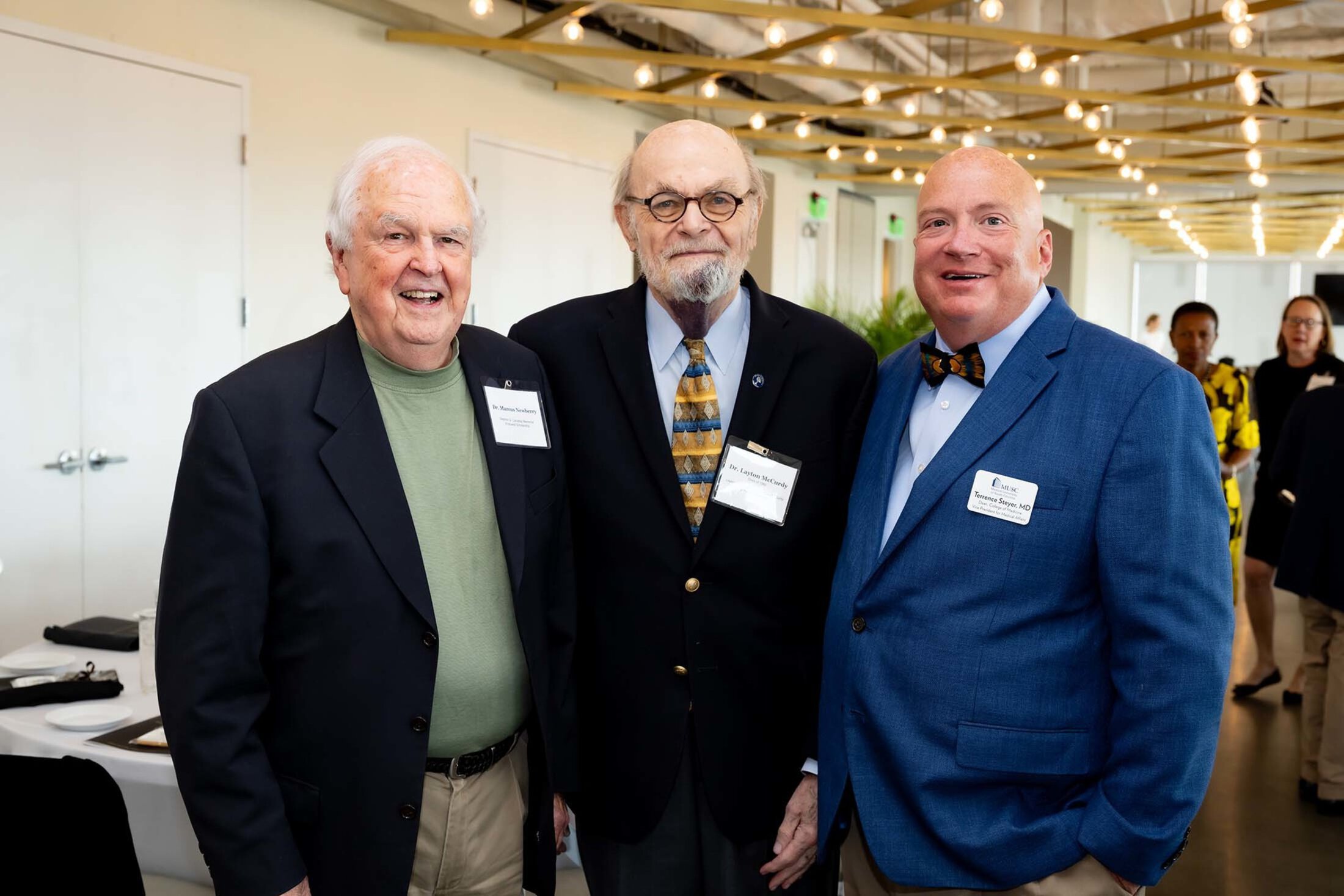
Decades later, he participated in its 50th anniversary commemoration, underscoring the lasting importance he placed on remembrance and reconciliation. A leader who always elevated others, Dr. McCurdy shared his personal recollections during the keynote event “MUSC in 1969: The Care Giver Perspective.” He addressed the concerns of that period and the many ways MUSC had progressed. His firsthand account offered the audience a window into the tumult that tested the Holy City’s resilience. “There’s reason to be hopeful for what can be achieved with a deep commitment. One of the mistakes we make is we say, ‘This can’t be solved,’” he said to a full auditorium. “But we can work at it and continue to work at it.”
During his 14-year tenure as department chair, Dr. McCurdy guided the Department of Psychiatry and Behavioral Sciences to national prominence, strengthening clinical programs, expanding research and cultivating a culture that valued scholarship alongside compassionate patient care. His leadership extended far beyond MUSC.
Over the course of his career, he served in prominent roles within the American Psychiatric Association; the American College of Psychiatrists; the Association of Academic Psychiatry, which he helped to found and served as its inaugural president; and the Association of American Medical Colleges. He served as director, and later president, of the American Board of Psychiatry and Neurology, further cementing his influence on national standards for education and certification. He also played a major role in developing the fourth edition of DSM-IV, one of the most consequential frameworks in modern psychiatry.
A dual appointment
In 1982, Dr. McCurdy accepted the role of psychiatrist-in-chief at Pennsylvania Hospital, part of the University of Pennsylvania. He returned to MUSC in 1990, having been appointed dean of the College of Medicine and vice president for Medical Affairs. The dual role – a first for the institution – was established by former U.S. Secretary of Energy and then-MUSC president James B. Edwards, D.M.D., in recognition of Dr. McCurdy’s leadership and national stature.
He assumed these roles at a time when the College of Medicine was poised for transformation but still grappling with longstanding challenges and worked to ensure that MUSC offered a welcoming environment for all students.
At the same time, Dr. McCurdy was intent on strengthening the institution’s academic foundation. With the support of Dr. Edwards and the MUSC Board of Trustees, he championed research growth, expanded academic programs and elevated MUSC’s national standing through steady investment in people and infrastructure. That steady approach left a lasting imprint on the College of Medicine.
“I firmly believe that where MUSC and the College of Medicine are today, in terms of our innovations, our research and the work we do, is a direct result of Layton’s leadership as dean and his oversight of medical affairs," said Terrence E. Steyer, M.D., dean of the College of Medicine and vice president for Medical Affairs. “He believed deeply in the tripartite mission of academic medicine and the responsibility of leadership to protect and advance it for the next generation.”
Colleagues and staff recall a leader who noticed details, followed through on commitments and understood that institutions are sustained by people who feel trusted and empowered. Even decades after stepping away from formal leadership roles, he remained a presence at MUSC, sought out for his counsel.
Answering the call
Dr. McCurdy stepped down as dean and vice president in 2001, but his commitment did not end there. Even after retiring, he remained attentive to the institution and ready to step forward when continuity and care were needed most.
That commitment became especially evident following the sudden death of cardiologist Michael Assey, M.D., the founding director of MUSC’s Cardiovascular Institute (CVI). At a moment of profound loss, when the future of a complex and growing program was uncertain, Raymond S. Greenberg, M.D., Ph.D., then-MUSC president, asked Dr. McCurdy to step in until a new leader could be named.
Dr. McCurdy, who, with a small team, spent 18 months conceptualizing and launching the CVI, quietly assumed the leadership role to ensure the institute’s work continued without interruption. That decision was driven by a deep sense of responsibility to the people and mission involved – a mission that, for him, was personal.
The episode was emblematic of his broader approach to institutional life, Greenberg said. “Layton had a passion for the Medical University. It helped shape him during his days as a medical student, and later, he spent most of his professional career giving back to his alma mater – always striving to make MUSC the best it could be. He did that first as chairman of psychiatry, building a powerhouse department that was known internationally for its research; again as the dean of the medical school; and, finally, when he answered the call to leadership during a period of loss and transition. Nobody has ever loved this institution more than Layton McCurdy, and we all owe him a great debt for a lifetime of service to the people of South Carolina.”
After retiring from MUSC, Dr. McCurdy did not step away from public service. In 2003, the U.S. Department of Veterans Affairs named him to the Capital Asset Realignment for Enhanced Services (CARES) Commission, charged with evaluating and recommending how the VA should align its health care facilities to meet the long-term needs of veterans. In 2006, the Secretary of Defense appointed him to the Defense Health Board Task Force on Mental Health, a congressionally mandated effort to assess mental health care for deployed and returning service members and their families. Traveling weekly to military bases around the world for more than a year, the task force warned of a critical shortage of mental health specialists within the military.
A citizen of Charleston and the world
Dr. McCurdy’s sense of responsibility extended well beyond the walls of the University. Deeply committed to civic life, he believed that academic leaders had an obligation to engage with and strengthen the communities they served. In Charleston, that belief translated into decades of service on boards and commissions dedicated to education, culture and public good.
He served as chairman of the board of the Gibbes Museum of Art and as vice chairman of the South Carolina Aquarium, lending his leadership to institutions that shape the intellectual and cultural life of the Lowcountry. Then-Mayor Joe Riley invited Dr. McCurdy to serve on a formative committee focused on establishing an African American museum in Charleston, an invitation he gladly accepted. The list of organizations he served and supported is long and distinguished.
At the state level, he was appointed chairman of the South Carolina Commission on Higher Education, where he helped to guide strategic planning for colleges and universities across the state. He chaired the commission from 2005 to 2008. Even in these roles, colleagues noted his characteristic approach: thoughtful, prepared and grounded in the belief that institutions flourish when they are led with integrity and foresight.
Yet Dr. McCurdy’s curiosity and engagement were never confined by geography. An avid world traveler, he believed deeply in the value of understanding the world beyond one’s immediate surroundings. Nowhere was that more evident than in his lifelong fascination with the life and legacy of former UK Prime Minister Winston Churchill. He admired not only Churchill’s leadership during moments of historic crisis but also his intellect, complexity and command of language.
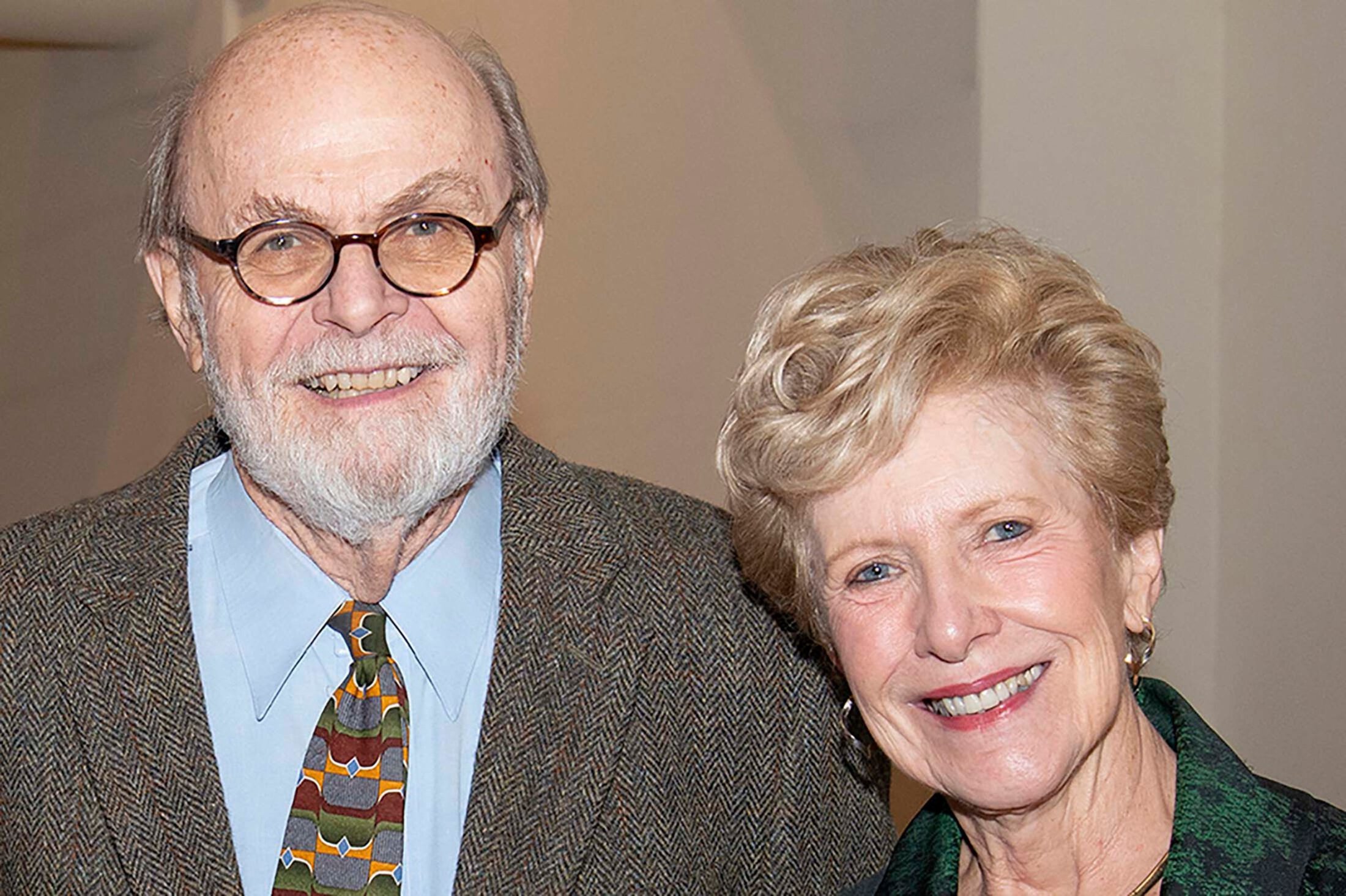
Dr. McCurdy and his wife, Gwen, traveled frequently to England, immersing themselves in the history and culture that so captivated him. During a sabbatical in 1974 and 1975, the family lived there while he worked at the Maudsley Hospital, part of King’s College London. Through their travels, he and Gwen formed a friendship with Churchill’s granddaughter, Celia Sandys, whose stories and reflections further enriched his understanding of a figure he had long studied.
These interests were not separate from Dr. McCurdy’s professional life. They informed it. His global perspective, appreciation for history and reverence for institutions shaped the way he led, practiced, taught, mentored and lived. He believed that leadership required both depth of knowledge and breadth of vision – an understanding of where one stands in a much longer human story.
Both in Charleston and far beyond, he fully lived that belief. Whether guiding a medical school, supporting a nonprofit or engaging with the wider world, he carried himself as a citizen-scholar – curious, disciplined and profoundly committed to the idea that thoughtful leadership can leave a place better than it was found.
A legacy that endures
In the years since Dr. McCurdy stepped away from formal leadership at MUSC, his influence and name have continued to surface – in conversation, in reflection, in moments when his unique perspective is needed. Long after titles are set aside, he remains a touchstone – a reminder of what principled leadership looks like when it is practiced with humility and care.
The legacy he leaves behind lives on in the programs he strengthened, the patients he treated, the leaders he mentored and the supportive culture he built. It is reflected in the countless individuals whose paths were touched by his quiet encouragement.
Dr. McCurdy was a genuinely beloved figure, as comfortable commanding a boardroom as he was trading stories with the best of them over a coffee. A gifted storyteller, he could captivate a room with ease. He could speak extemporaneously for an hour without losing his train of thought – or his audience – a rare talent that made those listening feel included.
It's no mystery why the news of Dr. McCurdy’s passing has prompted an outpouring of grief and contemplation across MUSC and the broader community. Colleagues, former students, staff, friends from every corner of the institution have shared memories across social media, marked by common themes: kindness, generosity and an uncommon ability to make every person feel valued and remembered.
One spoke of a man who “gave worth to everyone he knew.” Another called him a “gentle giant whose presence commanded respect without ever demanding it.” Another reflected that he “never met anyone who was not his friend” – a testament to the natural kindness Layton McCurdy was born with.
Dr. McCurdy was devoted to his family and spoke lovingly of them. He cherished time spent together. He is survived by his wife, Gwen Atkinson McCurdy, and his sons, Robert (Robby) Layton McCurdy Jr., of California, and David Barclay McCurdy of Brevard, North Carolina. Always at the center of his life, his family was a source of joy, grounding and great personal pride.
As MUSC and the broader community reflect on his life and legacy, the measure of Robert Layton McCurdy is found not only in the honors he received or the offices he held but in the lasting presence he leaves behind. He was a builder, a steward, a world citizen of uncommon integrity – a leader whose influence continues precisely because it was never centered on himself.
And while his passing marks the end of a remarkable life, it is not the end of his impact. That forever remains – in memories, in his students and patients, in buildings and programs and, most certainly, in the impeccable standards he set for what leadership, at its best, can be.
A funeral service for Dr. Robert Layton McCurdy will be held on Friday, Feb. 13, at 2:00 p.m., at Grace Episcopal Cathedral in downtown Charleston. In lieu of flowers, memorial gifts can be made to the Bishop Gadsden Employee Appreciation Fund.

Mikie Hayes
Mikie Hayes is director of writing services and enterprise copy editor at MUSC. A seasoned communications, crisis management and development professional, she has served as a trusted speechwriter to three MUSC presidents, numerous deans and department chairs. She has written and edited extensively for MUSC’s publications. She previously led a U.S.-based organization with global reach that worked closely with global media outlets and government partners worldwide, developing a range of complex strategies and specialized publications to support high-level initiatives. With experience spanning health care, scientific research, higher education and national and international security, she brings more than 35 years of experience in writing, editing, strategy and program development. An experienced public speaker, she has presented to audiences nationally and internationally.
Recent Enterprise stories