
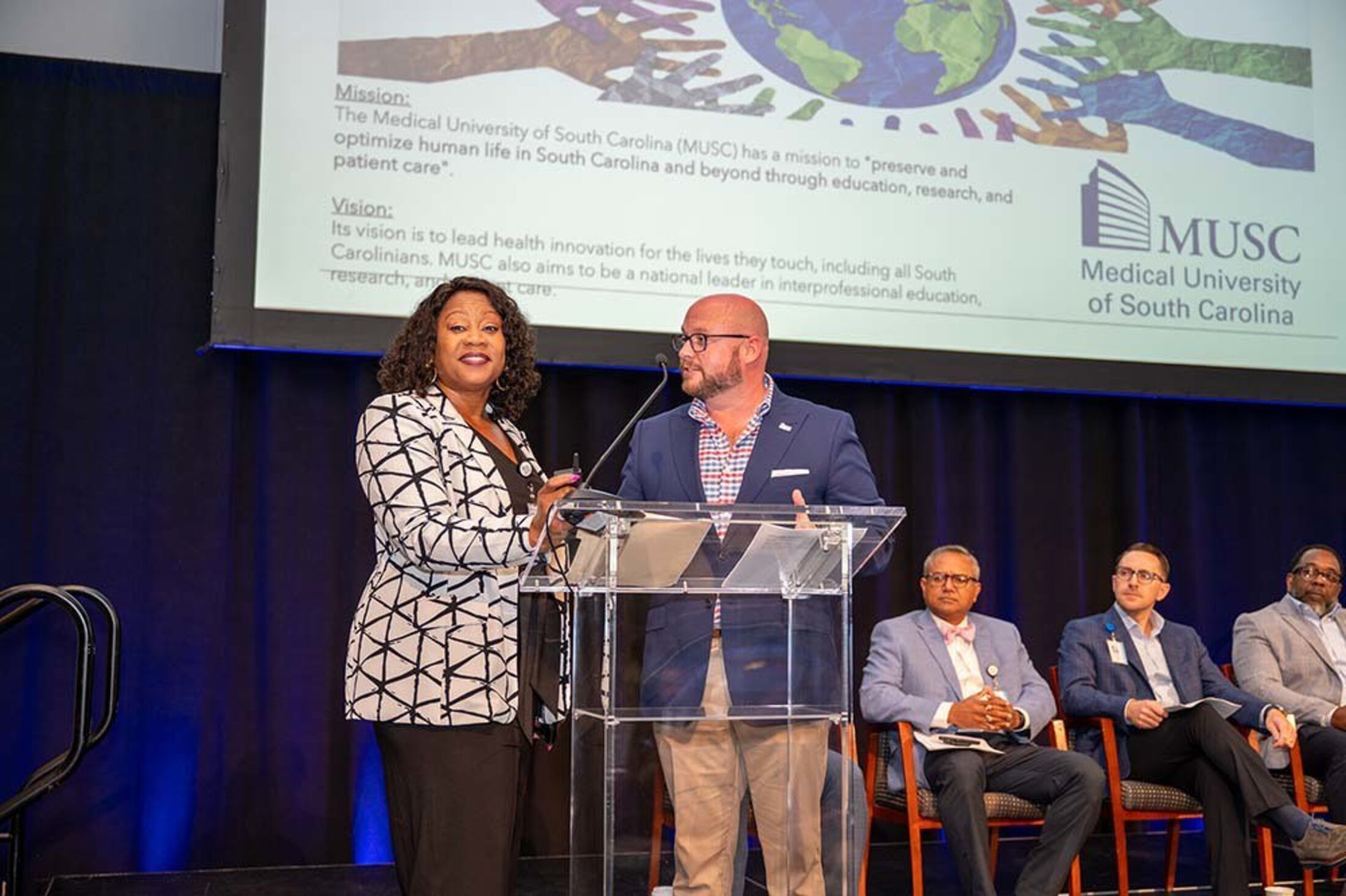
The floodwaters rose, but enthusiasm for the Medical University of South Carolina’s Project IMPACT symposium rose higher on Aug. 22 as participants packed Charleston’s Gaillard Center to celebrate MUSC’s growing community partnerships.
“They came in spite of the flood,” said Natasha Wright, program manager for Project IMPACT and symposium organizer. “We actually had to close registration at 300, and nearly 300 people did show up, even with the weather alerts.”
Designed to highlight MUSC’s wide-ranging resources available to community nonprofits, the symposium drew representatives from more than 50 MUSC clinics and departments and over 100 community organizations.
“We wanted to showcase everything about MUSC focusing on social impact, access and workforce development, and well-being — from the sickle cell clinic and mobile health screening bus to the community garden where people can get healthy produce,” Wright said.
Representatives from the departments of psychiatry, family medicine, pediatrics, nursing and Hollings Cancer Center were among the presenters who highlighted their resources in oral presentations and at booths set up throughout the auditorium.
Feedback from participants confirmed the event’s impact. “So many people told me they had no idea that so much was available in their own backyard,” Wright said. “Our community members were blown away. They asked us to do this next year, but with even more time to connect with departments, clinics and one another.”
That’s encouraging news for Wright, who revved up Project IMPACT after joining the team in late 2024 from the James B. Edwards College of Dental Medicine.
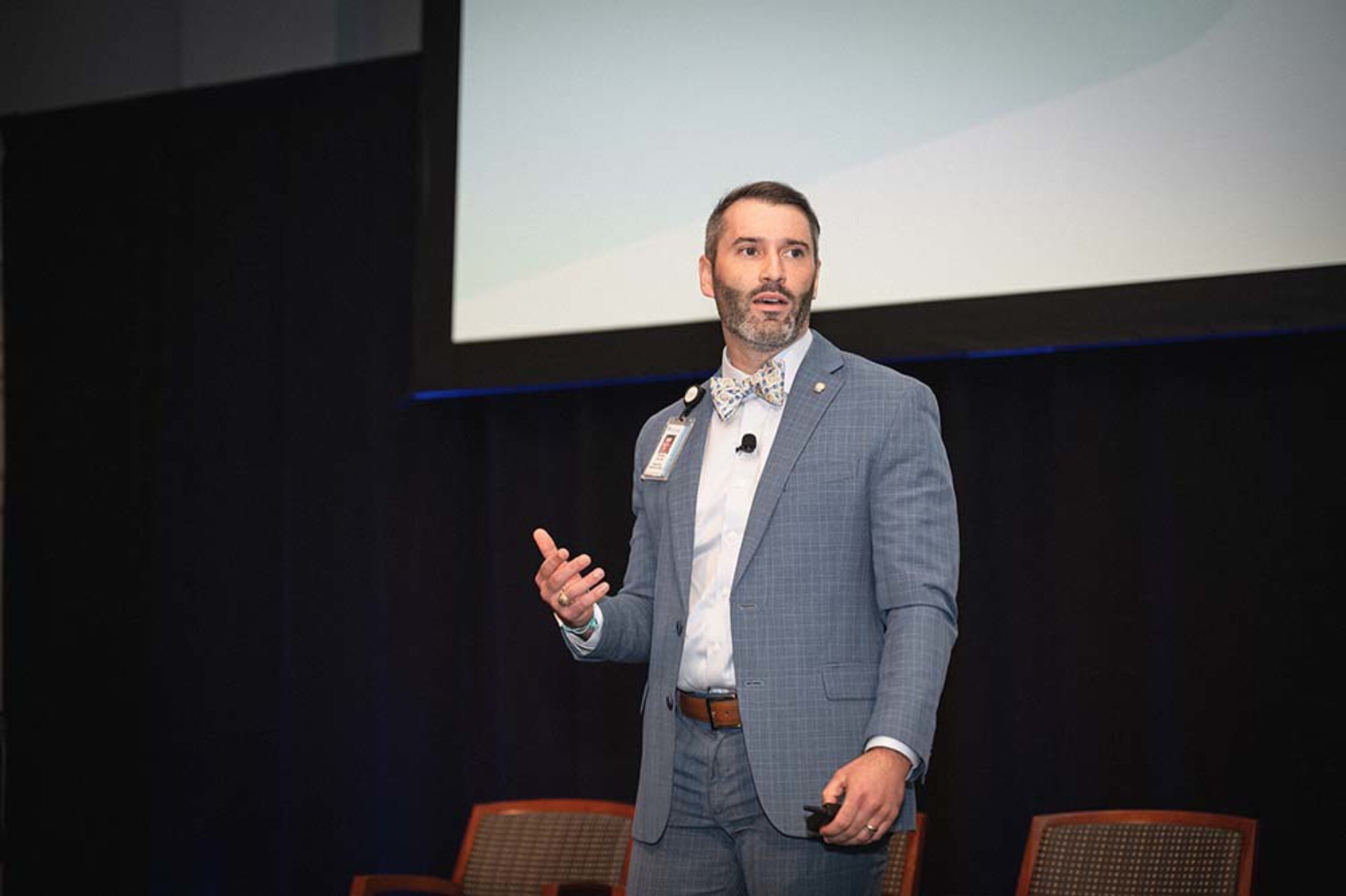
Project IMPACT, Improving Mission Performance And Community Together, was conceived through a collaboration between Jess Johnson, former MUSC Health Charleston Division chief operating officer, and Tripp Grooms, now executive director of operations. Grooms advanced the program, which had the backing of the Executive Leadership Council, by setting a 2025 vision, refining action plans and recruiting Wright.
“When I came on as project manager, a big question was what we would do differently from other groups on campus,” Wright said. “I didn’t want to duplicate. I wanted to collaborate. Tripp and I agreed we wanted to position MUSC as a convener and bridge MUSC resources with community nonprofits.”
The idea crystallized when Wright learned about a groundbreaking treatment for sickle cell disease being offered at MUSC. “I was amazed MUSC was offering this lifesaving treatment and realized there must be so many programs and initiatives that the community should know about,” she said.
She presented a proposal to Grooms. It called for creating an inventory of MUSC departments and building a repository of community resources, including business hours, partnerships, treatments and contact points. The response, she said, was overwhelming.Wright also suggested the concept of a community-facing symposium, an idea that has become a cornerstone of the program’s engagement strategy.
Working with a steering committee of senior leaders, she began recruiting employees as ambassadors to spread the word, gather feedback and staff events. The committee also sharpened Project IMPACT’s mission statement: “A Charleston Division initiative to improve social impact, access, workforce development & well-being.”
Since then, Project IMPACT has hosted blood drives, a back-to-school bash, a Day of Service with hundreds of participants and monthly programs on topics from arts and healing to self-defense in the Rejuvenation Station.
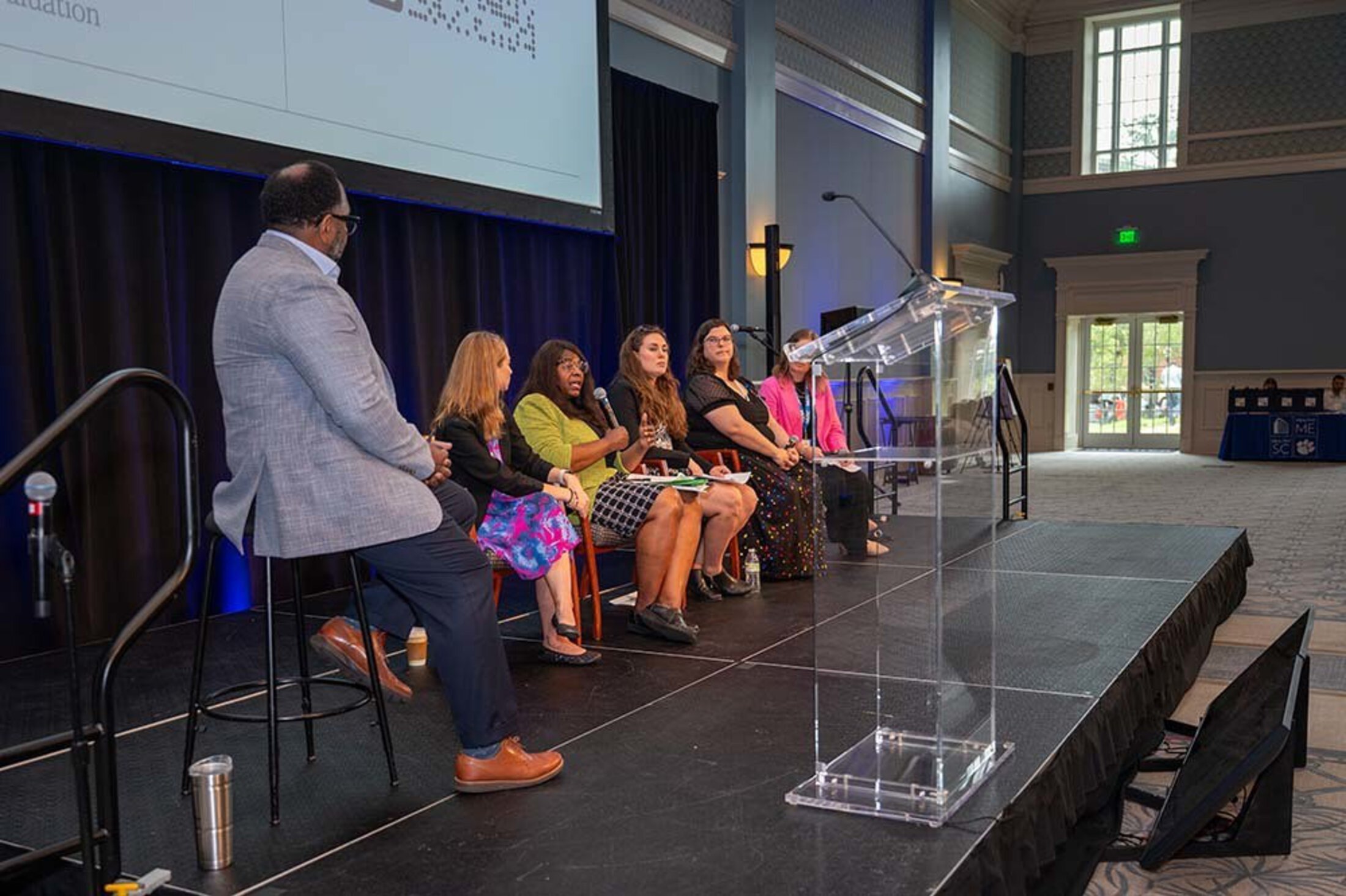
“Participation is completely flexible, but our membership keeps growing,” Wright said. “Our ambassadors are working on 30 different initiatives, and they get it done.”
Encouraged by the success of this year’s symposium, she is already planning for 2026. “Never in MUSC’s history has something like this symposium been done,” she said. “The positive emails and social media posts urging us to keep this going show how much the community values it, and that’s exactly our goal.”
Grooms agreed. “That's what this is all about, bridging that gap of communication and information sharing and helping bridge the gap of health disparities that are out there for our Lowcountry communities.”
MUSC employees interested in becoming a Project IMPACT ambassador can contact email Wright.

Margaret Lamb
Margaret Lamb has extensive experience in higher education, health, medical and wellness communications as a writer, editor, spokesperson and manager. A graduate of the University of South Carolina (USC) with a degree in political science, she has worked for USC and Clemson University as well as Hill & Knowlton Public Relations and The Atlanta Constitution.
Recent Impact stories