
Vaccination not only protects children against severe COVID-19 illness but also from MIS-C, a rare complication that can show up weeks or even a month or two after even asymptomatic illness, according to a new report from the U.S. Centers for Disease Control and Prevention.
The study collected data from 24 children’s hospitals, including the MUSC Shawn Jenkins Children’s Hospital, from July to December 2021 as part of the Overcoming COVID-19 study, a real-time collaboration that seeks to understand COVID-19 complications in children and young adults.
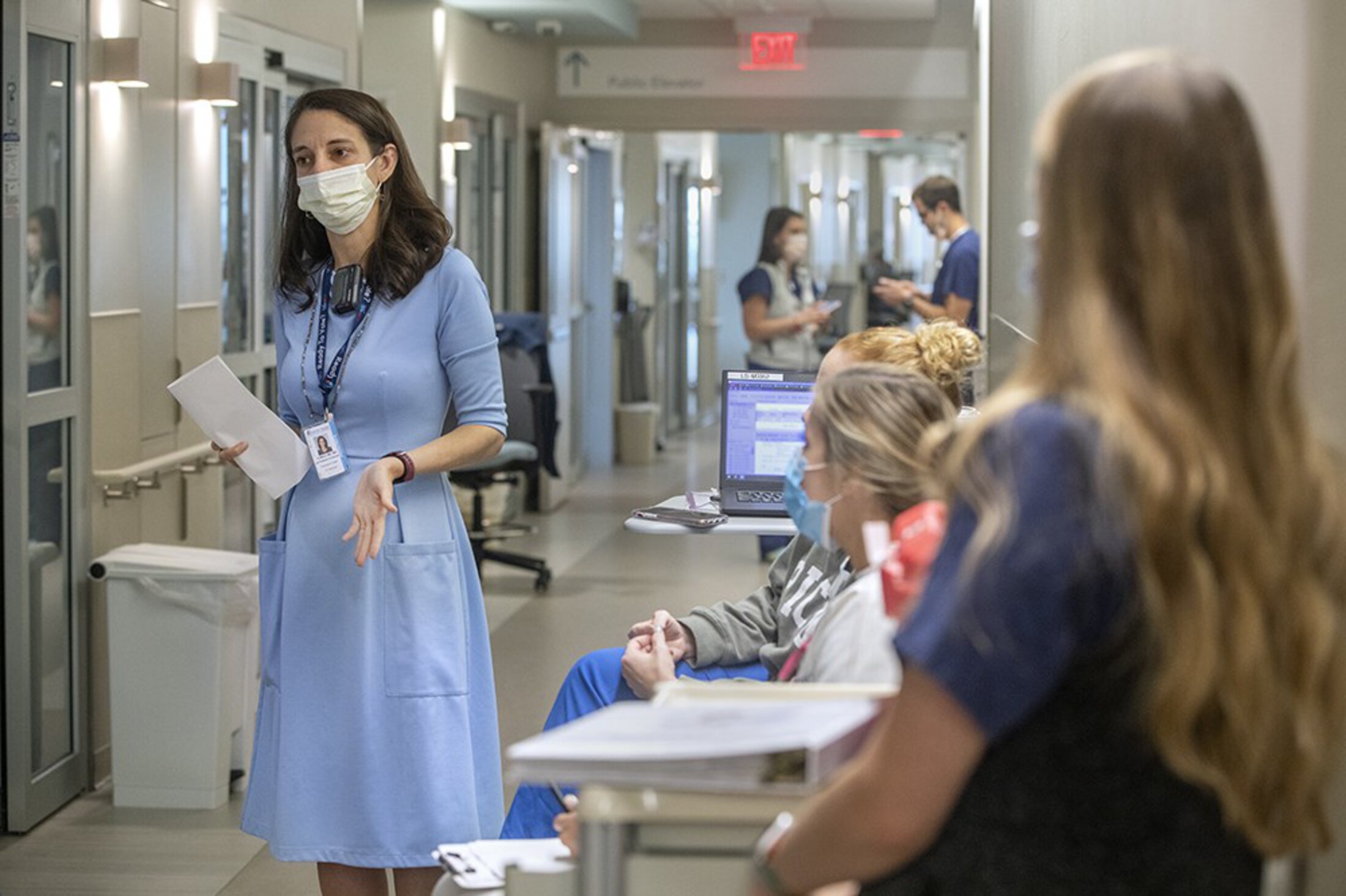
“The bottom line is MIS-C is a vaccine-preventable disease,” said Elizabeth Mack, M.D., division chief of Pediatric Critical Care Medicine and a spokeswoman for the American Academy of Pediatrics. Mack is also an author on the CDC report and serves as principal investigator for the MUSC study site.
MIS-C, or multisystem inflammatory syndrome in children, is a delayed inflammatory response to the coronavirus that can affect multiple organs, including the heart, lungs, kidneys, intestines and brain. Researchers are still investigating why it affects some children and not others. Progress is being made in treatment, including through clinical trials at MUSC Children’s Health, but some children have died from MIS-C, including in South Carolina.
The new report states that all of the children with MIS-C who needed life support were unvaccinated.
Mack said that hospital admissions for children with COVID are ticking up across South Carolina. At MUSC Children’s Health, today teams are caring for 11 children with acute COVID-19 and three children with COVID-19 who are in intensive care. One child is in intensive care with MIS-C, but Mack expects that number to increase in the coming weeks because MIS-C typically shows up within a month or two after the initial COVID-19 infection.
It’s not too surprising that a vaccine that is effective against COVID-19 would also be effective against MIS-C, Mack said.
“You can’t have MIS-C without having had a COVID-19 infection. Now, a lot of people don’t know that their child had COVID, because sometimes the COVID was a mild or asymptomatic infection, but you had to have the infection to build up the inflammatory response to it, so it’s not surprising that the vaccine would also prevent this postinfectious inflammatory process,” she said.
Unfortunately, some people still think children can’t get seriously ill with COVID, and others have never heard of MIS-C.
“It’s very sad,” she said.
Overall, as of this week South Carolina ranks sixth among the states with cumulative pediatric COVID-19 cases per 100,000 children and fifth for the percentage of a state’s cumulative COVID-19 cases that were in children, according to the American Academy of Pediatrics and the Children’s Hospital Association.

Leslie Cantu
Senior Communications Manager
Leslie Cantu is the senior communications manager at MUSC Hollings Cancer Center, where she works with researchers, clinicians and patients to tell the people of South Carolina about the innovative work being done to improve cancer care for everyone in the state. She joined the MUSC Office of Communications and Marketing in 2018 after a career as an award-winning writer, editor and producer at community newspapers and local TV news. She transferred to the communications office at Hollings in 2022, where she happily finds something new and interesting to write about every day. Her favorite stories to cover at MUSC have included Match Day, the Angel Tree Parade, a clinical trial of CAR-T cell therapy and the many patients who have agreed to share their very personal struggles and triumphs.
Contact Leslie at cantul@musc.edu.