
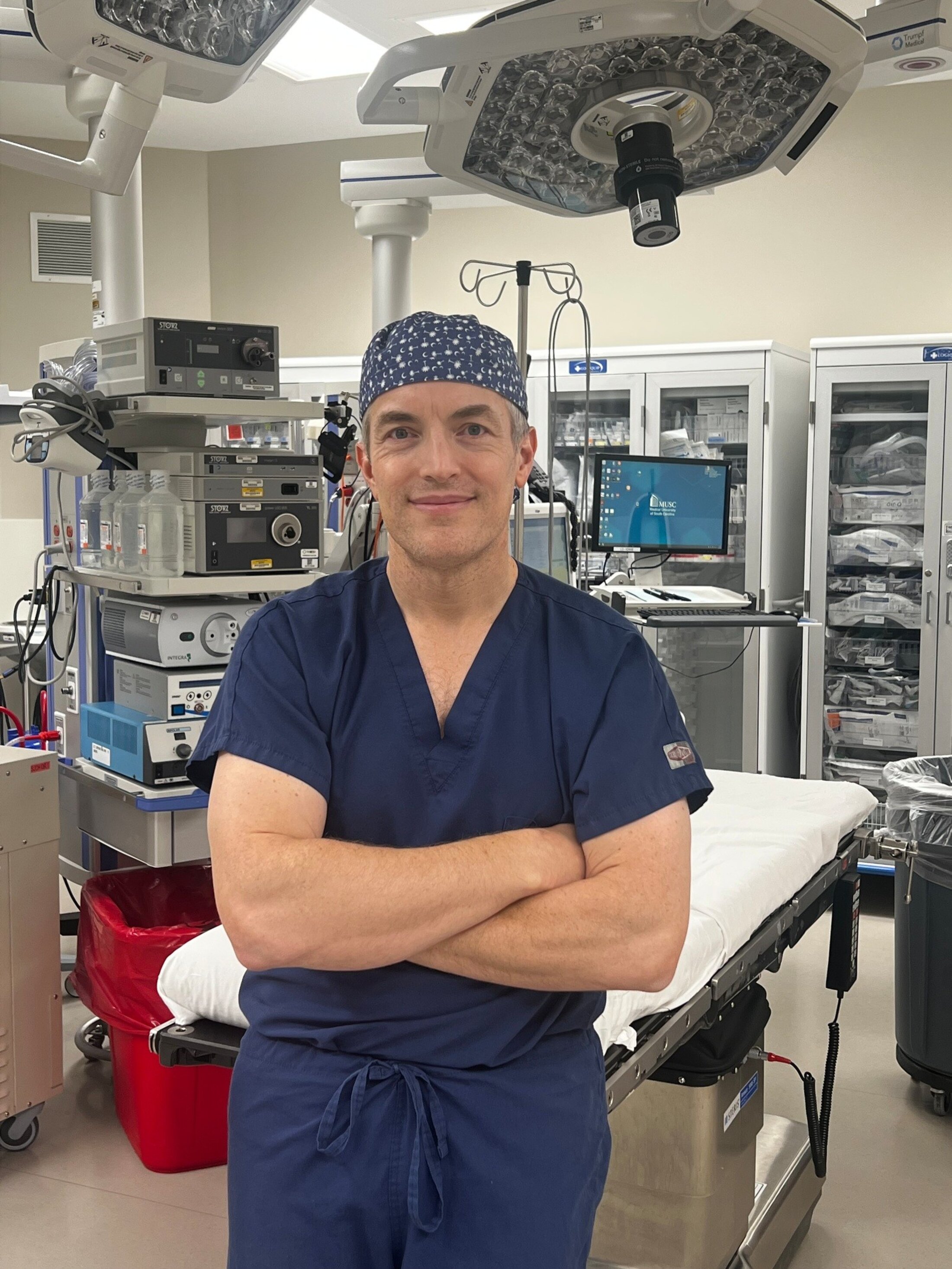
The smallest patients that Associate Professor of Pediatric Neurosurgery Brandon A. Miller, M.D., Ph.D., treats weigh less than 1 kilogram when they’re born. With some born as early as 22 weeks, these premature infants are at risk for numerous health challenges. As a pediatric neurosurgeon at MUSC Shawn Jenkins Children’s Hospital, Miller routinely performs brain and spine surgery on children, treating conditions ranging from brain tumors and congenital abnormalities to head injuries. His work caring for patients, including those with brain injuries, leads to the questions he brings to the laboratory.
Among the most devastating is neonatal intraventricular hemorrhage (IVH), a spontaneous bleed into the brain that can cause lifelong neurological issues, from cognitive impairment to epilepsy and increased fluid in the brain, called hydrocephalus.
Miller said that IVH is an inflammatory disease, but instead of affecting the body’s tissues or joints, it triggers inflammation and injury in the brain.
“Our research lab has focused on how IVH causes not just hydrocephalus but other problems in the brain,” said Miller. “We’re trying to focus on the core issue, inflammation caused by bleeding into the brain.”
“The analogy I use is that if a car crashes into your house, it’s not just going to break the plumbing. It’s going to break everything in the house. So, we’re trying to focus on treatments that can improve all aspects of brain function and development after IVH not just the ‘plumbing problem’ of hydrocephalus” added Miller.
The question of how to protect developing brains from the lasting effects of IVH has shaped much of Miller’s research career. Now, a more than $3 million National Institutes of Health (NIH) grant is helping the pediatric neurosurgery team to expand its research efforts significantly. The grant funds laboratory work, salaries, equipment as well as collaborations around the country. He also shared that one of the most important outcomes of receiving the grant is raising awareness of their goals and getting the word out to as many people in the medical field as possible. One of the biggest unanswered questions surrounding IVH is why outcomes can vary so drastically from patient to patient. Miller explained that while some children experience relatively few complications, others face significant neurological challenges that can last a lifetime.
Miller’s experiences treating patients motivate him to be a part of new discoveries. Earlier in his career, during his pediatric neurosurgery fellowship at Washington University, he treated a patient with IVH who never required fluid drainage but still developed a severe brain injury. This experience sparked his curiosity about the various lasting effects of IVH. Now that awareness is growing, Miller is glad that he could be part of the shift in focus. “People are talking more about IVH as a whole brain problem, not just a fluid problem. I’m proud to say I’m part of the group that’s really pushed that thinking in the neurosurgical community,” he shared.
Miller and his team have also been focusing on understanding how bleeding affects the brain’s immune system during development. Their findings so far suggest that IVH may alter immune cells that usually help the brain to grow and develop.
“We found that when there’s this bleeding, it changes the immune cells from being beneficial to being detrimental,” he explained.Their research has already led to new discoveries. “We’re excited about understanding how the brain’s own immune system is changed by the bleeding in the brain,” Miller shared. “We are investigating ways to modify that to restore the immune system’s normal function in the brain.”
Dr. Miller emphasized the importance of teamwork in his lab. Research on a condition as complex as IVH requires expertise across multiple disciplines. The grant supports not only the work being done in the pediatric neurosurgery lab but also partnerships with researchers and clinicians across MUSC.
“I love collaborating across different clinical departments and research departments,” he said. “Science is very collaborative, just like medical care is. One thing that the lab has done a really good job of is building relationships with people at MUSC. It’s a pleasure to work with great collaborators, and we have that here at MUSC.”
While current treatments largely focus on surgically managing the complications from IVH, Miller hopes research will soon open the door to new therapies and medicines that address and treat brain injury less invasively.
“The hope is we’ll be able to develop pharmacologic treatment so that we won’t need to do as much surgery. And with less surgery, kids will have more normal lives,” he said. “Younger and younger premature kids are surviving, and therefore optimizing neonatal care is an even bigger issue for their families and society.”
With research still ongoing, many questions remain, but Miller is optimistic about the impact the research could have on future generations of premature infants.
“We’re hoping that the work we do is going to be applicable to, of course, kids here in South Carolina but also all around the world,” Miller added. “We want to make sure children born prematurely have the best outcomes and the fullest lives.”

Sarah Majer
Recent MUSC News stories