
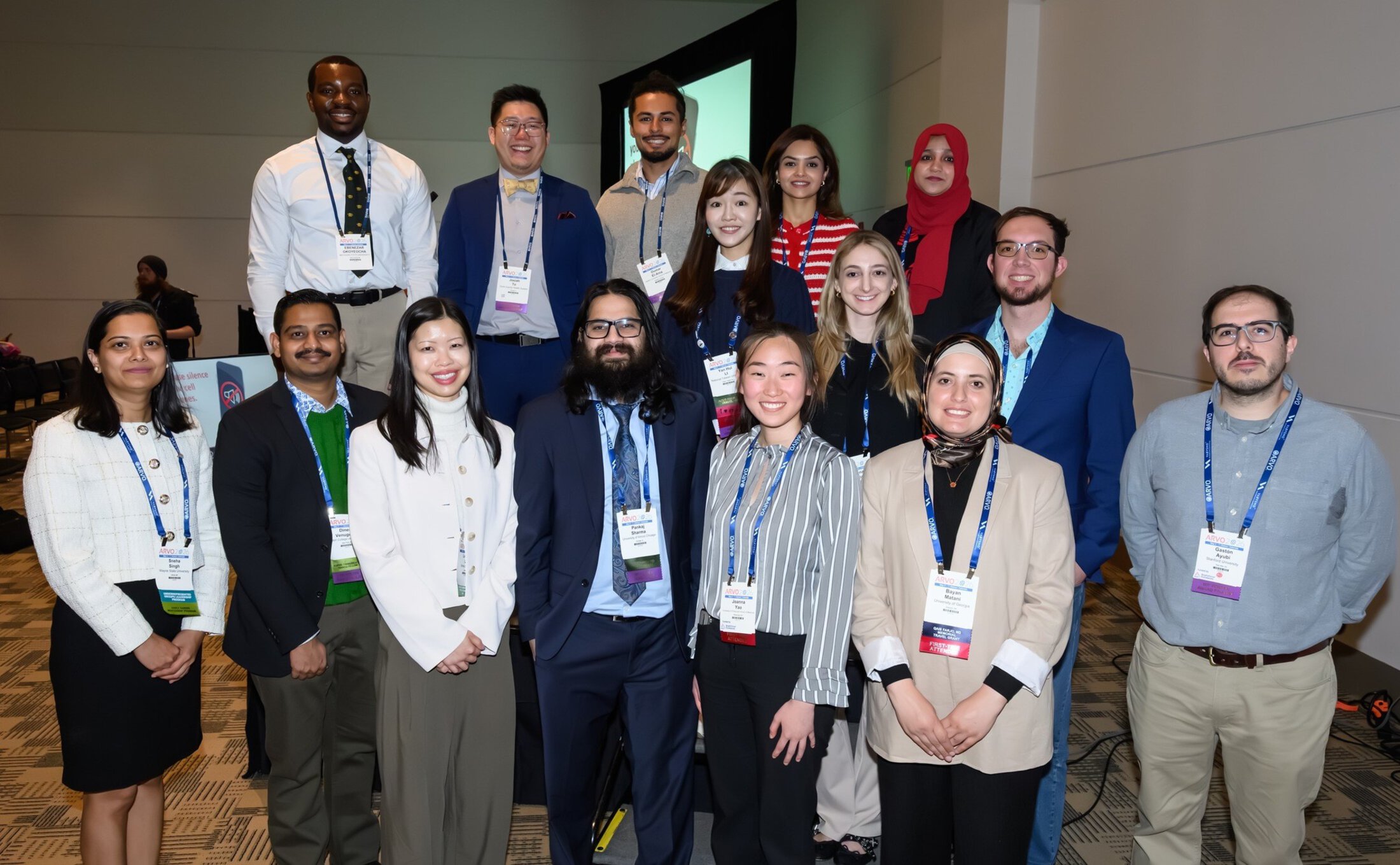
For most young researchers, presenting at the Association for Research in Vision and Ophthalmology (ARVO) annual meeting is an accomplishment in and of itself. For Atiyabanu Nagingar, Ph.D., a postdoctoral scholar in the lab of Elizabeth Pearsall, Ph.D., at MUSC’s Storm Eye Institute, the experience culminated in one of the conference’s highest honors.
Nagingar won first place in the Retinal Cell Biology section of ARVO’s prestigious Members-in-Training (MIT) Outstanding Poster Competition for her research exploring why women face a higher risk of developing the blinding form of age-related macular degeneration (AMD).
A rare accomplishment
According to Pearsall, ARVO is considered the world’s premier vision research conference. Nagingar’s research was first selected for the MIT Outstanding Poster Competition prior to the meeting, after ranking among the top 5 scoring trainee abstracts submitted in the Retina Cell Biology section. During the meeting, Nagingar competed against the other top-scoring presenters and ultimately earned first place in the category.In addition to winning the poster competition, she also received a highly competitive BrightFocus Foundation Travel Award, one of only 12 awarded worldwide.
“I have never known anyone who even made it into the MIT contest,” said Pearsall, an assistant professor in the College of Medicine’s Department of Ophthalmology and Nagingar’s mentor.
The competition drew applicants from leading research institutions around the world, and only a small percentage was accepted, she explained.
“The 40 contestants who were selected, they were among thousands, and Retinal Cell Biology is one of the largest sections,” said Pearsall. “And then she went and beat these elite contenders.”
I have never known anyone who even made it into the MIT contest.
Researching a hidden risk for women
Nagingar’s research focuses on AMD, a leading cause of vision loss among older adults. While decades-old statistical analyses identified that women face a greater risk of developing the disease’s most severe, vision-threatening form, the reasons behind that increased risk are poorly understood.
According to Pearsall, the risk for women has largely flown under the radar despite appearing repeatedly in data.
“Females are more likely to develop blinding disease, and they didn’t know about it,” she said.
That observation became the foundation for the project, which seeks to understand why sex influences the disease’s progression and whether understanding that connection could eventually lead to more personalized approaches to treatment.
Nagingar and her colleagues are investigating how the immune system may play a role. They have identified differences in inflammatory responses that could help to explain why women are more likely to develop choroidal neovascularization (CNV), the advanced form of AMD responsible for most AMD-related blindness. Pearsall explained that 90% of AMD legal blindness is due to CNV.
“We have found out there are some immunological regulators, especially macrophages, involved in this mechanism,” said Nagingar. “So we are studying how sex-specific macrophage processes increase disease severity in females.”
Researchers believe these immune-related differences may play an important role in how the disease develops and progresses. With a better understanding of the sex-specific mechanisms at play, the team hopes to identify new opportunities for future therapies and earlier intervention in women at increased risk of blindness.
Mentorship – the heart of success
Beyond the award itself, both Nagingar and Pearsall credit their mentoring relationship as a key factor in the project’s success. Nagingar is Pearsall’s first postdoctoral fellow, and Pearsall said she made a conscious decision to give her trainee, rather than herself, the opportunity to take center stage on an international platform, making Nagingar first author and herself senior author.
“When you put your trainee in the limelight, everyone wins,” said Pearsall. “Allow your trainee to shine brighter than you.”
When Pearsall was unable to attend the conference because of illness, she enlisted colleagues from her own mentor’s research group to support Nagingar on-site. Nagingar still credits Pearsall’s remote encouragement from Charleson throughout the process.
“Dr. Pearsall encouraged me to go and present my work,” she said. “She always supports me.”
For Pearsall, a principal investigator building her laboratory at the Storm Eye Institute, the award represented more than a personal achievement for her trainee. It also brought international recognition to the Storm Eye Institute and MUSC.
“The two things that made me the happiest of all were the credibility that went to Atiya, first and foremost, and second, the credibility that went to my school,” said Pearsall.
As the team continues investigating why women are at greater risk for the blinding form of AMD, both researchers hope their findings will contribute to a better understanding of the disease and eventually lead to more personalized approaches to patient care.
A lesson in persistence
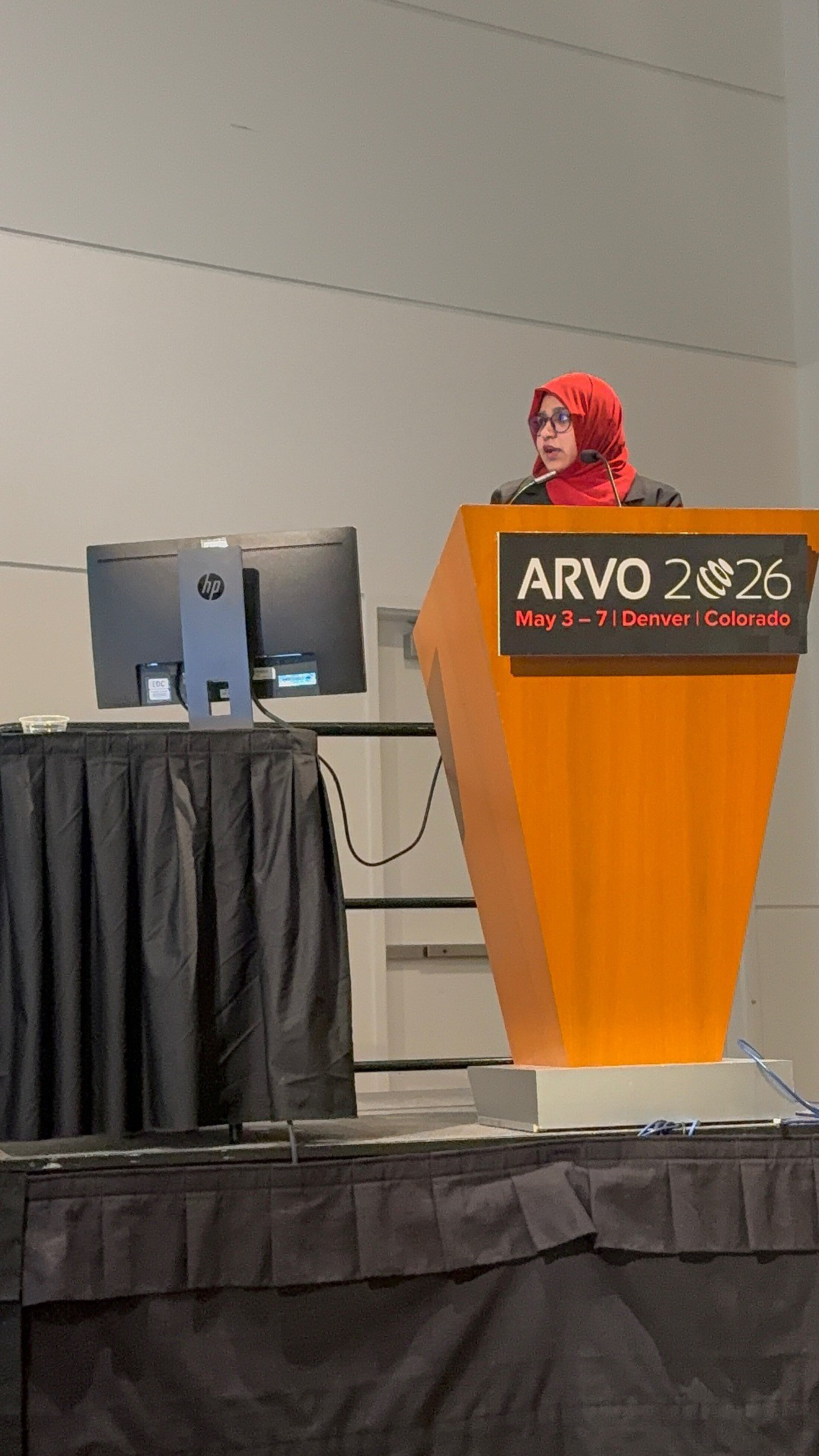
Preparing for ARVO required months of research and an exhaustive review of the scientific literature, Nagingar explained.
“For this conference, I read hundreds of papers to understand each and every concept,” said Nagingar. “Because if you are not conceptually clear, you cannot explain to your audience what you are trying to study.”
The experience, she said, reinforced a lesson she hopes other young researchers will take to heart. “It’s not like one-day success,” she said. “Sometimes it doesn’t work, but you have to be persistent and constant in your work.”
It’s not like one-day success. Sometimes it doesn’t work, but you have to be persistent and constant in your work.

Jennifer Sweenie
Recent MUSC News stories