

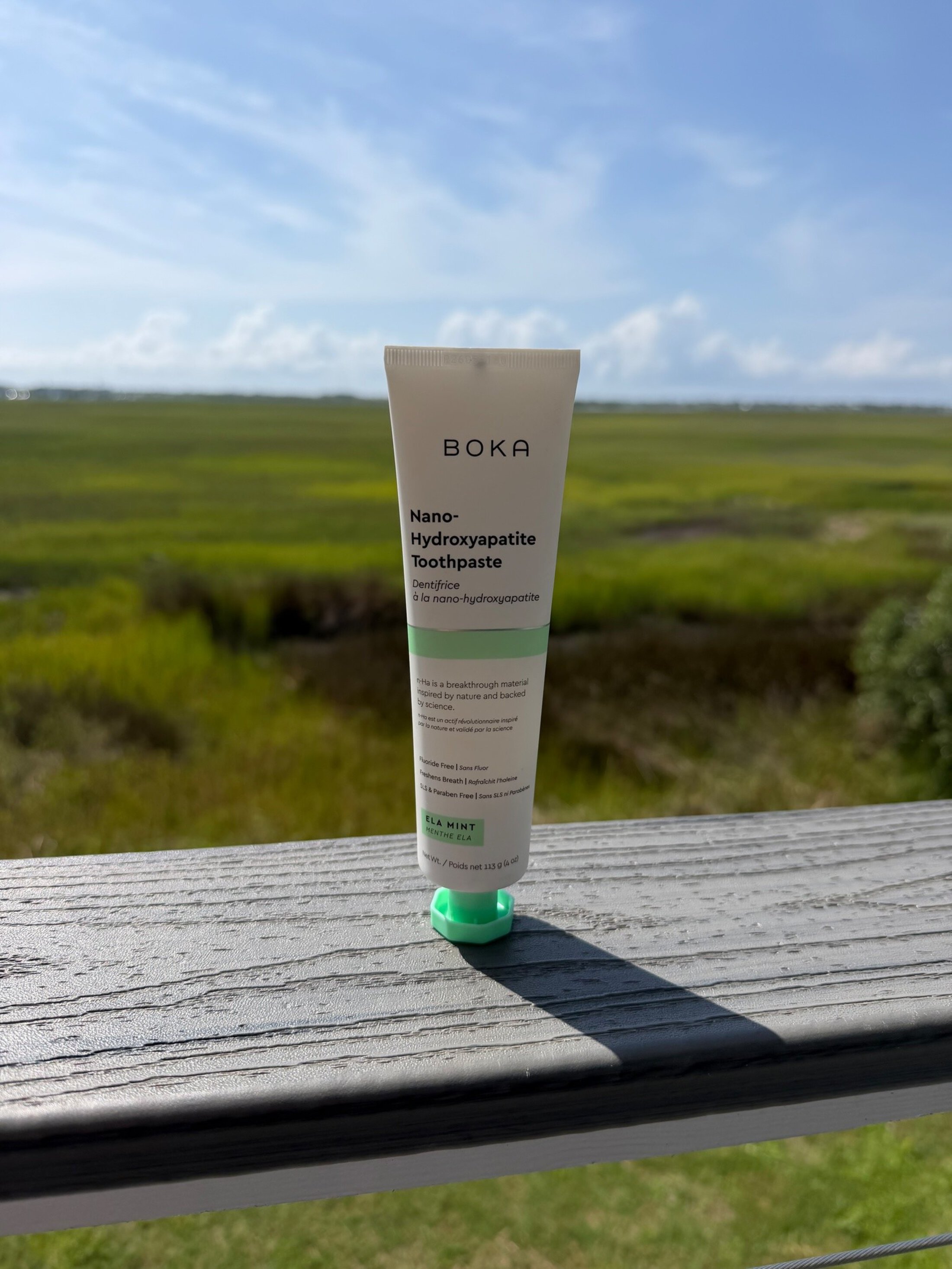
If you’ve spent a few minutes looking at the toothpaste section in your grocery or drug store, you may have noticed something different among the traditional tubes. Hydroxyapatite toothpaste, made under multiple brand names, is now being sold as an alternative to fluoride toothpaste.
Does it work? Is it safe? And does it protect teeth as well as fluoride does? Here with some answers is dentist Hema Arany, an associate professor in the James B. Edwards College of Dental Medicine at the Medical University of South Carolina.
What is hydroxyapatite toothpaste?
Hydroxyapatite is a mineral in our bones and teeth that helps with support and regeneration. The toothpaste contains a synthetic version of it, Arany said. “NASA introduced it in the 1970s.”
Scientists at the space agency patented hydroxyapatite as a way to repair teeth, according to NASA Spinoff. A Japanese businessman then acquired NASA’s patent and developed hydroxyapatite toothpaste. It went on to become a success in Japan and other countries.
And it eventually made its way to the United States, Arany said – with a caveat. “Hydroxyapatite toothpaste is available over the counter in the United States, but hydroxyapatite is not currently FDA-approved as an active ingredient for cavity prevention.”
Does it work?
That lack of approval does not necessarily mean hydroxyapatite toothpaste is ineffective, Arany said. “It is newer than fluoride toothpaste, and we do not yet have the same depth of long-term clinical research. But the studies we do have — including laboratory research and short-term clinical studies of about six months — have shown encouraging results.”
She pointed to an analysis of existing research, published in the Journal of Dentistry, that found hydroxyapatite toothpastes performed comparably to fluoride toothpastes in helping protect against cavities and supporting enamel remineralization.
“Some studies also suggest that using hydroxyapatite and fluoride together may provide added benefit,” Arany said. “But more research is still needed.”
Is it safe?
Arany said the research so far suggests that hydroxyapatite toothpaste appears to be safe when used as directed. The European Commission’s Scientific Committee on Consumer Safety reached a similar conclusion, finding “hydroxyapatite (nano) safe when used at concentrations up to 29.5% in toothpaste, and up to 10% in mouthwash.”
Still, Arany said she would not advise patients to replace fluoride toothpaste with hydroxyapatite toothpaste as a standard recommendation. “As far as telling someone, ‘Hey, stop using fluoride toothpaste and start using this,’ we don't have enough evidence yet. And so when it comes to standard of care, we are not recommending the hydroxyapatite toothpaste.”
The American Dental Association takes a similar position through its Seal of Acceptance program. Toothpastes that claim to protect against cavities must contain fluoride to earn the ADA Seal.
But for families or individuals who decline fluoride, hydroxyapatite toothpaste may be a reasonable alternative, Arany said. Ethical guidance in the Journal of the American Dental Association supports helping patients maintain oral health even when they decline fluoride, including discussion of alternatives such as hydroxyapatite.
Noticing nano
People who check out the newer type of toothpaste will notice a couple of things. One, it can be more expensive than fluoride toothpaste. Two, much of the hydroxyapatite toothpaste on the market now is the nano version, as in nano-hydroxyapatite. It uses a smaller particle size, Arany said. “The smaller particle size allows it to interact more closely with the tooth surface.”
She explained that hydroxyapatite particles may help replace minerals lost from the tooth structure, supporting remineralization. They may also form a thin protective layer on the tooth surface. In one study, patients who used hydroxyapatite toothpaste reported that their teeth felt smooth throughout the day.
Regular checkups with dentists
No matter what toothpaste people use, Arany said it doesn’t negate the need for regular dental care. The American Dental Association recommends that the number of appointments per year should be tailored to each patient’s needs.
“Hydroxyapatite has potential,” Arany said. “It can be one tool to support preventive care, but people still need to keep up with the other basics which includes brushing, flossing and seeing a dentist regularly for checkups.”

Helen Adams
Recent MUSC News stories