
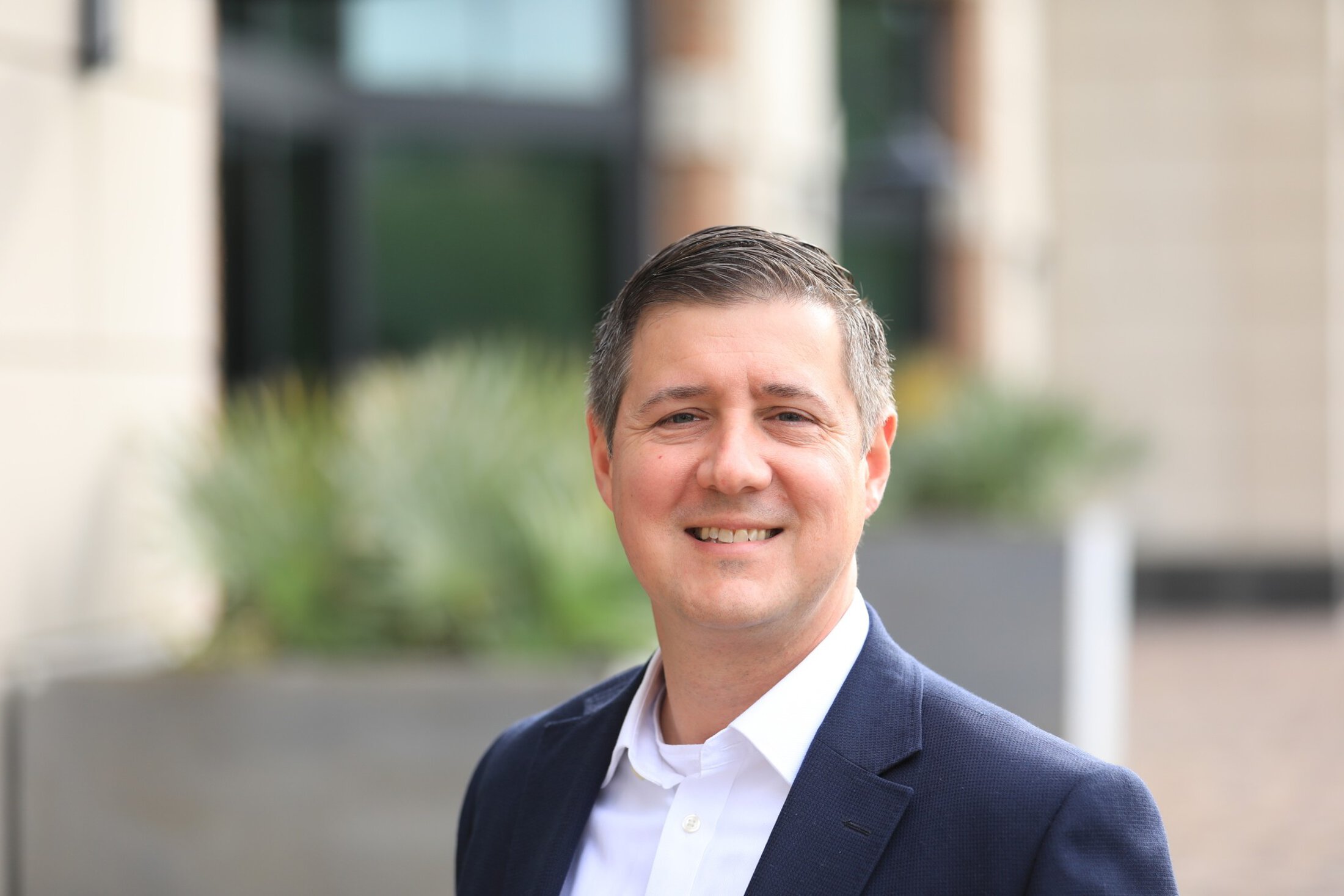
CHARLESTON, S.C. (JULY 8, 2026) – The Medical University of South Carolina (MUSC) Board of Trustees today announced the appointment of Adam Bacik as CEO of the new comprehensive cancer hospital. The hospital is a transformational initiative representing one of the most significant investments in the future of cancer care in MUSC’s history.
“This project will redefine the future of cancer care for our patients, families and communities,” said Charles Schulze, CPA, chairman of the MUSC Board of Trustees. “The board has full confidence in Adam’s leadership and vision to successfully deliver a nationally recognized comprehensive cancer hospital that advances innovation, research, patient outcomes and access to world-class care.”
As CEO, Bacik will provide strategic and operational leadership. He will guide planning, design and construction; clinical and operational integration; recruitment and workforce development; and technology implementation.
Since 2012, Bacik has held a series of leadership roles at MUSC Health, most recently serving as associate chief operating officer for the health system. Earlier in his career, he spent more than five years at Duke University in administrative and patient access roles. Bacik earned a Bachelor of Science in Biology from the College of Charleston and a Master of Health Administration from MUSC.
The board’s decision reflects a commitment to making the comprehensive cancer hospital the organization’s highest strategic priority. Throughout the project, all organizational efforts related to oncology services, cancer care expansion and hospital development will be aligned under Bacik’s direction.
As the cornerstone of MUSC Health’s statewide cancer ecosystem, the comprehensive cancer hospital is envisioned as a destination for integrated cancer treatment, research, education, prevention and survivorship. that serves as a vital partner to facilities and providers across South Carolina. Once completed, it will bring together leading physicians, researchers and multidisciplinary care teams in a state-of-the-art environment designed around the needs of patients and families.
“The new comprehensive cancer hospital will not only be a brick-and-mortar facility in Charleston,” said Donald R. Johnson II, M.D., chairman of the Hollings Cancer Center Committee. “It will also serve as a partner to providers and health facilities across South Carolina. Through those partnerships, we will be able to deliver best-in-class care, treatments and therapies to people close to home, cutting down on their travel times and reducing a burden on families when they need it most. As we all know, care delivered closer to home is care that leads to better outcomes.”
###
About MUSC
Founded in 1824 in Charleston, MUSC is the state’s only comprehensive academic health system, with a mission to preserve and optimize human life in South Carolina through education, research and patient care. Each year, MUSC educates nearly 3,500 students in six colleges and trains more than 1,060 residents and fellows across its health system. MUSC leads the state in research funding from the National Institutes of Health, including National Institute of General Medical Sciences COBRE awards. For information on our academic programs, visit musc.edu.
As the health care system of the Medical University of South Carolina, MUSC Health is dedicated to delivering the highest-quality and safest patient care while educating and training generations of outstanding health care providers and leaders to serve the people of South Carolina and beyond. In 2025, for the 11th consecutive year, U.S. News & World Report named MUSC Health University Medical Center in Charleston the No. 1 hospital in South Carolina. To learn more about clinical patient services, visit muschealth.org.
MUSC has a total enterprise annual operating budget of $10.1 billion. The more than 36,200 MUSC members include world-class faculty, physicians, specialty providers, scientists, contract employees, affiliates and care team members who deliver groundbreaking education, research and patient care.
Recent News Releases stories