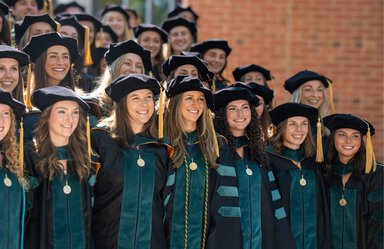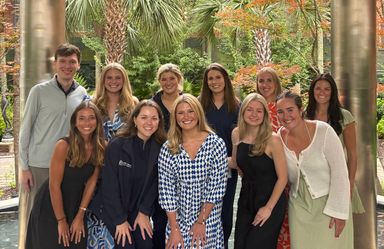

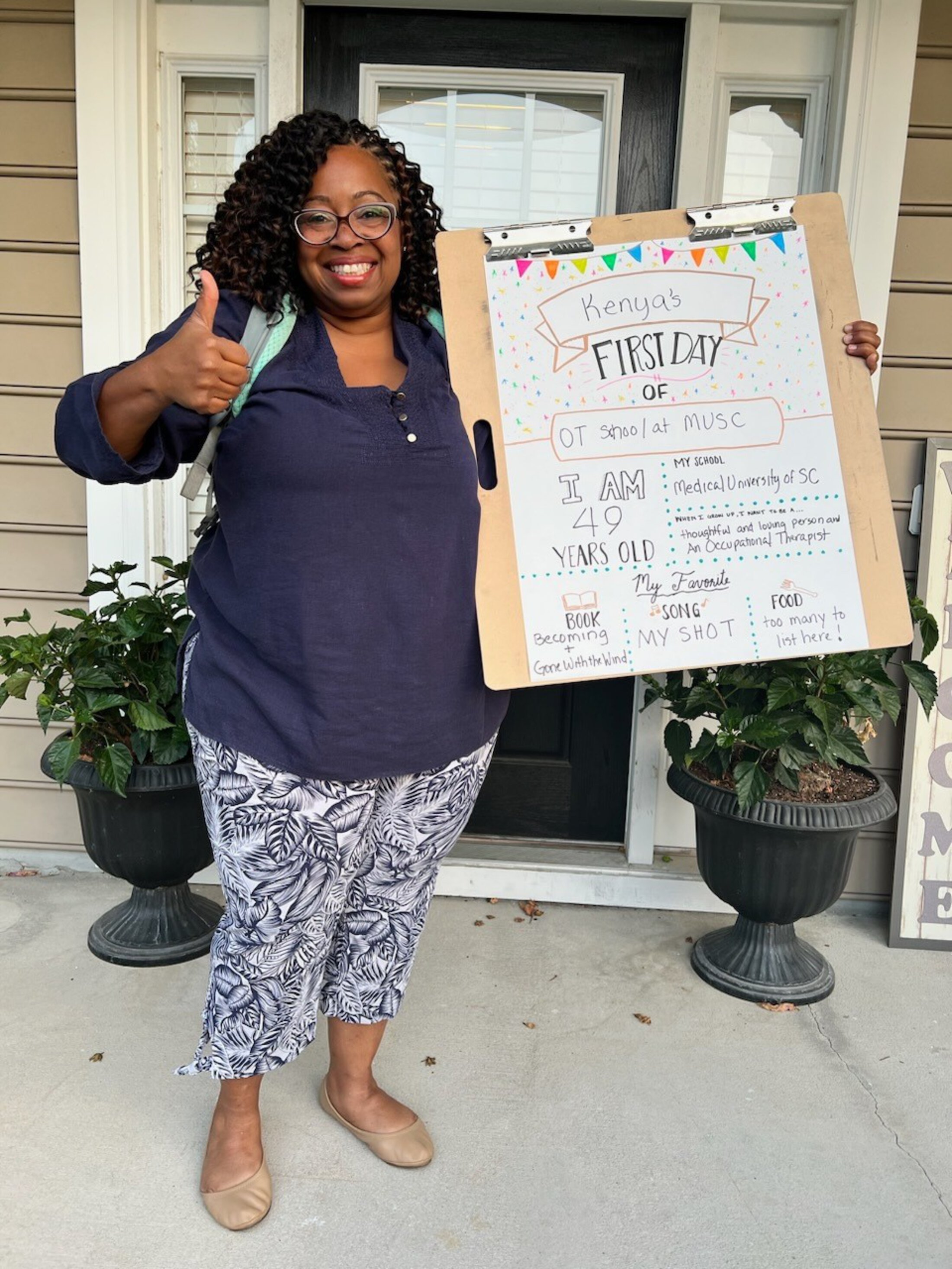
Throughout Kenya Raybon’s professional life and parenting journey, it always seemed like there were signs that she should be an occupational therapist. While raising her four children, studying accounting and being a teacher, a nanny and then an early interventionist, all of life’s arrows seemed to be pointing to a career in occupational therapy (OT). Now, as a recent graduate of the College of Health Professions with a doctoral degree in OT, Raybon can see the signs that led to this moment.
As a first-time college student, fresh out of high school, Raybon thought she wanted to be an accountant. She recalled wanting to stray away from the education profession that she saw her mother do. With a doctorate in psychology, her mother, who has always been Raybon’s inspiration, also spent her career helping families. It wasn’t long before Raybon realized that accounting wasn’t for her.
She decided to follow in her mother’s footsteps and pursue education. She started out teaching English in Japan in the early 2000s when her husband was in the Navy.
They later moved to Maryland, where Raybon completed an associate degree in early childhood development when her children were young. After moving to South Carolina, she taught preschool on Sullivan's Island.
When work/life balance became too difficult to handle, Raybon sought out early intervention for infants and toddlers. She remained in that role up until recently.
She credits her work in early intervention with introducing her to OT.
During COVID, the early interventionists were able to stay online in meetings with clients when the OTs would come in, and I got to see what they did. I knew that I would love to be an OT.
As an older student, the application process wasn’t easy. She had to take some courses at Trident Technical College for about a year before she could even officially apply. However, she was determined to go to OT school; moreover, she was determined to go to MUSC’s doctoral degree program. “It didn’t even occur to me to apply anywhere else. I just figured that if I didn’t get in, I would keep applying until I got accepted.”
She began the OT doctoral program at MUSC in 2023. At that time, she had a daughter in her fourth year at the College of Charleston. Her other daughter had just graduated from Michigan State, and her other two children were also college graduates by then.
“It was so sweet because they would help me with technology and my PowerPoint presentations,” she said.
While Raybon finished OT school, she nannied for a husband and wife who were doctors at MUSC. She would do her homework with the children while they did their homework. “I feel like they were an important part of the journey for me. They were so supportive and inspired me to work hard.”
Working hard was certainly her intent. As an older student, she said she had a real appreciation for what she was learning.
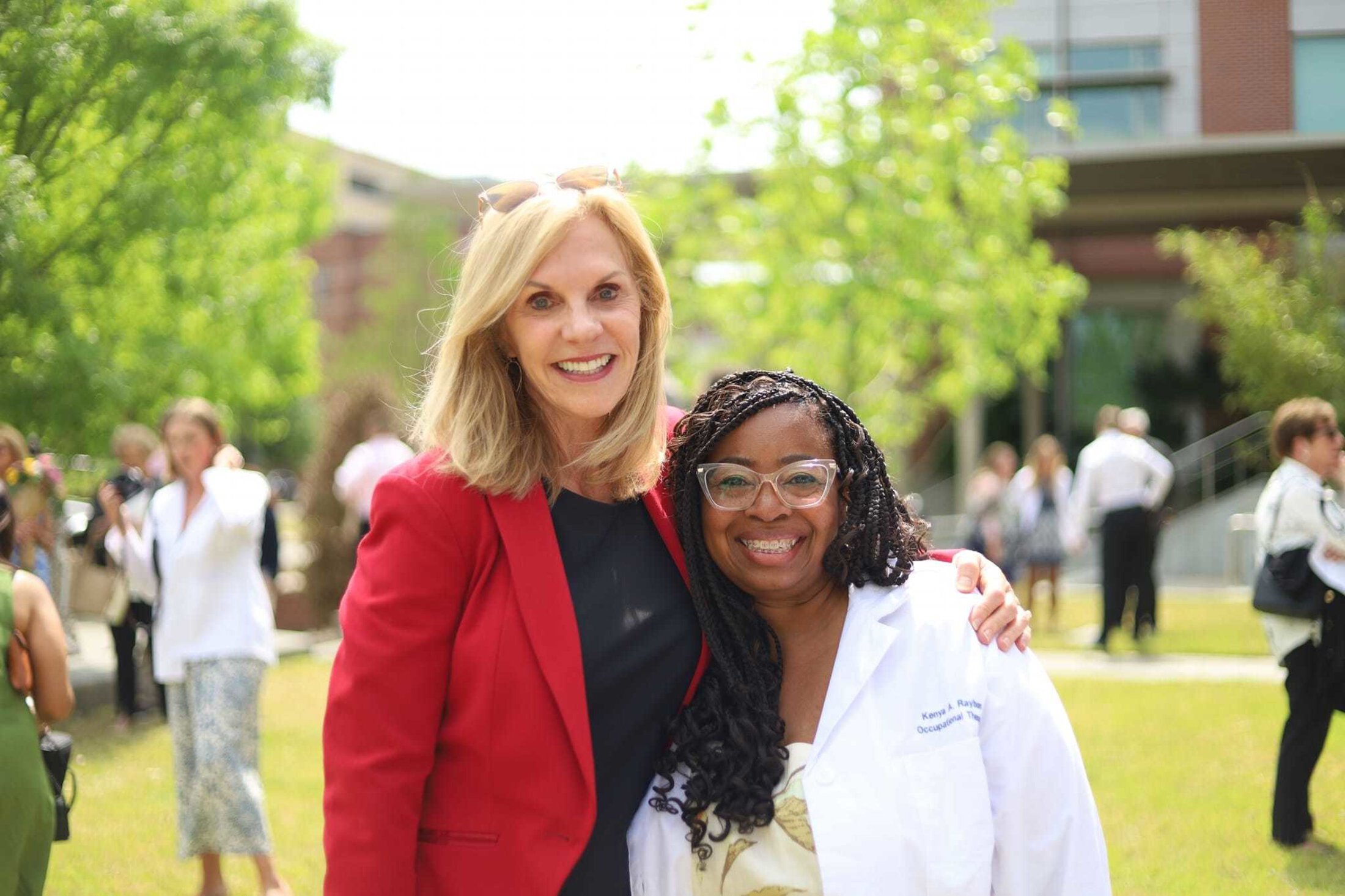
While pursuing her doctoral degree in OT, Raybon also took the time to advocate for the profession. She traveled to Washington, D.C., for the American Occupational Therapy Association’s Hill Day, where she spoke to representatives about providing more funds from Medicaid for OT. She spoke to the staff of Rep. Nancy Mace and Sens. Lindsey Graham and Tim Scott about the cause.
“It’s important to have a voice. Everyone was great about listening to us. I was happy to see the bipartisan support, and I’m glad we went because they might want to use the funds for something else.”
Raybon also served on the leadership board of the Community Aid Relief, Education and Support (CARES) student-run, pro-bono, interdisciplinary therapy clinic for underserved populations, and she was a Leadership Education in Neurodevelopmental Disabilities (LEND) scholar. Through LEND, she completed a project at the Institute of Psychiatry (IOP) focused on the development of a sensory-based program to improve regulation and reduce seclusion and restraint events. This program resulted in an educational toolkit that is now recommended to all IOP staff. Currently, Raybon is developing an evidence-based program to improve cognition, participation and regulation in older adults with dementia for her doctoral Capstone Project.
She didn't just earn her OTD degree. She redefined what it means to show up. As a mother, a mentor and a scholar, she brings a depth of life experience to OT that can't be taught in a classroom. Watching her thrive in this program, earning the respect of her peers and faculty alike, has been a true privilege. The OT profession is gaining exactly the kind of practitioner it needs.
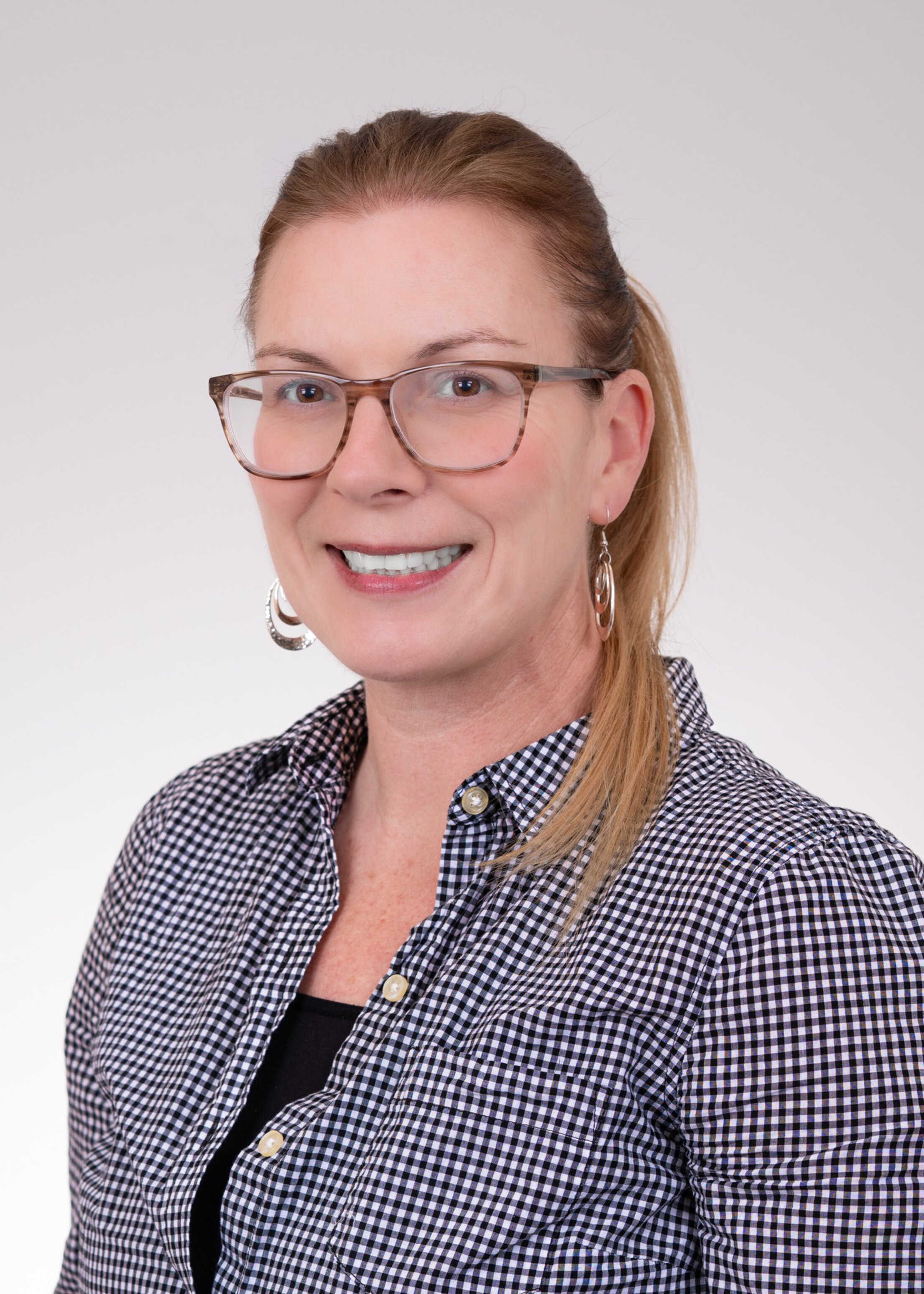
Theresa Stratford
Theresa Stratford is the editor for MUSC’s newspaper, The Catalyst. She has worked as a writer and editor for 25 years since graduating from the University of South Carolina with a Bachelor of Arts degree in journalism and mass communications. As a writer, she has worked for the federal government in cybersecurity and for the Department of Energy. As both a writer and an editor, she has worked for a variety of syndications, including national magazines, such as Vogue Knitting, as well as many local Charleston and South Carolina publications.
Recent CHP Student Stories stories