
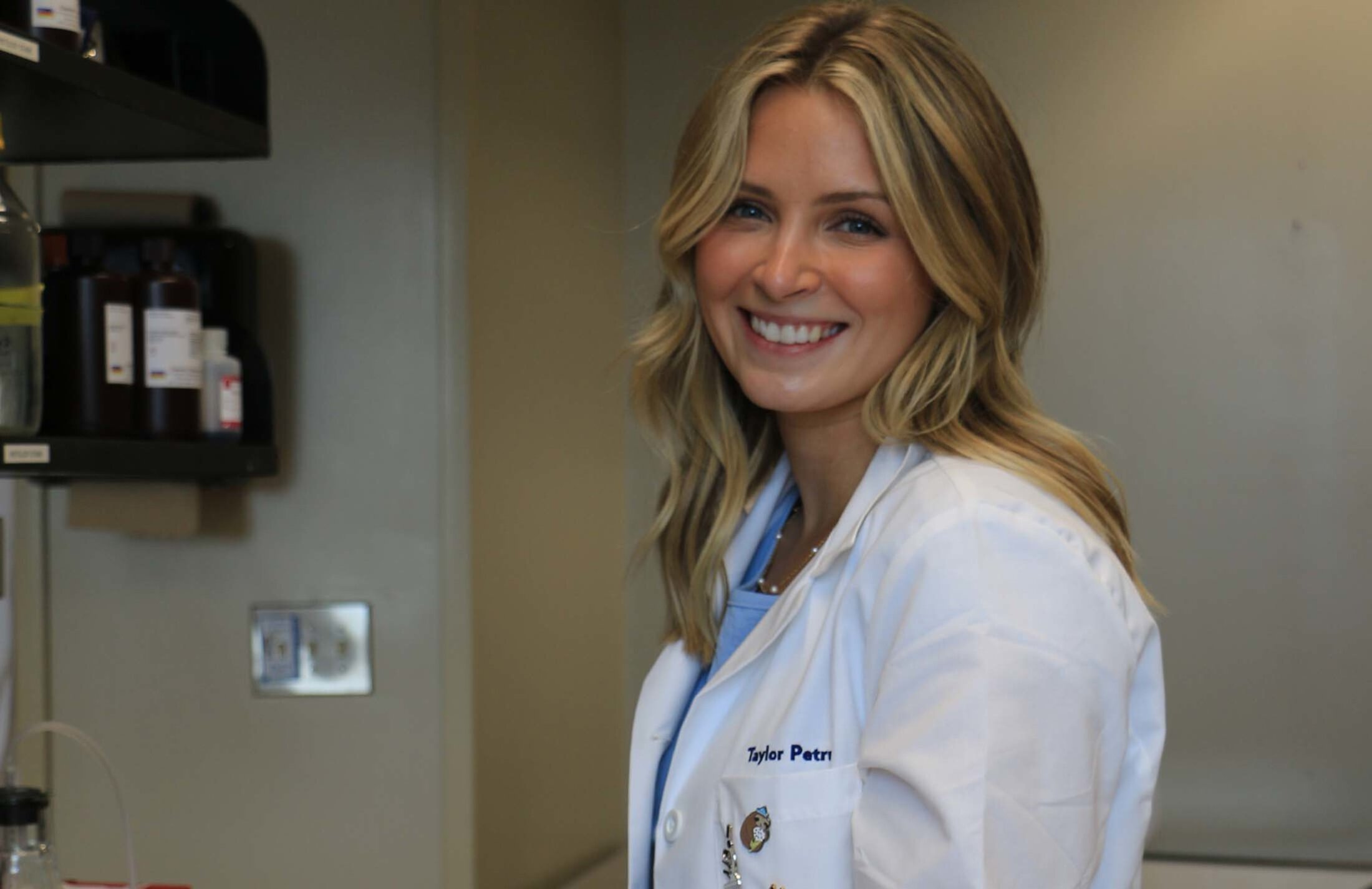
Biomedical Sciences Ph.D. graduate Taylor Nelson helped lead what her former lab director calls a “monumental, transformative study.” A report on it is set to publish in a prestigious journal. A preprint summary has already appeared online.
“She identified new genes that are involved in hEDS,” said Chip Norris, Ph.D., referring to Nelson’s work focusing on the connective tissue disorder hypermobile Ehlers-Danlos syndrome. “I think that's a huge step forward. It not only provides a genetic marker – it would be some time until that's developed into a diagnostic tool – but it also validates for the patients that this is a genetic condition. It's not all in their heads.”
Nelson worked in Norris’ lab while earning her doctorate in the College of Graduate Studies at the Medical University of South Carolina. Norris, a professor in the Department of Regenerative Medicine and Cell Biology, said Nelson brought passion and creativity to the role.
“She developed bench skills and computational skills. But it's more than that. With any Ph.D. student, we try to get them to the point where they answer the ‘so what’ question. ‘So what does this tell me? What can I learn from doing these things, and how is this going to make people better?’ She had the ability to get to that. Not all Ph.D. students get there that quickly,” Norris said.
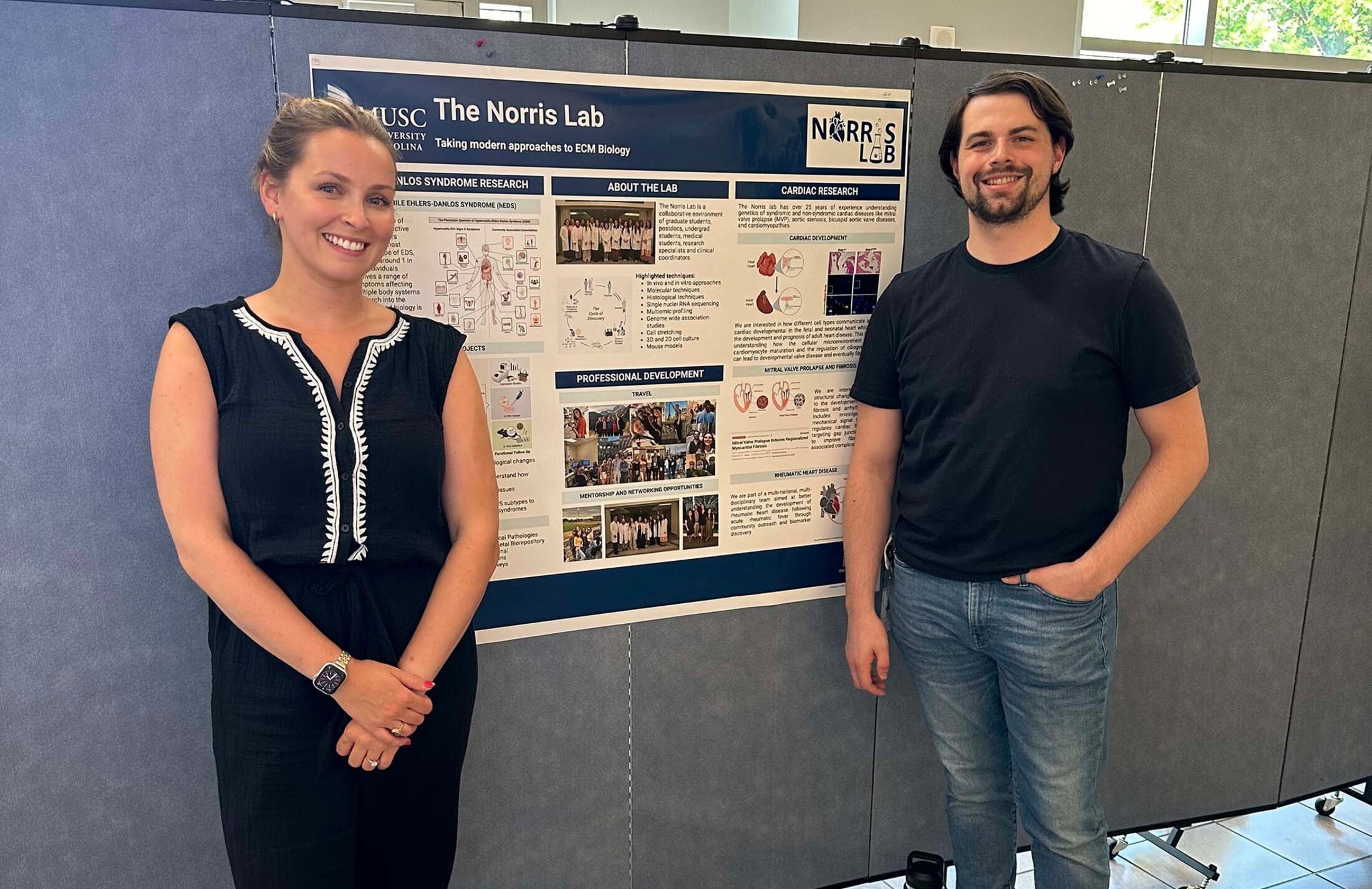
Nelson didn’t set out to do any of that. “I studied psychology at Clemson University as an undergraduate, and that’s where I first discovered my interest in biology. A mentor encouraged me to pursue graduate training at MUSC, which ultimately changed the trajectory of my career.”
She followed that recommendation. “During my first year at Medical University of South Carolina, I realized how much I enjoyed the curriculum. Coming from a nontraditional scientific background, I had to build technical expertise quickly, which ultimately shaped how I approached the complex problems that hEDS patients face.”
She joined Norris’ lab as a master’s student, where she became a mentor to undergraduate interns and decided to shift to the doctoral program. “The transition into the Ph.D. program felt like a natural next step. I was able to build on the training I had already completed while continuing research in a lab that strongly supported my development.”
Nelson’s work has focused on translational research, complex disease biology and genetics. She led interdisciplinary research programs, conducted large-scale genomic analyses and worked closely with specialists in dermatology, orthopedic surgery, neurosurgery and clinical care.
Nelson also developed a knack for listening to patients. She enjoyed one-on-one talks with people who have hypermobile Ehlers-Danlos syndrome, described by the Ehlers-Danlos Society as “a heritable connective tissue disorder that causes generalized joint hypermobility, joint instability and chronic pain.”
Nelson took what she learned from them and applied it to her work in the lab, Norris said.
“The main thing that she was really interested in with this type of Ehlers-Danlos is the diagnostic journey that these patients have. On average, it takes about 22 years from symptom onset to get diagnosed. Ninety-seven percent of our registry is female. That provides another big challenge. What she was really focused on was identifying genetic markers that would allow a diagnosis to happen more quickly. That will change everything with those patients.”
The upcoming journal publication is an important step in that direction. It establishes “the first evidence of common variant contributions to hEDS,” according to the preprint. It also found new indications for how hEDS develops, offering foundations for defining and treating the condition.
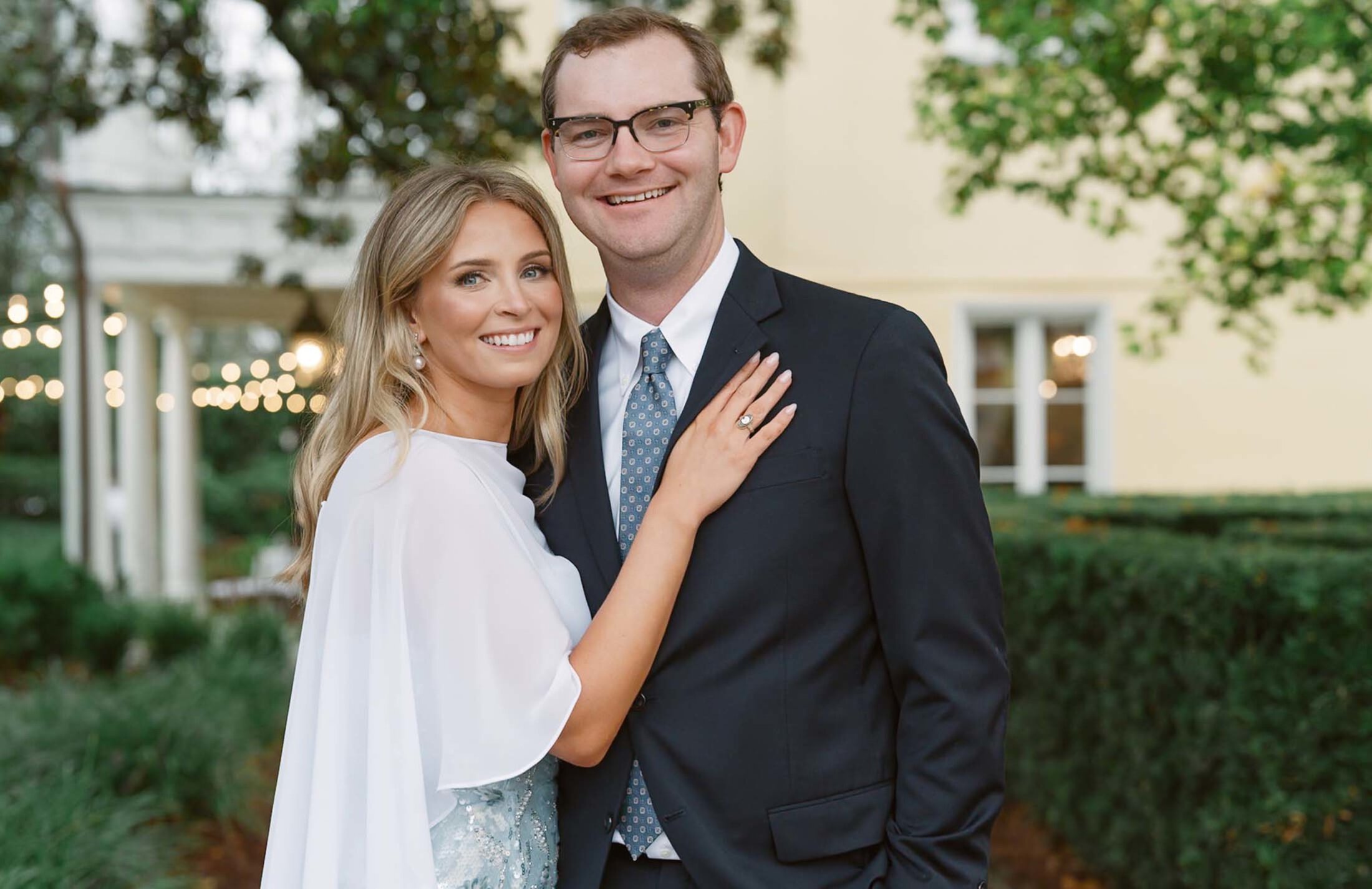
Nelson, who grew up in Massachusetts, has enjoyed living in Charleston. She married while she was in the Ph.D. program. Now, she plans to apply her expertise in genomics, translational science and scientific communication to roles that bridge research, clinical innovation and real-world patient impact.
She offered some final advice for students considering Biomedical Sciences. “Before coming to MUSC, I never imagined pursuing a Ph.D. The people, training and experiences I found here completely changed how I saw my future,” Nelson said. “If you have a clear sense of what drives you, this is a place where you have the mentorship, time and resources to pursue it fully.”