
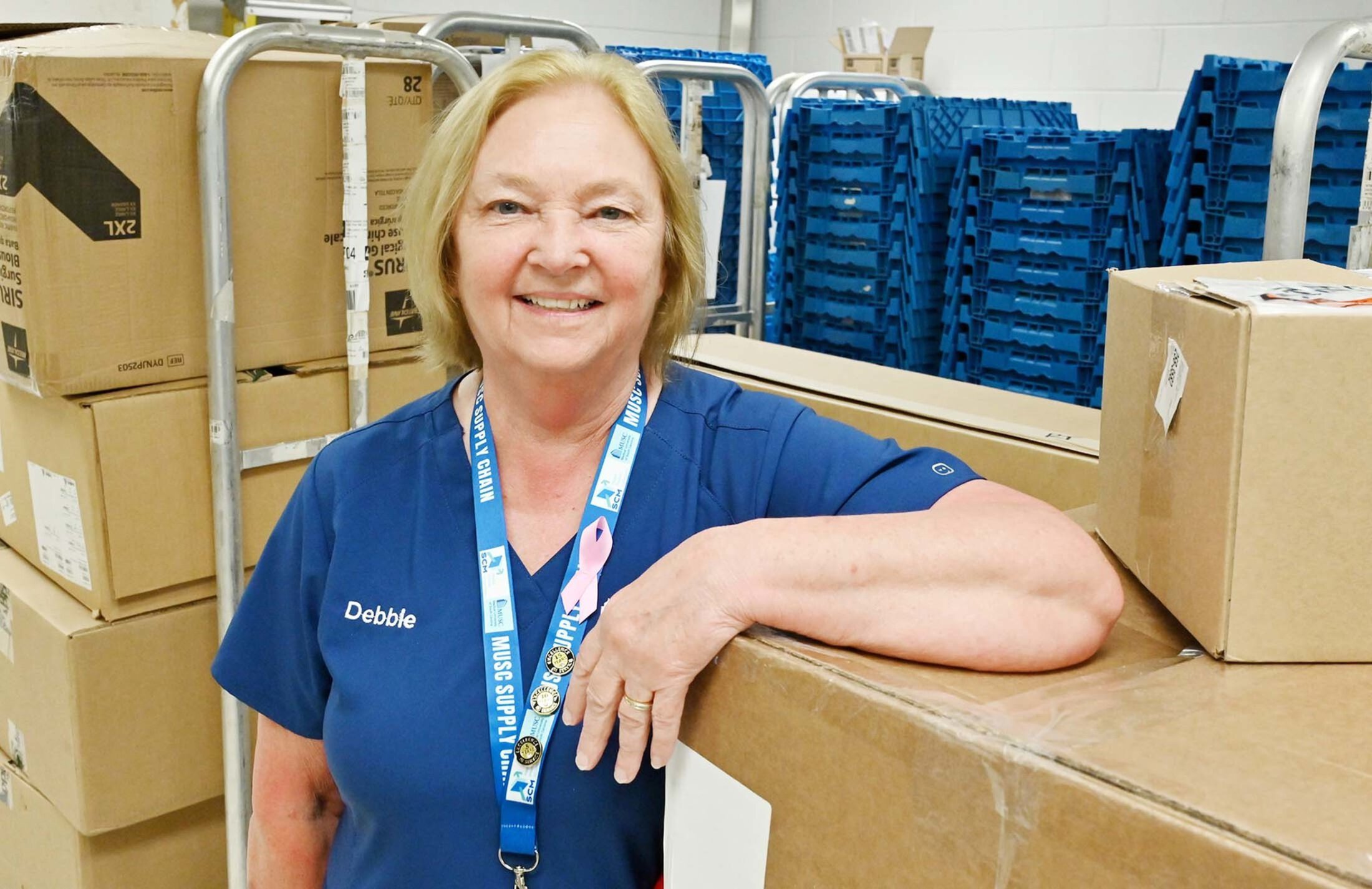
At the age of 40, Debra Campbell was exhausted.
She told herself there were plenty of reasons. She was opening a consignment store with her best friend, which meant doing everything from painting to picking out merchandise. Campbell was also keeping the books for her husband’s trucking business, raising two sons and taking care of the family’s horses.
But those justifications didn’t keep her from telling her doctor about her tiredness at her annual checkup. It was a decision that saved Campbell’s life.
“The doctor did some bloodwork. Then, they sent me up right away for an upper GI exam and a colonoscopy. I got the upper GI. That was nothing there. They did the colonoscopy, and they found a tumor. It was huge,” Campbell said.
She was shocked to learn she had cancer in her large intestine. It was causing bleeding, which led to a reduction in the number of red blood cells and an iron deficiency – and that nagging sense of wanting to get off her feet and take a long nap.
So at the age of 41, she had surgery. “They took out a big section of my colon. I took chemo for six months every week.”
Campbell also learned that she might have had a genetic predisposition. “When I found out I had cancer, my mom started checking around. Back in the day, they didn't tell you stuff like that. Families keep it quiet. And then that's what my mom found two of her sisters had it.”
According to the American Cancer Society, cancers can “run in the family” because of inherited genes, shared environmental factors or some combination of these.
Campbell, an inventory manager/coordinator at MUSC Health Florence Medical Center, is making sure her family knows about that risk. “We talk about it. My mom always has to get checked every five years because I had it. My siblings get checked. My sons get checked.”
She wants to remind others during National Colorectal Cancer Awareness Month to do the same. The term colorectal cancer includes colon cancer, which occurs in the five feet that make up the main part of the large intestine, and rectal cancer, which shows up in the last six inches before the anal canal.
According to MUSC Hollings Cancer Center, colorectal cancers are the third most common type in both men and women in South Carolina. The center has been recognized as high performing in colon cancer surgery by U.S. News & World Report.
Symptoms of colorectal cancer include:
- Anemia and fatigue, as Cambell experienced.
- Blood in the stool, which her doctor found she also had.
- Lasting changes in bowel habits.
- Unintended weight loss.
- Abdominal pain.
- Vomiting.
Hollings recommends that anyone with those symptoms, including people under 50, get checked out. The recent death of actor James Van Der Beek, 48, from colorectal cancer, served as a sad reminder that a growing number of adults are being diagnosed with cancers once considered far more common later in life.
Campbell, who lives in Aynor, South Carolina, knows that well. She was diagnosed back in 2001 at an age when she didn’t realize she was at risk. Twenty-five years later, she remains healthy but vigilant for herself and others.
“I would just say getting screened is not hard. It is very easy. I highly recommend it, and I tell everybody I work with the truth. I tell them I had colon cancer, and they can't believe it.”