
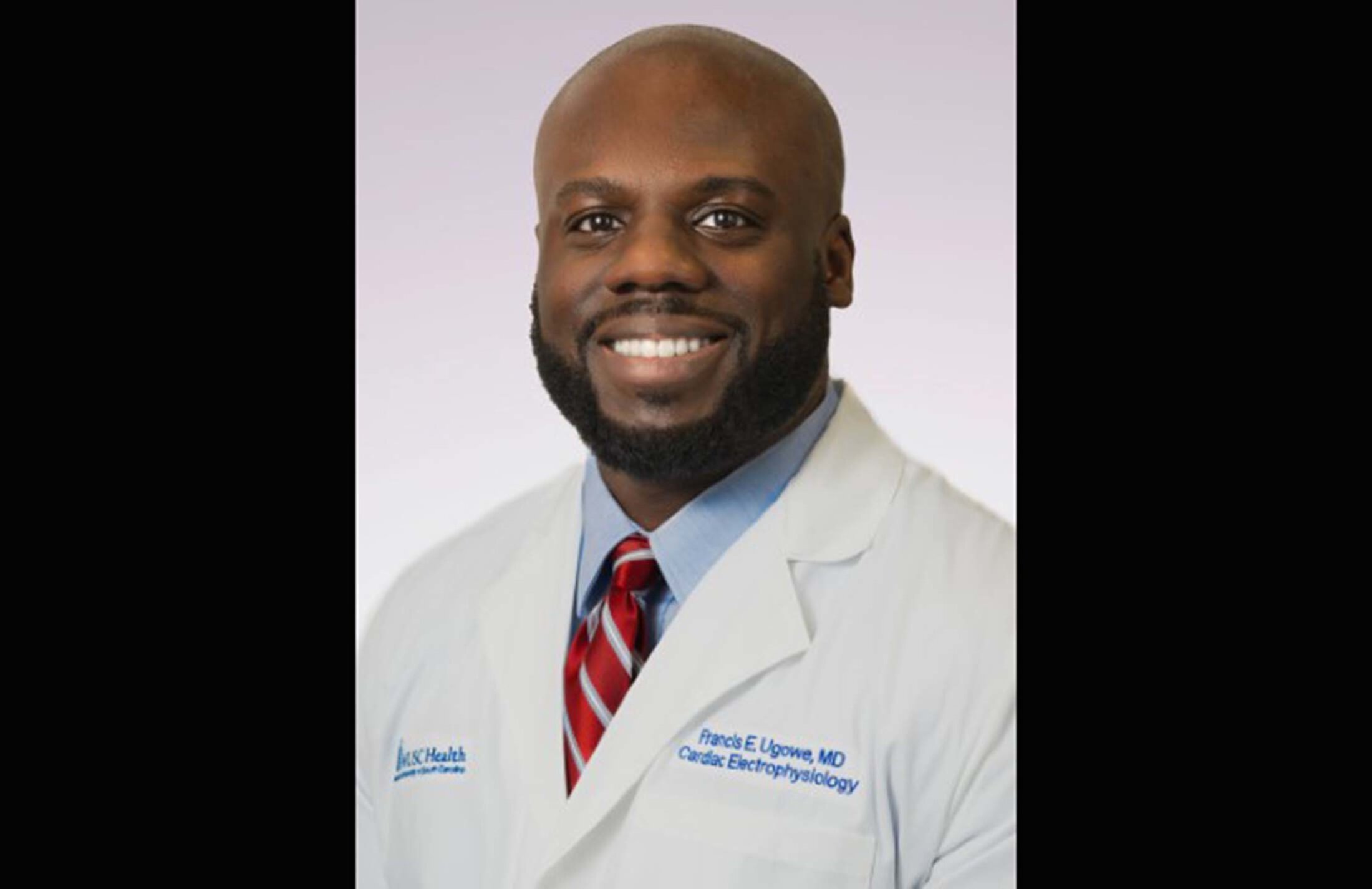
The heart team at MUSC Health Columbia is using what it calls a safer, faster way to treat atrial fibrillation, also known as A-fib. “I think it speaks to how we are trying to remain on the cutting edge,” said cardiac electrophysiologist Francis Ugowe, M.D. He specializes in treating problems involving the heart’s electrical system.
The new option, a system called Affera, gives doctors more flexibility in how they treat A-fib by letting them switch between two methods as they work, depending on which is a better fit for the heart tissue they’re focusing on. Affera also reduces the risk of damage to tissue next to the area being treated, Ugowe said.
What is A-fib?
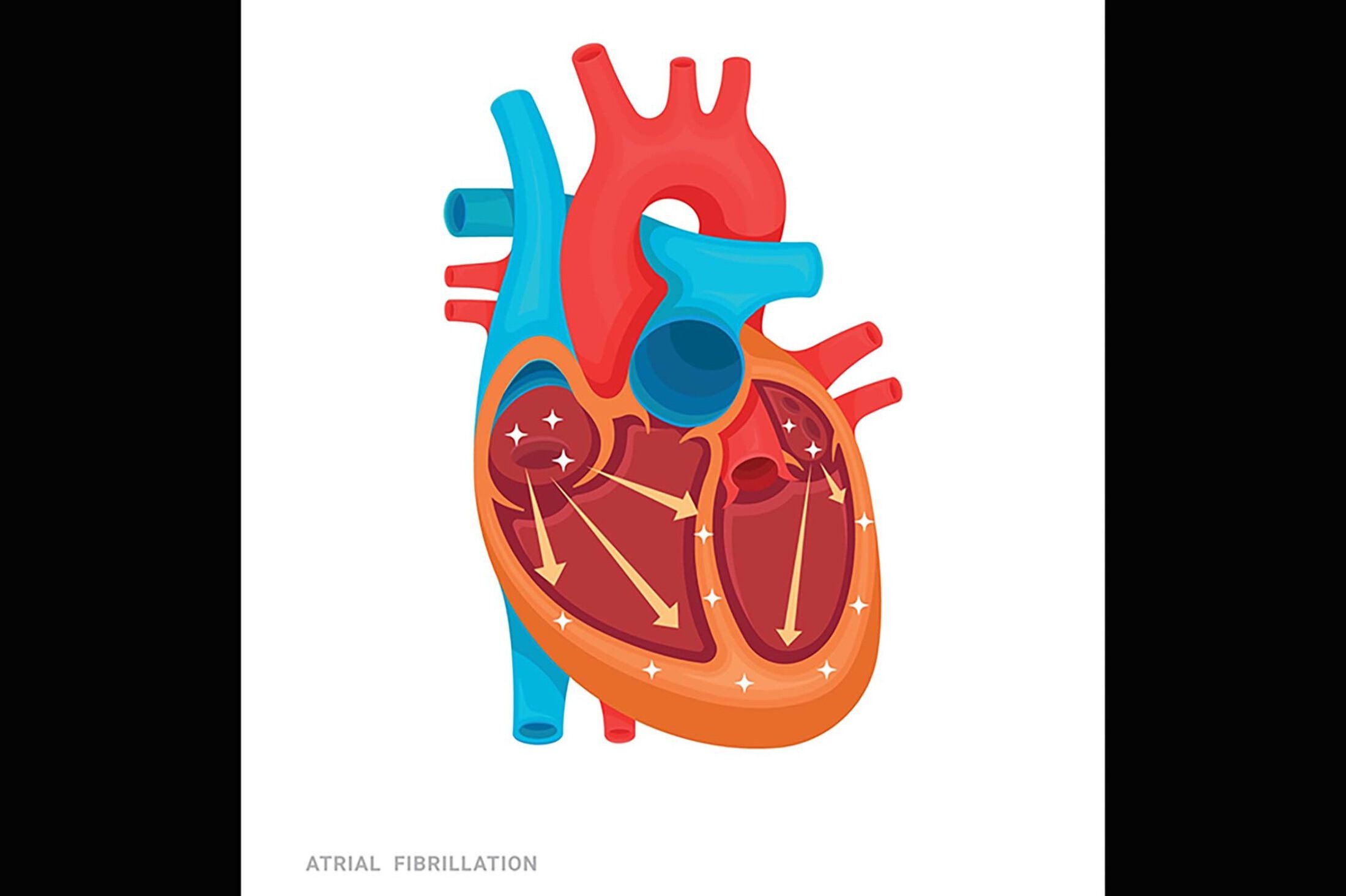
Atrial fibrillation, an irregular heartbeat, is the most common type of arrhythmia. Ugowe said it affects at least 10 million Americans, causing blood clots, strokes, heart failure and other serious health problems.
Risk factors include age, genetics, drinking too much alcohol, illegal drugs and high levels of physical activity, such as endurance sports, along with smoking and stress. One common symptom of A-fib is a fluttering heartbeat, according to the American Heart Association. Others include tiredness, dizziness, shortness of breath, faintness, sweating and chest pain. Doctors say people with chest pain should call 911 immediately.
Treatments, including Affera
So treating A-fib is important. Lifestyle changes work for some people. So do medications, including blood thinners and drugs that control heart rate or rhythm.
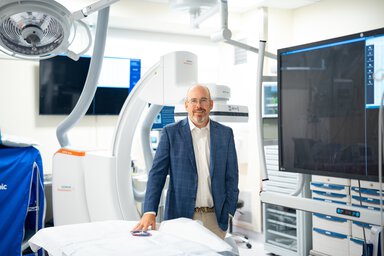
For people who need more, ablation is a possibility. It’s considered a minimally invasive procedure that targets areas of the heart that cause A-fib. Affera, a “mapping and ablation system,” is one of the newer ablation tools. It helps doctors see the heart and its electrical system and treat the problem with just one catheter.
Affera also uses a newer technology called pulsed field ablation, Ugowe said. “Previously, ablation systems were thermal, so you could freeze or burn tissue but there was risk for collateral damage.” Pulsed field ablation uses electrical pulses to selectively treat heart-rhythm tissue while reducing the risk of accidental injury to nearby areas such as the esophagus or nerves.
Affera also allows doctors to use the older method, thermal ablation, when needed. “So you can do both. You can toggle and flip, depending on where you are. In my mind, that’s game-changing,” Ugowe said.
The cardiologist said ablation with Affera is safe. But, he added: “As with any new technology, there are always going to be growing pains. We’re learning more and more every day about a system we believe is substantially safer.”
Ugowe called having a range of options for A-fib patients essential. “We’re all interested in making sure we have the right tools and specialists to take care of everything.”
Affera is produced by Medtronic, one of the Medical University of South Carolina’s strategic partners. The mapping and ablation system is in use at multiple MUSC Health locations, including Columbia and Charleston. “It’s part of MUSC’s ongoing commitment to offering leading-edge heart care in South Carolina,” Ugowe said.

Helen Adams
Recent Heart & Vascular Care stories