

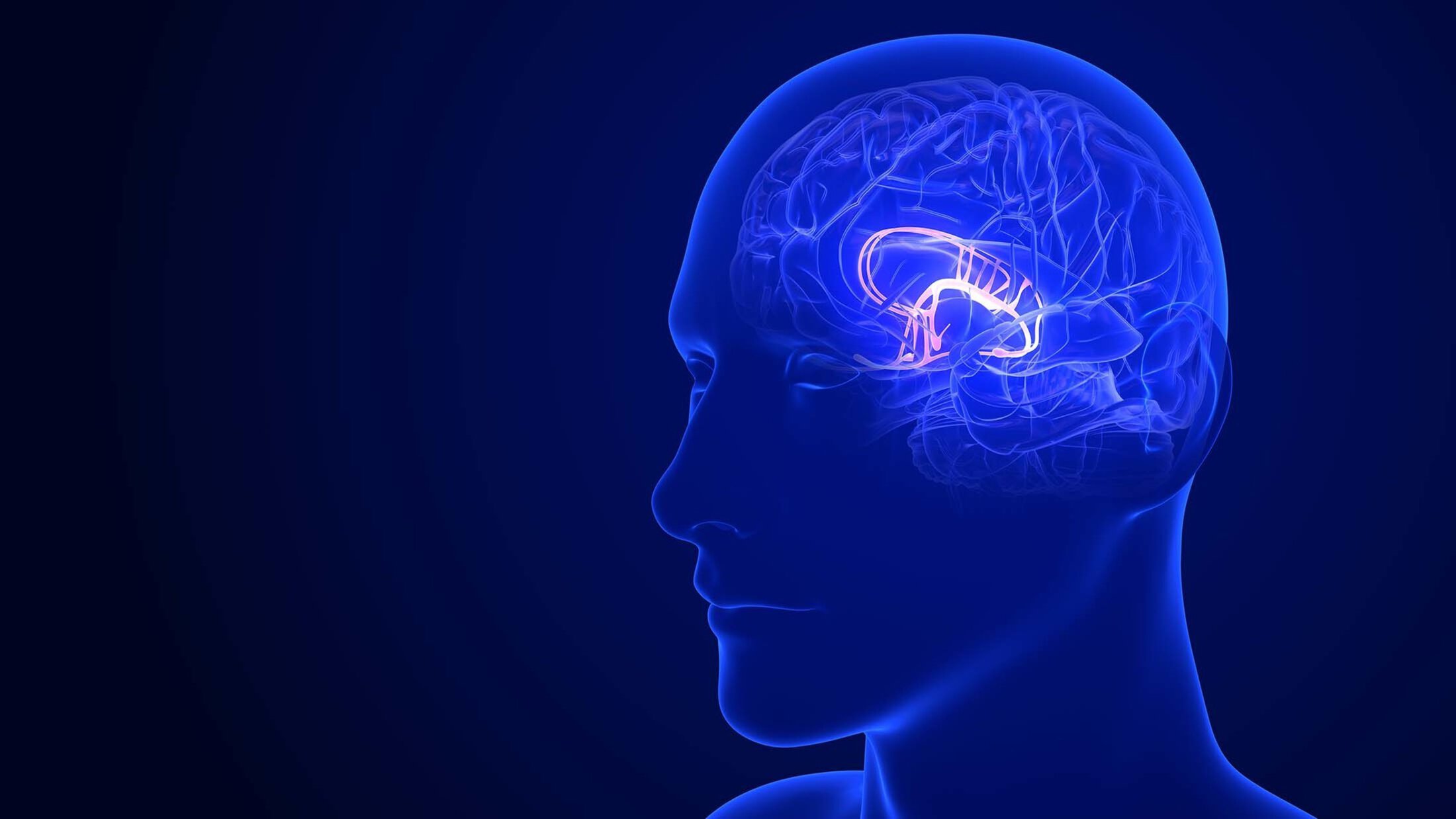
A 3-D illustration of the brain's limbic system, where a protein called TDP-43 can build up. Shutterstock
Memory loss specialists at MUSC Health are glad that more information is emerging about LATE dementia. Doctors estimate that the condition, which has only been around as a clinical diagnosis for about seven years, affects more than 10% of people 65 and older and about third of people 85 and older.
"It's almost a diagnosis of exclusion because we don't have any tests for it. There's no biomarker blood test or brain scan,” said neurologist Nicholas Milano, M.D.
But there are promising developments, including:
- Guidelines to help doctors diagnose LATE dementia.
- Talk about possible treatments, including one that’s in a clinical trial.
- A growing understanding of what happens when people have both LATE and Alzheimer’s disease.
We’ll get to those in a moment, but first, a look at what the term LATE dementia means – and what the condition does.
LATE dementia
LATE stands for Limbic-predominant age-related TDP-43 encephalopathy.
In people with LATE dementia, a protein called TDP-43 builds up in the limbic system, affecting areas involved with memory.
“It looks a lot like Alzheimer's disease. The primary symptom is difficulty with short-term memory, which is also the primary difficulty with Alzheimer's disease,” Milano said.
“The main differences are that it typically shows up a little bit later in life. That's one of the reasons why they came up with that name. LATE, at least typically, is more slow moving. You'll see a person in their 80s. They do have some trouble with their memory, but it's really progressing very slowly. And also it tends to just stay with memory difficulty as the primary symptom,” Milano said.
“Alzheimer's spreads through the brain much more quickly than LATE does. It starts to affect visual spatial function and, executive function, which is problem-solving, and language. With LATE, it's much more specific to memory, typically.”
Guidelines for diagnosing LATE
Diagnosing LATE dementia is getting a little easier thanks to new criteria created by a group of experts. Here’s the gist of what they wrote in the journal “Alzheimer’s and Dementia.”
- People with LATE dementia may have pretty good immediate memory but have a harder time with what doctors call delayed recall (remembering something they learned earlier in the day).
- They may also have a harder time remembering some words, such as the names of animals, than people without LATE dementia.
- With LATE, other intellectual processes usually aren’t affected for a while. However, that can change as the disease progresses.
- As Milano noted, LATE is slow to progress. The longer a person goes without other significant dementia-related problems, the more likely it is that they have LATE instead of Alzheimer’s disease.
- LATE is uncommon in people under 75.
The guideline experts said LATE also causes changes in the hippocampus of the brain, a key player in learning and memory. Milano has seen the reality of that.
“That's where we see this TDP-43 pathology,” he said. “It's right in the hippocampus. And we really see pretty striking, atrophy or shrinkage of that area on the brain scan to the point that if you see severe hippocampal atrophy on a brain scan, it makes you think about LATE."
Working toward treatments for LATE
Right now, there are no treatments for LATE. While its symptoms look like those of Alzheimer’s disease, the cause is different. “So the treatment has to be different,” Milano said. “That pushes us to research LATE.”
Some of that research will take place through the South Carolina Alzheimer’s Network, also known as SCAN. The network, based at MUSC Health, brings together specialists in not just Alzheimer’s disease but also other memory and cognitive conditions to ensure people get early and accurate diagnoses, coordinated care, new medications and clinical trials.
Milano said one thing is already clear. “The future of dementia treatment is going to be moving away from symptoms and more towards the underlying pathology of the brain.”
An example of that kind of treatment: the Alzheimer’s medication Leqembi, which targets amyloid plaques in the brain.
“Well, now we need treatment for people with elevated levels of TDP-43 in LATE dementia,” Milano said. “Or in Lewy body dementia, we need treatment for people with elevated levels of the protein alpha synuclein. So hopefully in the future, we will be checking all these biomarkers and treating them all.”
One possible treatment for LATE is already being tested at the University of Kentucky. Researchers want to know if the heart drug nicorandil can protect brain tissue and stop the hippocampus from shrinking in people with mild memory loss.
LATE + Alzheimer’s
That drive to find treatments for all forms of dementia will take into account something that may surprise you. “Most people with dementia, if you're looking at the brain under a microscope, have more than one type of dementia,” Milano said.
“And so you'll get people with Alzheimer's disease who also have LATE. And unfortunately, those patients tend to progress more quickly. LATE will make Alzheimer’s worse.”
That’s why it’s important to try to pin down each person’s cause of dementia. “It’s important to know that not every cause of mild memory difficulty is Alzheimer's disease. And so LATE is one of many different causes,” Milano said.
“I think this is why it's important to be evaluated, because when someone is evaluating for memory difficulties or other difficulties with thinking, we are looking for treatable causes. So we can fix things and lead to improvement. But even if something is not treatable, it's important to know what is going on. Having that information can help patients and their families plan for the future and know what to expect.”
Meet the Author
Helen Adams
Recent Neuroscience stories

MUSC News + College of Health Professions
MUSC-led study finds CBD/THC oil helped ease end-of-life agitation in dementia
MUSC News + Surgery
Charleston, MUSC pull together to get man badly hurt at bachelor party home for care

MUSC News + Neuroscience
MUSC researcher leverages technology to collect more patient data