

This article originally appeared in a Center for Global Health newsletter in Nov. 2025.
When MUSC College of Pharmacy student and native Jamaican Tania Thomas learned that Hurricane Melissa, a storm that would strengthen to a harrowing Category 5 status, was approaching her home country last month, she immediately grew anxious.
It had been 21 years since Hurricane Ivan, a similarly destructive Category 5 event that struck the island of Jamaica in September 2004, causing many deaths and widespread damage, and the memories rushed back into her mind.
“During Ivan, I was in primary school, and my parents were abroad at the time, and that was scary,” she said. “Ever since, I’ve been scared of storms.”
Thomas, who still has friends and family who live on the island, including her sister Raina, began refreshing her apps for weather updates.
“I was anxious the whole time,” she said. “It was moving so slowly, and you didn’t know if it would turn or get worse. That helpless feeling – it’s horrible.”
Melissa made landfall on Jamaica’s southwestern coast on October 28, leaving behind widespread flooding, damaged or destroyed homes and communities struggling to rebuild. According to a Nov. 11 report from The Associated Press, there were 45 confirmed deaths resulting from the storm, with more than a dozen missing.
MUSC has a small community of representatives who are native to the island and now work and study on campus. Thomas grew up in Saint Catherine, a parish community on the eastern side of the island that avoided the worst of the storm, though her sister lost electricity for a week and saw some property damage.
“Thankfully, our family was safe,” she said. “But the waiting – the not knowing – that was the hardest part.”
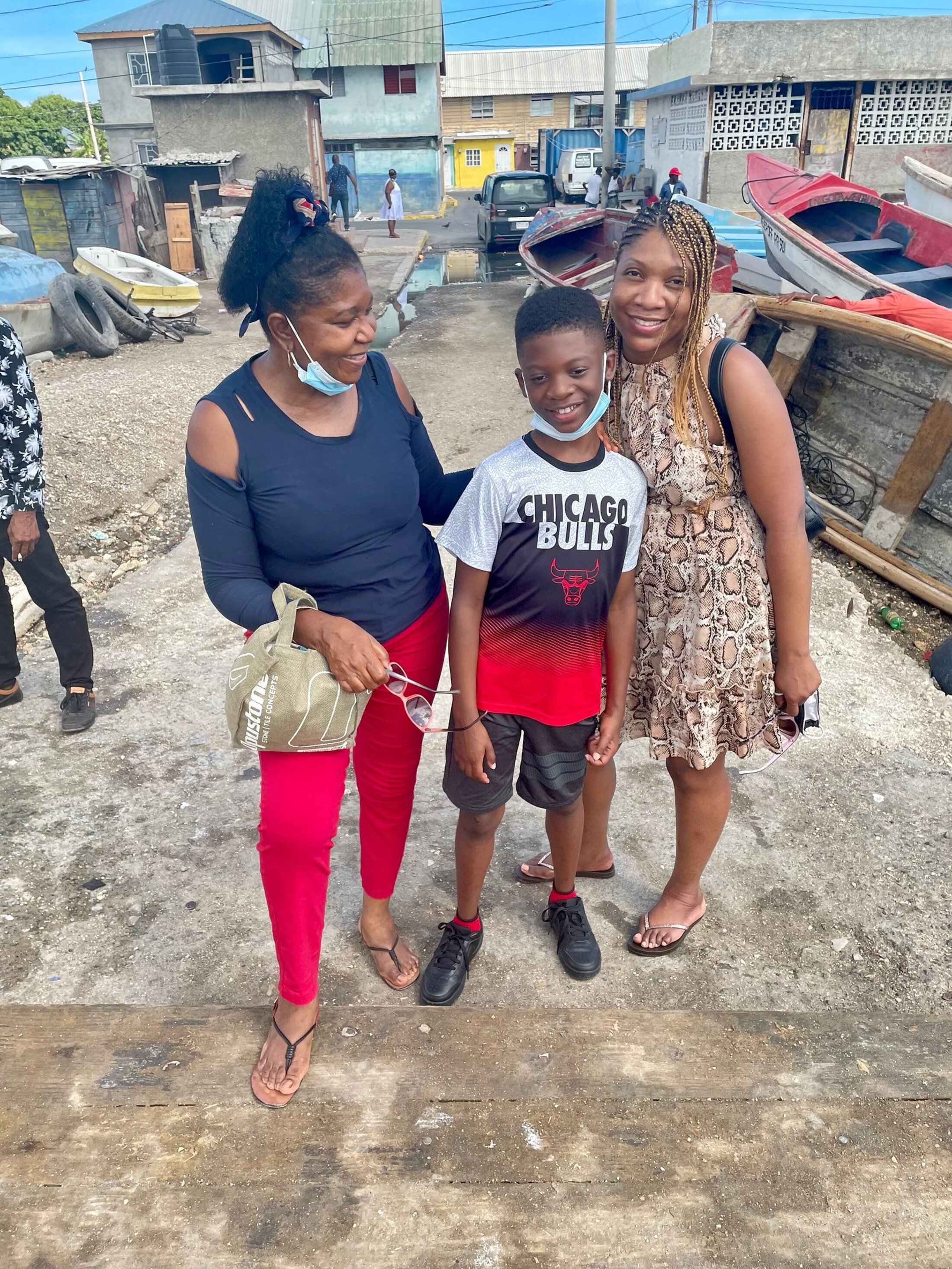
Similar to Thomas, Julaine Fowlin, Ph.D., an assistant professor and the executive director of the Center for Advancement of Teaching and Learning, grew up in Saint Andrew, a parish that neighbors Saint Catherine, which also was spared the worst outcomes. But the hours leading up to and during the hurricane did nothing to ease her anxiety – well, aside from perhaps the humorous TikTok videos coming from locals.
“We love to dance, and music is a very important part of our culture. And you saw some during the hurricane – people dancing in the rain,” she said, “because we have a saying that we make light of harsh moments to keep us going.”
Thomas described her childhood in Jamaica as one rooted in connection and care. “We’re a very close-knit community,” she said. “Back home, you know your neighbors’ names. You could walk into their house, spend the day, eat breakfast and dinner there. It really takes a village.”
That spirit of togetherness, she said, has once again defined Jamaica in the wake of the disaster. “People keep saying Jamaicans are resilient – and it’s true,” Thomas said. “No matter what we’re facing, we say, ‘As long as I have life, there is hope.’ You might have lost your home or your car, but you have life. You can rebuild.”
Thomas says her heart aches for those in western parishes like Westmoreland and Saint Elizabeth, where the storm’s impact was catastrophic. “It’s horrible what’s happened, but I’m amazed by the international support,” she said. “When tragedy happens, people come together. We’re all in this together.”
Fowlin recalled her own memories of a community built on care and connection. “People would just stop by for a meal,” she said. “If someone had a need, we helped. That’s how Jamaicans are: We’re people-focused.”
Both women agree that recovery will take time – and that help from others remains crucial.
“The rebuilding won’t happen overnight,” Thomas said. “But Jamaicans are strong, and we don’t give up easily. As I said… ‘As long as there’s life, there’s hope,’ – and that’s truly what keeps us going.”
Adam Wise
Recent Center for Global Health stories