

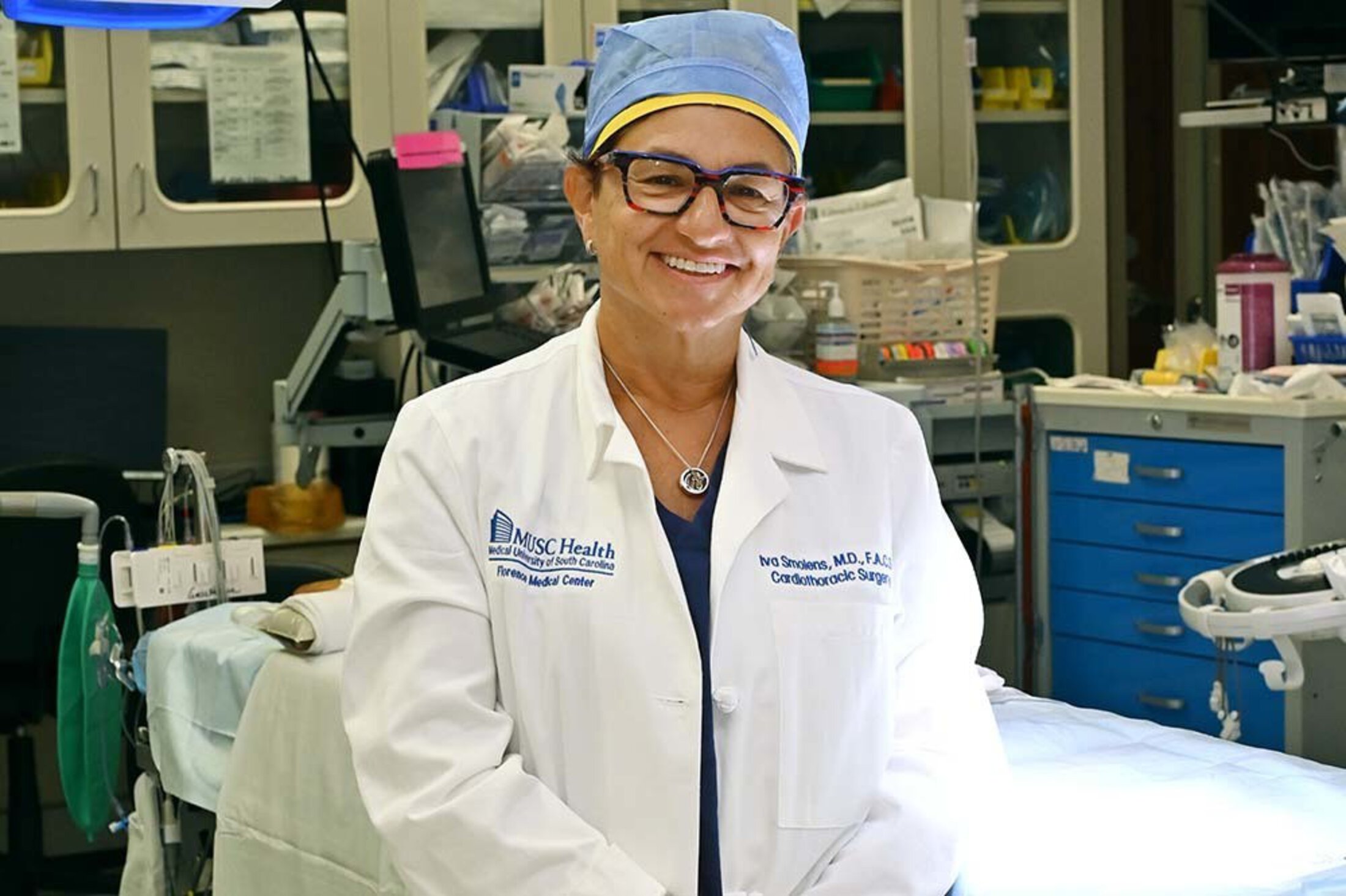
Dr. Iva Smolens takes care of heart patients at the MUSC Health Florence Medical Center. Photo by John Russell
On a day when many people celebrate Christmas, some also end up in hospitals with heart attacks. It’s a well-established pattern that cardiologists recognize – but the public is less aware of.
Iva Smolens, M.D., a cardiothoracic surgeon at the MUSC Health Florence Medical Center, is trying to change that. She said the facts are plain. “The American Heart Association says that the last week of December has the highest number of deaths from heart disease.”
There’s also a condition known as holiday heart syndrome to watch out for.
Here’s what she wants people to keep in mind to stay as healthy as possible during the holidays.
Stress and overindulging can cause heart trouble.
“So many people are stressed out over the holidays. They're spending more money, dealing with families, planning parties and coordinating schedules, all while setting aside caring for themselves. People who should be adhering to diabetic or low-sodium diets are not, and this can contribute to heart attacks and complications,” Smolens said.
Binge drinking can cause heart trouble, including atrial fibrillation, the most common heart arrhythmia.
“The incidence of atrial fibrillation increases with age. People over the age of 65 start to have an increased risk of A-fib at baseline. And then on the holidays, you binge drink, throw off your electrolyte balance, get dehydrated, and it can precipitate A-fib,” Smolens said.
That’s known as holiday heart syndrome. “You may experience the heart racing, and you feel like you are running a marathon even when you are sitting still. It can be dramatic.”
It’s important to recognize other symptoms of heart trouble, including heart attacks. They may not be what you expect.
“The classic symptom of left-sided crushing chest pain is really a symptom that’s only true for white men. Women, men and women of color and other minorities all can present with different symptoms,” Smolens said.
“Looking at women who come in with heart attacks, the most common symptom that they complained of was feeling poorly for a few days and thinking they had the flu.”
Symptoms can include chest pain, chest pressure, shortness of breath and fatigue. “Some people will experience arm pain, shoulder and back pain, indigestion, jaw pain or even swelling in the ankles and feet,” Smolens said.
“Early recognition of the symptoms and seeking out help quickly are important. The sooner medical treatment is instituted, the better the chances of survival.”
You can take steps to protect your heart health during the holidays and beyond.
“If you really want to prevent heart trouble, familiarize yourself with the common symptoms and act early. Celebrate in moderation, take your medications as prescribed and make time to care for yourself during the holidays. Reduce your stress and keep active. The American Heart Association recommends 150 minutes of activity per week,” Smolens said.
You can find more information on how to stay healthy in this guide from the MUSC Health Heart and Vascular Center.
Meet the Author

Helen Adams
Recent Heart & Vascular Care stories
Heart and Vascular Care + Transplant
Columbia woman helps heart patients with her skill and personal experience

Childrens Health + Heart and Vascular Care
The surprising, generous gesture of a teenage Make-A-Wish recipient
Impact + Transplant
Mom of double transplant survivor 'not surprised at all' by hospital's top ranking