
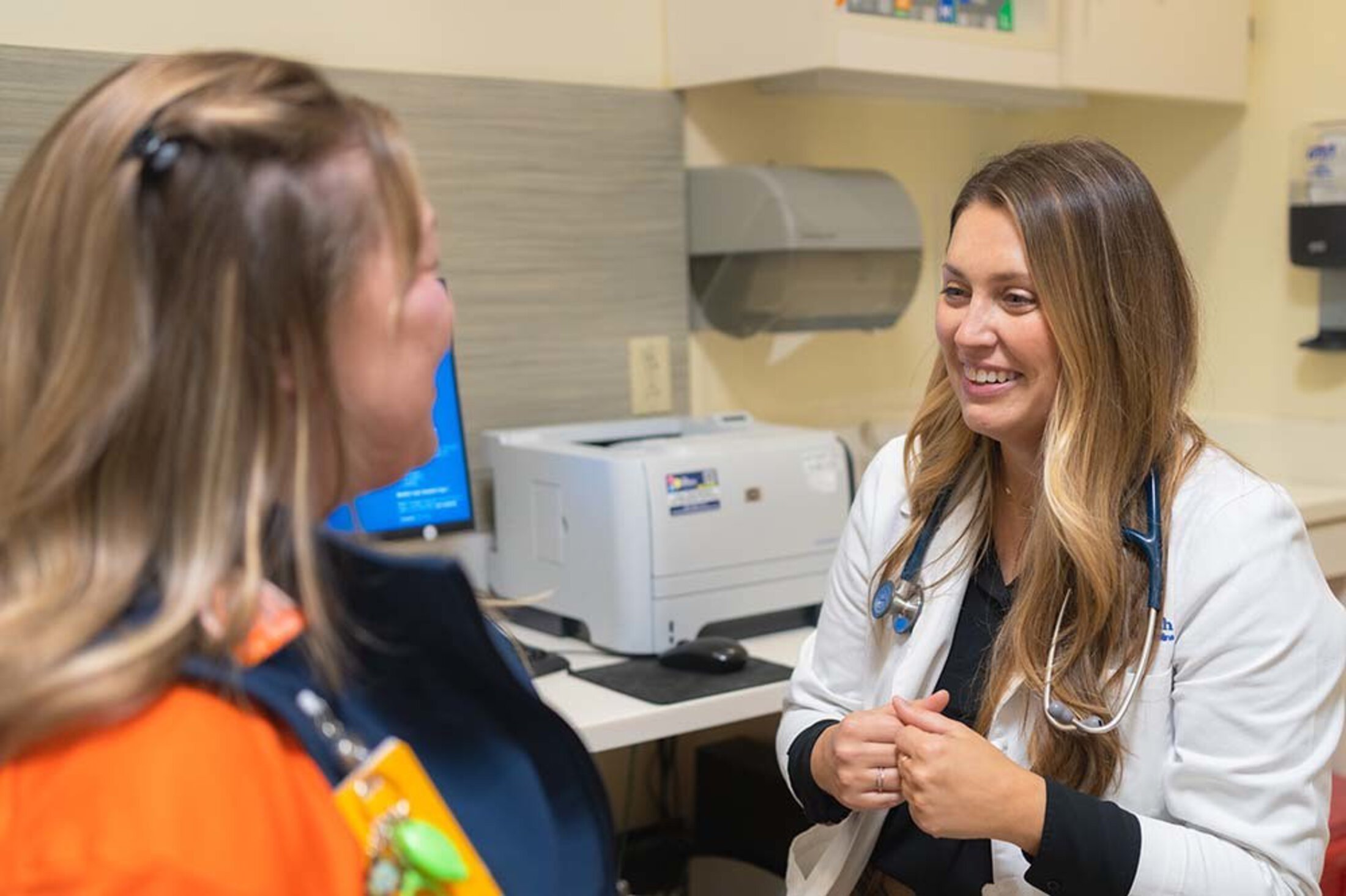
Hypertrophic cardiomyopathy patient Katherine Woodward, left, at an appointment with Dr. Jessica Atkins. Photos by Julie Taylor
Katherine Woodward was a new nurse when she unexpectedly became a patient as well. “I was 24, right before I turned 25, when I found out I had it. I had just graduated. I was just really, really short of breath.”
Her diagnosis: hypertrophic cardiomyopathy, or HCM. Jessica Atkins, M.D., medical director of the HCM team at MUSC Health, said Woodward was lucky, in a way – she had a sign that something was wrong.
Shortness of breath can be a symptom of HCM, along with:
-Heart palpitations.
-Fatigue.
-Chest pain.
-Fainting.
But there’s another sign that’s much more serious. “The scariest thing is when your first symptom is sudden cardiac arrest,” Atkins said. The risk of sudden cardiac arrest is low, 1% or 2% per year among people with HCM, but when it happens, it can be devastating – and even deadly.
“It's known as one of the more common primary diseases of the heart muscle related to sudden cardiac death. And so if we can identify people who are at risk, we can get them evaluated and treated quickly.”
As MUSC Health works toward becoming the first site in South Carolina with an HCM Center of Excellence, a designation awarded by the Hypertrophic Cardiomyopathy Association, Atkins is also focused on raising awareness about HCM itself – a condition that affects an estimated 1 in 500 people and can cause atrial fibrillation, blood clots, strokes and heart failure, among other ailments.
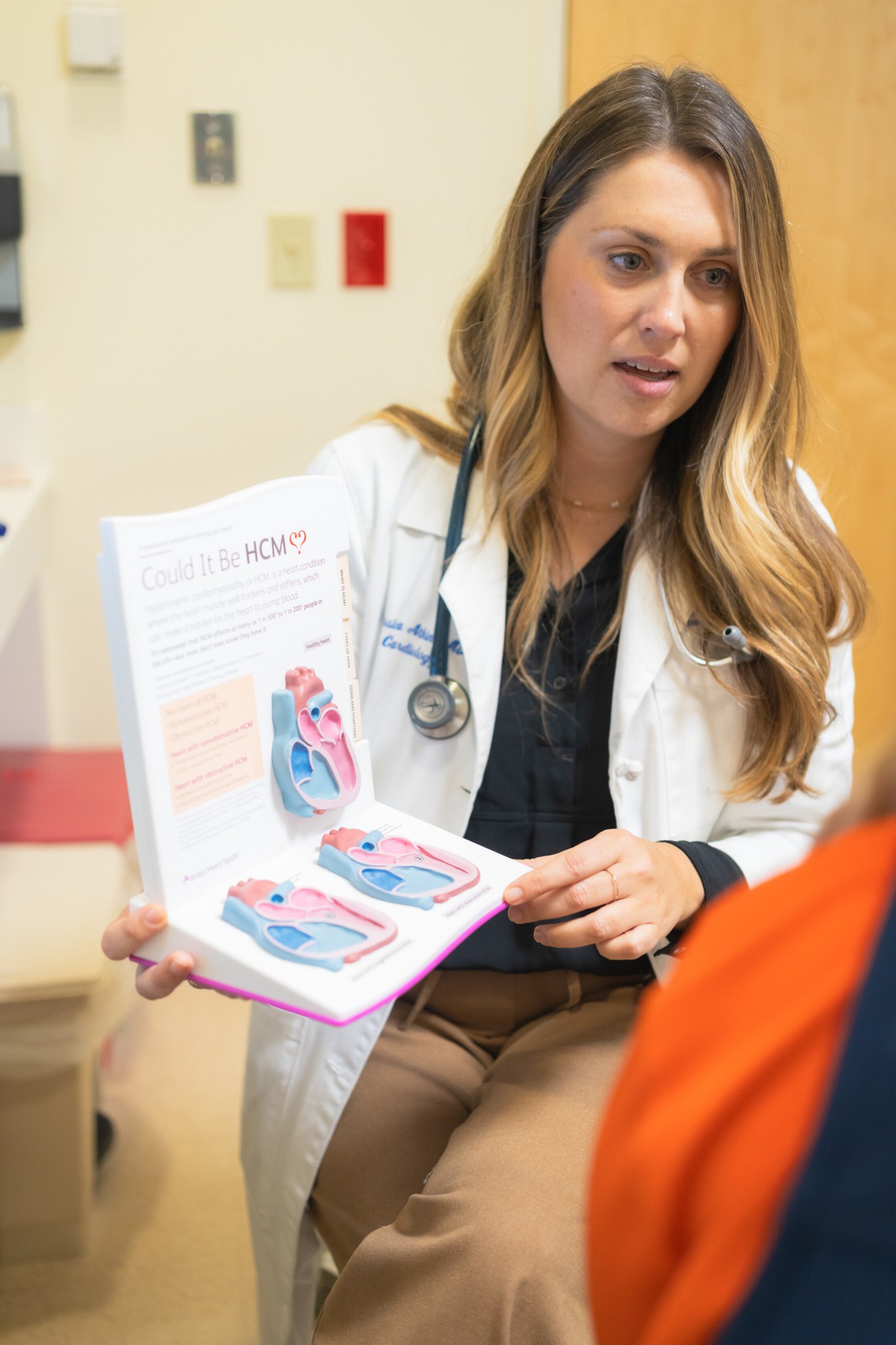
Dr. Jessica Atkins and her team are working to become the first in South Carolina have an HCM Center of Excellence.
But many people with the disease don’t know they have it. HCM isn’t obvious at first. That can change as the disease progresses. “The walls of the heart can become thickened to the point where they can cause issues with the way the heart functions,” Atkins said.
Those issues vary depending on the course of the disease. “There are different forms of HCM. We have patients who have obstructive HCM, where the muscle grows to the point where it blocks the blood flow exiting the heart,” Atkins said.
“And we have patients with non-obstructive HCM. The muscle is thickened, creating a stiffening of the heart, but it doesn't block the blood flow leaving the heart.”
Current treatments for HCM at MUSC Health include:
-Medical therapy, initially with beta blockers or calcium channel blockers, and the newest medication, mavacamten, brand name Camzyos, which helps stiffened heart walls relax.
-Septal reduction therapy, which shrinks the size of the wall separating the left and right sides of the heart. Doctors can do this with a minimally invasive technique called alcohol septal ablation or with surgery (myectomy).
- Genetic testing: 50% of HCM patients carry an abnormal gene that causes the thickening of the heart. If a positive test is found, screening can also be offered to family members.
-Evaluation of abnormal heart rhythms and risk for sudden cardiac death.
And Atkins’ team is studying new potential treatments for HCM through clinical trials, testing the drugs Aficamten and EDG-7500. The medications are investigational, not approved by the Food and Drug Administration, but Atkins said both show promise.
Whatever the treatment, the overarching goal of the HCM team is the same. “We want to make sure that patients live long, healthy lives.”
Woodward, the nurse surprised by her HCM diagnosis in her mid-20s, is doing just that.
“Dr. Atkins has been phenomenal. She really has made my quality of life so much better by adjusting my medications,” Woodward said.
The HCM team also facilitated genetic testing for Woodward’s daughter. “She is doing great. She carries the genetic mutation but does not have signs of hypertrophic cardiomyopathy at this time,” Woodward said of her toddler.
Woodward is doing well, too, with careful management of her condition. “I am still able to be a wife and mom, work as an ER nurse, and do all of the things I would do if I had never been diagnosed. Any time I’ve ever gone to Dr. Atkins and said, ‘Hey, I'm still not feeling good,’ she's like, ‘OK, well here's the next thing we can do.’ She is always open to expanding and explaining treatment options, while being there for me and making sure I can function with this condition.”
Meet the Author