MUSC COVID-19 Epidemiology Intelligence Project

MUSC global health epidemiologists and scientists present graphs to model the effects of COVID-19 in the regions MUSC serves. 

COVID-19 Status Summary by Location

Choose a region in South Carolina to view the status summary. Updated 10/31/2025

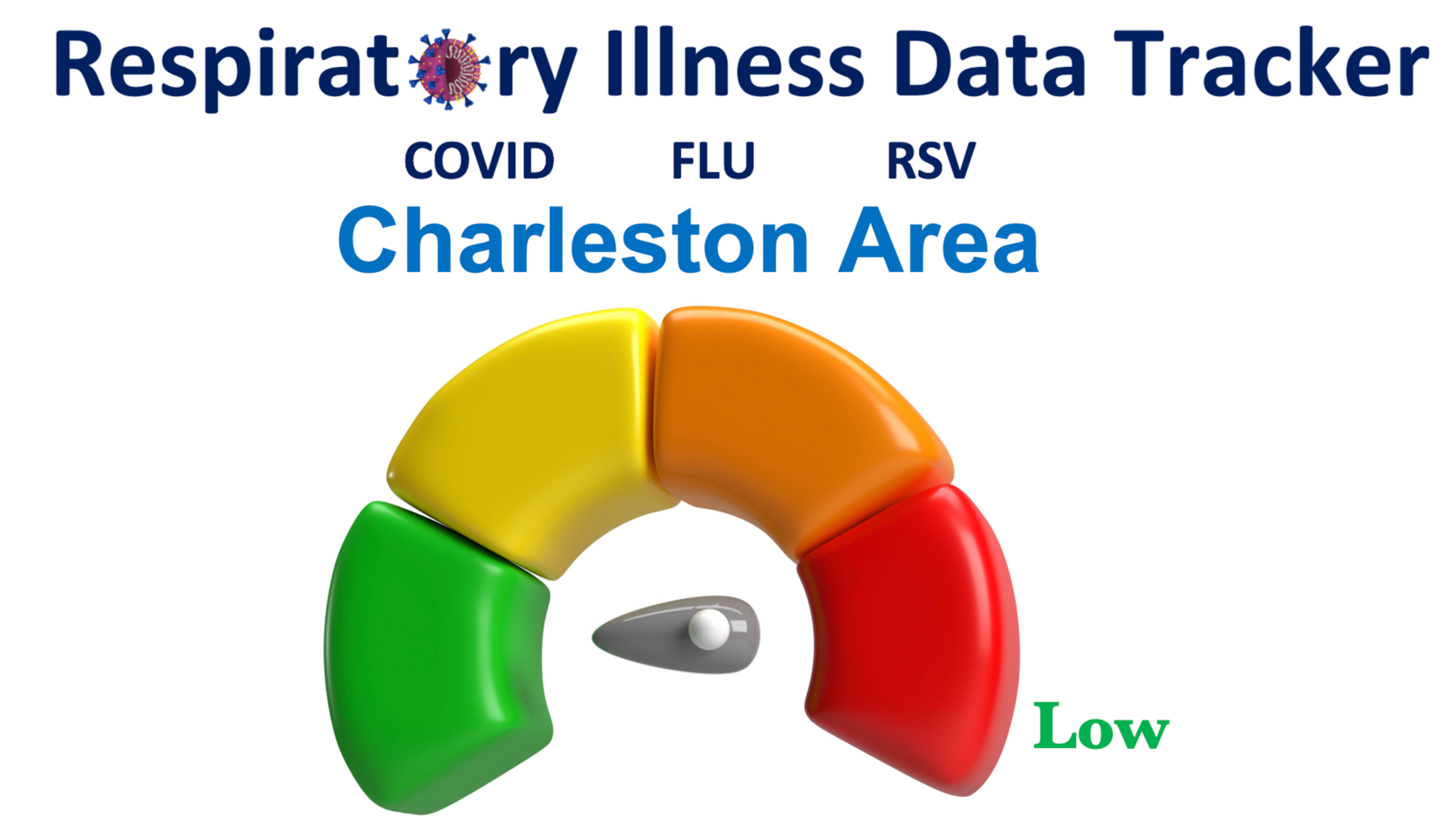
Charleston Area Information


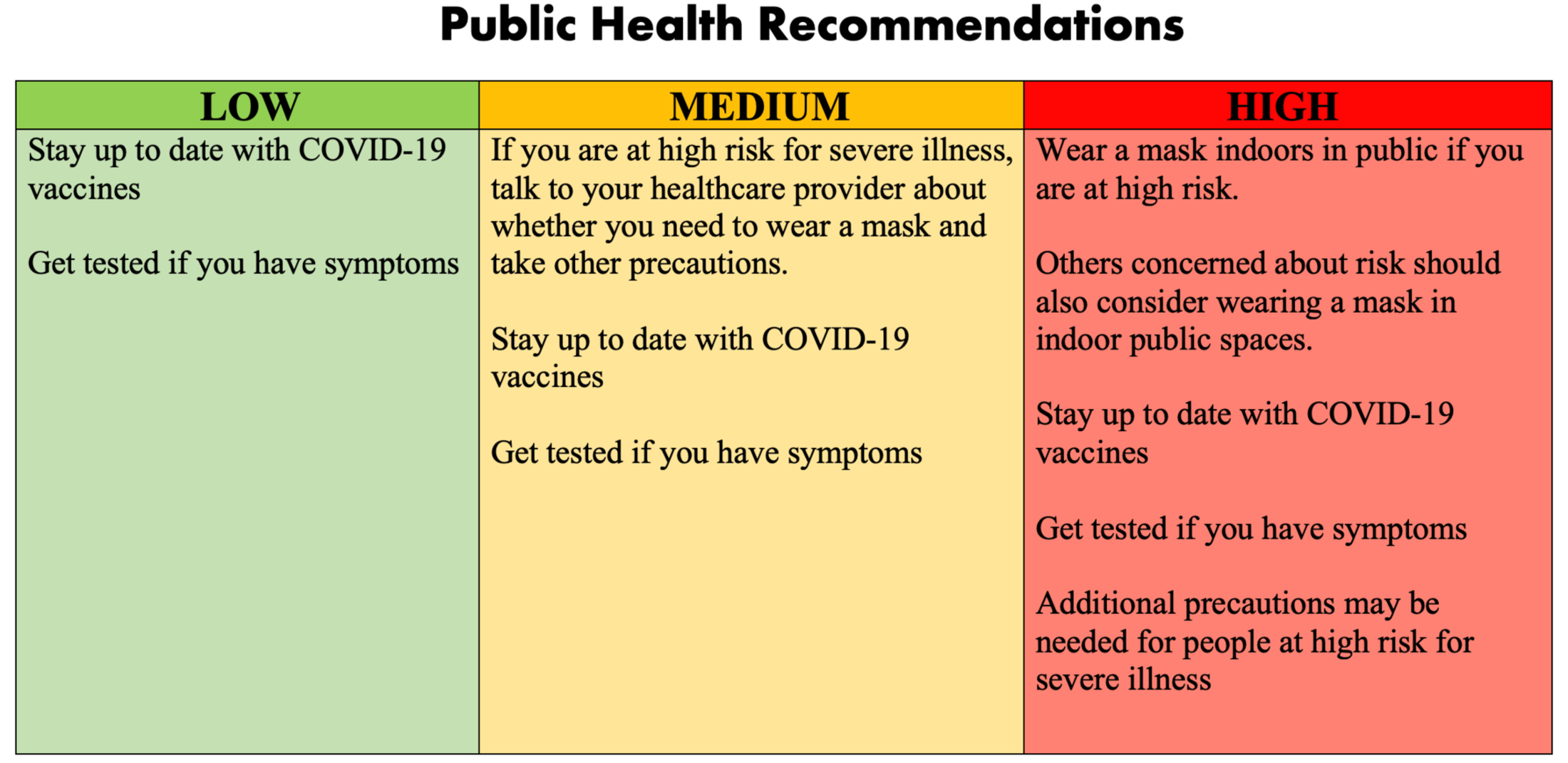
Chart describes what to do if an alert is low, medium, or high for COVID-19.

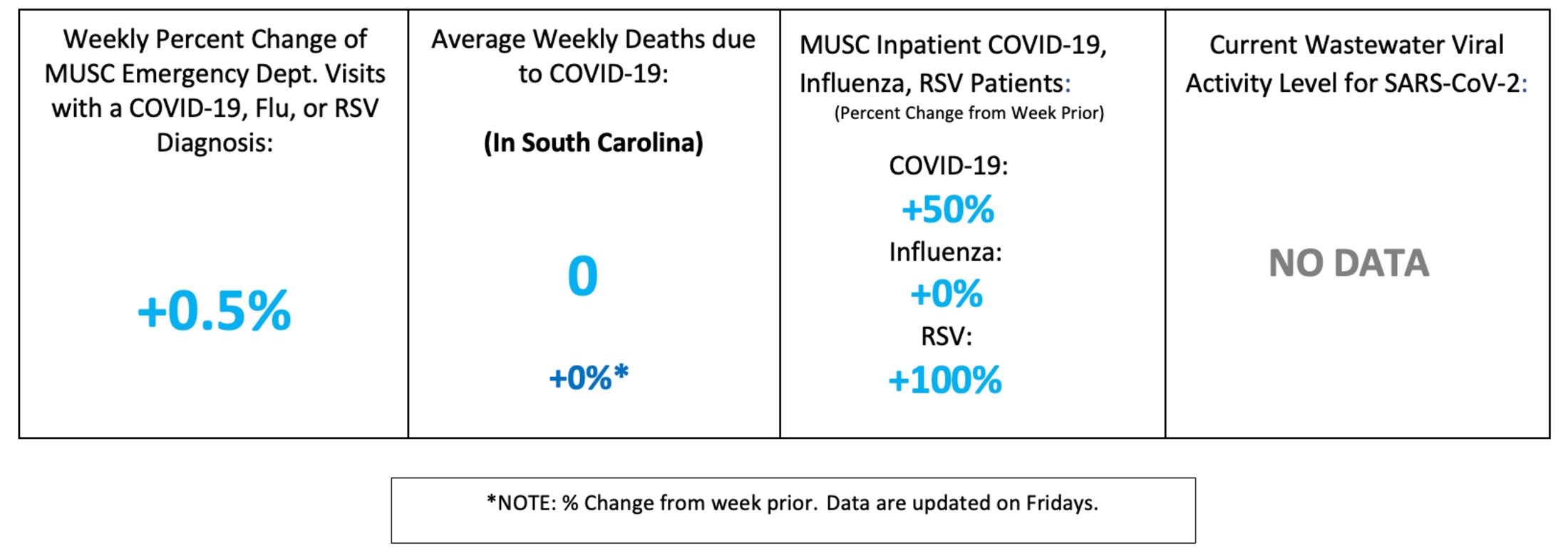
Tri-County (Charleston Area) – Weekly Respiratory Summary (Inbox Graphic) Dashboard graphic summarizing weekly changes in emergency department visits for COVID-19, flu, and RSV in the Tri-County area (+45%), showing increased ED visits, zero average weekly COVID-19 deaths statewide, 7.42% vaccination coverage, declining COVID-19 and flu inpatients, rising RSV, and low wastewater viral activity.

Graph shows wastewater viral activity rise and falls between 2022 and 2025. Current level appears consistent compared to other peaks in the same time.

A graph shows the percentage of ED visits with  COVID-19 spiking in August, and coming down to a much lower percentage in October.

South Carolina ER Visits (Statewide) Line chart showing the percentage of emergency room visits statewide in South Carolina associated with influenza, COVID-19, and RSV from 2023 to 2025, with strong winter influenza peaks, periodic COVID-19 surges, and minimal RSV contribution.

MUSC Health – Charleston Area (Hospitalizations) Line chart illustrating daily hospitalizations in the MUSC Charleston area for COVID-19, influenza, and RSV, with high overall winter hospitalization counts driven primarily by influenza and recurring COVID-19 peaks.

MUSC Charleston Children’s ER Line chart showing weekly percentages of children’s ER visits at MUSC Charleston for influenza, COVID-19, and RSV, with a large influenza and RSV surge in January, a COVID-19 spike in early fall, and rising RSV toward late fall.

A graph shows the percentage of ED visits at the MUSC Children's Hospital diagnosed with COVID-19 in the last year. August saw the largest spike, but currently it is relatively low.

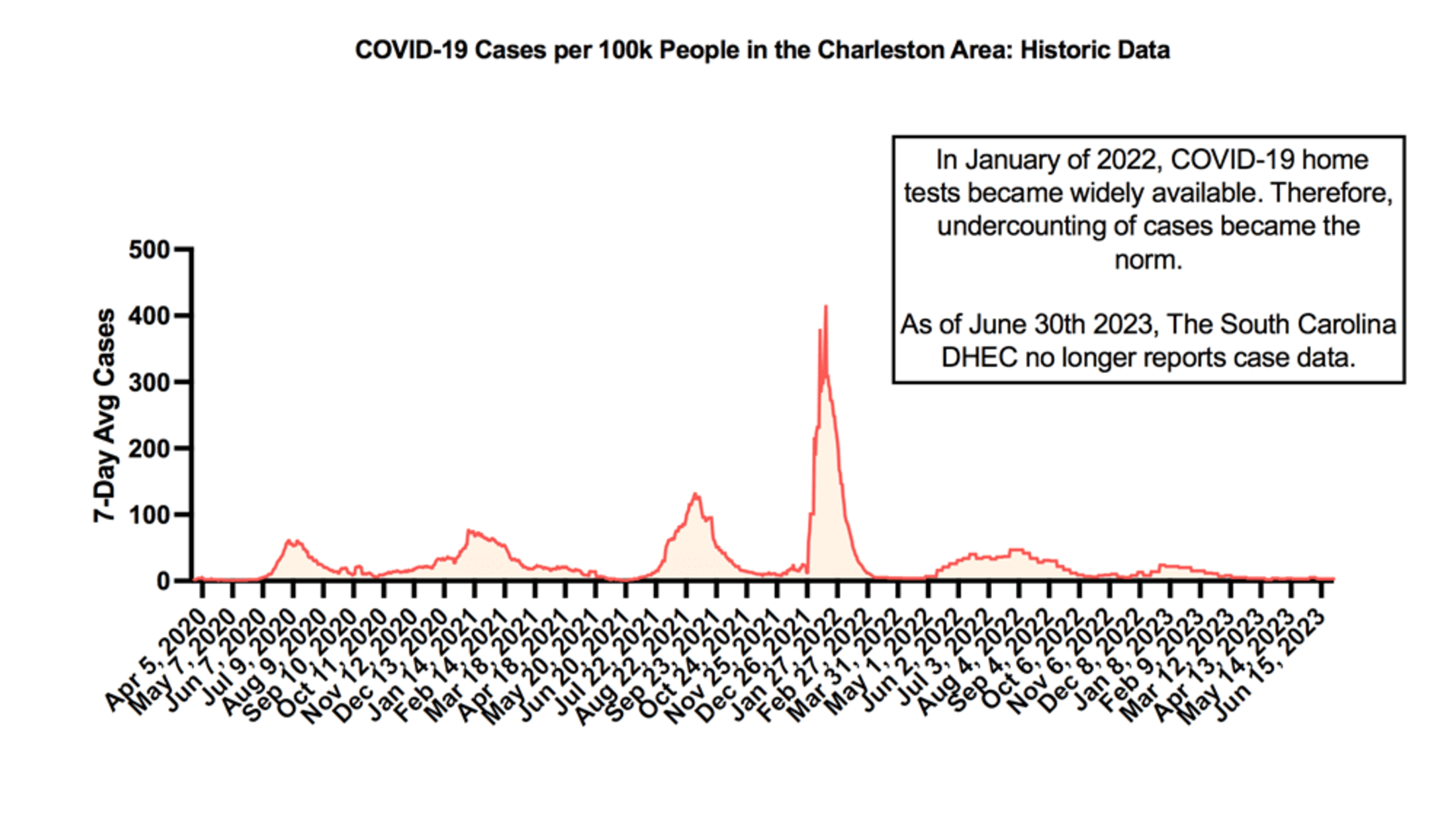
A graph shows the number of COVID-19 cases (per 100K) in the Charleston area between 2020 - 2023. The largest spike was January 2022.

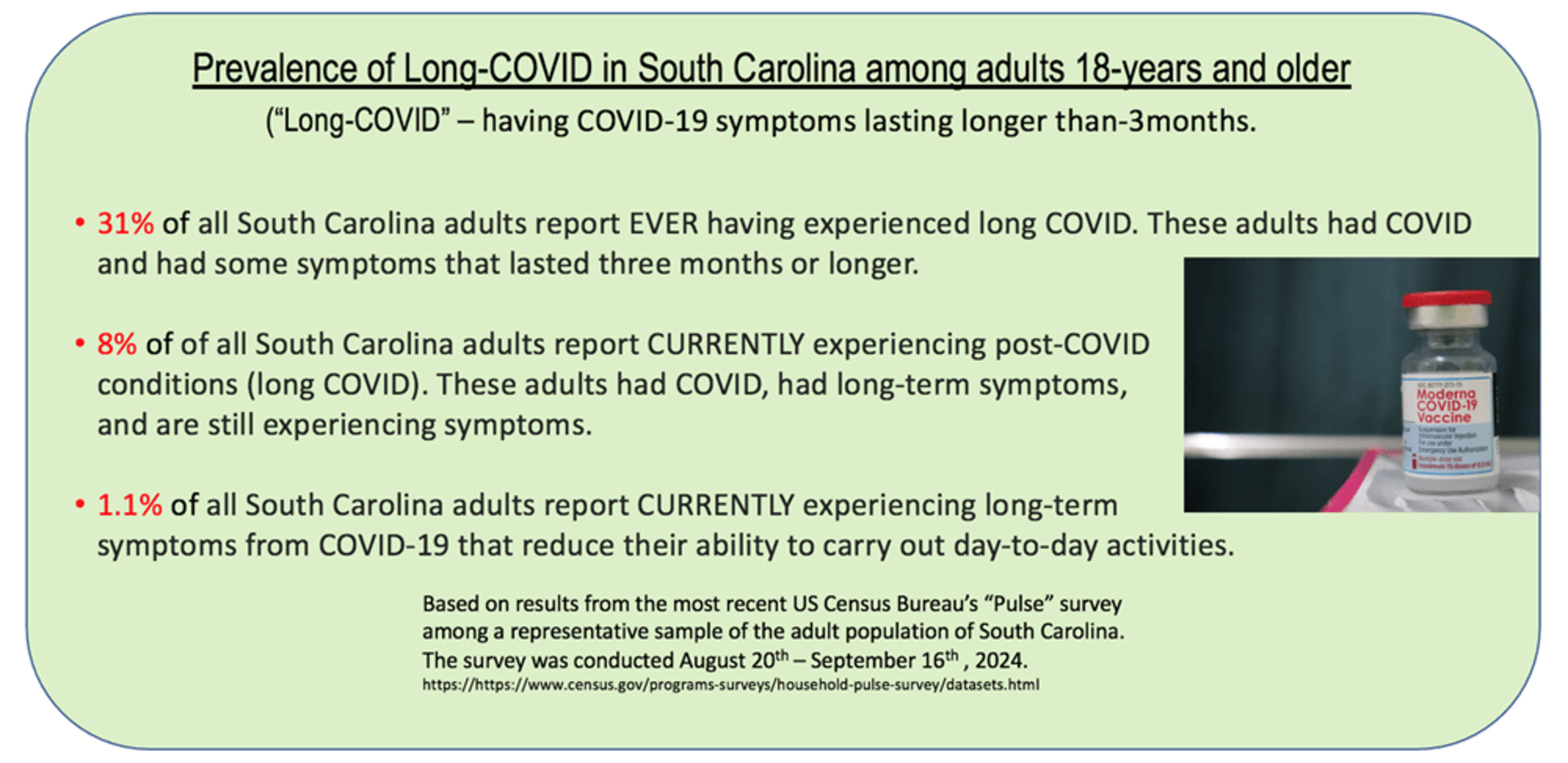
Information details the prevalence of Long-COVID in SC among adults 18-years and older. 31% reported having COVID. 8% of all SC adults currently report experiencing post-COVID symptoms. 1.1% of all SC adults report currently experiencing long-term symptoms that reduce their ability to carry out day-to-day activities.

Florence Area Information

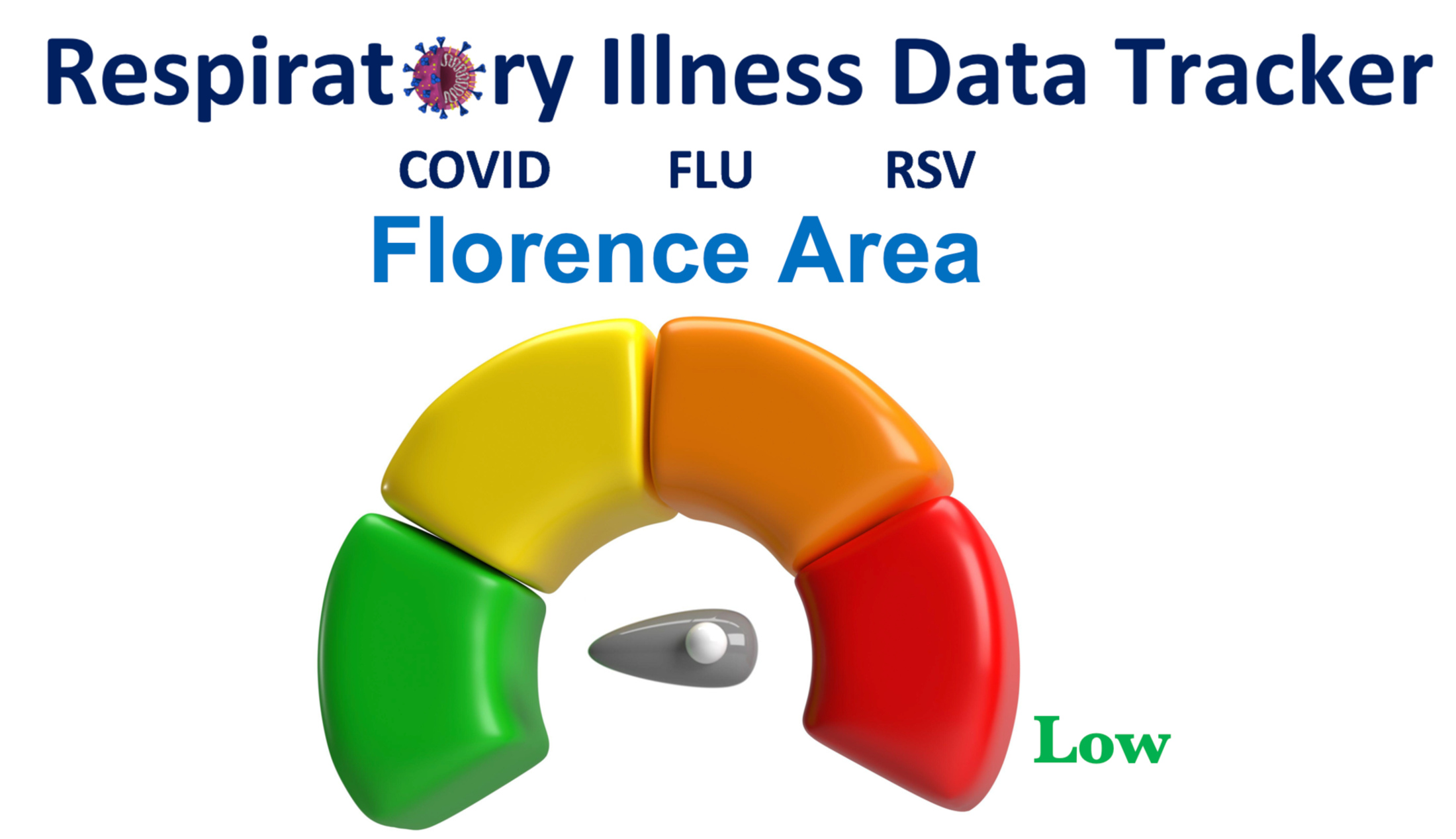
Respiratory Illness Data Tracker in text, representing COVID, Flu, and RSV

A graph shows Florence Area is relatively low for respiratory illnesses at the current time.

A graph showing the recommendations for public health for COVID-19, with threats are LOW, MEDIUM, and HIGH. When low, get tested and stay up-to-date. When medium, get tested, stay up-to-date, and talk to your healthcare provider if you are high risk. When threat of COVID is high, get tested, stay up-to-date, wear a mask indoors, and consider talking to your healthcare provider if you are high risk.

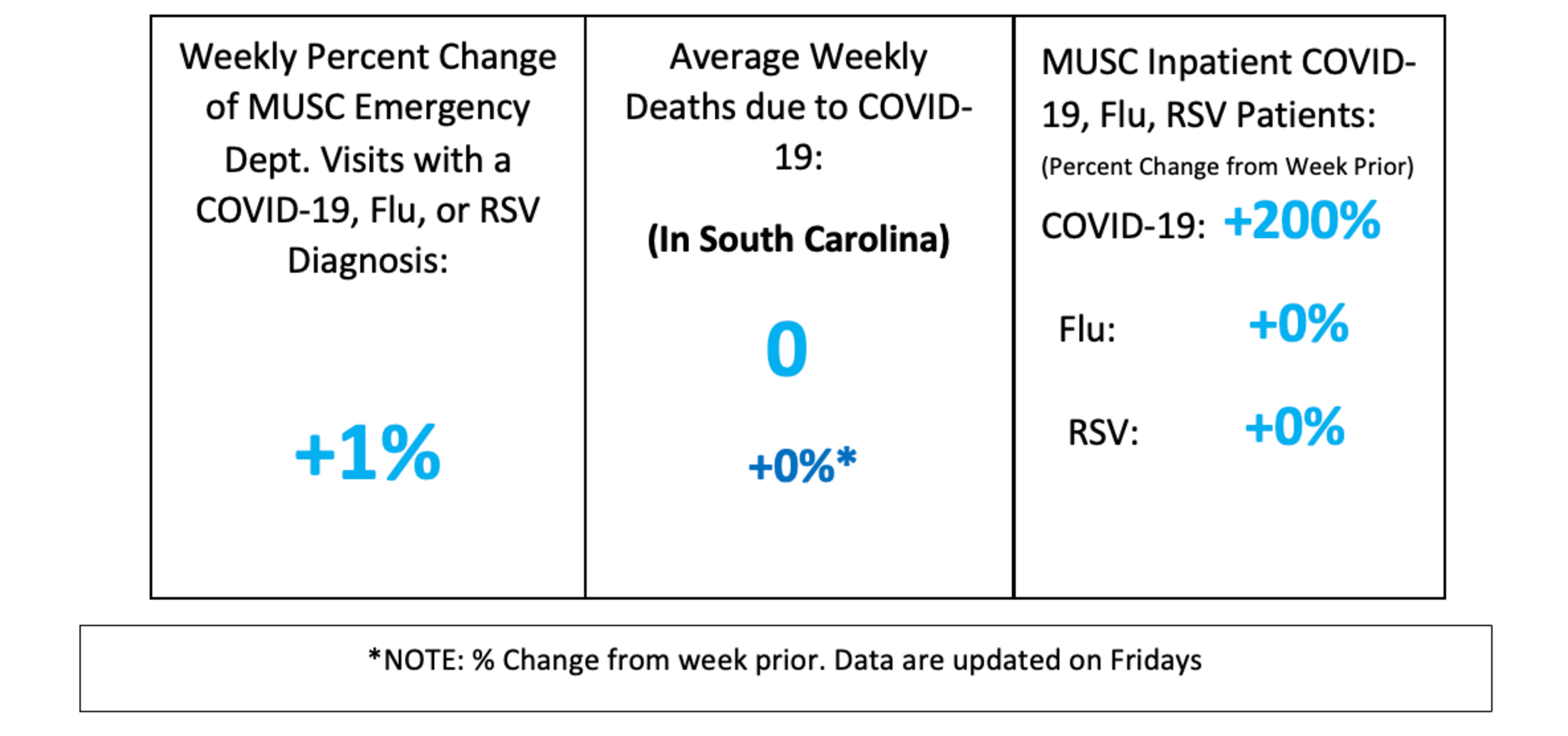
Florence – Weekly Respiratory Summary (Inbox Graphic) Dashboard-style graphic summarizing weekly percent change in MUSC emergency department visits for COVID-19, flu, and RSV in the Florence area, showing a large increase in visits (+44%), zero average weekly COVID-19 deaths statewide, 7.42% vaccine uptake, and mixed changes in inpatient COVID-19, flu, and RSV cases.

A graph shows wastewater viral activity in SC is comparable to other instances for this time of year.

A graph shows the percentage of ED visits with  COVID-19 spiking in August, and coming down to a much lower percentage in October.

MUSC Pee Dee ER Line chart of weekly ER visit percentages at MUSC Pee Dee for influenza, COVID-19, and RSV, showing very high influenza activity in January, low summer levels, and a sharp influenza increase again in December.

South Carolina ER Visits (Statewide) Line chart showing the percentage of emergency room visits statewide in South Carolina associated with influenza, COVID-19, and RSV from 2023 to 2025, with strong winter influenza peaks, periodic COVID-19 surges, and minimal RSV contribution.

MUSC Health – Florence Area (Hospitalizations) Line chart showing daily counts of patients hospitalized in the MUSC Florence area with COVID-19, influenza, and RSV from late 2023 to early 2026, with large winter influenza surges, smaller COVID-19 waves, and minimal RSV activity.

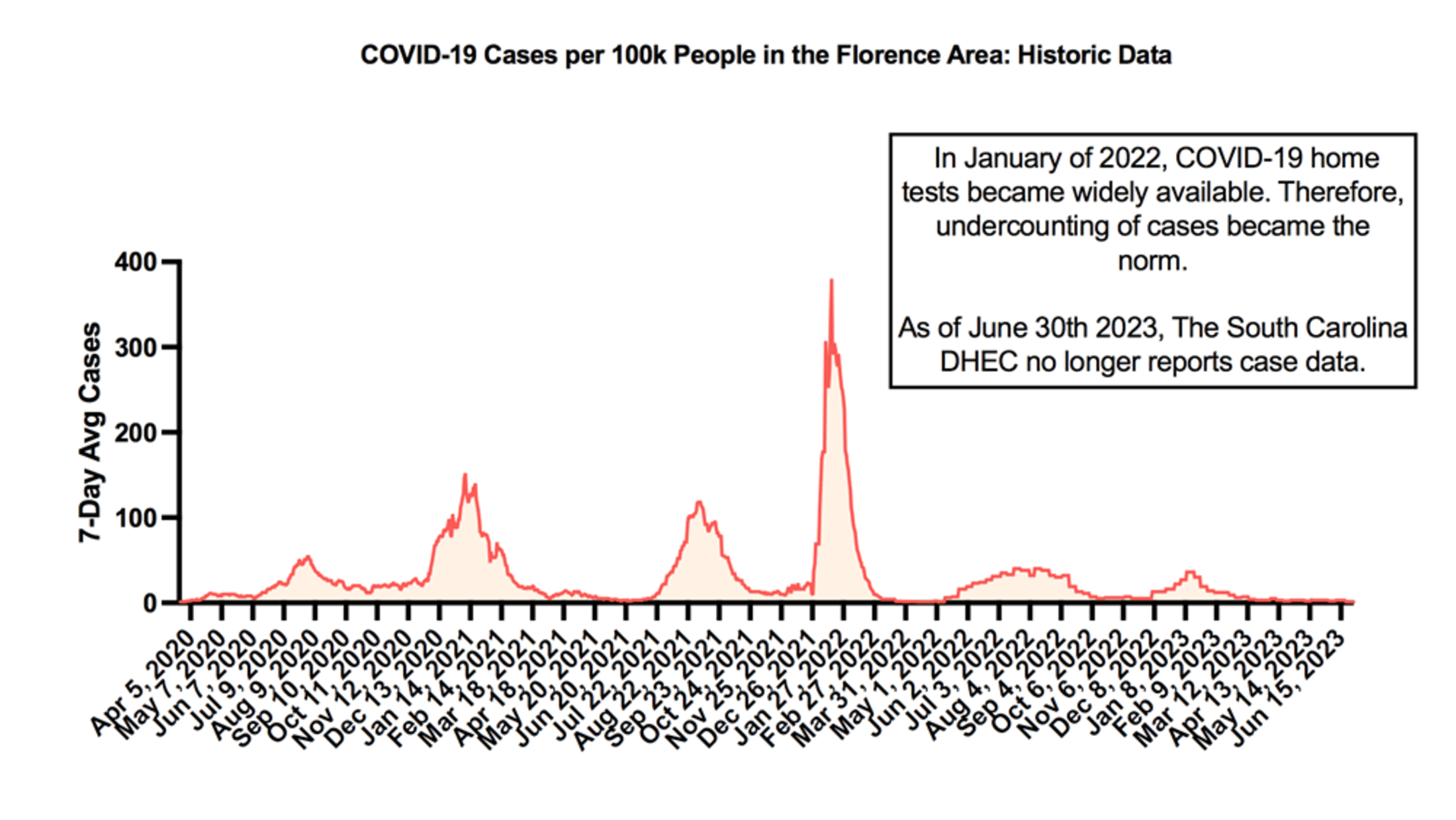
•	A graph shows the number of COVID-19 cases (per 100K) in the Florence area between 2020 - 2023. The largest spike was February 2022.

Information details the prevalence of Long-COVID in SC among adults 18-years and older. 31% reported having COVID. 8% of all SC adults currently report experiencing post-COVID symptoms. 1.1% of all SC adults report currently experiencing long-term symptoms that reduce their ability to carry out day-to-day activities.

Lancaster Area Information

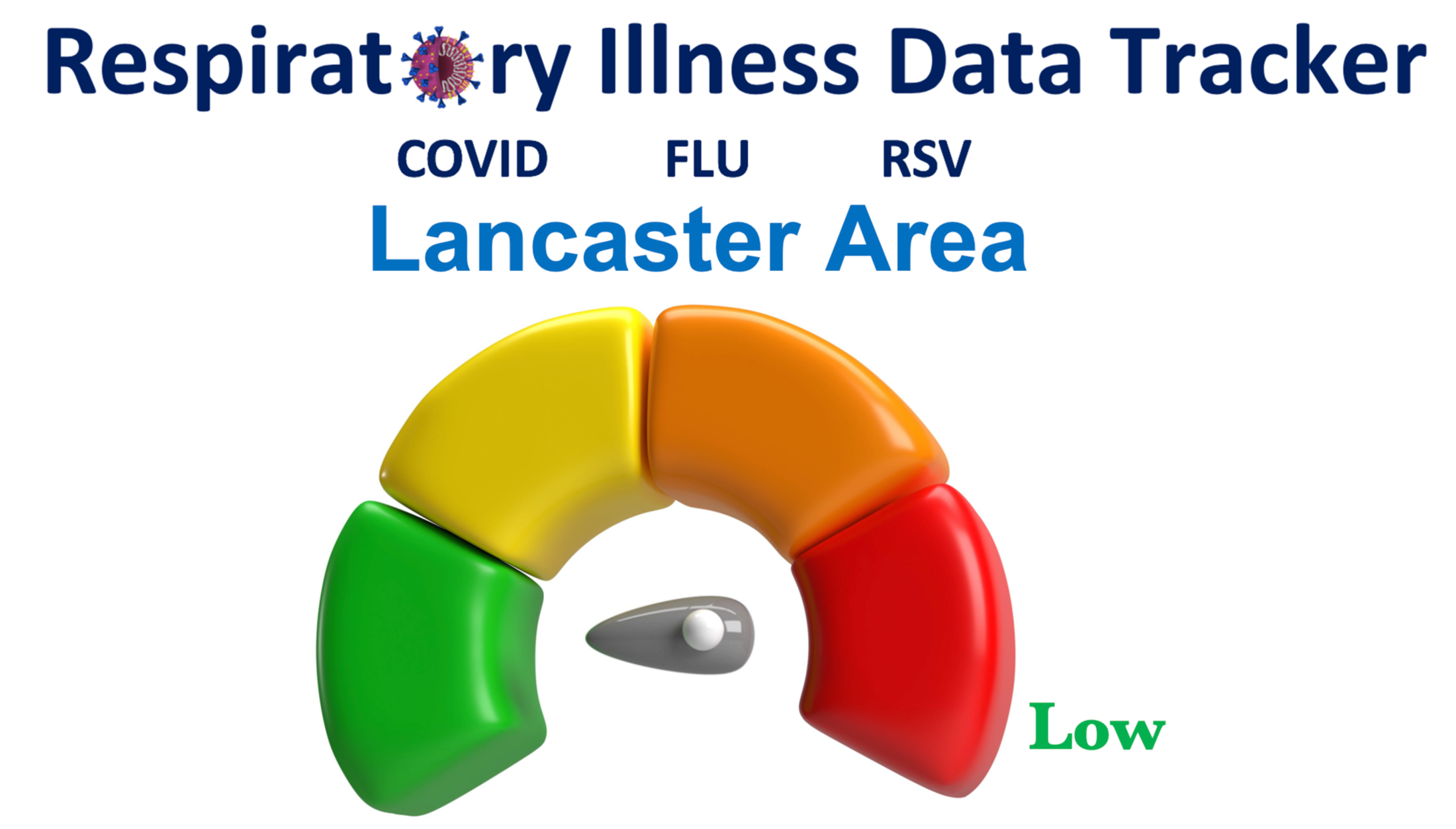
Respiratory Illness Data Tracker in text, representing COVID, Flu, and RSV

Cases of respiratory illnesses in the Lancaster area are low.

A graph showing the recommendations for public health for COVID-19, with threats are LOW, MEDIUM, and HIGH. When low, get tested and stay up-to-date. When medium, get tested, stay up-to-date, and talk to your healthcare provider if you are high risk. When threat of COVID is high, get tested, stay up-to-date, wear a mask indoors, and consider talking to your healthcare provider if you are high risk.

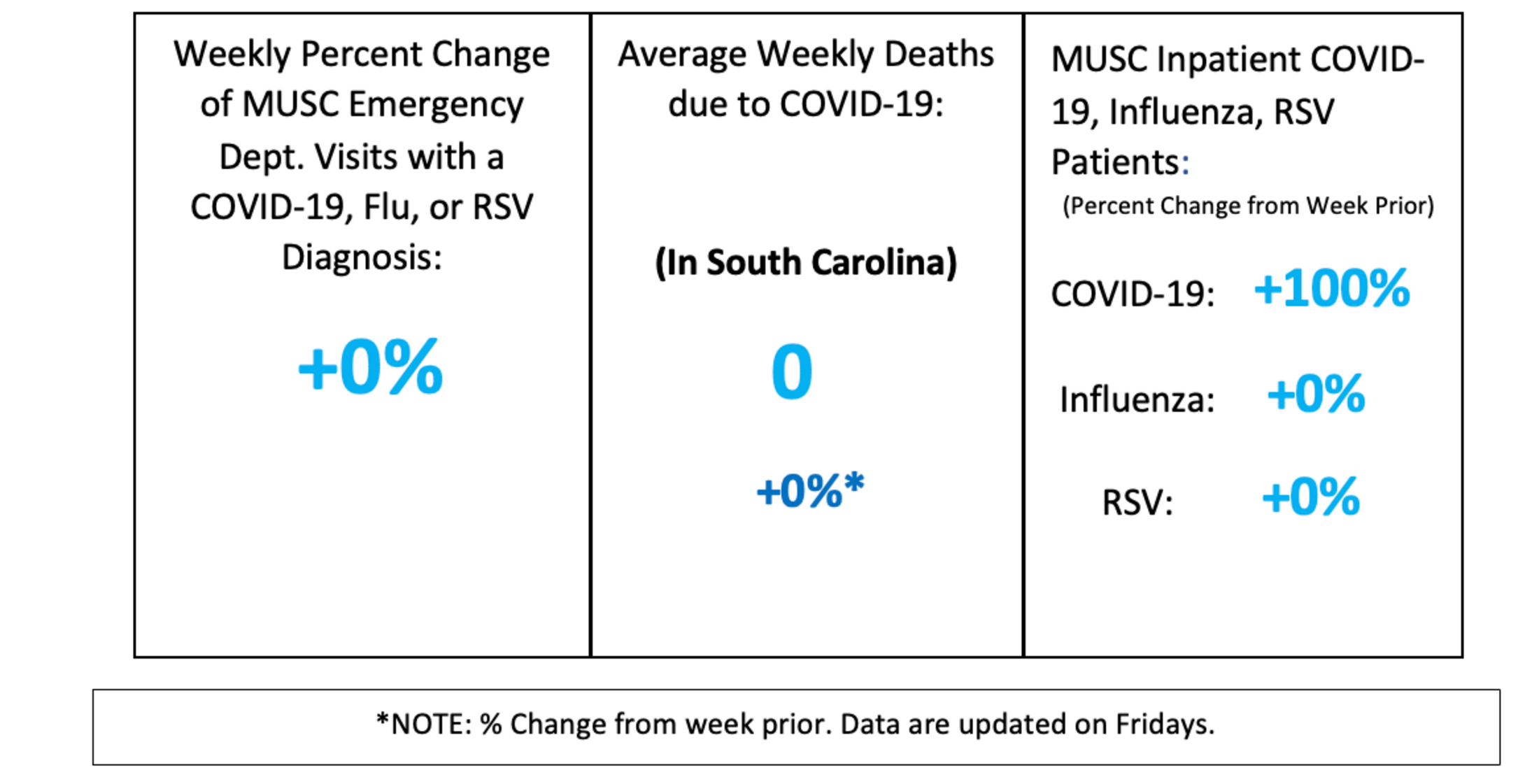
Lancaster – Weekly Respiratory Summary (Inbox Graphic) Dashboard graphic showing weekly percent change in MUSC emergency department visits for COVID-19, flu, and RSV in the Lancaster area, with minimal change in ED visits (+1%), zero average weekly COVID-19 deaths statewide, 7.42% vaccination coverage, and declining flu but increasing RSV inpatient cases.

A graph shows wastewater viral activity in SC is comparable to other instances for this time of year.

A graph shows the percentage of ED visits with  COVID-19 spiking in August, and coming down to a much lower percentage in October.

MUSC Catawba ER (Lancaster / Chester) Line chart showing weekly percentages of ER visits at MUSC Catawba for influenza, COVID-19, and RSV from November to December, with large influenza peaks in January and mid-December, low RSV levels, and smaller COVID-19 increases in late summer.

South Carolina ER Visits (Statewide) Line chart showing the percentage of emergency room visits statewide in South Carolina associated with influenza, COVID-19, and RSV from 2023 to 2025, with strong winter influenza peaks, periodic COVID-19 surges, and minimal RSV contribution.

MUSC Health – Lancaster Area (Hospitalizations)Line chart displaying daily hospitalizations in the MUSC Lancaster area for COVID-19, influenza, and RSV, highlighting repeated influenza-driven winter peaks and smaller COVID-19 increases in summer and fall.

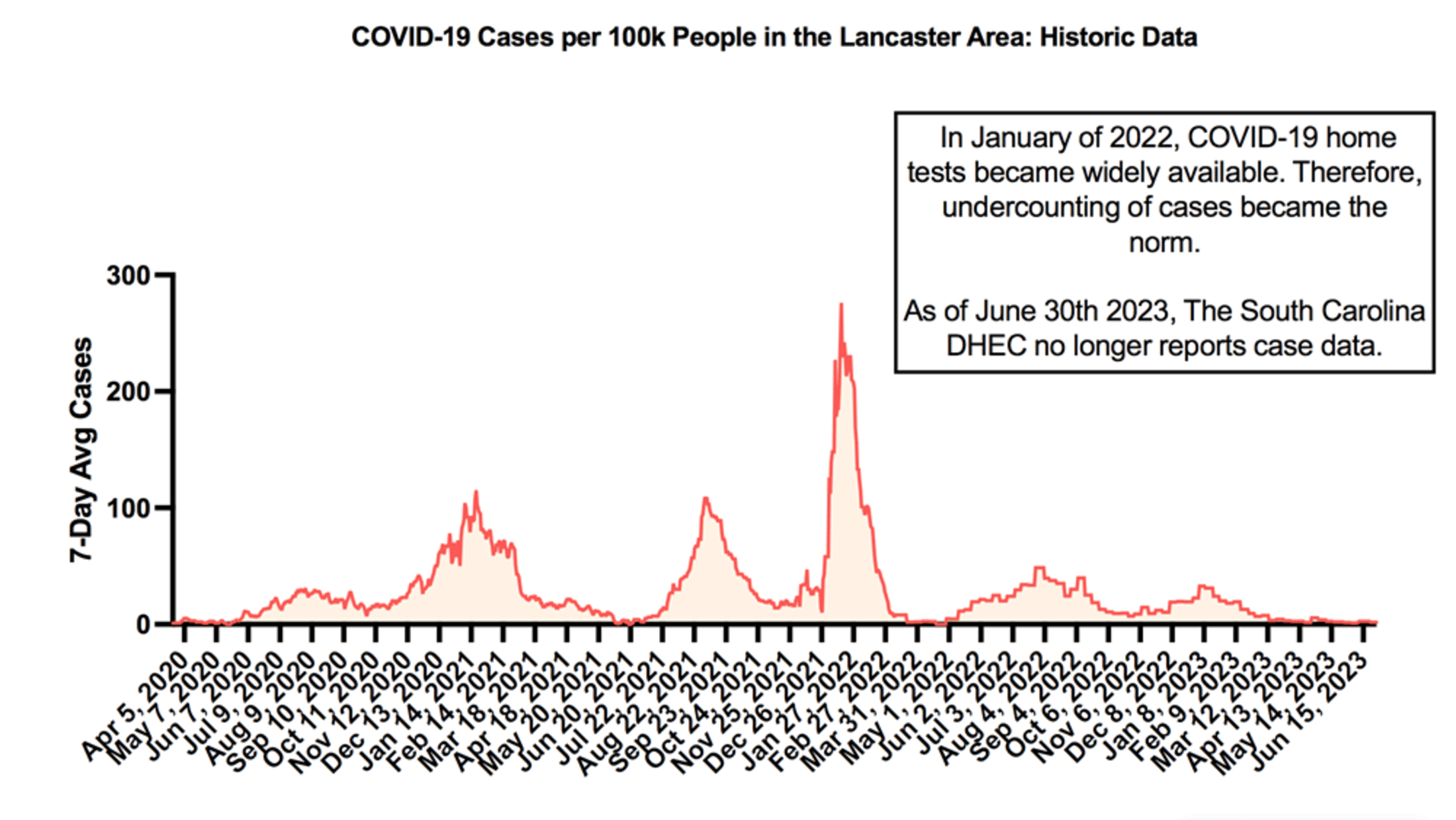
A graph shows the number of COVID-19 cases (per 100K) in the Lancaster area between 2020 - 2023. The largest spike was January 2022.

Information details the prevalence of Long-COVID in SC among adults 18-years and older. 31% reported having COVID. 8% of all SC adults currently report experiencing post-COVID symptoms. 1.1% of all SC adults report currently experiencing long-term symptoms that reduce their ability to carry out day-to-day activities.


Midlands Area Information

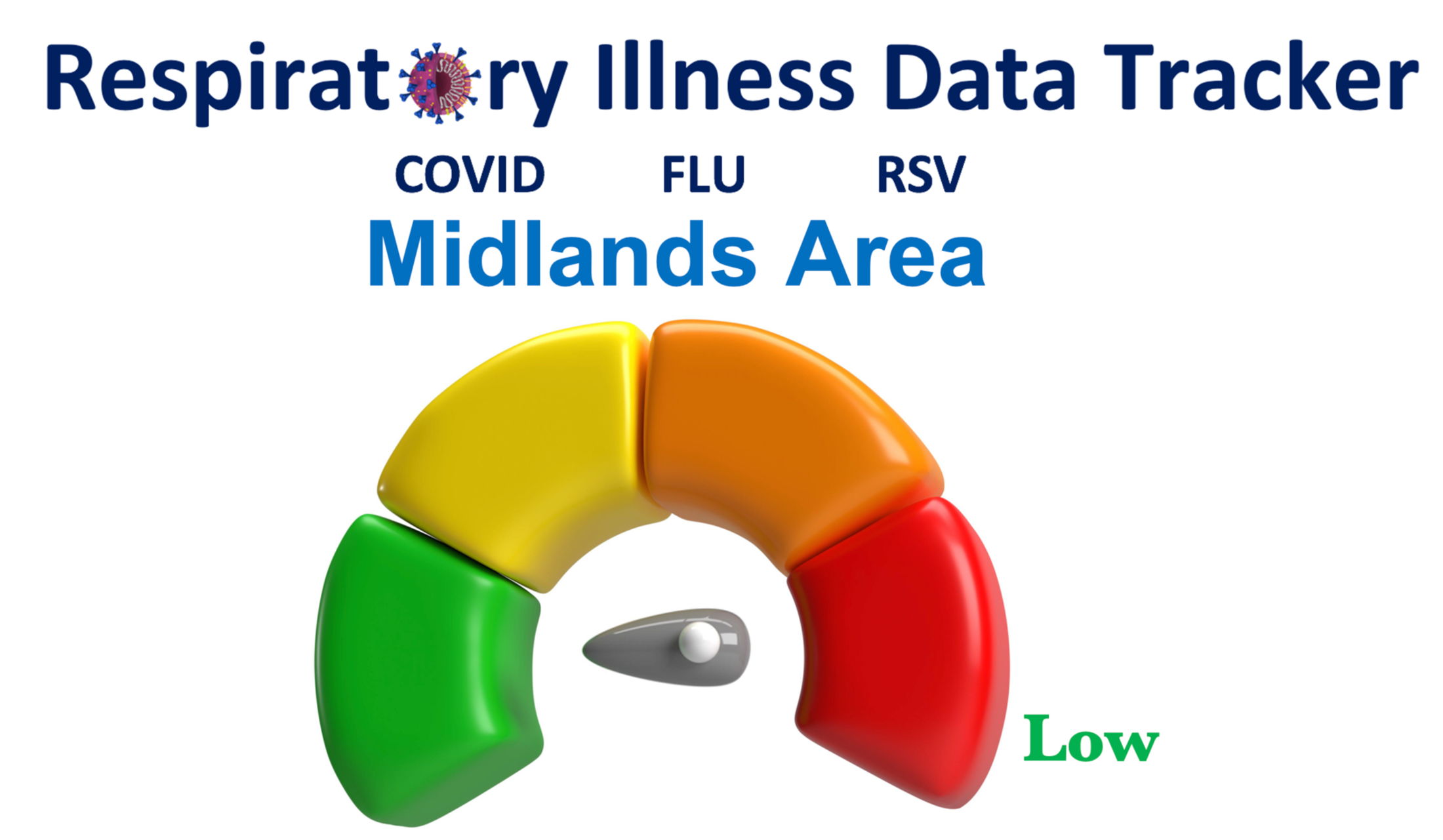
Respiratory Illness Data Tracker in text, representing COVID, Flu, and RSV.

Cases of respiratory illnesses are currently low in the Midlands area.

A graph showing the recommendations for public health for COVID-19, with threats are LOW, MEDIUM, and HIGH. When low, get tested and stay up-to-date. When medium, get tested, stay up-to-date, and talk to your healthcare provider if you are high risk. When threat of COVID is high, get tested, stay up-to-date, wear a mask indoors, and consider talking to your healthcare provider if you are high risk.

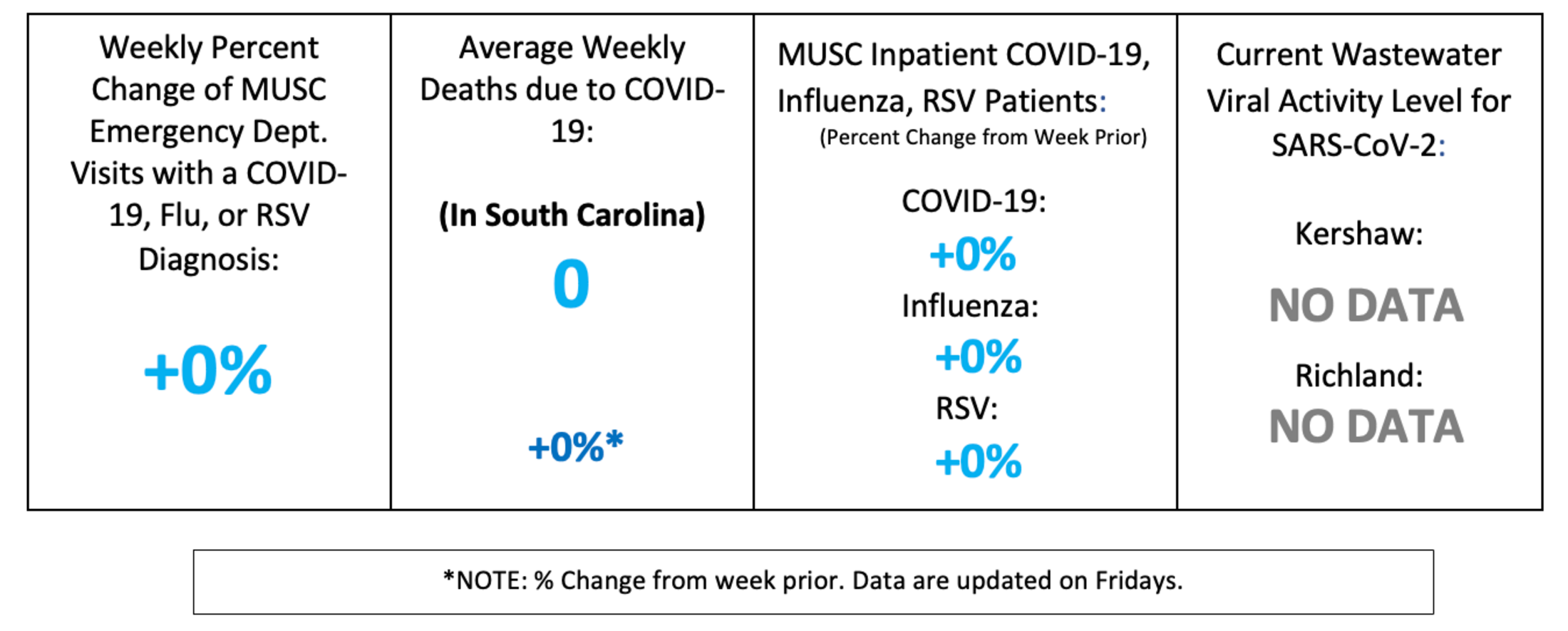
Midlands – Weekly Respiratory Summary (Inbox Graphic) Dashboard-style summary for the Midlands area showing increased emergency department visits (+34%) for COVID-19, flu, and RSV, zero average weekly COVID-19 deaths statewide, 7.42% vaccination coverage, rising inpatient COVID-19 and flu cases, declining RSV, and low SARS-CoV-2 wastewater levels.

A graph shows the percentage of ED visits with  COVID-19 spiking in August, and coming down to a much lower percentage in October.

MUSC Midlands ER Line chart displaying weekly ER visit percentages at MUSC Midlands for influenza, COVID-19, and RSV, with a pronounced influenza peak in January, a COVID-19 increase in late summer, and renewed influenza growth in December.

South Carolina ER Visits (Statewide) Line chart showing the percentage of emergency room visits statewide in South Carolina associated with influenza, COVID-19, and RSV from 2023 to 2025, with strong winter influenza peaks, periodic COVID-19 surges, and minimal RSV contribution.

MUSC Health – Midlands Area (Hospitalizations) Line chart of daily hospitalizations in the MUSC Midlands area for COVID-19, influenza, and RSV, showing major winter influenza peaks, moderate COVID-19 waves, and low RSV levels throughout most of the year.

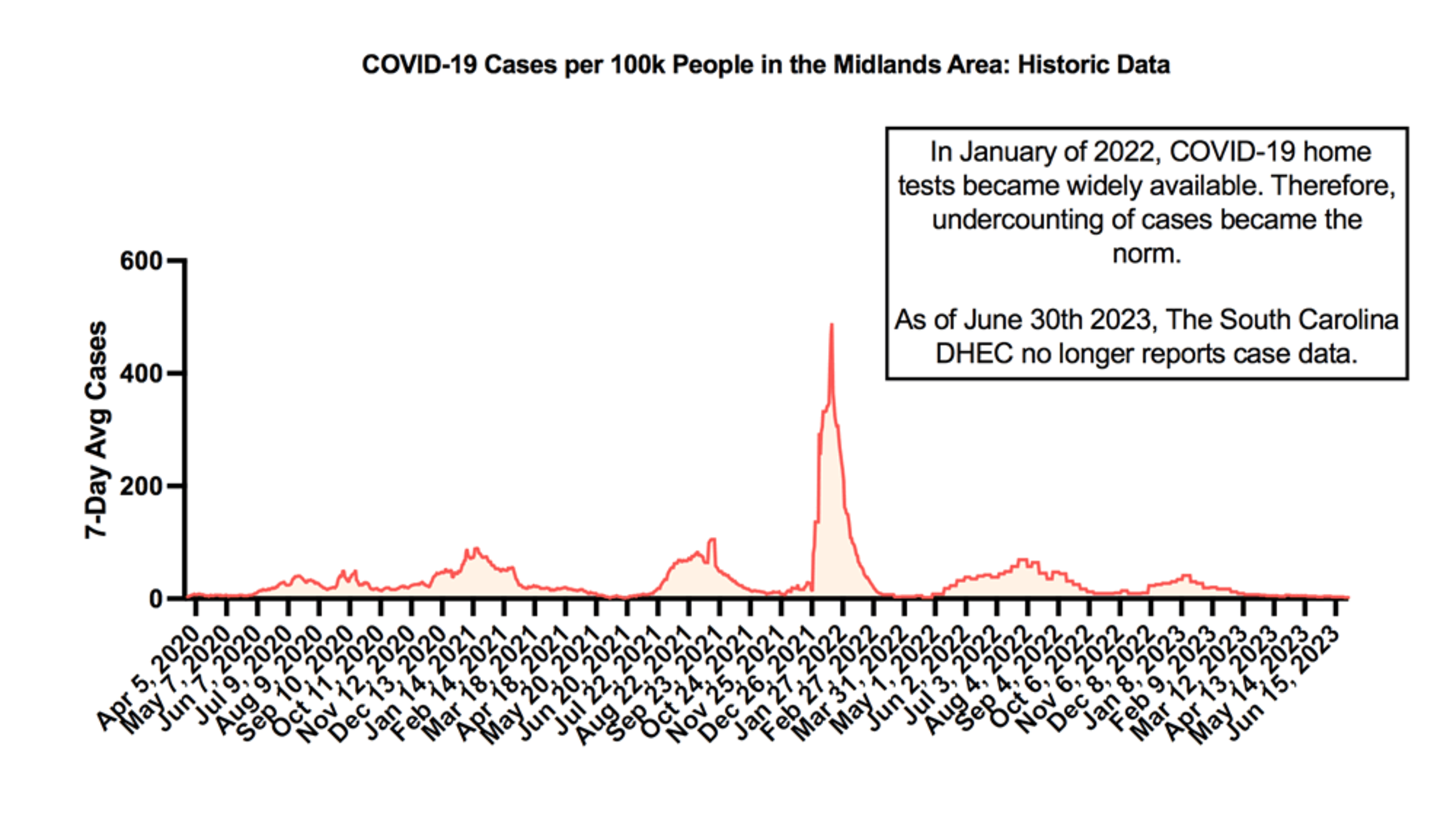
A graph shows the number of COVID-19 cases (per 100K) in the midlands area between 2020 - 2023. The largest spike was January 2022.

Information details the prevalence of Long-COVID in SC among adults 18-years and older. 31% reported having COVID. 8% of all SC adults currently report experiencing post-COVID symptoms. 1.1% of all SC adults report currently experiencing long-term symptoms that reduce their ability to carry out day-to-day activities.

About the Project

MUSC's COVID-19 Epidemiology Intelligence Project analysis has been developed to:

  1. Provide analysis of trends in the COVID-19 epidemic to assist with understanding the current and projected status of transmission, impacts to the community and hospital system, and the success of mitigation efforts. Our goal is also to provide information that can help assess each stage of the pandemic and provide vital health information to our community.
  2. Help us better understand and predict the critical needs of our hospitals, health care teams, in the Charleston, Berkeley, Dorchester, Florence, Marion, Darlington, Williamsburg, Chester, Lancaster, Kershaw, Richland, and Fairfield communities so that we can plan for and mitigate the impact of COVID-19 to the best of our ability.
  3. Provide reliable data to help guide and support decision making by policymakers, business leaders, and members of the general public across the aforementioned regions.

Data used in trend analysis comes from SCDHEC, MUSC clinical data, and The Center for Disease Control. Data used in the models comes from the Census Bureau, literature reviews, The U.S. Department of Health and Human Services, and internal clinical data.

How Often Are the Graphs Updated?

The goal of the project is to update analysis once per week.

Project Team

  • Michael D. Sweat, Ph.D., professor, MUSC Department of Psychiatry and Behavioral Sciences; director, Division of Global and Community Health; and faculty director, MUSC Center for Global Health – Project Director
  • Veronique Whittaker, MPH, Lead research analyst, Department of Psychiatry and Behavioral Sciences, Division of Global and Community Health
  • Eric Meissner, M.D., Ph.D., assistant professor, Department of Medicine, Division of Infectious Diseases
  • Kathleen Ellis, executive director, MUSC Center for Global Health

With special thanks to:

  • Claire Bailey, MPH, RD, former program coordinator, Department of Psychiatry and Behavioral Sciences, Division of Global and Community Health
  • Virginia “Ginny” Fonner, Ph.D., MPH, former assistant professor, Department of Psychiatry and Behavioral Sciences, Division of Global and Community Health

And our medical student volunteers from early 2020:

  • William “Alex” Parler, MUSC College of Medicine student
  • Gregory "Brian" Elmore, MUSC College of Medicine student

Methods & Metrics

  • Weekly Percent Change of MUSC Emergency Department Visits with a COVID-19, Flu, or RSV Diagnosis -This is the change in the weekly percentage of people in Emergency Departments due to Influenza-like-illness across MUSC's regional hospitals. These percentages are drawn directly from internal MUSC data.  
  • Average Weekly Deaths due to COVID-19 -This is the average number of weekly deaths due to COVID-19 per 100k people in South Carolina. These data are drawn from: https://covid.cdc.gov/covid-data-tracker/#trends_weeklydeaths_totaldeathratecrude_45
  • Percentage of Emergency Room Visits for COVID-19, Flu, and RSV in South Carolina -These data are presented by the CDC and are updated weekly. Data available at: https://data.cdc.gov/Public-Health-Surveillance/2023-Respiratory-Virus-Response-NSSP-Emergency-Dep/vutn-jzwm
  • MUSC Inpatient COVID-19, Influenza, RSV Patients -These data come directly from MUSC and are reported daily counts. We update these data weekly. If the cases are below 5, we will report this as an N/A.
  • South Carolina COVID-19 Wastewater Viral Activity Levels -These are current wastewater viral activity levels of SARS-COV-2 across wastewater treatment plants or sampling locations in the state of South Carolina. These levels are drawn from CDC and are updated weekly. Data available at: https://www.cdc.gov/nwss/rv/COVID19-statetrend.html?stateval=South%20Carolina
  • Household Pulse Survey -These data are drawn from The U.S. Census Bureau’s Household Pulse Survey, as part of an ongoing partnership between the Census Bureau and The National Center for Health Statistics (NCHS) and includes questions to assess the prevalence of post-COVID-19 conditions (long COVID), on the experimental Household Pulse Survey. These data are weighted, and the details can be found at: https://www.cdc.gov/nchs/covid19/pulse/long-covid.htm

Covid-19 Impact Criterion for Level Status

These community risk levels are informed by The Center for Disease Control's calculation of COVID-19 risk and public health recommendations. The thresholds are for the Charleston Metro Area (Charleston, Berkeley, and Dorchester). Further information can be found on the CDC website (Center for Disease Control and Prevention Website).

We report the growth rate of COVID-19 in weekly Internal MUSC Emergency Department visits and hospital admissions per 100k people. Risk Levels are defined as follows: Low, Medium, and High. We will include the wastewater data if it becomes available across all sites again.

LOW: The weekly ED visits are under 5% for two consecutive weeks.
MEDIUM: The weekly ED visits are above 5%. 
HIGH: The weekly ED visits are above 10%.    
Metrics shown reflect the day events occurred, not the day they were reported. DHEC releases data on a weekly basis.