
MUSC and Trident Technical College have teamed up to create an apprenticeship program that addresses the dire shortage of radiologic technologists.
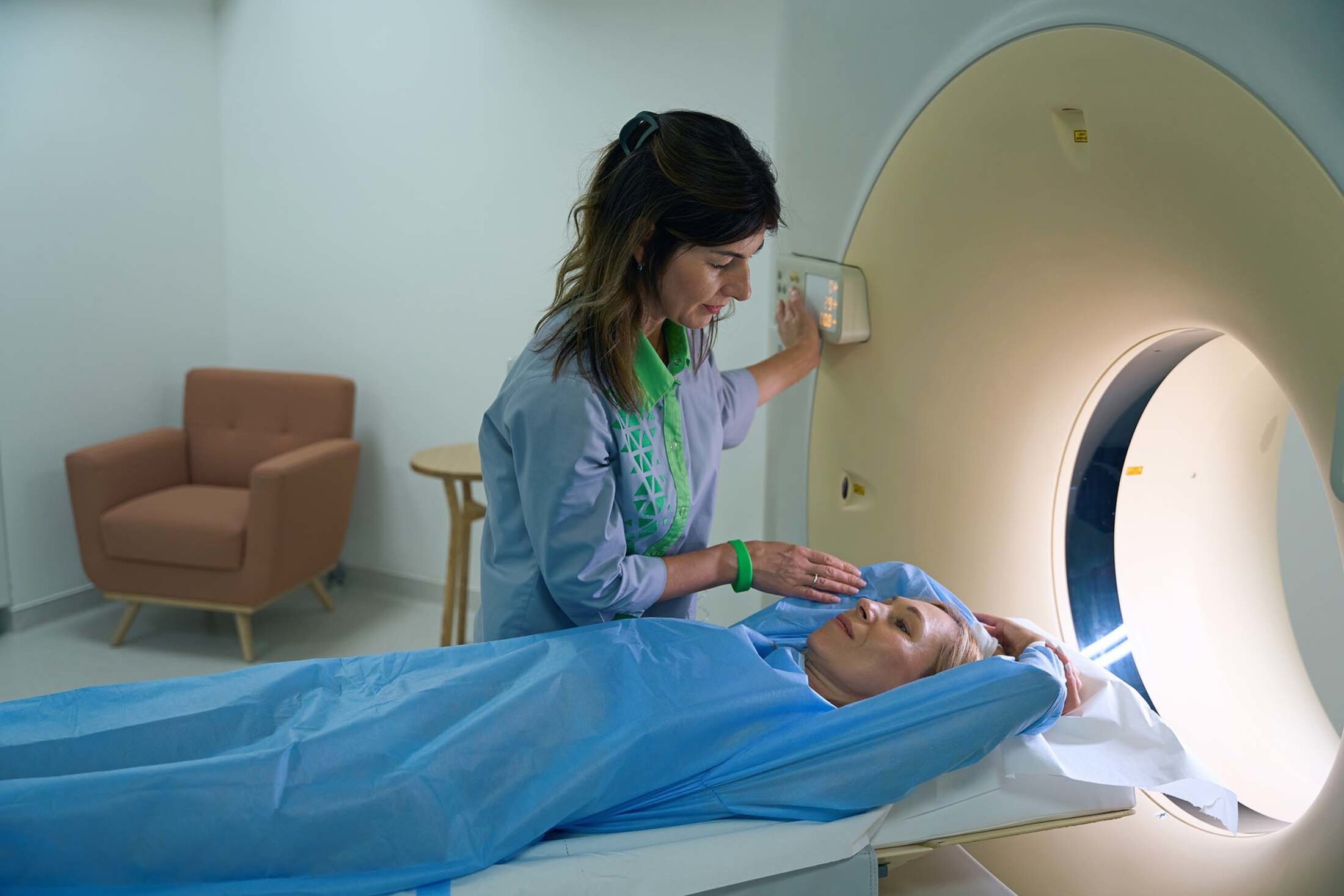
When doctors need to see what’s happening inside the body, radiologic technologists make that possible. Using imaging tools like X-rays, CT scanners and MRIs, they capture the images that help to diagnose everything from broken bones to cancer and stroke, playing a critical role in patient care every day.
Ensuring that patients have access to that level of care requires a strong pipeline of trained professionals, which led to the creation of the apprenticeship. The four-year program got underway in November. It's the first of its kind in South Carolina and one of only a few in the United States for training radiologic technologists, providing on-the-job training for students who are wait-listed for Trident’s radiology program.
The program is said to be a win-win for students and for health care.
“This first-of-its-kind apprenticeship is a powerful win for patients and for talent in South Carolina,” said Becky Seals, the System Radiology Education Program manager for MUSC Health. “By pairing rigorous academics with mentored clinical hours, we’re preparing graduates to step confidently into high-impact imaging roles.”
Trident Tech’s waiting list for students accepted into its radiologic technologist program is about two years. Under the new agreement, crafted by leaders at MUSC and Trident, these students can apply to the apprenticeship program, which includes working in MUSC’s Diagnostic Imaging Department for two years, once they begin classes at Trident Tech while they attend classes at Trident. The intention is for these students to become full-time employees at MUSC after they graduate and pass the state and national licensing exams.
“This is a competitive program that blends classroom learning with paid on-the-job training at MUSC Health and accelerates entry into a high-demand technologist’s role,” said Kelly Howard, system director, Quality, Safety, Regulatory and Education for Imaging Services. Funded through grants from Trident Tech and an hourly wage offered by MUSC, the program aims to build a workforce development pipeline for a field plagued by a shortage of workers.
“We have a huge workforce shortage for radiologic technologists, and this helps address that shortage and strengthens care access and supports local talent,” Howard said. Student-employees will work as radiology aides, assisting technologists with exams, prepping rooms for exams, inventorying supplies, transporting patients and helping with general patient care.
Jordan Hall, 19, is one of two students who entered the program in November. A graduate of Stratford High School in Goose Creek, Hall is already settling into the routine and hospital setting. She said she’s honored to have been selected for the inaugural class.
“Being in the program offers so many growth and learning opportunities, and I’ve already experienced and learned a lot,” she said. “It’s hard to get into the health care field without qualifications and certifications and to get a jump start and see all that comes with being in the program is such a benefit for me.”
The first person in her family to go into radiologic technology, Hall said she became interested in health care in high school and settled on radiology during her senior year because it combines her interest in anatomy and physiology with her desire to help others.
She took the prerequisite courses, including anatomy and physiology, and was accepted to Trident. Her enrollment year was 2029, but it has moved up to 2028.
Meanwhile, she’s getting on-the-job training at MUSC’s University Hospital, observing scans and shadowing team members in radiology.
“I have the opportunity to see different aspects of the radiology field, make connections and talk to people about their learning and career experiences,” she said.
According to recent statistics from the American Society of Radiologic Technologists, the radiologic technologist vacancy rate is 18.1%, up from 6.2% three years ago.
The shortage is having a significant impact on health care as the population ages and wait times for imaging services grow longer.
To create a pipeline of new technologists and ease the shortage, MUSC and Trident Tech leaders began discussions to join forces to combine training and education for future technologists. Jonathan Vallentine, director of Workforce Development at MUSC, and Melissa J. Stowasser, vice president for Community and Continuing Education at Trident Tech, led the initiative and are optimistic that the program will grow and fulfill its goal of increasing the workforce and improving health care. The plan calls for a new cohort to come in every two years.
“Our partnership with MUSC Health will open new doors into radiologic technology. Apprenticeships align education with employer needs, creating strong careers and stronger communities.”
Vallentine said the new pathway is about opportunity and service. “These students are trailblazers and, hopefully, many more will follow.”

Margaret Lamb
Margaret Lamb has extensive experience in higher education, health, medical and wellness communications as a writer, editor, spokesperson and manager. A graduate of the University of South Carolina (USC) with a degree in political science, she has worked for USC and Clemson University as well as Hill & Knowlton Public Relations and The Atlanta Constitution.
Recent Education stories