
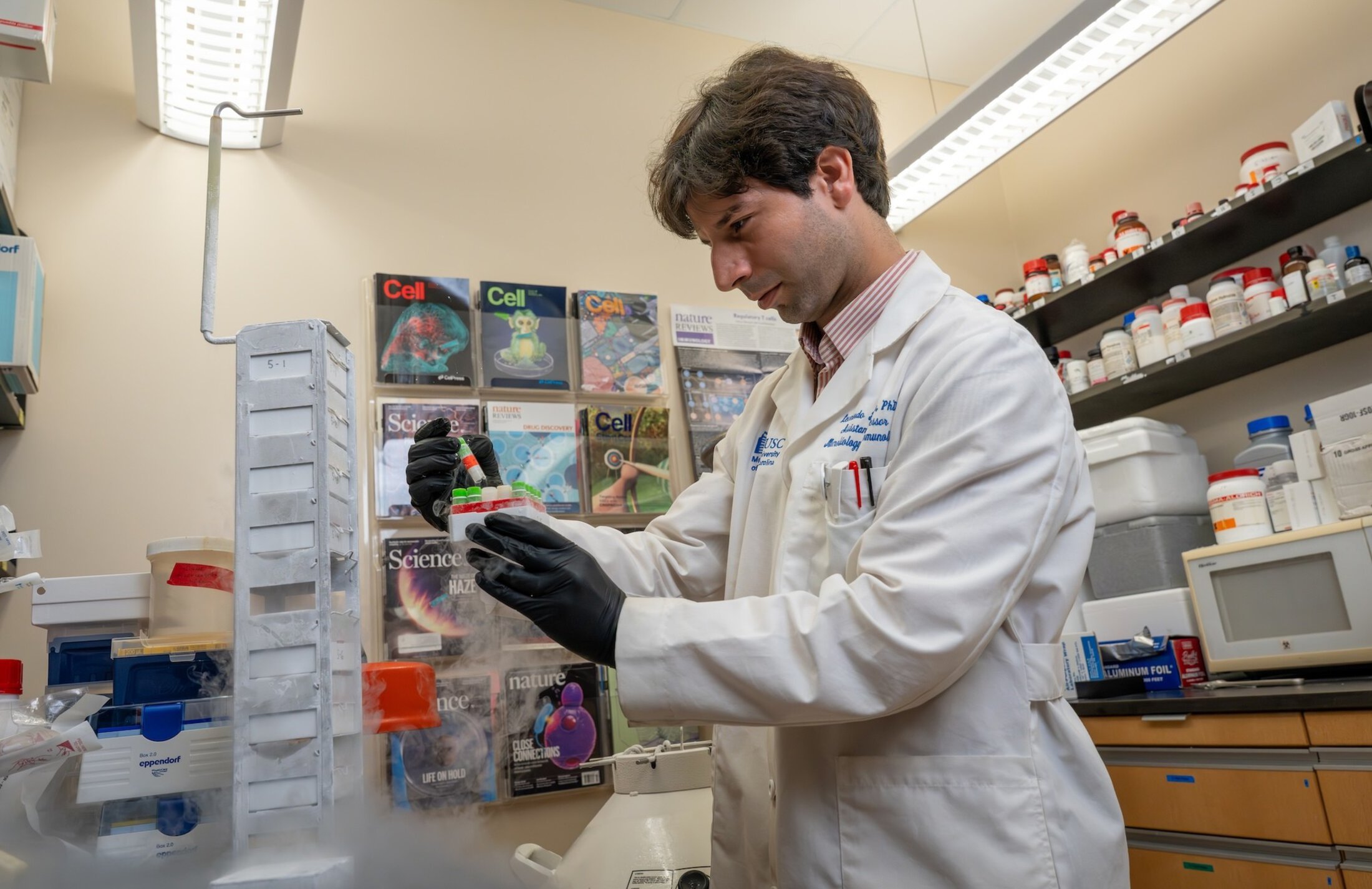
In the battle against type 1 diabetes (T1D), one researcher at the Medical University of South Carolina (MUSC) is leading a bold new front. With $1 million in funding from Breakthrough T1D, the leading global T1D research and advocacy organization, Leonardo Ferreira, Ph.D., assistant professor of Pharmacology and Immunology, and his collaborators at partnering institutions will explore a new approach to treating – and potentially curing – the disease.
The team aims to reimagine how the immune system interacts with the pancreas by combining stem cell biology, immunology and transplantation science. The project’s goal is deceptively simple: to restore beta cell function and insulin production in people with T1D without the use of immunosuppressive drugs.
“These awards support the most promising work that can significantly advance the path to cures for type 1 diabetes,” said Ferreira. “This is what Breakthrough T1D believes is the next wave in type 1 diabetes therapy.”
Ferreira brings to the T1D field his expertise in engineering the immune system by creating chimeric antigen receptors, or CARs, that help regulatory T-cells Tregs, to find their targets. Tregs are key players in regulating the body’s natural immune response as well as the autoimmune process in T1D. They act as bodyguards, keeping the response in check and ensuring that it doesn’t go too far and cause tissue damage and autoimmune diseases. Ferreira is joined by two renowned collaborators. His co-principal investigator, Holger Russ, Ph.D., associate professor of Pharmacology and Therapeutics at the University of Florida, is a leading expert in stem cell research in T1D – an area many consider the future of all transplantation as it provides an unlimited source of islet cells for manufacturing and clinical use. Completing the trio is Michael Brehm, Ph.D., of the University of Massachusetts Medical School, a pioneer in humanized mouse models used to test and predict human immune and metabolic responses in human T1D.
Behind the Diagnosis: How T1D Works
T1D is an autoimmune disease in which the body’s own immune system attacks the insulin-producing beta cells of the pancreas. Without these cells, the body cannot regulate blood glucose levels, forcing people to rely on constant blood sugar monitoring and insulin injections. The disease affects approximately 1.5 million Americans, according to the Centers for Disease Control and Prevention, and can lead to nerve damage, blindness, coma and even death.
The Breakthrough T1D award builds upon a 2021 Discovery Pilot grant from the South Carolina Clinical & Translational Research Institute (SCTR), which first enabled Ferreira and Russ to collaborate. That early funding helped to establish the foundation for the current project – one that could reshape how T1D is understood and treated.
We’re trying to develop a therapy that would work for all people with type 1 diabetes at every stage.
Agents in the new approach
Beta cells, which serve as the insulin factory of the pancreas, are depleted in people with T1D because their immune systems fail to recognize them as self and target them for destruction. Currently, patients with severe, difficult-to-manage T1D with exogenous insulin can receive a transplant of islet cells, which include beta cells.
While islet cell transplant therapy replenishes beta cells, it’s not without challenges. First, as they rely on human donors, it’s difficult to find enough beta cells for transplant. The team has tackled this issue by generating and producing its own stem-cell derived islet cells.
The second setback with this approach is that the transplanted beta cells, like any other organ/tissue/cells foreign to our self-body, are vulnerable to rejection by the immune system. This is where Ferreira’s expertise becomes critical. Because immune Tregs naturally help to restore and balance the immune system during and after immune activation, he engineers them with a CAR that can recognize a surface protein placed on the beta cells, acting like a GPS system that can be directed to reach a specific site. This allows the Tregs to act as targeted “bodyguards,” homing in on and protecting the beta cells, thereby creating a lock-and-key mechanism that does not occur in nature. When the receptor on the Treg – the “key” – fits into the protein on the beta cell – the “lock” – it sends a powerful message to the immune system to stand down. Working together, the beta cell and the Treg form a symbiotic partnership and protect the beta cell from immune attack after transplantation.
What’s the advantage of this approach? This combination cellular therapy – lab-produced beta cells that can make insulin along with their bodyguard Tregs to protect them from the immune response – would not require patients to take immunosuppressive drugs, which carry significant long-term risks, particularly in pediatric patients.
Moreover, the lab-grown cells could solve a longstanding logistical challenge in beta cell transplantation: the shortage of donor cells. Currently, a single transplant often requires beta cells from three or four donors, while most organ transplants need only a one-to-one match. The team’s engineered beta cells, by contrast, can be manufactured in the laboratory, frozen and stored for extended periods without losing quality. This could ensure a reliable, scalable source of donor material for future treatments.
The ultimate goal is to generate a complete off-the-shelf therapy, melding the engineered Tregs with the novel beta cells to create a ready-to-use treatment that can be distributed widely and administered through transplantation.
“We’re trying to develop a therapy that would work for all people with type 1 diabetes at every stage, even people who have had the disease for many years and have no beta cells left,” said Ferreira.
Measuring success and looking ahead
Getting these therapies into clinics will take time. Ferreira and his team have a number of questions and obstacles to overcome before treatments can be offered to the public. For example, one of the key questions this study aims to answer is how long the treatment remains effective. In preclinical models using humanized mice, the effects last for up to a month, the longest time assessed. The new Breakthrough T1D grant will allow the team to investigate ways to extend this window, refine delivery methods and evaluate whether combining multiple doses might yield more durable results.
By merging the disciplines of stem cell biology, gene editing and immunoregulation, Ferreira’s team is creating not just a therapy but a model for how science can reprogram the body’s natural systems to heal itself. Their work may one day mean freedom from daily insulin injections and a future where type 1 diabetes is not just managed but cured.
If successful, this work could mark a turning point in regenerative and immune-based medicine.
“I think this can change how medicine is done,” Ferreira said. “Instead of treating symptoms, we can actually replace the missing cells. By doing this work, we are likely to further understand how T1D starts, how it develops and how it can be treated.”
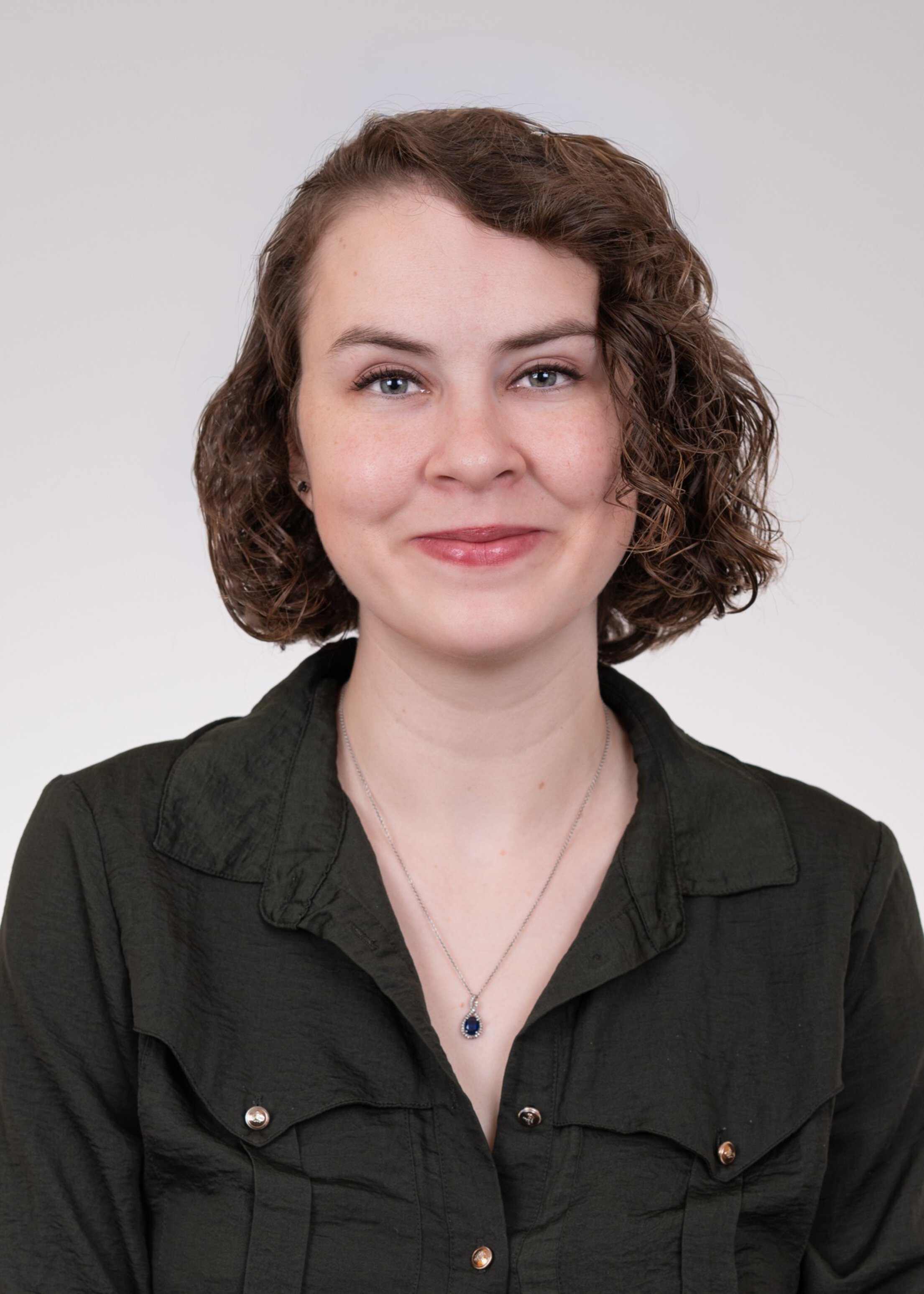
Sophia Barry Gordon
Sophia Barry Gordon is the science writing and communications program coordinator at the South Carolina Clinical & Translational Research (SCTR) Institute. She holds a Master of Science degree from New York University and is currently a Ph.D. candidate at the University of Birmingham (UK).