
About one in five Americans has a disability of some sort, whether because of accident, war, congenital issues or aging, according to the National Institutes of Health.
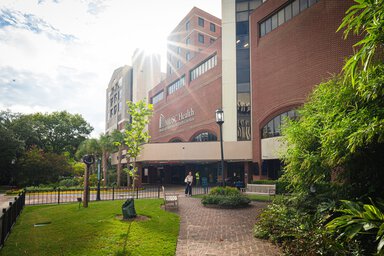
The Medical University of South Carolina has been a leader in supporting research to help individuals to rehabilitate their bodies and participate more fully in life for the past five years. This will continue as the National Center of Neuromodulation for Rehabilitation (NC NM4R), housed within the College of Health Professions (CHP) at MUSC, has received a five-year renewal from the National Institutes of Health (NIH). It is one of only two rehabilitation research centers to be renewed in this grant cycle.
In addition, the NC NM4R will take on a new leadership role as it has been named the national coordinating center for a group of six such centers, the Medical Rehabilitation Research Resource Network, each with its own particular focus on rehabilitation research. The coordinating center is what can truly make the whole greater than the sum of its parts, said NC NM4R program director Steve Kautz, Ph.D., an endowed professor whose research focuses on stroke recovery.
“We're now working hand in glove with the NIH to help set the agenda to improve rehabilitation research across the country,” he said.
As the national coordinating center, MUSC will be able to develop conferences and initiatives to meet the emerging needs and interests of the rehabilitation research community, Kautz said.
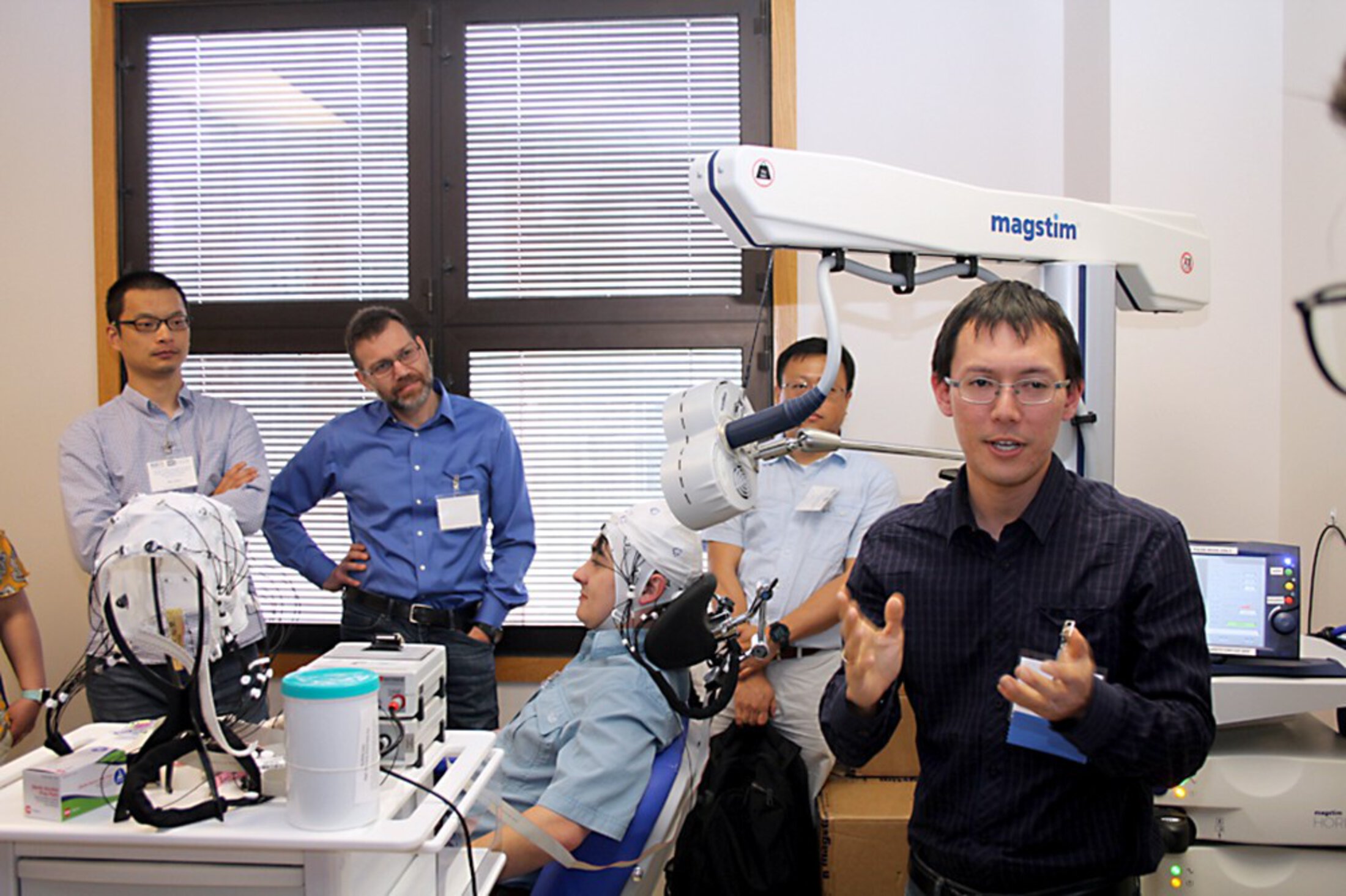
The NC NM4R, which includes faculty from the College of Medicine as well as CHP, focuses on research into neuromodulation, using noninvasive techniques like transcutaneous auricular vagus nerve stimulation (taVNS), transcranial magnetic stimulation (TMS) and operant conditioning to train the brain and spinal cord in new ways of moving or thinking. Multiple clinical trials are using these techniques on a variety of physical and mental conditions, and TMS is already FDA approved for treatment-resistant depression.
But the key to MUSC’s successful renewal is its focus not just on MUSC researchers but on training researchers across the country, Kautz said.
“We try to nurture people at different levels of their involvement in rehab research to take them to the cutting edge and make it more likely they can get funded to do things that are going to have impact,” said Richard Segal, PT, Ph.D., chairman of the CHP Department of Health Professions.
He made note of one graduate student who came to a workshop at MUSC and learned techniques for operant conditioning of spinal reflexes, took that information back to the lab where his advisor gathered preliminary data and then successfully applied for a grant from the NC NM4R. With those results, the advisor was able to secure an NIH grant. That the researcher is at the University of Texas at Austin, rather than MUSC, isn’t a drawback in Segal’s eyes but a win.
“That’s perfect,” he said. “That’s our job, to reach out.”
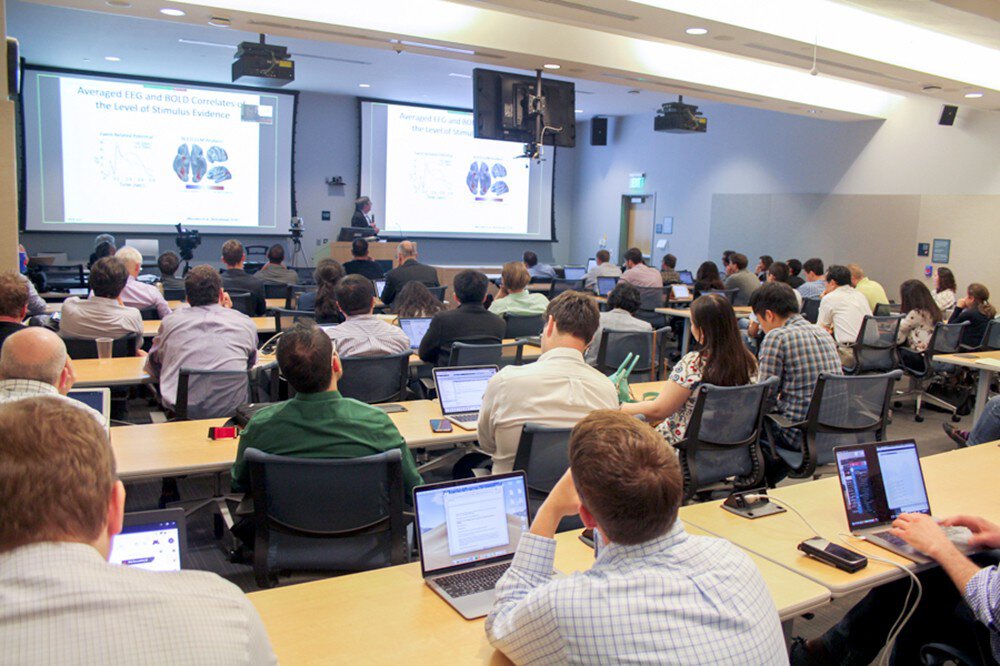
The NC NM4R has trained people from more than 30 states, Segal and Kautz said. Traditionally, those trainings are in the form of in-person workshops, but the pandemic has forced them to get creative and go online. In doing so, they’ve discovered how many more people they can reach. One recent workshop was slated to have 40 in-person attendees. When it was moved online, 200 people registered, Segal said. At times, there were as many as 150 people logged into Zoom sessions. Segal and Kautz are enthusiastic about continuing virtual trainings even when in-person sessions are feasible again because they offer a way for scientists from universities with smaller travel budgets to receive training.
“The training we do is for researchers who want to change the structure and function of the nervous system to help people recover after an injury or disease. We do most of it without being invasive, so we’re helping people with things we believe, ultimately, could end up in practice,” Segal said.
The currency of the nervous system is electricity, Kautz explained. Thus, stimulating certain nerves or areas of the brain promises to deliver results in a more targeted fashion with fewer side effects than drugs.
“The gold standard for what we hope to achieve is what Dr. Mark George already achieved with respect to depression. He came up with a TMS protocol that is now saving the lives of people with depression for whom drug therapy isn’t working,” Kautz said.
Leslie Cantu
Senior Communications Manager
Leslie Cantu is the senior communications manager at MUSC Hollings Cancer Center, where she works with researchers, clinicians and patients to tell the people of South Carolina about the innovative work being done to improve cancer care for everyone in the state. She joined the MUSC Office of Communications and Marketing in 2018 after a career as an award-winning writer, editor and producer at community newspapers and local TV news. She transferred to the communications office at Hollings in 2022, where she happily finds something new and interesting to write about every day. Her favorite stories to cover at MUSC have included Match Day, the Angel Tree Parade, a clinical trial of CAR-T cell therapy and the many patients who have agreed to share their very personal struggles and triumphs.
Contact Leslie at cantul@musc.edu.