
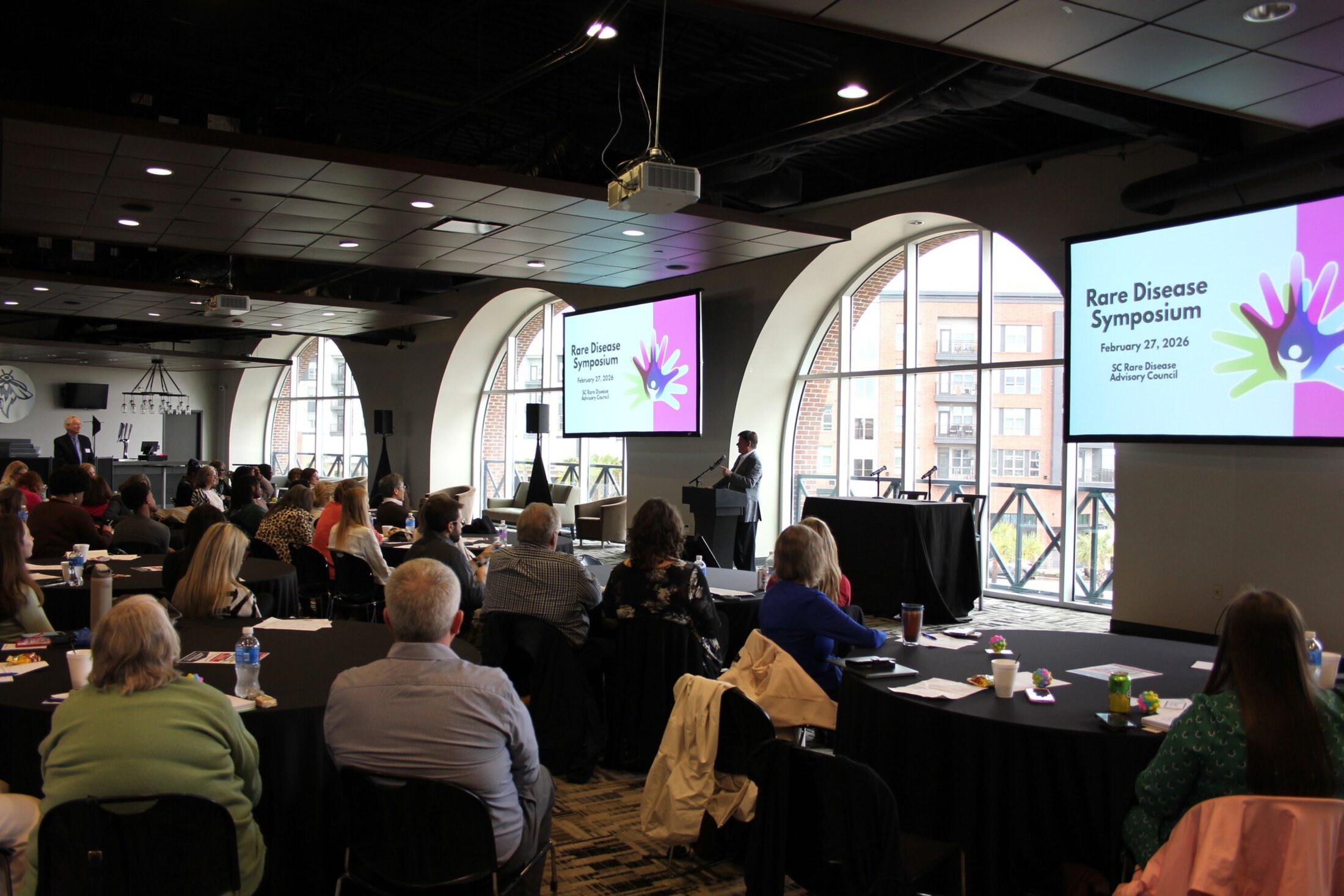
On a cold, rain-soaked Friday at Segra Park in Columbia, a sea of stripes and neon colors brightened the day in a powerful show of solidarity for South Carolinians living with rare diseases. Dressing in zebra print and bright colors – symbols of the rare disease community – was just one of the ways that patients, caregivers, researchers and advocates came together on Feb. 27, in celebration of Rare Disease Day, recognized on Feb. 28th for the 3rd annual 2026 South Carolina Rare Disease Symposium, organized by the South Carolina Rare Disease Advisory Council (SC RDAC).
“I want those who attend to know that they’re not alone,” said Neena Champaigne, M.D., medical geneticist and member of the SC RDAC, who later moderated the afternoon panels. “Even though you have a rare or ultra-rare condition, there are other individuals that have shared lived experiences, and collectively, we can use each other as resources, for mentorship and for peer support. We have a lot of resources in South Carolina to achieve that.”
I want those who attend to know that they are not alone.
The day began with opening remarks from Patrick Flume, M.D., co-director of the South Carolina Clinical & Translational Research (SCTR) Institute and chair of the SC RDAC. He kicked off the presentations with an insightful report on rare disease prevalence estimates for the state, collected and analyzed by MUSC’s Kit Simpson, DrPH, Distinguished University Professor and director of the Comparative Effectiveness Data Analytics Core. From the outset, the event was interactive. Both in-person and virtual attendees asked questions, shared experiences and engaged in open discussion.
The next speaker, Brian Chen, J.D., Ph.D., associate professor of Health Services Policy and Management at the Arnold School of Public Health at the University of South Carolina, delivered a talk titled “Million-Dollar Treatments, Finite Budgets.” He explained how health care systems make difficult decisions about funding rare disease treatments and offered insight into the economics behind those choices.
Patient Katrina Wharton described the talk as very enlightening. “I’ve been dealing with a lot of issues about how treatments are chosen and how to make them cost-effective. Seeing how that works is really eye-opening.”
David Rotholz, Ph.D., executive director and clinical professor at the Center for Disability Resources at the USC School of Medicine, then presented on the transition from childhood to adulthood for people with rare diseases. He discussed challenges beyond medical care, including housing, employment and continuing education.
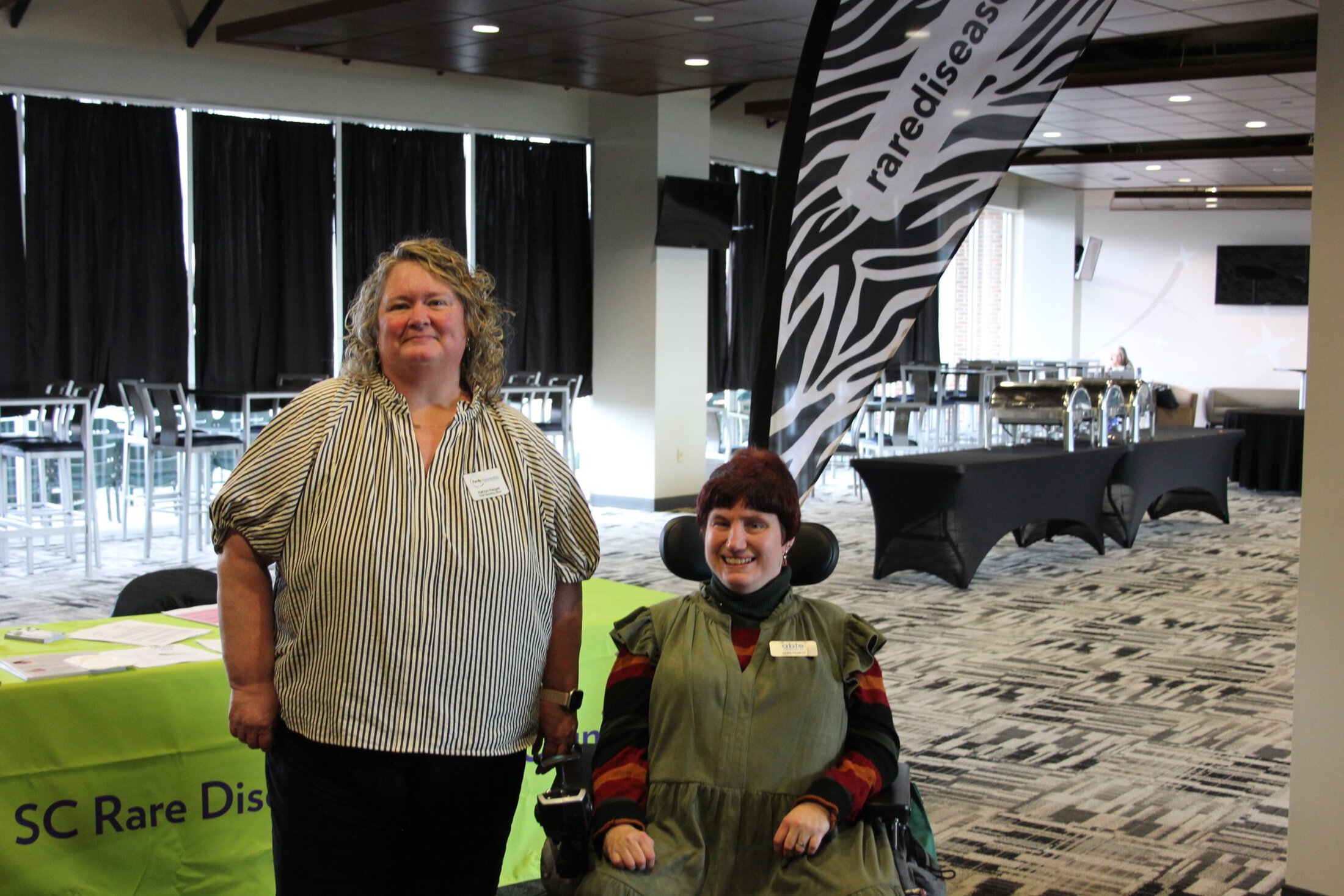
In the afternoon, two panels brought together experts and individuals with lived experience. The first, the “South Carolina Resources Panel,” featured Dori Tempio, senior director of Community Education at Able SC, and Kathryn Padgett, chief operating officer of Family Connection of SC. Both women live with rare diseases and shared information about resources available across the state.
“The takeaway I want everyone to leave with is that they can achieve any goal they want to,” said Tempio. “It doesn’t have to look like everyone else. You can find the tools, resources and assistive technology that will work for you and can be tailored to your needs and wants.”
Padgett, who also has a child with a rare disease, spoke about the power of shared understanding. “As an individual with a rare disease and also parenting a child with a rare disease, it’s really empowering to be among a group of people who have dealt with similar situations, obstacles and conversations,” she said. “To know that even though our situations each are different and rare, we still have so much in common.”
The final panel, “Patient and Provider Perspectives,” included Sarah Mennito, M.D., professor of Pediatrics at the MUSC College of Medicine, and Kate Wink, member of the SC RDAC. Wink shared the challenges of raising a son with a rare disease while also living with the same condition herself. Mennito, who has cared for both children and adults with rare diseases, offered practical advice for navigating a complex medical system.
“We don’t just care for people with rare diseases,” Mennito said. “We help them care for themselves.”
Throughout the day, formal presentations were balanced with moments of personal connection. Christine Wrixon, a patient and advocate representing Rare Together Worldwide, spoke openly about her experiences with anxiety and family strain related to her condition. Her honesty was met with strong support from others in the audience.
“Being a part of today’s Rare Disease Symposium meant a whole bunch. I’m proud of this network at MUSC,” Wrixon said. “I hope everyone has an experience like this.”
Being a part of today's Rare Disease Symposium meant a whole bunch. I'm proud of this network at MUSC. I hope everyone has an experience like this.
By the end of the day, the rain outside had not dampened the spirit inside. “This was our third Rare Disease Symposium and each year, the attendance keeps growing,” said Flume. “I am pleased to see our work get some traction and I look forward to further growth.” Each year, the SC Rare Disease Symposium serves as a reminder that while each rare disease is unique, the community built around them is united, resilient and growing stronger together.
Information about SC RDAC quarterly meetings, which are open to the public and held virtually, can be found on their website at rarediseasesc.org.
Sophia Barry Gordon
Sophia Barry Gordon is the science writing and communications program coordinator at the South Carolina Clinical & Translational Research (SCTR) Institute. She holds a Master of Science degree from New York University and is currently a Ph.D. candidate at the University of Birmingham (UK).
Recent Enterprise stories